


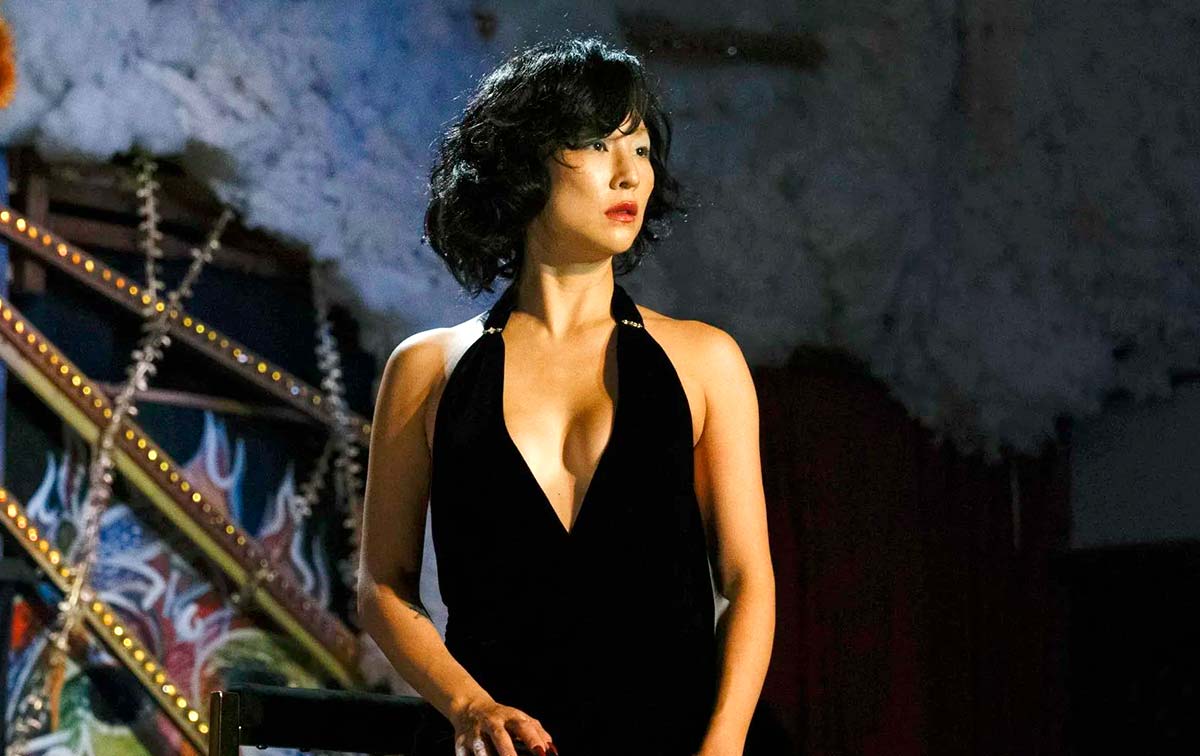
For years, Greta Lee was routinely described as a “scene-stealer”—a flattering label that nonetheless confined her to the margins of stories centered on other people. “Past Lives” finally offered the actress a leading role worthy of her talents, while her fabulous, vivacious turn in Kent Jones’ delicate character study “Late Fame” pushes her in another direction entirely.
However, Lee’s recent success does not mean she believes Hollywood’s representational problems have been resolved. While promoting “Late Fame” on the Talk Easy podcast, Lee questioned whether the industry has quietly tired of discussing inequality before actually addressing it.
READ MORE: The Best Films Of 2026 (So Far)
“It’s not done,” Lee said. “Whatever that is. There is so much work to be done on multiple fronts, and it’s factual. It’s statistical.”
Lee then directly questioned whether conversations surrounding race, wage disparity, and unequal opportunities had become unfashionable within the industry. “I think I’d be lying if I didn’t admit that I sit here today and I’m asking, ‘Are we done with that?’” she continued. “Are we done with talking about people of color and, you know, wage disparity and complete lack of opportunities? Are we done? Does no one want to hear this anymore?”
For Lee, those questions are complicated by her resistance to becoming a representative for an entire community. Hollywood’s limited opportunities gave “Past Lives” tremendous significance, but that scarcity also forced performers like Lee to carry expectations extending far beyond the work itself.
“I think I’m trying to say I’m just starting,” she explained. “And that can feel exhausting and scary and like a lot.”
Experience has also made Lee wary of the expectation that actors from marginalized communities must become public representatives for everyone who shares their identity.
“The idea of spokesperson can be a trap, can be impossible, can be brutal, and can be so just unfair,” she said.
That burden was especially acute with “Past Lives,” Celine Song’s Oscar-nominated romantic drama. Lee knew the film was offering her the kind of leading role she had spent her career hoping to see, making the prospect of its rejection feel much larger than an ordinary professional disappointment.
“For me, finally, a person like me was in a role in a kind of movie that I wanted to watch myself and had wanted my whole life,” Lee recalled. “Finally—I mean, in the West, in America, in Hollywood—it finally was happening.”
Lee feared that if audiences rejected the film, its failure could be used to deny comparable opportunities to other performers.
“If it didn’t work, where would that leave us, and what would that mean?” she said. “How many steps back would that result in if this did not work? So there was so much on the line.”
At the film’s Sundance premiere, Lee initially mistook the sounds of audience members shifting in their seats and reaching into their bags as signs that they were preparing to leave. “I was convinced, truly, that’s it,” she recalled. “No one gives a shit about this thing that I was so certain that people would care about, or that I care about.”
The movement had another explanation: viewers were reaching for tissues. “It was because people were crying, and people were reaching for tissues and covering up their feelings,” Lee said. “I could not believe it. I was so convinced that we were dead, that we had failed.”
“Past Lives” ultimately earned Oscar nominations for Best Picture and Best Original Screenplay, but Lee does not view its success as evidence that Hollywood’s representational problems have been solved. Her comments suggest the celebratory language surrounding progress may have obscured how tentative that progress remains—and how quickly the industry can decide it has discussed inequity enough.
“Late Fame,” which co-stars Willem Dafoe, is now in theaters and expands nationally on August 14. Watch the full conversation below.


