


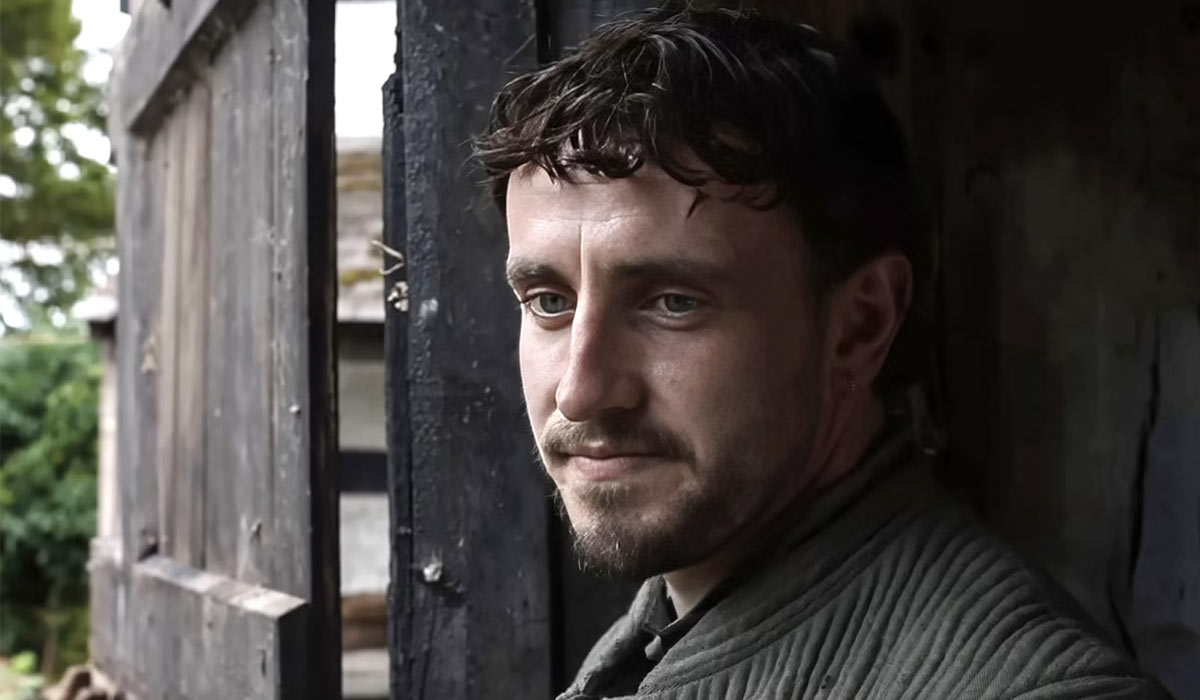
Maggie O’Farrell was not looking to add screenwriter to her resume. The acclaimed novelist was told Chloe Zhao wanted to talk to her about adapting her novel, “Hamnet,” into a movie. O’Farrell was excited about the Oscar winner was coming on board to direct, but had absolutely no interest in writings its screenplay. After the end of their Zoom call, the very persuasive Zhao had convinced O’Farrell to change her tune. Their collaboration crafted one of the most critically acclaimed films of the year, and may lead to a deserved Academy Award nomination. Not bad for an author who wanted to just focus on her next novel.
READ MORE: “Hamnet’s” Chloe Zhao: “It’s Not My Job To Tell People How They Should Feel”
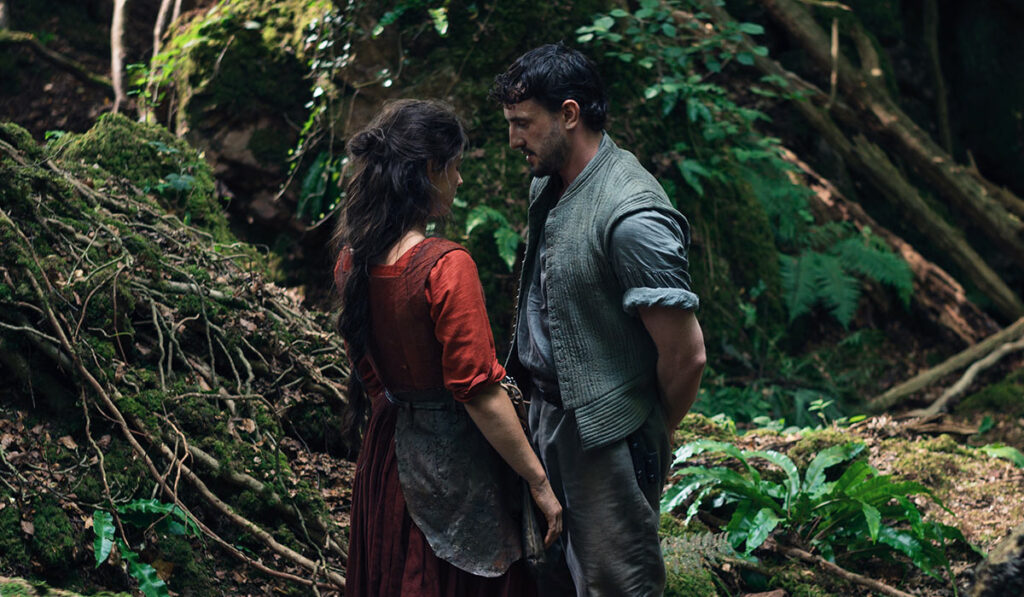
The film imagines the early lives of William Shakespeare (Paul Mescal) and Anne Hathaway (Jesse Buckley) when they first met in the English countryside. Lovestruck, the pair eventually marry and have three children: Susanna (Bodhi Rae Breathnach), Judith (Olivia Lynes), and Hamnet (Jacobi Jupe). History tells us not much is known about the family. They never followed him to London when he pursued his playwriting career. And to be fair, little is known about Shakespeare’s life in London, either. But tragedy struck and, somehow, an obvious connection to Shakespeare’s seminal work “Hamlet” was never made. Then again, the fact that so little of their lives is known or taught at all is not limited to this side of the Atlantic.
“Honestly, it’s not just an American thing,” the Edinburgh resident says. “I have friends who have degrees like mine in literature, and I remember saying to a couple of them, ‘I’m writing a novel about Shakespeare’s son called Hamnet,’ and they said, ‘You can’t make that up.’ And I said, ‘I promise you I’m not making it up. It’s true. It’s not that part I’m not making up.’ Yeah, it’s really strange. And I dunno why he’s been so ignored by history. He didn’t even have a gravestone until recently.”
During our conversation last month, O’Farrell shared her frustration over how Anne Hathaway has been the subject of misogynistic and questionable takes by historians over the centuries, how Mescal always had to play Shakespeare, the one moment from the book she wanted to remain in the movie, and much more.
This interview has been edited for length and clarity.
_____
The Playlist: Maggie, congratulations on the movie.
Maggie O’Farrell: Thank you so much.
Where did your initial inspiration for the novel come from?
Well, it was a novel I wanted to write for a really long time, but for various reasons, I put it off, or I didn’t write it because there’s quite a lot of vertigo involved with writing a novel about Shakespeare. And that kind of kept slightly, I kept thinking, I can’t do it, I can’t do it, who would do such a thing? But actually, the first time I ever heard about Hamnet Shakespeare was when I was 16, and I was in High School. And I was really lucky in that I had a brilliant literature teacher, and we were studying to play “Hamlet,” which I loved. I think it appeals to a certain type of adolescent, maybe one who wears a lot of black and much too much eyeliner. That’s hanging out in graveyards. And that was definitely me. So, my teacher mentioned in passing one day that Shakespeare had a son, and he’d been called Hamnet, and that he’d died four years or so before Shakespeare wrote the play “Hamlet”. And I just remember being amazed by that snippet of information. I remember looking down at my school copy of the play and putting my finger over the L and ticking it off again and thinking, “But that’s the same name. What does that mean?” I think even though I was a really long time away from being a writer, I knew somehow that it was really significant. Nobody would casually name a play “The Ghost and A Young Prince” after their dead child. That was a very significant act. So I mean, obviously, I’m not saying that there. And then I decided to write a novel. It was a long time later, but I did have the idea. I remember looking back in my notebooks, say, about 2013 or 2014, and I’d written “A novel about Shakespeare’s son Hamnet and the play Hamlet.” But one of the reasons I put it off was that I had a bit of a weird superstition. I’m not a very superstitious person, but I have a son and two daughters, as the Shakespeares did, and I just couldn’t write the book until my own son was well past the age of 11, even though there wasn’t a massive risk of him contracting the Black Death. But you never know. You can’t be too careful. [Laughs].
No, I know. I get it.
Exactly, so I kind of put it off until he was a bit older. But I think the main engine really behind me writing a book was that I just always felt that not enough people knew the story, not enough people knew about Shakespeare. And when you read the big thousand-page biographies of Shakespeare, which are brilliant, amazing works of scholarship and detective work, but Hamlet’s lucky if he gets maybe two mentions. And I’ve read a very respected Shakespearean scholar when talking about Hamnet dying. He says the line, “It’s impossible to know whether or not Shakespeare was aggrieved when Hamnet died.” And I was so furious about that that I threw the book across the room. I thought, “Whatcha talking about? The idea?” And a lot of it was wrapped up in statistics about child mortality in the Elizabethan age, which, of course, was high. But the idea that somehow made it less painful, I think, is really ridiculous. I suppose I just wanted to say to the world, “This child existed, and he’s got the same name as his father’s most famous play. He was loved, and he was grieved, and he was really important.” Without him, we wouldn’t have “Hamlet,” and we wouldn’t have“Twelfth Night.”
What’s so strange is that, at least in the US, every single person I talked to about this film, their reaction is, “Oh, wait, he had a son? And that was that name?” It’s like this massive unknown.
It’s not just America. It’s the same in the UK.
We can read all these details about the Pharaohs of Egypt, and yet Shakespeare’s life, a thousand years later, relatively not that long ago, is so private. We know so little about it. Do you think he was a private person, or do you think it was just a sign of the times?
I dunno, it’s hard to know really. I think there has been a very, I mean obviously, Shakespeare’s life was basically, as far as we know, split into two places. Stratford-upon-Avon and London. I mean, there may have been other places because there’s still an awful lot we don’t know about Shakespeare. There are many gaps in his story that people talk about the lost years. No one really knows how he went from being the glover’s son to being a playwright. But lots of people have different theories. And, obviously, there’s a reason why most biographers and scholars will focus on his time in London. We dunno if he wrote [his works] there, but he certainly put ’em on there and acted in them there. But for some reason, with Shakespeare, there’s been a very, very potent drive to minimize his family, his wife, and his three children. Particularly his wife. History has not been very kind to her. Scholarship even less. And I could never really work out why, because there’s no evidence at all to suggest, as is always posited, that he was trapped into marrying her, that she hoodwinked him, that she’d got pregnant deliberately, and he ran away to London to get away from it. And as far as I know, getting pregnant takes two people. And it’s all absolute fabrication. There’s no evidence for any of that whatsoever. I dunno whether it’s because scholars want him to give him a kind of retrospective divorce? So he’s footloose and fancy free in London? Who knows? I don’t. But I was really shocked by the criticism, opprobrium, and misogyny that she’s been exposed to. And the fact that, I mean, as you say, honestly, it’s not just an American thing. I have friends who have degrees like mine in literature, and I remember saying to a couple of them, “I’m writing a novel about Shakespeare’s son called Hamnet,” and they said, “You can’t make that up.” And I said, “I promise you I’m not making it up. It’s true. It’s not that part I’m not making up.” Yeah, it’s really strange. And I dunno why he’s been so ignored by history. He didn’t even have a gravestone until recently.
Was there any information you could find out at all about Agnes, or was it like birth date, death date, two kids, married, Shakespeare lived here, that was it?
Basically. You don’t even know her birth date. So she was born in a village at a site called Ery. She wasn’t born in Stratford-upon-Avon like Shakespeare was. So, there’s no record of her birth date. So we don’t even know if she was 26 when they got married. You can basically see the dates of the children’s baptism, and you see Hamlet’s burial, and then you see Shakespeare’s death and her death, and you can see that they moved houses a year after Hamnet died. And there’s also evidence that she ran her own molting business from the back of that house. And I love that tiny, tiny detail of her because history tries to suggest, and scholarship tries to suggest, that she was this bitter wife left behind in Stratford. But actually, that’s not true either because she was clearly a very successful businesswoman in her own right, getting on with life in Stratford with her daughters and running a molting business, which is fascinating. I dunno if you know, but molting was very important because people didn’t drink water in those days because it wasn’t safe. You drank beer, and so you needed malt for beer. But the one detail which I really, really loved and which was a massive shock was that I read her will. Her father, Richard Hathaway, died a year before she married William, and he left her quite a generous dowry. And, in it he refers to her as my daughter Agnes. And that was a massive shock, I thought. On top of everything else, we’ve been calling her by the wrong name for 500 years because surely if anyone knows her real name, it’s going to be her father.
What was she referred to as before?
Well, everybody knows her as Anne Hathaway.
Oh, see, I didn’t even know that. I hadn’t paid enough attention.
Don’t worry. Everybody knows her as Hathaway. And the story, the narrative about her is that he didn’t like her, that he went to London to get away from her, that she trapped him into marriage. But all of that’s total rubbish. The most significant thing for me is that at the end of his life, when he retired from the stage in London, he went back to Stratford-upon-Avon to live with her, which he wouldn’t do if you hated your wife and had been trapped in marriage. And all the money that he earned in London, which was a lot, I mean, he was the equivalent of a multimillionaire. He sent it all back to Stratford. He lived in one room, lodgings in London, while he was on the stage. He bought houses, he bought fields and cottages. He was probably known in Stratford more as a landlord than he was as a playwright or a player.
That sounds like someone who loves their family more than someone who is just trying to run away from them.
Exactly. Exactly.
Wild. Do you remember when you started actually figuring out the narrative structure of the book and where the story was going to take you?
I mean, I had the idea in 2014, but as I said, I was putting off writing in between writing other books. I was buying an awful lot of books about Shakespeare, and I was reading them, and I was making notes, and I had made a start on the novel. I’d kind of tried it out, but it wasn’t really working. It wasn’t kind of coming together. And I’d written about 15,000 words, and I wrote a memoir, which is about brushes with death. And then after that, I thought I sort of gave myself a talking to, and this was probably about 2016 or something, and I thought, “You either have to write this book or forget about it. You can’t keep circling, buying more books about Shakespeare. So I’ll give it a go.” And I looked at the file where I’d made a start, and I thought, this all happens in totally the wrong place. You’ve stepped into the story at the wrong point. Stitch all that, and I’ll start again. And I would’ve thought, “I’m going to start with the boy, it’s him, it’s going to be called ‘Hamnet,’ and I want him to assume center stage after all this time in the wings.” And so I just wrote the line, “A boy was coming down a flight of stairs,” and somehow that was a key turning in the lock to start. Basically, the novel starts on the day that Judith, his twin sister, gets ill. It just sort of seemed to be the right time in the narrative. And so it probably took me, I don’t know, I mean, I probably started seriously in about 2016, and then I probably finished in about 2o19. It came out in 2020, so I must have finished it in 2019.
The film doesn’t start with a boy coming down the stairs, though.
That’s right. Yeah.


