


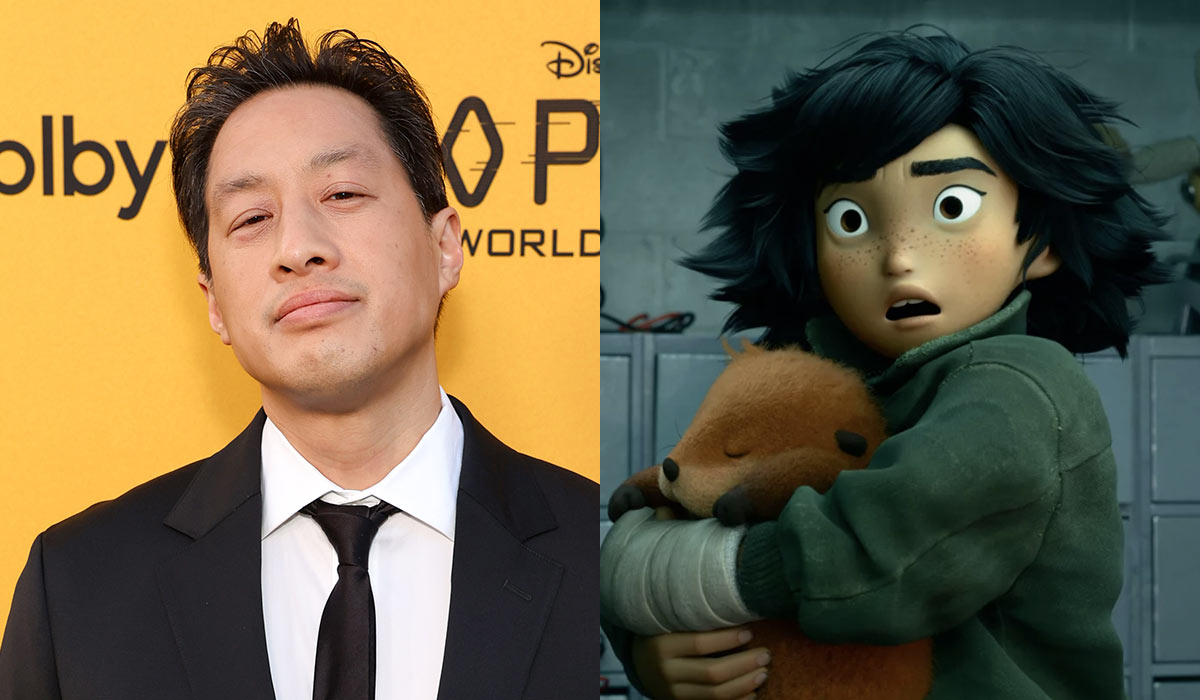
Daniel Chong might not realize it yet, but after this weekend, he’s made someone’s favorite Pixar movie. In fact, he’d probably made a ton of moviegoers’ favorite Pixar movie. And who can blame them? The well-reviewed animated comedy is one of the Disney division’s best original movies in years.
READ MORE: “Hoppers” Review: Pixar Gets Back On Track With Madcap Romp In The Animal Kingdom
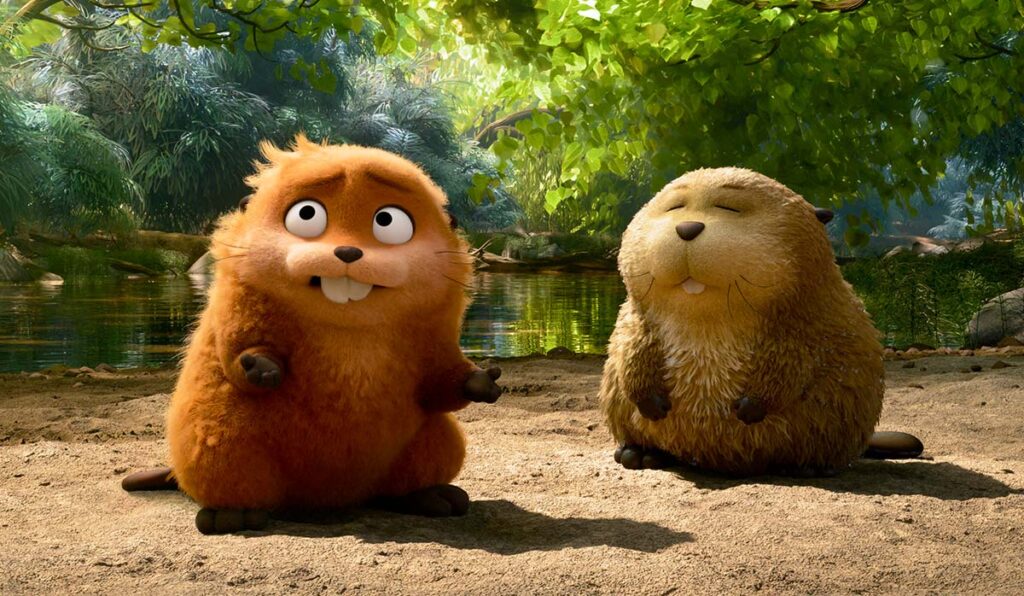
Set in a fictional city that screams Northern California or the Pacific Northwest, “Hoppers” follows Mabel (Piper Curda), a young college student who spends most of her free time trying to stop a new highway from destroying a nearby forest. The glade she’s most worried about also had sentimental value, as it was the spot where she spent countless afternoons with her now-departed grandmother (Karen Huie). As the seemingly nefarious but popular mayor (Jon Hamm) continues with his plan, Mabel discovers that her professor (Kathy Najimy) has made a technological breakthrough. The biologist and her assistants can inhabit the bodies of robot animals and communicate with them. Mabel hijacks a beaver in hopes of recruiting the animal kingdom to fight back before construction crews decimate their natural habitat.
Beyond the aforementioned cast, the movie features a slew of familiar voices, including Bobby Moynihan, Dave Franco, Sam Richardson, Melissa Villaseñor, Ego Nwodim, and Vanessa Bayer. It was convincing the legendary Meryl Streep to portray the Insect Queen, which may have been Chong’s greatest casting coup. Then again, Streep continues to demonstrate she’s down for all sorts of creative opportunities that come her way.
“We brought her name up when we were describing this character,” Chong recalls. “We’d be like, ‘The insect queen, she’s powerful. Think of a Meryl Streep type.’ And then it came time to cast her, and then we were like, ‘Maybe we can just ask.’ And we did a Zoom call with her first, and it was just so she could feel out what the story was about. The minute I started pitching the story, she was just laughing the whole way through, and loved the tone. She understood the humor, and she understood what her role in the movie would be. And there’s a very specific thing that happened to her character that I had to make sure she was going to be O.K. with. And she was like, ‘I am ready for all that.'”
No spoilers, but moviegoers will cackle at the Insect Queen’s big moment.
During our conversation late last week, Chong reflected on the six-year journey to get “Hoppers” to the big screen, the film’s“Mission: Impossible” inspiration, how SZA came to write and sing the film’s stellar closing credits track, and much, much more.
This interview has been edited for length and clarity.
_____
The Playlist: The most obvious question first: What was the inspiration for the story of this particular film?
Daniel Chong: There are these documentaries. You might’ve even seen them on YouTube, where they actually put robot animals into nature. They have cameras in their eyes. It’s really goofy. And honestly, it’s very tense because most of the time when you’re watching it, you’re like, “When are the animals going to figure it out? When are they going to knock it over or rip its arm off or something?” And I don’t know, we were just imagining what if that technology were so good you couldn’t tell the difference? And that took us down, going like, “Oh, maybe that’s a little bit like ‘Avatar.’” And then we started playing with some of those ideas, and then we just kind of made a crazy movie after that.
Did you come up with the idea of Mabel being at the center of this? Was she based on or inspired by anyone you know?
It’s funny because it was one of those situations where the concept came first and then the character. So we had a concept, we had this idea of this technology, and then it was like, “O.K., who is the vehicle? The person, the character that’s going to inhabit that story?” And honestly, it’s like, “Who are the people who are thinking about these environmental issues and are coping with them?” And at that time, it was the youth because they were kind of growing up in this time when they’re looking into their future and figuring out, “Do we have a future?” And a lot of them were women, especially. And so I think that felt very natural that our main character would be a woman in her early 18’s or coming into adulthood. But the other hard part of it is she’s kind of modeled after my partner, Renee. And my partner is a very passionate person. She’s very fiery. You would not want to cross her if you messed with her. But she cares a lot, though, and she’s very protective, and she loves animals. And I just kind of had to look to her to find that character, and she was there.
How early in the process did she realize that you were basing this character on her?
I’ll be honest, she didn’t know for a while because I kind of kept the movie from her. I mean, I tried showing her things here and there, but when the movie’s in early stages, it’s kind of funky to look at. You can’t really make out what it is. But, I mean, I think she could also tell that I was kind of making [the character] King George after myself, too, and he is a lot of me. But she didn’t really see the movie until it was done. And she finally saw it at the wrap party, which was in November at Pixar. And yeah, I think it portrays her pretty well. But yeah, I kind of kept it for her for a while.
So wait, was that her choice, a company choice, or your choice for her not to see it till the last possible minute?
I think I decided…I tried showing her a couple of things early on, and I could just tell she didn’t know what to make of it. So I was like, “You know what? Let me surprise you.” [Laughs.] So, I waited. So yeah, I waited six years.
Six years! Was it really a six-year-long process?
Yeah. I mean, I came to Pixar in 2019 to start this movie, and I think they bought off on the idea in the pandemic. It was April of 2020. That’s when they kind of bought off on the general concept. And then from there, yeah, the movie took that whole time till now.
Animation can be an iterative process. It’s not like traditional film in many ways. How many narrative different directions did this film go in before it became the film that audiences will see today?
In the early days, there were a lot of wild swings in different directions. I would say early on, I kind of saw this movie as a“Mission: Impossible” type movie. There are spy elements to it. That’s why it is “Avatar,” but it’s actually nothing like “Avatar” because we kind of go down a “Mission: Impossible” route, and it becomes a spy thriller. And so, because of that, I kind of thought it was going to be a globetrotting movie where you go to all these different countries, and you’d beat all these wild animals from all over the world, but it just became an untenable story to produce. It’s too big, and you couldn’t focus emotionally on what was going on. It was just too much. So, we had to bring it down and make that story as big as we could. I would say that’s all we do. We completely blow up and try again, blow up and try again. There were definitely a lot of core things that were always there. Mabel, George, this council. That was always part of the DNA of this movie. But I think anything you make, you’re just always just trying to ask, “What is the essence? What’s the good stuff? And how do I pull out the excess?” It’s a constant game of that the whole time.
I haven’t spoken to Piper Curda, who voices Mabel, but is this a project where five years ago she first went into the recording booth and recorded stuff early on, or did she come on board much later on in the process?
Much later, but she was crucial in the development of Mabel because that was a tough character to crack. And I think some of it is how hard it is to break a female character that everyone loves. I think it’s also a female character that’s angry and has fire and is very passionate, and also is not afraid to yell back at authority. That’s a tough character, I think, for a lot of people to kind of get behind. So, I would say part of it was just the constant writing with our writer, Jesse Andrews, who’s amazing. And we just kept rewriting it and rewriting it with our team. And then when she came in, it was just like workshopping it with her, like “How do we find humanity in Mabel? How do we ground her? How do we make people love her immediately so that they’ll go on this journey?” Because I wanted this character to be kind of wild and unpredictable. I wanted kind of a “Mission: Impossible” type hero who would jump into fire, and you’re like, “What are they going to do next?” But she’s also got to have an emotional core and someone that you care about. So, that was tough. And Piper was core to that.
By the way, this is a compliment, but I feel like this is one of the most zaniest Pixar movies I’ve ever seen. I can’t remember the last time I saw a Pixar movie that had this energy. Do you feel that’s reflective of you as a filmmaker or the team you put together? Where do you think that comes from?
I think it’s both, but yeah, I mean, I like to move fast, and I came from TV. So in TV, the jokes come fast and quick, and that’s kind of the pacing that you work at. But I think I came in with that same sensibility, and I built a team around me that had that sensibility, because as most people know, comedy is a very specific thing, and some people kind of understand the comedy, and some don’t. So, we had to be very strategic about who the people are that really get our movie and who can really push it and find the avenues we can go with it.
Pixar, where you started, right? As an animator? And then you left, and you went, and you created your own series, “We Bare Bears.” And by the way, congrats on your BAFTA for that.
Thank you. [Laughs.]
How do you think you changed as an animator, a director, a filmmaker, an artist, from when you were at Pixar to going and doing your own thing?
Man, that’s a great question because I mean, the way I look at it is, or at least look back at it, I don’t think I could have made this movie at this scale without that experience working on “Bears” because we made 140 episodes. We went four seasons, and we made a TV movie in six years. And in six years, we made “Hoppers.” So, in the course of those six years working on a TV show, it’s like boot camp. I just got all these reps in, got to produce things, got to make all these things. And I really got to know my taste really well because one of the toughest things when you’re making your own thing is you just have to know how to make decisions and what your taste is, and you have to make them do it really fast, and you have to be very decisive about what you like and what you don’t like. TV kind of trained me to understand that and to kind of shape my sense of humor and my tone and what I’m attracted to, because unless you really start doing it, you don’t know. You think you know, but until you actually have to put it into practice, you don’t quite know how to put that into practice. So that’s one thing that I was able to take into my experience at Pixar and sort of bring a lot more confidence in the decisions I make. But I would say the other thing that I didn’t know would be so helpful that I went through on “Bears” was just leadership, because that’s like the other half of this whole thing is knowing how to work with other people. And when you get to Pixar, it’s like working with hundreds of people, and I’ve got to lead this group for six years and keep them invested in caring about this project. And man, if I didn’t have that time on TV, I don’t think I would’ve been able to handle it. So, I think those two things are the most important things that I was able to carry and refine as I got into Pixar.
I have friends who work in television animation, and it’s faster but not that much faster. Usually, it’s a year before an episode ever makes it to air or streaming. Sometimes longer. I know you’ve been at Pixar before. You’ve worked on multiple projects, you were popping around, no pun intended, how tough was it to be like, “O.K., I am every day working on this. I know it’s going to take this super long time to get made.” Are you just a super patient person?
I’m not. [Laughs.] But it’s funny because I think you definitely, you don’t know when you start, there’s almost anticipation even when we got the green light, it’s like you don’t know if it’s going to work, and you don’t know how long it’s going to go. They say it could take four years, could take five, you might not get made. You’re on edge for a lot of it, just going like, “Ugh, just hope we survive another month, just hope we survive.” It’s not like you ever buckle up and go like, “All right, ride’s begun.” It’s like that ride’s just always moving, no matter what. You don’t really have time to think about the future that much. At least I don’t. I guess that’s the producer’s job. Maybe the better way to answer that is from the creative side, you’re just trying to survive every week or every month, and try to get by. I look back on it now, and I’m like, “Holy s**t, how did I do that for six years? That’s crazy.” But yeah, you just do it a little bit at a time, and it just gets done.
You mentioned that the scale of the movie couldn’t be as big as you might’ve initially hoped, but in terms of the story, even when you scaled it down, was there one moment or one sort of story beat that you had to crack that made you think like, “Yep, we’re on the right track”?
I would say a big one was kind of our midpoint. I mean, this is not a spoiler because the trailer kind of says it, but when we realized that the midpoint was the mayor and that was going to be the thing that Mabel had to accomplish in the second half of the movie, we realized, “O.K., I think we know how to progress this story.” We were always changing the movie, iterating, and rewriting. And our writer, Jesse Andrews, was always writing those script pages. It was a chaotic way to work, but I think it lent itself to the chaotic ride the movie became. It’s reflective of, I think, how the story feels because I wanted it to also feel unpredictable. You didn’t know where it was going. And we also didn’t know where it was going when we were kind of playing around with it. And that was kind of how we made it feel the way it feels. A bit of a chaotic style of how we were writing it, and it was very intuitive.
Three quick questions for you before I let you go. First off, how did you get Meryl Streep on board?
Yeah, that blows me away also. And it’s funny because we brought her name up when we were describing this character. We’d be like, “The insect queen, she’s powerful. Think of a Meryl Streep type.” And then it came time to cast her, and then we were like, “Maybe we can just ask.” And we did a Zoom call with her first, and it was just so she could feel out what the story was about. The minute I started pitching the story, she was just laughing the whole way through, and loved the tone. She understood the humor, and she understood what her role in the movie would be. And there’s a very specific things that happened to her character that I had to make sure she was going to be O.K. with. And she was like, “I am ready for all that. ” So yeah, it’s magical. It’s unreal. It’s not even something I’ve ever dreamed of because I could never imagine that it would ever happen.
I also love the closing track that’s over the credits, “Save the Day” by SZA. She did “All the Stars” or “Black Panther” with Kendrick Lamar, but this is her first solo animated track. How did she get involved?
We do these internal screenings at the studio just to test out the whole thing. And obviously, there’s no credits because it’s so early, but we always want music to have people walk out of, just so it’s not awkward when the lights come up and everyone’s quiet and just walking out. And I would put SZA’s music after that. It’s like I put “Good Days,” “Saturn,” just that vibe, you know what I mean?
Yeah.
And when it came time for us to have an end credits, I was like, “Why don’t we just ask SZA to see if she’ll do it?” I feel like it’s the right tone of melancholy, but hopeful and kind of beautiful, that we want people to leave with out of the theater. We want people to feel good, but we also don’t want to neglect the sadness that’s a part of this story. And we reached out to her, and she was on tour, so we had to wait. And it was like a Hail Mary because it was just like, if she says, no, I don’t know what we’re going to do. After all, we’re putting all our chips in the SZA bucket. And then I think we were getting close to mixing, and we were like, “Ah, s**t.” And then one day we were in Florida for some press event, and we got a call, and it’s like, “SZA’s ready to watch the movie.” We were like, “Oh.” Then we got on a plane, we flew down to LA, and we showed her the movie, and she loved it. And we talked about what I wanted for this song. And she only watched the movie once, and she came out with that song, and it blew our minds. Because it’s like you made this thing, and then someone sees it, and then they write a poem about it. It felt like they understood every inch of what the movie was. And I wanted it to be a beautiful song that gave hope and something you could walk out of nature with, but she also made it like an anthem. She made it like this song that’s like a fight song for a young generation who’s like, “Just get out of my way.” It’s perfect. And a lot of us cried listening to it because you’re just like, “This is the culmination of everything we’ve created.” And SZA has taken it and reinterpreted it for you, and it’s exactly what we wanted to say. So I love it. I can’t stop not talk about this. It’s so incredible.
That’s awesome. And my last question for you is, having gone through this process for six years, do you know what you want to do next? And do you miss TV? Do you miss the speed of TV?
[Laughs.] I personally think TV is a young person’s game, and I’m not there anymore. I mean, it does take a year to make an episode, but you’re making episodes, you’re writing them constantly, and you’re never sure if you’re going to get another year or another season. I just don’t think I want to live with that instability anymore. So, I am very happy to stay at Pixar. At least for now, it feels like that’s the right place for me. And I’m going to be executive producing another movie over there at Pixar. That’s exciting. It’s a new way for me to grow and to learn how to help guide movies and other filmmakers. But yeah, I think I’m happy here. And so I don’t know what the next project’s going to be, but I think I’m really happy at the studio. I think there are some exciting things for the future for the studio.
“Hoppers” is now playing nationwide
Follow Gregory Ellwood on Bluesky
Follow Gregory Ellwood on Threads
Follow Gregory Ellwood on Instagram
Sign Up For The Breakdown Newsletter


