




Every once in a while—or, objectively, more often—a film comes along that seems to defy any logical explanation for its existence. It’s easy to strip a film down to its core, focusing on the elements that define basic filmmaking: the ability of the camera to capture a moving image, the way an onscreen cast can convey even a semblance of understanding about their respective roles, and the larger foundation from which an assessment of a film’s quality can build. When any of those key ingredients fail, the question of whether such a project can stand worthy of the title “film” immediately arises. It is here that one such experiment, known as “Ponderosa,” sits.
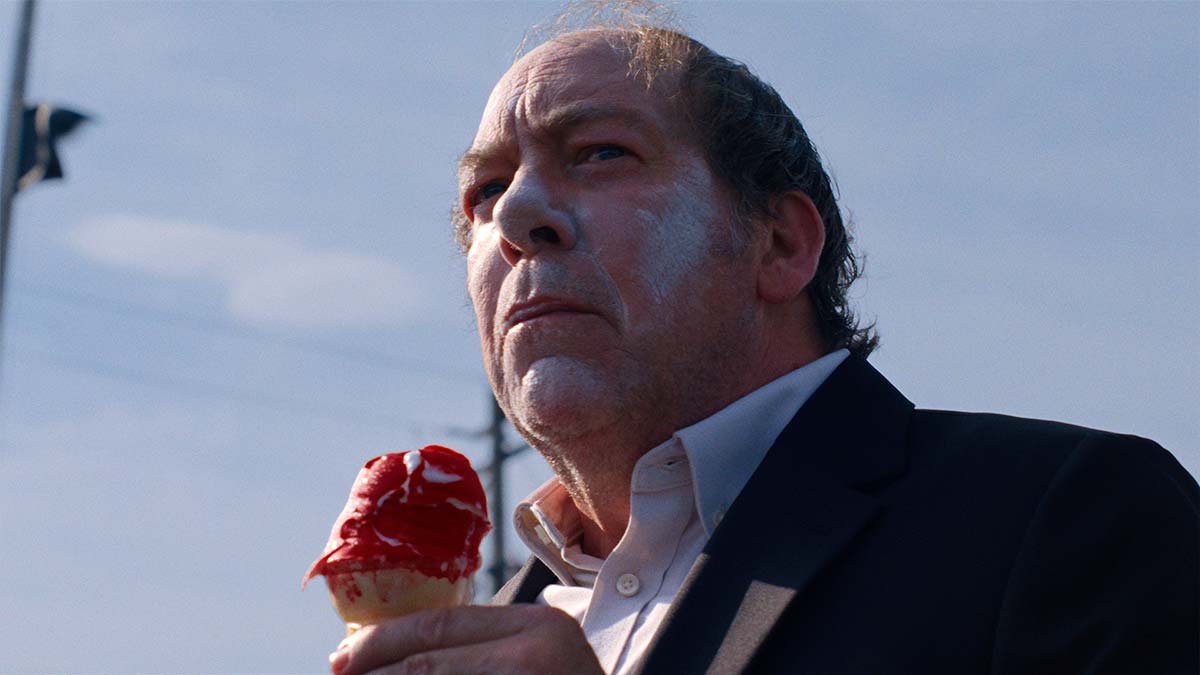
To properly review “Ponderosa” would require a deep—or, at minimum, moderate—understanding of the premise. Films can have multiple storylines running simultaneously, but the centerpiece thread shouldn’t be this hard to track down. Here, whether several stories intermingle or a single main story exists is ultimately one of the film’s biggest questions. But make no mistake: if you had even the slightest hunch that the semi-defunct chain of buffet restaurants is where the film derives its name, you would somehow be correct. Mere minutes pass before our main character, more or less, Zeke (Jack Dylan Grazer), is seen walking into the kitchen of a Ponderosa in the small town where he resides. There, his mother, Sandra (Alexis Bledel), works preparing the lightbulb-warmed food many a buffet-goer knows all too well. He’s there to deliver lunch, and it’s there that the few precious minutes of “Ponderosa” making sense come to an end, as George (Bill Camp) decides it’s time to make his introduction.
At first, one might surmise this particular gentleman may also have a connection to the local Ponderosa. A manager, perhaps? The way he questions Zeke in the parking lot about whether Zeke is taking a lunch break could suggest as much. But no, this is not the case. In fact, George has a plan, as head-scratching as it may be, to integrate himself into Zeke’s life as a father figure of sorts. Why? The answer, of course, is reasons. Those reasons are never explained.
Could the gathering of men to which George brings Zeke provide something in the manner of an explanation? Not exactly. It’s a baffling scene, alternating between shots of Zeke sitting in conversation with one or two men in attendance as they expound upon a belief system these individuals seem to share, while Zeke stares back with a mix of complete disinterest and an emotion just below the surface presumably meant to register as confusion. By now, George has hired Zeke to work a desk job at the site of a construction business he owns. Again, for reasons. Oh, did we mention the Ponderosa is closing? Could that pique your interest?
“Ponderosa” is partly described as horror, which only adds to the perplexing nature of the viewing experience. There are endless scenes of George walking into Zeke’s home uninvited, at one point even posing as Zeke so he can shout upstairs to Sandra that he’ll be up to bed shortly. For those all-important reasons, George finds this act hilarious, as Zeke tries to quiet him down. Sandra isn’t feeling well, you see, though that seems to be the least of Zeke’s concerns at the moment. Yet, through it all, Grazer’s performance, rarely wavering from a kind of drifting attempt to decipher everything around him, somehow works. He is an audience surrogate if ever there was one. Bledel can’t help but play second fiddle, while Camp was either provided with the sole direction to do anything he wished with his character, or director Rob Rice has a, shall we say, unique take on how to handle his craft. It’s reflected in George. It’s reflected in everything.
By the time the final scenes, set at a birthday party for the sister of one of Zeke’s friends, usher in the credits, all that’s left to do is figure out a way to reclaim the time spent watching “Ponderosa.” Like navigating the scraps of story scattered here and there, that task is ultimately impossible. That said, the score does provide an interesting, unsettling tone throughout. It’s not enough to salvage whatever this is. [D-]

Brian Farvour is a film/television critic and entertainment journalist whose work has also appeared on Fandomwire. He previously co-hosted The Playlist Podcast.

