



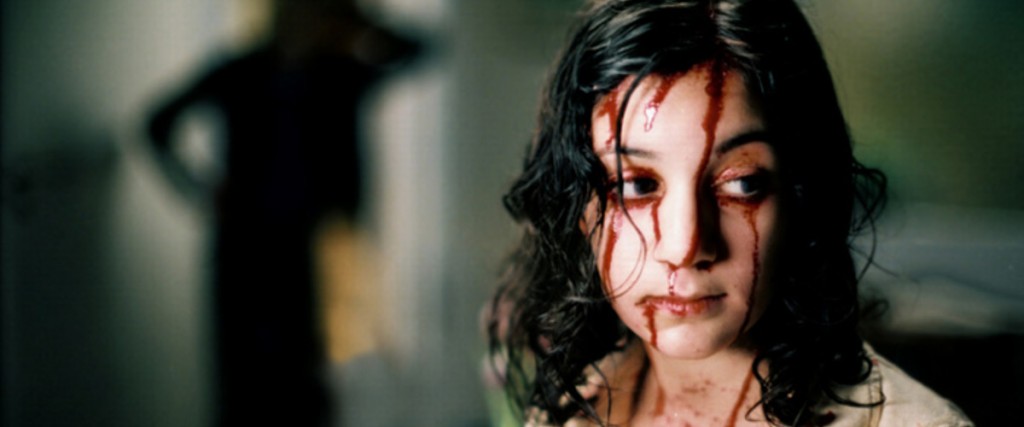
 5. “Let The Right One In” (2008) plus “Let Me In” (2010)
As much gothic love story as horror, Tomas Alfredson’s original Swedish version of John Ajvide Lindqvist’s novel isn’t just one of the great recent horror movies, it’s one of the great movies period. It’s so great that Matt Reeves’ American remake, accomplished and beloved by many in these parts though it may be, is more a faithful cover (recreating many major sequences verbatim) than a wholly unique spin on the material. Alfredson and Lindqvist (the latter masterfully adapting his own novel) do more to challenge the audience, finding a harmonious storytelling balance in which important details are obfuscated but never too cryptic. “Let the Right One In” is a rarity: genre geeks and art-house snobs can mutually appreciate the work. By the time “Let Me In” made it screens a few years later with little interest from audiences (admittedly unfair because it’s better than 90% of horror remakes), most of the challenging elements were softened for American audiences, and the original’s dark subtleties were made too explicit. The U.S. version also missed a huge opportunity for a new angle, as Lindqvist’s original, near-500 page novel was packed with sub plots that never made it into the Swedish original. The most fascinating possibility was in the “father” character, who does the vampire’s hunting in the beginning; in the book, he’s given a more nefarious characterization, and let’s just say his arc isn’t over after he’s bitten and falls from the hospital window. But what could have been is instead largely what came before, not that there’s anything wrong with that. In the end, Alfredson is a more arty filmmaker than Reeves, willing to let his version be weirder and more transgressive (watch a certain third act scene closely, and you’ll see Eli is actually a castrated boy in the Swedish version, more clearly defined in the book, whereas Chloë Moretz’s Abby is without question strictly female). Both films carry a deeply sad and sometimes ambivalent tone and confronts the viewers with existential and moral quandaries. These are full-bodied genre movies with a head, heart and plenty of blood coursing through their veins, and we can’t begrudge whichever take you like better.
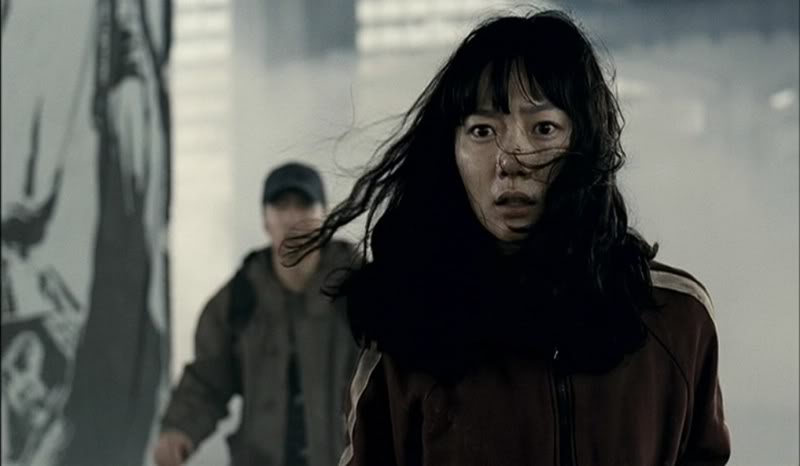 4. “The Host” (2006)
There are monster movies. And then there is “The Host.” Bong Joon-ho‘s flawless, fearless creature feature was at the time of its release the most successful South Korean film ever —and it’s easy to see why. What starts as a fairly typical nature-gone-wrong tale (with some prickly political overtones), quickly evolves into something more, encompassing a handful of genres on its way to an ending so beautiful and atypical that you would never expect to see it in an American film. After an American military base dumps hazardous toxins into the Han River (this bit is actually based on a real historical footnote), a giant, amphibious creature emerges from the water and causes havoc, eventually spiriting away a young girl (Go Ah-sung). The girl’s family, led by her schlubby father (Bong regular Song Kang-ho), vow to retrieve her, and what follows is equal parts horror film, comedic family drama, satirical sci-fi and, well, fairy tale (also, in early scenes, it’s a fascinating portrait of the cultural differences when it comes to grieving a lost loved one). Everything about “The Host” is so, so satisfying. It’s dazzling enough that Joon-ho would attempt incorporating all of these disparate genres, but it’s another thing altogether that they all seem to hit. “The Host” has been endlessly aped in the years since (mostly by J.J. Abrams) but its quirky energy and tonal uniqueness has never been appropriated, let alone matched.
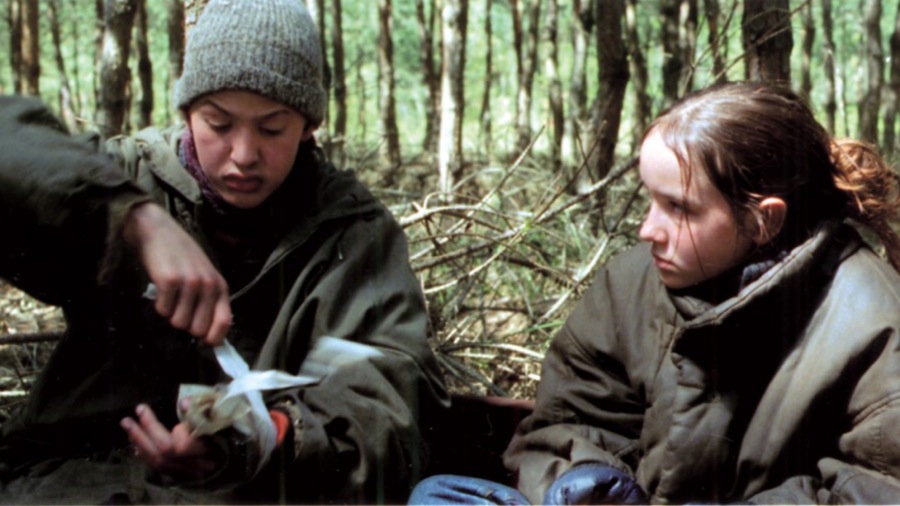 3. “Time Of The Wolf” (2003)
Michael Haneke broke through to international recognition with “Funny Games,” which is essentially a deconstructed slasher movie. Since then you could make an argument that almost any of his films (yes, even “Amour”) are horror films, or at least flecked with horror, but we reckon the truest example of the genre in the director’s output is his 2003 dystopian terrorfest “Time Of The Wolf.” The apocalypse has come and gone by the opening of the film, but that doesn’t mean that the worst is over. Far from it. Society is still crumbling around the central family, led by matriarch Anne (Isabelle Huppert), who are struggling to survive in a world in the aftermath of an catastrophe (drinking water is scarce and livestock are set aflame). And in the opening minutes, they’re robbed and have to watch as the patriarch (Daniel Duval) is murdered, forcing them to flee until they eventually come under the questionable protection of tinpot despot Olivier Gourmet, who has control of the uncontaminated water. It’s about as much fun as you’d expect from a post-apocalyptic Michael Haneke film —i.e. no fucking fun whatsoever— but it’s impeccably directed and performed, by Huppert especially. And what elevates it above something like “The Road,” and that makes it in our mind a horror film, are the hints that the director gives —without ever over-egging it— that he’s not really talking about some futuristic dystopia, but about the places in the world —Kosovo, Somalia, wherever— where people eke out desperate existences in circumstances all too similar to those of Anne and her family.
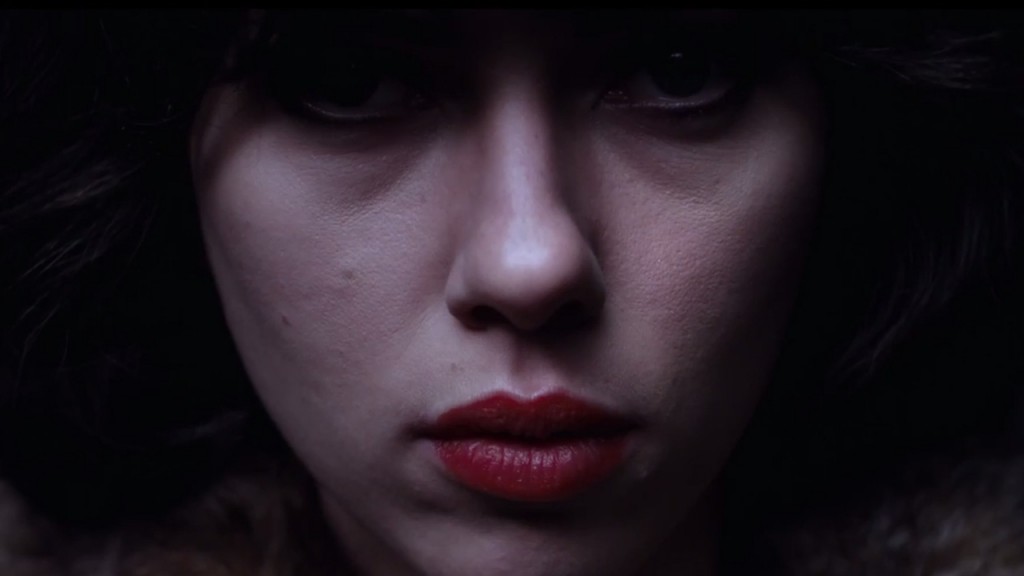 2. “Under The Skin” (2014)
Without question, it’s reductive to simply label Jonathan Glazer’s masterpiece as simply a horror movie. Like the neon-rust drenched sequence in the film where Scarlett Johansson’s alien who fell to earth is overcome by the sheer magnitude of human goodness and emotion, there’s just so many kinds of films layered on top of each other in “Under the Skin” that trying to distill it down to one genre is a fool’s errand. Having said that, we feel comfortable calling it a horror movie because it is deeply creepy and totally disturbing. Mica Levi’s fantastical, bewitching score does a lot of the heavy lifting in the creep-you-out department, but not enough praise can be bestowed on Glazer’s bold, experimental approach (using real people off the street for certain scenes, a reliance on visuals to tell the story, etc.) and Johansson’s career-best (defining?) performance as an alien using her sexuality to prey on men for… we’ll leave it for you to discover. With at least a dozen memorable, totally haunting moments singed into our memories for good (the baby crying helpless on the shore as the tide approaches, motorcycle men roaming the Scottish highways, the reveal of what exactly happens to these hapless men as they plunge into a black watery oblivion, the closing images, etc.), ‘Skin’ ultimately transcends generic classification to become, simply, a great film. Packed with ideas and insight into how women’s bodies can be reduced to tools, sexuality as a weapon, and proving that post-feminism theories are about as silly as saying we live in a post-racist society, this is a film to be unpacked and frightened by again and again. Yet its greatest feat is how Glazer realigns our sympathies in the film’s midsection, turning the villain into the victim. There’s true emotion going on amidst its chilly, sci-fi horror exterior. With this film, you have to follow it into the black void, willfully ignorant and understandably scared of what’s coming next. Thankfully, Glazer is an incredibly gifted filmmaker, and is thus to be trusted. Take the plunge.
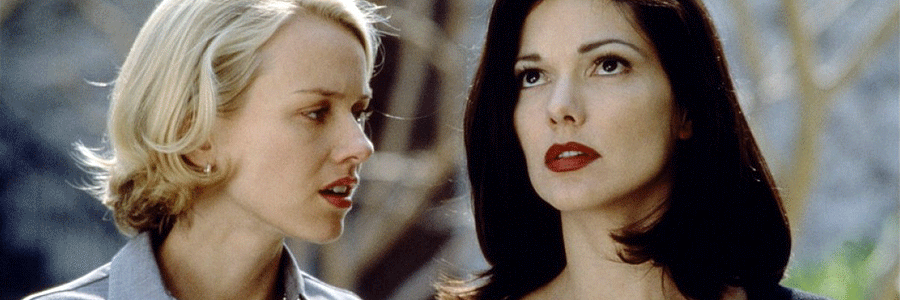 1. “Mulholland Drive” (2001)
Even if David Lynch’s return trip back to “Twin Peaks” for Showtime fails miserably and he never makes another film again, we will always have “Mulholland Drive.” To our mind, it’s his best film and features the scariest scene of the 2000s (you know the one we’re talking about). Its strange journey from TV show pilot to the movies has been detailed plenty already, but it’s worth noting that evolution to appreciate how Lynch made quite possibly the greatest example of turning lemons into cinematic lemonade. As for the actual film itself, well, it’s one of the greatest renderings of nightmare logic into a story, something Lynch had been tinkering with since his beginnings and is perfected here. Its nightmare starts as a particularly American dream, following Naomi Watts’ Betty (in a performance that should’ve won every award that year), a fresh-off-the-bus midwesterner ready for Hollywood stardom. The dream, which we surmise through various subplots, digressions and twisty logic, is crushed through eventual unrequited love and nefarious producers. The more one watches “Mulholland Drive,” the easier it becomes to piece together its often baffling narrative, one that switches midway through and sees Watts turn into a character named Diane, a more ruthless, vengeful spurned lover who gets what she thinks she wants—revenge—but finds her nightmare is only just beginning when she’s left in a wake of regret and self-hatred. A dark, near-perfect parable about the dangers and corruptibility of Hollywood fame, Lynch and co. never hit a false note, delivering on cinema’s innate ability to literalize a character’s perspective, to terrifying results. Definitely a stretch for consideration as a horror (a good deal of arguing went into whether this title should be number one on the list, or be removed from it entirely, which should give you some idea of our thought processes), ultimately we decided that as uncategorizable as it is, “horror” is the closest we can get. As excited as we are about the “Twin Peaks” news, thinking about “Mulholland Drive” makes us fervently hope Lynch has more movies up his sleeve in the future.
Honorable Mentions: Even with our loose definition of horror (pure-genre heads may well be taking issue with some of our top five in particular), there were a few we didn’t quite qualify, like Guillermo Del Toro‘s “Pan’s Labyrinth,” Lars Von Trier‘s “Antichrist,” Kim Ji-Woon‘s “I Saw The Devil,” Edgar Wright‘s “Shaun Of The Dead” and Joe Cornish‘s “Attack The Block.” A vocal contingent flew the flag for movies like “Haute Tension,” “Martyrs,” “A Field In England” and “The Devil’s Rejects,” but were shouted down by the equally vocal anti-contingent.
Those pictures aside, there were still plenty more that could have made a more expanded list. Among them: “The Conjuring,” “Paranormal Activity,” “Drag Me To Hell,” “The Children,” “Ginger Snaps,” “Teeth,” “Session 9,” “Frailty,” “Slither,” “Trick R Treat,” “Pontypool,” “The Strangers,” “Splice,” “Dog Soldiers,” “Dracula: Pages From A Virgin’s Diary,” “May,” “A Tale Of Two Sisters,” “Calvaire,” “Wolf Creek,” “The Red Shoes,” “[REC],” “Cloverfield,” “Splinter,” “Amer,” “Thirst,” “The Innkeepers,” “The Woman In Black,” and “V/H/S 2,” plus plenty more besides. Did we miss your favorite? Argue your case in the comments section.
– Erik McClanahan, Oliver Lyttelton, Drew Taylor, Jessica Kiang


