


“Until the End of the World” (1991)
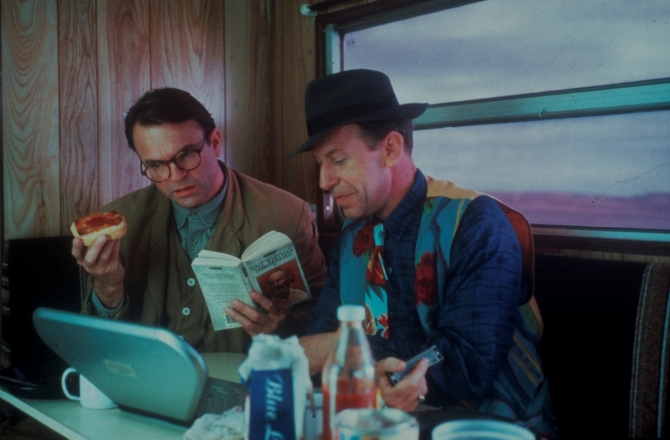
The first half of Wim Wenders’s 1991 epic plays like a globe-trotting mystery thriller, as lost soul Claire Tourneur (Solveig Dommartin) scours the world to find Sam Farber (William Hurt), whom she latches onto as the one who will deliver her from her spiritual ennui. But only when we discover what it is that makes Sam run—an image-recording device he has stolen that essentially helps blind people see—does “Until the End of the World” fully reveal its cosmic ambition. The film imagines a world on the brink of technological apocalypse, in which the threat of digital collapse momentarily helps bring disparate societies together before it isolates people into their own narcissistic bubbles. Watching it now, it’s startling to see just how much the film anticipated in terms of the societal effects of social-media platforms like Facebook and Twitter; the many images in its final hour of characters dazedly staring at screens contemplating their own memories are, if anything, even more resonant today than they were back in 1991. With this 4K digital restoration of the 295-minute director’s cut—rarely screened here in the U.S., and only available on video in Europe—more audiences will finally get a chance to see Wenders’s apocalyptic epic for the amazing visionary folly it was intended to be.
“Buena Vista Social Club” (1999)
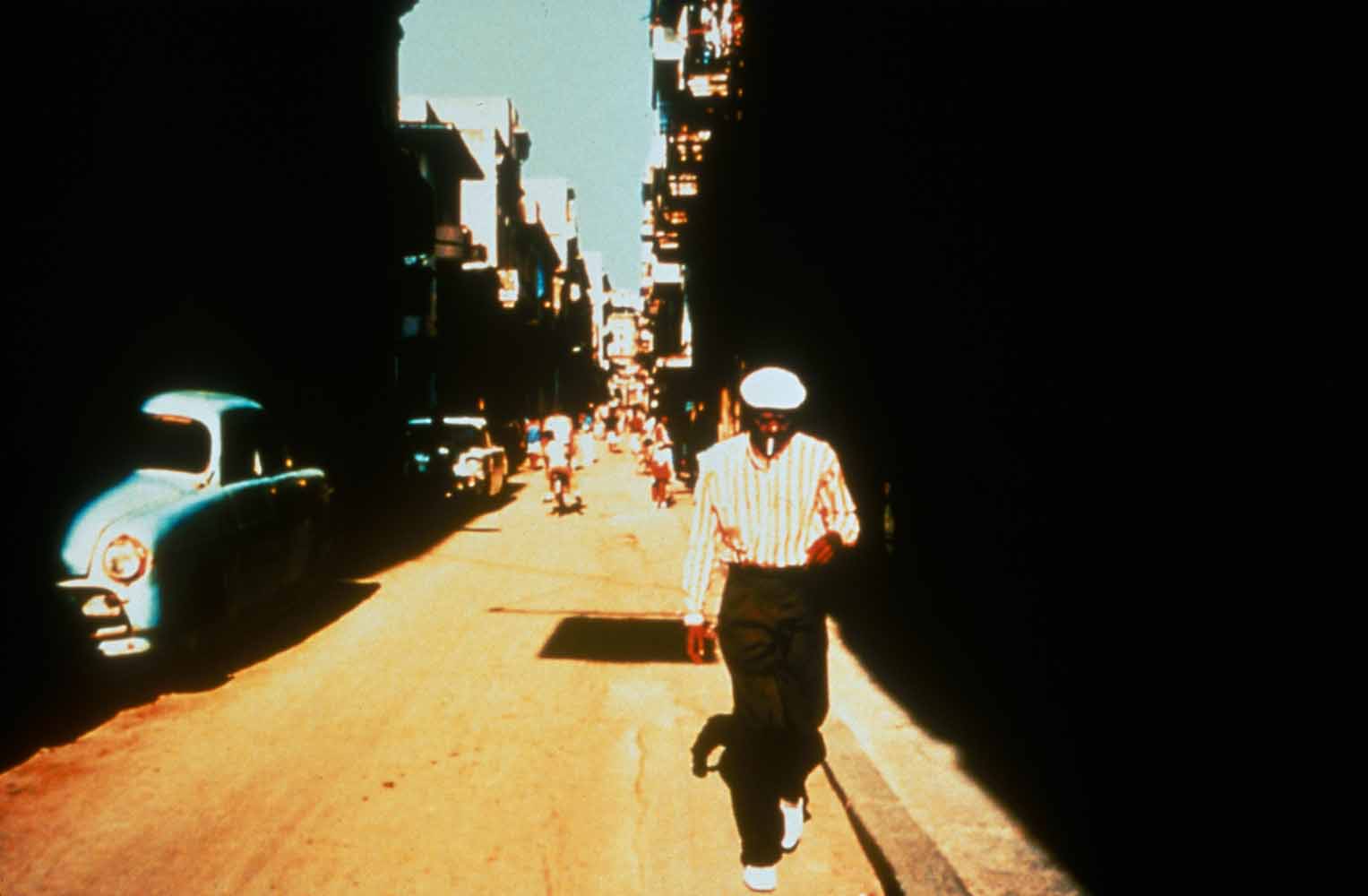
Wenders’s biggest-ever crossover hit, one of the most successful documentaries of all time (up until that point), and the director’s first Oscar-nominated film, “Buena Vista Social Club” has always been a deep pleasure. It feels especially interesting in a year when U.S-Cuban relations have finally thawed in a major way. The director had been a friend of legendary slide guitarist Ry Cooder since the latter scored “Paris, Texas,” and when Cooder set out out to unite a line-up of legendary Cuban musicians forgotten after Castro took power and record an album and bring them on tour, Wenders was there to document every step. The resulting record of the same name had been a giant global hit two years earlier, and the gigs sell-out, but Wenders is as interested in the people and the locations than in the music — it’s no concert movie, which is perhaps a little frustrating to die-hard world music fans, but more fun for the rest of us. Wenders is one of the great documenters of place, and this film let him gorgeously capture Havana, which had become more and more exotic for U.S. audiences over the previous thirty years. The most memorable, and most moving moments are watching these astonishing musicians — including 90-year-old singer Ibrahim Ferrer — play together, laugh together and finally enjoy the recognition that they should have had decades earlier.
“Pina” (2011)
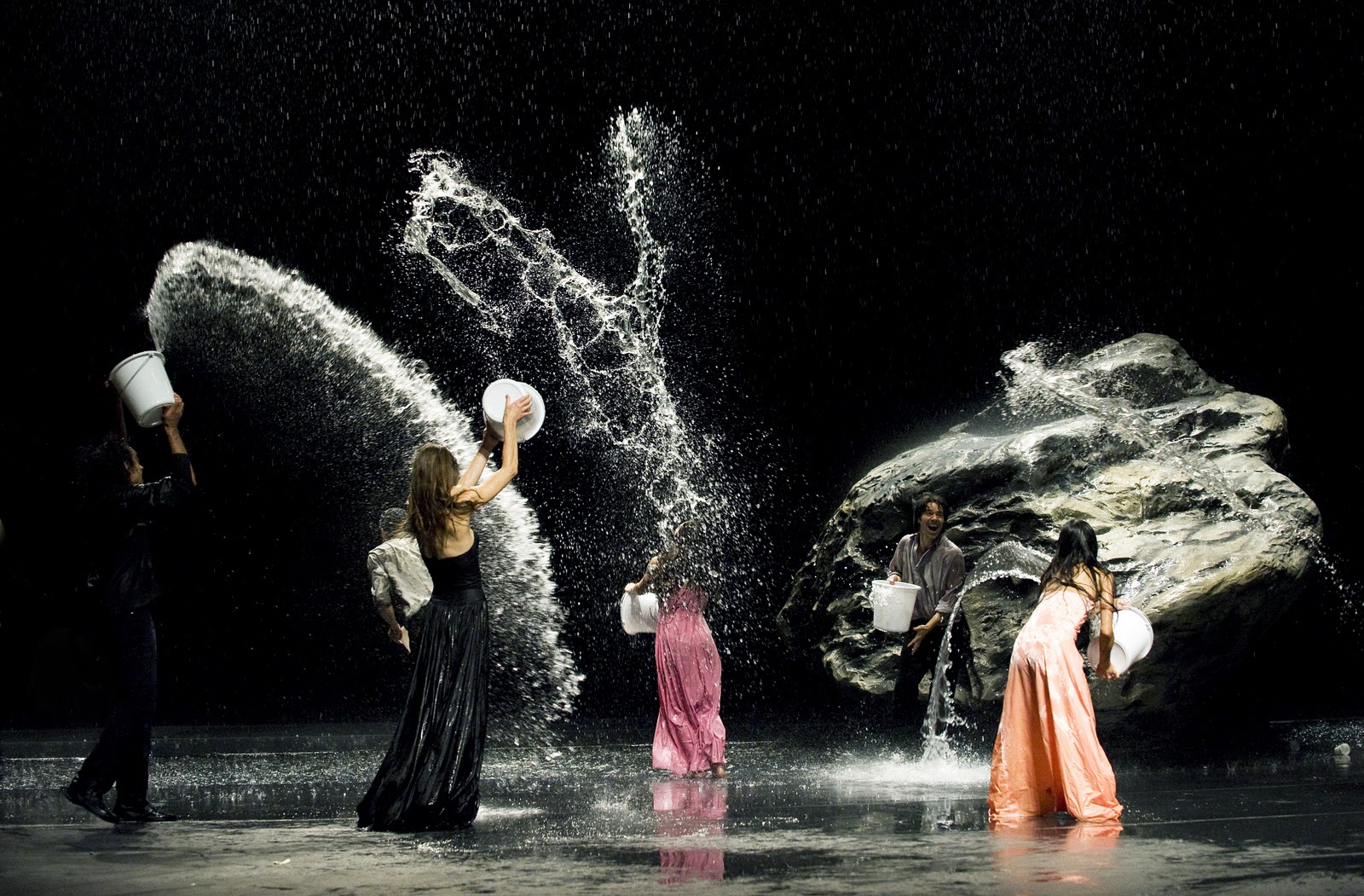
Some artists just can’t help but reinvent their medium. What Federico Fellini is to cinema, what William S. Burroughs is to post-WWII literature, that’s what German-born Pina Bausch is to dance. Her work resembles nothing you’ve ever seen before – she smashes the rules of traditional dance into tiny bits and pieces and forms glorious relics out of the rubble. She’s a perfect subject, in other words, for the restless and perpetually curious Mr. Wenders, who made Bausch the subject of his 2011 Oscar-nominated documentary “Pina”. Shot largely outdoors in the dancer’s home city of Wuppertal (in hugely effective 3D, no less) and divided into four show-stopping dance numbers, “Pina” is nothing short of hypnotic as a pure display of aesthetic prowess. The dance sequences have a seamless, almost hallucinatory power, resulting in some of the most vivid imagery Wenders has ever managed to whip up. And honestly, if the movie were simply that, we’d be totally fine with it. But “Pina” as it stands is so much more – in addition to being a great sound-and-light show, it’s also a deceptively incisive look at one renegade artist who marched proudly and defiantly to the beat of her own drum. We come to know Bausch through interviews with collaborators and family members alike, and Wenders is generous enough to let us see her genius in bravura pieces like the “Café Muller” number, or the emotionally-charged finale where the stage is suddenly flooded with water. In a career filled with oddities and excursions into the unknown, “Pina” still manages to stand out. Doc or not, this is one of the director’s more compelling pictures.
Honorable Mentions: There’s plenty more among Wenders’s expansive filmography that’s worth checking out beyond this. Among them: 1980’s “Lightning Over Water,” about the final days of Nicholas Ray’s life, the fascinating, if uneven 1982 picture “Hammett,” 1985’s Ozu doc “Tokyo-Ga,” entertaining Golden Lion winner “The State Of Things” and its 1994 follow-up “Lisbon Story,” his mixed collaboration with Antonioni on 1995’s “Beyond The Clouds” and the interesting Sam Shepard-starring “Don’t Come Knocking.” Did we miss your favorite Wenders pic? Let us know your favorite in the comments.
— Kenji Fujishima, Nicholas Laskin, Oliver Lyttelton, Rodrigo Perez