

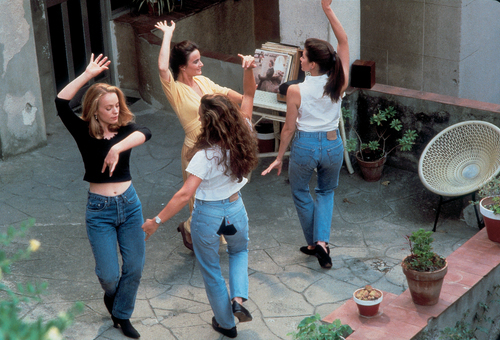
 “Barcelona” (1994)
“I think it’s well-known that anti-Americanism has its roots in sexual impotence, at least in Europe.”
Class and social status dovetail rather beautifully with family relations, politics and cross-cultural barriers in “Barcelona,” arguably Stillman’s best film, yet one never quite recognized as such (perhaps because his other two are Criterion approved). But its sophisticated and witty observations and commentary on cultural (both American and Spanish) self-absorption and differences are rather wry and deliciously sharp. A tart fish-out-of water romantic comedy, “Barcelona” centers on Ted, a priggish, conservative, yuppie (Taylor Nichols) working in the Barcelona branch of his Chicago sales office whose life is deeply disrupted when his shallow jackass cousin Fred (Chris Eigeman), a U.S. Navy officer, comes to mooch and crash in his apartment. While skirt-chasing, bar-hopping and philosophizing about love and life across the beautiful Spanish city, the two cousins inadvertently (all Fred’s fault) provoke the volatile ire of the post-Franco political climate in Spain leading to anti-American sentiments and dangers much more perilous than simple heartache and chasing girls. Serving up the dictionary definition of the ungrateful, unwanted guest who overstays his welcome (not to mention “the ugly american”), while Nichols is deeply convincing as the idealistic salesman with an almost devoted approach to sales (but not so lucky in love), it’s Eigeman who once again wickedly steals the show as the ignorant, yet smug American, proving that while Stillman is known for his writing, he could also coach actors into pitch-perfect performances. Cultivated and clever, “Barcelona” is an amusing, yet insightful look at cultural identity and lost-in-translation perceptions. [A]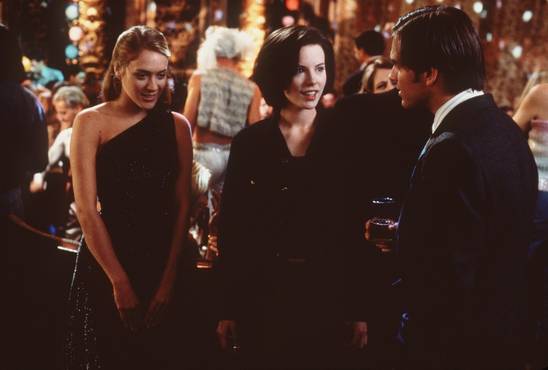 “The Last Days of Disco” (1998)
“It’s really important there be more group social life. Not just all this ferocious pairing off.”
Stillman’s final film in his “Doomed Bourgeois In Love” triptych — made for his biggest budget of $8 million — “The Last Days of Disco” follows a group of recent grads navigating the rules and social pecking orders of the New York nightlife in the waning days of disco’s popularity in the early ’80s. And yes, while it also humorlessly depicts them falling in and out of each other’s beds and on and off the dance floor, there is a strong hint of melancholy throughout the film. Nostalgic, but not sentimental, not only does ‘Disco’ mark the death of an era, but the death of an ideal, and therefore a newfound liberty. A side dish to all the talk of sex and class and dating the right guy or gal, Stillman also looks at the disco era through a philosophical prism — both sincere and comical — that views the heyday as a social utopia, an ideology and a lifestyle, and not just a fad. Chloë Sevigny plays the mousey ingénue Alice Kinnon, who is paired up with the callow and self-absorbed frenemy Charlotte (Kate Beckinsale), and together they are surrounded by a bevy of would-be suitors, including up-and-coming ad exec Jimmy Steinway (Mackenzie Astin), self-proclaimed “nightclub flunkie” Des McGrath (Chris Eigeman), potentially unhinged Assistant D.A. Josh Neff (Matt Keesler), and “Departmental” Dan Powers (Matt Ross). Stillman’s picture came out just three months after the much-derided Mike Myers drama on a similar era “54,” but unlike its rival, Stillman pretty much refrains from the hedonistic examination of the club’s notorious history, being much more interested in the social mores of the post-college set, the brief window of optimism this era allows them and the inevitable decline of the disco scene. Aided in no small way with a killer soundtrack that shimmies seamlessly from one golden ’70s hit into another, while the disco is fun, it’s the deadpan conversations and deeply ironic situations that truly shimmer. Both Beckinsale’s Charlotte and Eigeman’s Des have their share of classic Stillman lines in “The Last Days of Disco,” with captivating, if misguided rants on sex, love and friendship. But it’s actually the overly sincere, slightly ridiculous Josh, who seems to be the director’s mouthpiece, and his “Lady and the Tramp” analysis, a hilarious love triangle metaphor, that is one of the highlights of Stillman’s typically incisive and eloquent script (it’s also a bit meta with sly references to his first two films including a brief cameo by Carolyn Farina from “Metropolitan”). “The Last Days of Disco” was unfortunately a financial flop in North America, making only $3 million, but this comical requiem for a golden age of socializing was given a new lease on life to eager audiences (new and old) by Criterion in 2009. [A]
The Essentials: The Films Of Whit Stillman

NEWSLETTER
News, Reviews, Exclusive Interviews: The Best of The Playlist in your Inbox daily.
