


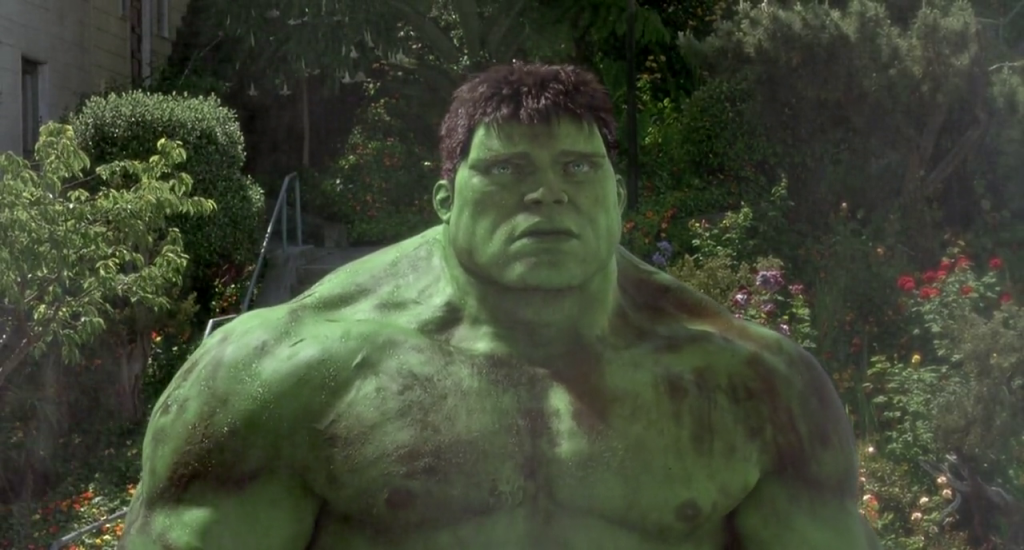
 20. “Hulk” (2003)
Ah, Ang Lee’s “Hulk”: the red-headed (green-skinned) totally bonkers step-child of the superhero movie. The chameleonic Lee was always a bold choice for a superhero movie, even after the majestic action of his “Crouching Tiger, Hidden Dragon,” but no one expected anything like what he eventually delivered: an existential actioner with a unique pop-art look and feel (he seemed to be literally mimicking comic books with his cutting), and a final act that sees Nick Nolte growling incomprehensibly before turning into a giant jellyfish or something. The film was extremely divisive at the time, but it’s aged well: an esoteric and idiosyncratic picture with more personality than most of the films below it on this list combined. But it’s not without its problems: the cast feel a bit adrift for the most part (Eric Bana, as Bruce Banner, doesn’t quite find a way to let us into his head), and the finale is borderline incoherent. Still, as we approach superhero overload, we find ourselves wishing for more swing-and-misses like this in the genre, versus the competent-but-unexceptional films we already have plenty of.
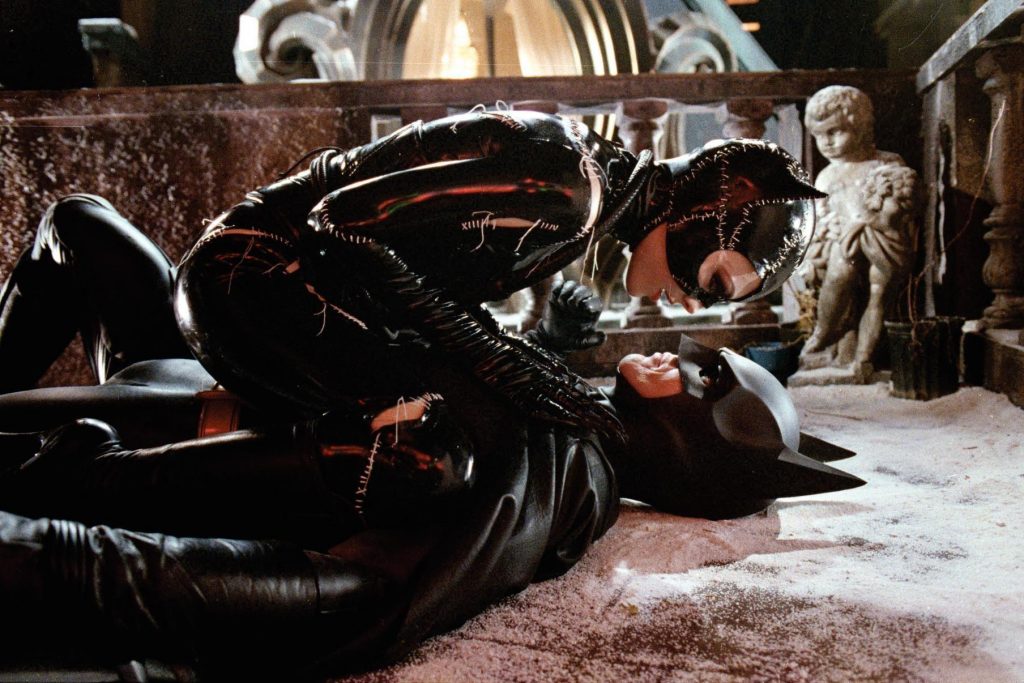 19. “Batman Returns” (1992)
Tim Burton’s heavily stylized, Gothic take on the Caped Crusader with 1989’s “Batman” made big-screen superheroics viable for the first time since Donner’s “Superman,” but the film’s pretty flawed: thinly plotted, a little empty, and somewhat compromised in a number of respects. But Burton let his freak flag fly properly with the sequel, “Batman Returns,” three years later, coming up with a film that’s totally imperfect, but weirdly pleasurable mostly because of how beautiful it looks, and how unashamedly it peeks into its director’s id. Once again, Michael Keaton’s Bruce/Batman takes second place to the villains and the scenery, but Danny De Vito’s Penguin and Michelle Pfeiffer’s Catwoman (and, to a lesser extent, Christopher Walken’s Max Shreck) are all pleasingly perverse, pathos-filled adversaries, and the film’s even more of a visual treat than its predecessor, from the snowy chiaroscuro of Gotham to Pfeiffer’s Franken-fetish costume. And though it’s dark (it begins, as all summer blockbusters should, with Pee-Wee Herman throwing a baby in a sewer), it’s rather more playful and imaginative than its predecessor too. Something of a curate’s egg, we’ll admit, but to us it’s easily the best of the 1980s/1990s Batman films.
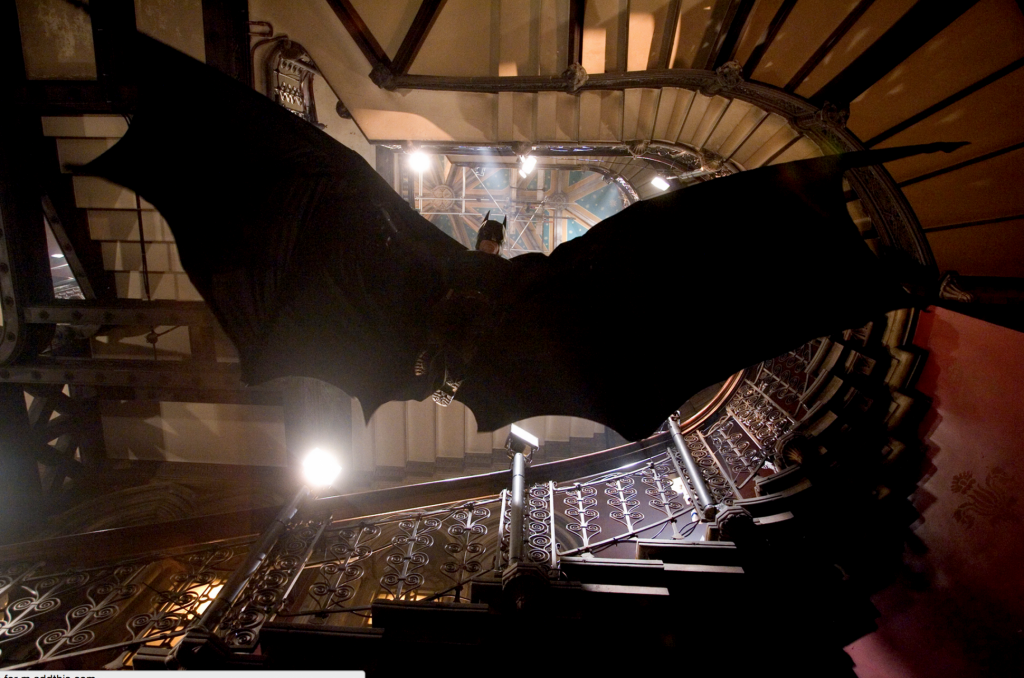 18. “Batman Begins” (2005)
The aftershocks of the impact made by “Batman Begins” on the superhero genre are still being felt today. Before, superhero films were still largely seen as campy, silly, heightened affairs, sometimes done well, more often poorly. Christopher Nolan (like Bryan Singer and Sam Raimi before him, hired more or less out of the indie world and something of an unexpected choice) changed things by essentially tackling the Caped Crusader as if he was in our world, explaining every eccentric element of the mythology with a cunning explanation and putting a new emphasis on real-world psychology. The resulting film, which jumps around time as Bruce Wayne (Christian Bale) loses his parents, seeks vengeance, travels the world, escapes a ninja cult, returns to Gotham City, confronts and absorbs his greatest fear, the bat, and takes on a city-destroying plot, gives the origin story a good name, and is the rare story to actually make Batman as compelling as his adversaries. Nolan’s still got his training wheels on to some extent: the action’s mostly not very good, and the film’s third act is arguably the worst thing he’s ever done. But when it worked, and it did for most of the time, it felt borderline revolutionary, and far greater things were still to come.
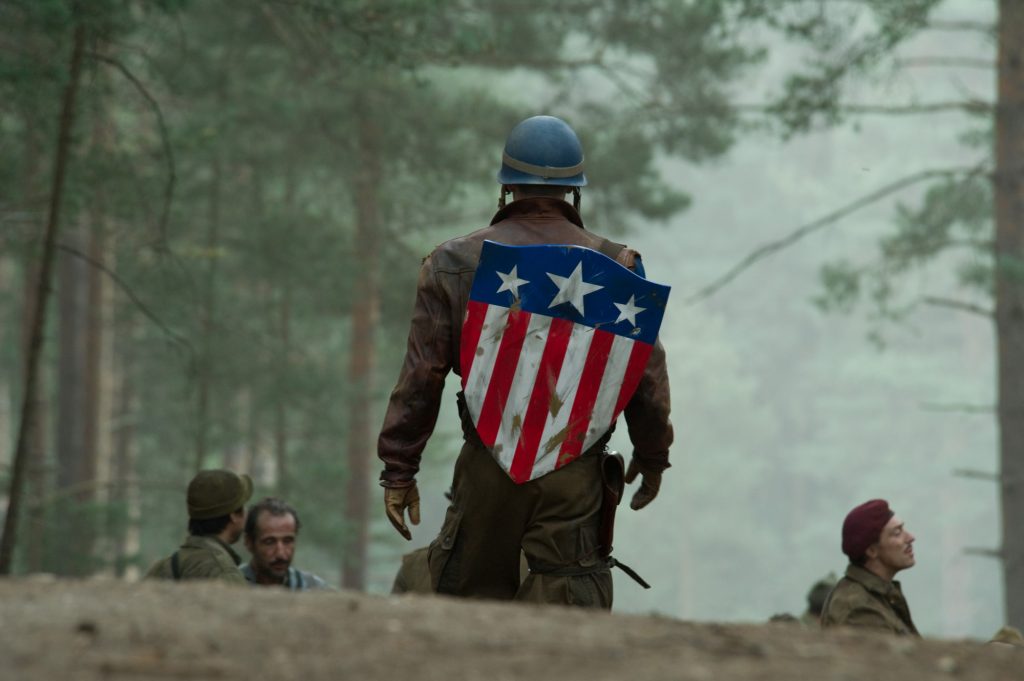 17. “Captain America: The First Avenger” (2011)
“Thor” was the trickiest task of Marvel Studios’ Phase One, but “Captain America: The First Avenger” presented an equally difficult challenge: a patriotic and irony-free hero in a time where neither of those things were popular. But making the intro of Cap a period piece was the perfect way to introduce the character, and Joe Johnston’s film is the rare superhero film to really make the origin story sing — you love little Steve Rogers (ably played by Chris Evans) from the first moment, and the film makes his transformation into an unlikely superman relatable and genuinely moving (it helps that strong performances from Stanley Tucci, Tommy Lee Jones, and Hayley Atwell are around to make this arguably the most purely human of the Marvel movies). The retro feel makes it visually distinctive as well, at a time when more and more superhero films were clogging up multiplexes. But like Captain America himself, the film can’t stick the landing: the second half, so much of which is delivered in montage, descends into rather interchangeable superheroics, and some faintly disappointing action. It pulls it back with somewhat of a tearjerker ending (a rarity for one of these films), but it’s still hard not to feel that, had the whole film been as a good as the opening, this could have landed much higher.
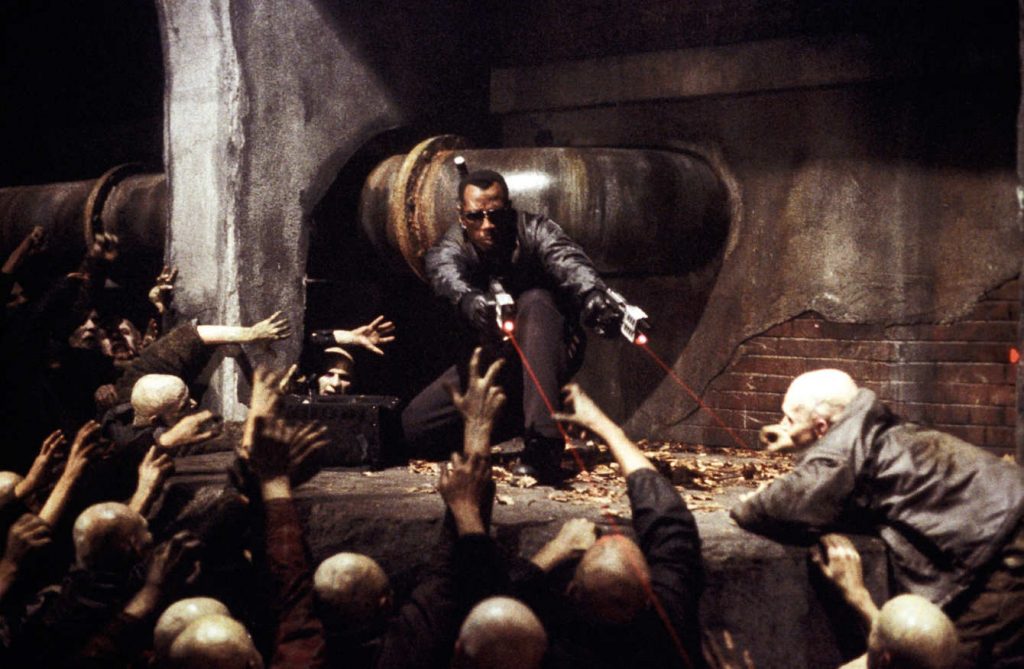 16. “Blade II” (2002)
The first “Blade” was a surprise hit, and one that sparked the revival of superhero movies to some extent, proving that C-list heroes could be big draws on screen, but Stephen Norrington’s mostly-ok original was superseded when Mexican madman Guillermo Del Toro got his grubby hands on the Daywalker, with a follow-up that saw Wesley Snipes team up with a Dirty Dozen-esque band of vampires to take down a greater threat. Del Toro’s film still has some scripting issues, and a more anonymous villain than the original in the shape of former Boy Band-er Luke Goss (although the grisly design of the Reaper creatures is great), but the action is terrific, the atmosphere nicely rank, and the engagement with vampire mythology continually inventive. The CGI can be ropey in places, but the practical effects, and general style with which proceedings are helmed, more than make up for it, while the director’s fine sense of character is kept up with the way he nicely sketches the various members of the Bloodpack. Del Toro would go on to make more expensive superhero pictures with the “Hellboy” films, but the bloody perversions on show here make it one of the most idiosyncratic films in the genre.
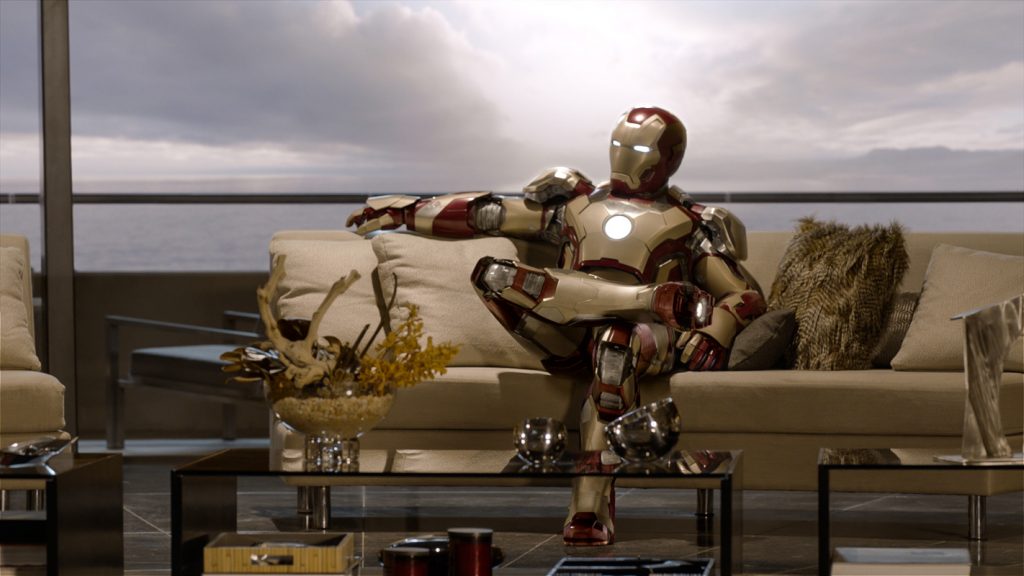 15. “Iron Man 3” (2013)
Controversial among coddled, self-serious fans, “Iron Man 3” might not have had the thrill of the new of the original film, and still suffers from villain problems (though Shane Black revealed recently that those were partly caused by corporate interference), but it’s arguably the most distinctive, auteur-driven and daring films of the MCU so far. As the director of only one film beforehand (the brilliant, but mostly unseen “Kiss Kiss Bang Bang”), the choice of Shane Black to direct the movie raised some eyebrows, but even more surprising was the way that it had turned out that Marvel had let Shane Black be Shane Black — “Iron Man 3” was less superhero formula, more quippy ’80s action movie, and all the better for it. Black (and co-writer Drew Pearce) understood what we were saying above about Downey Jr. being the heart of the movies, and brilliantly decided to put him out of his suit as much as possible, reconnecting him with the audiences that loved him so. They also had the best action sequences of the trilogy (the Air Force One rescue sequence, done mostly with practical skydivers, is one for the ages), and best of all, a humdinger of a twist, a daring subversion of one of Marvel’s best known villains that enraged fanboys, but delighted the rest of us.
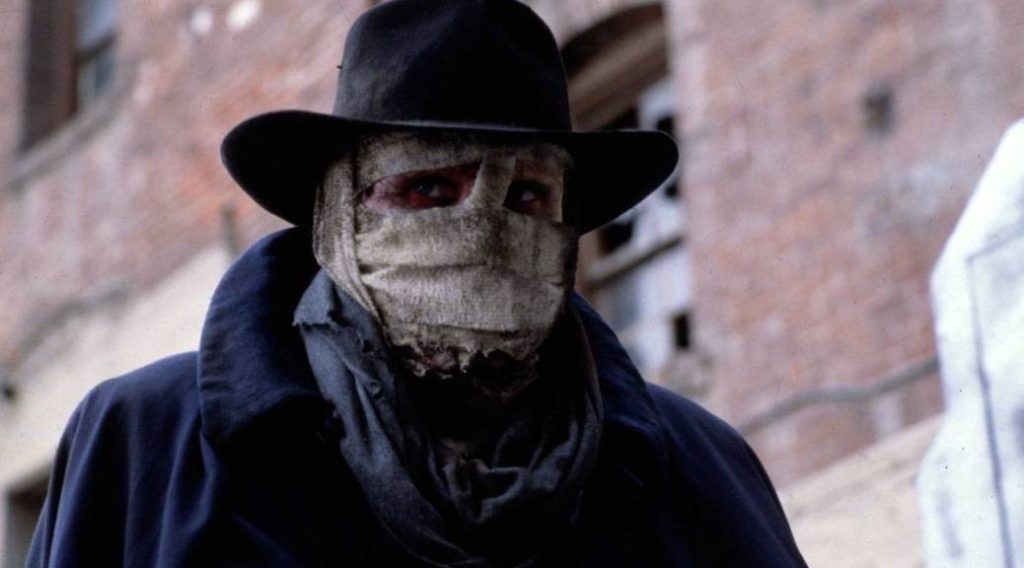 14. “Darkman” (1990)
In many ways, “Darkman” was a movie ahead of its time: a superhero movie without a comic book origin, a film that tapped the talents of horror master Sam Raimi for mainstream purposes, a rare pre-“Taken” action showcase for Liam Neeson as a leading man. It also does something we wish more superhero films did; use the genre as a way of carrying a completely different kind of genre on top of it instead. Raimi wrote the idea when he was passed over for the “Batman” job and failed to get the rights to “The Shadow,” and made his studio debut with the project, which sees scientist Peyton Westlake (Neeson) invent a kind of synthetic skin only to be hideously disfigured by thugs working for mobster Durant (Larry Drake) and industrialist Louis Strack (Colin Friels). He survives, and is no longer able to feel pain, and becomes the vigilante Darkman as he seeks revenge on those who wronged him, and tries to protect his girlfriend Julie (Frances McDormand). The film draws on classic Universal monster movies, noir and pulp crime novels as much as it does traditional superheroes, and Raimi blends goofy comic-book style and violent vigilante revenge as few others can, and the result is a movie that relentlessly entertains even while it makes you feel for its hero. No wonder Raimi would later get the call for “Spider-Man.”


