


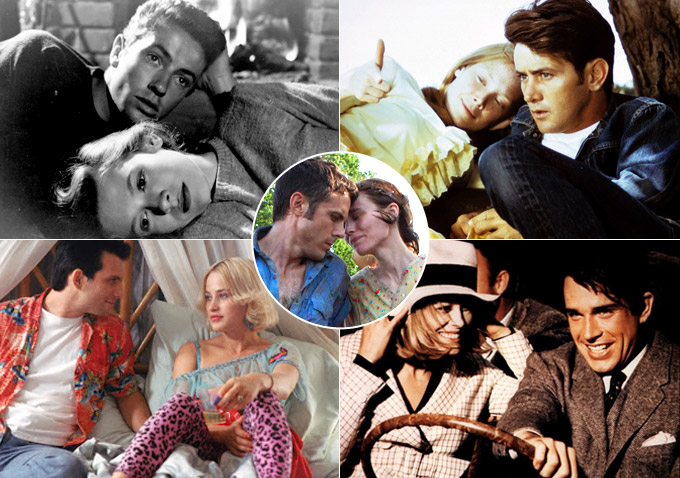
“Breathless” (1960)/“Breathless” (1983)
For a movie made back in 1960, stills from Jean-Luc Godard’s “Breathless” (on which Francois Truffaut gets a story credit) still adorn a whole lot of college dorm walls. Partly, of course, that’s to do with the irresistible black-and-white Parisian chic of the whole endeavor, partly because of Godard’s reputation as a cinematic enfant terrible and founding member of the terminally cool nouvelle vague, but also it’s because the film is simply one of the best evocations of how amazing it could ever be to be young and in love and alienated from a society that just doesn’t get it. Wreathed in cigarette smoke, Michel (Jean-Paul Belmondo) overtly and knowingly channels Humphrey Bogart to create a character who, as nihilist and self-centered as he is, is himself just as aspirational for young guys, while the eternally modern Patricia (Jean Seberg), with her pixie cut and flats represents the chic-est possible version of the young American abroad. Of course they don’t so much go on the lam as hole up together to talk and smoke and look cool after the sociopathic Michel, unbeknownst to Patricia, kills a policeman, but motion is hardly the order of the day here—and neither is morality, until Patricia’s final desperate decision. Even today, when perhaps the film feels ever so slightly worn, as though the intervening decades of adulation have rubbed a little of the sheen off, it’s easy to see why the kinetic jump-cut style and non-linear storytelling shook up French cinema to the extent it did, and launched a whole movement—a thousand dorm walls can’t dim the film’s sheer beauty and unimpeachable eye for cool. [A-]
And you know what? The 1983 Richard Gere-starring, L.A.-set U.S. remake is not nearly as terrible as you might think, if you can kind of get beyond the essential pointlessness of remaking “Breathless” in the first place (though Tarantino has gone on record to say the remake is superior; note: he’s dead wrong). We’re just surprised that Godard never thought to remake the U.S. remake of his French homage to U.S. genre films, though perhaps he did and it created a singularity which swallowed itself immediately. [B-]
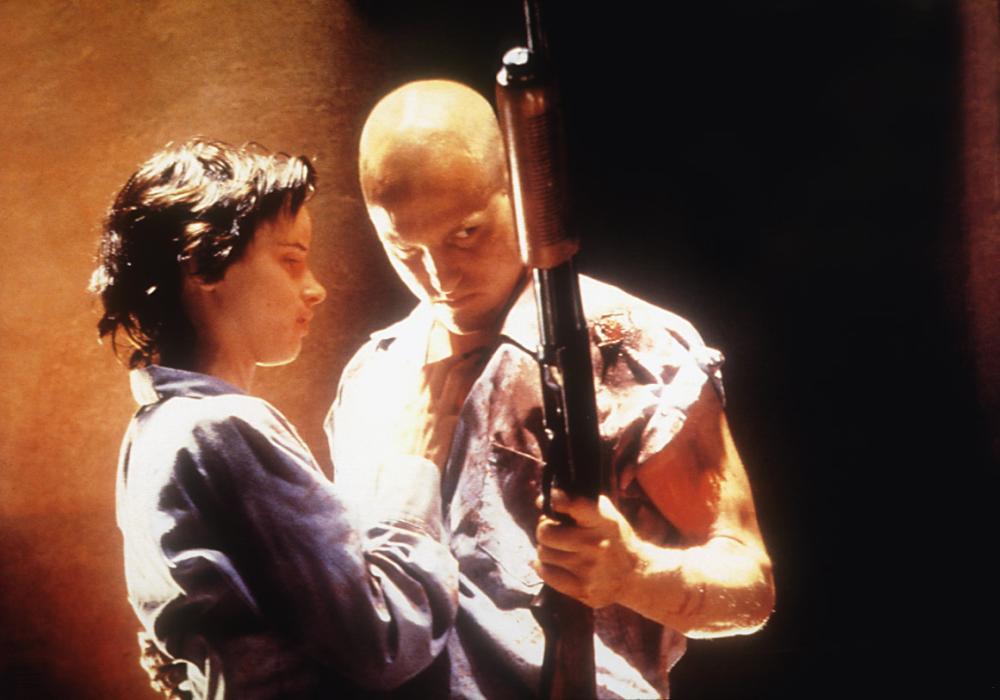
“Natural Born Killers” (1994)
Few movies in the nineties were as controversial as “Natural Born Killers,” Oliver Stone‘s kaleidoscopic, blood-soaked road movie about a pair of lovestruck serial killers (Woody Harrelson and Juliette Lewis), which was at least partially based on an old Quentin Tarantino screenplay (he publicly distanced himself from the movie after Stone changed it enough to make it his own). As visually striking as anything the filmmaker has done, “Natural Born Killers” was a lovers-on-the-run movie that also served as a barbed satire of the nineties media obsession with all things evil. This was a period in American history when high-profile criminal cases captured the nation’s imagination and serial killer trading cards were printed and traded by young kids (aw, I already have Dahmer) and Stone wanted to skewer it all in the most wildly over-the-top, orgiastic way possible. And so every frame of the movie is over-cranked, highly processed, or multimedia—sequences shift from black and white to garish animation and back again without any warning or context. To Stone, the passion of the two lovers on the run and the appetite of the American public to make them into rock stars was equally depraved, with one feeding the other. The amount of media outrage that accompanied this movie was just as shocking as in the actual movie, with whole sequences removed from the theatrical edition (including one where Tommy Lee Jones, who plays a villainous prison warden, had his head chopped off and put on a stick) to secure an R-rating, and outspoken protests mounted from coast to coast (later, a number of “copycat crimes” would be blamed on the movie). The gonzo kitchen-sink approach Stone takes to evoking the ‘Killers” private world is admirably bizarre and retains its power to jolt to this day, but its overheated, over-hyped freneticism doesn’t have much substance or emotive impact underneath its psychedelic trappings. It should be noted, though, that it’s divisive to the last, with this being one entry that the usually harmonious Playlist Borg Hive Mind cannot agree on a grade for, ranging from [D+] to [A] (insanity). So we’ll even it out at a [B-]
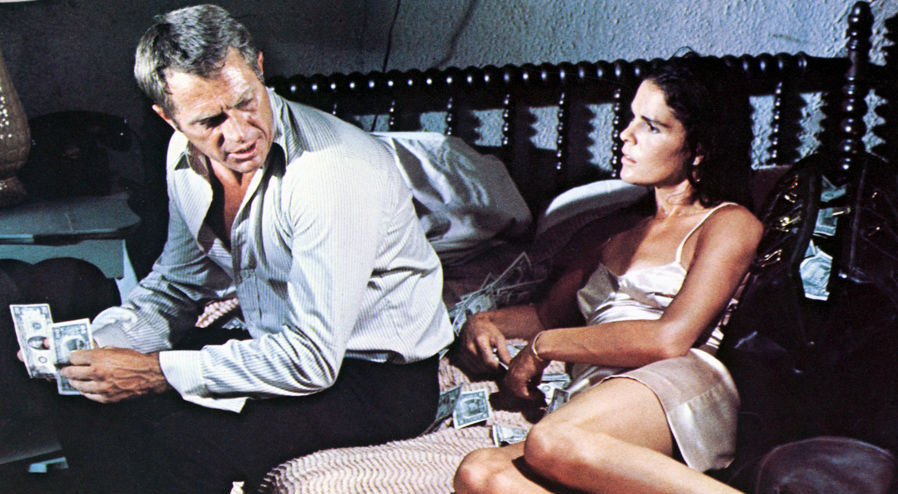
“The Getaway” (1972)/”The Getaway” (1994)
Based on a novel by the poet laureate of hard pulp Jim Thompson, whose script was rewritten by the titan of cinematic masculinity Walter Hill, directed by feminist favorite Sam Peckinpah, and starring a Steve McQueen firmly in the midst of a cocaine-soaked marriage breakdown, “The Getaway” rises out of a dense fog of testosterone: it doesn’t get any more boys-night-in than this. Ali McGraw (somewhat miscast, to occasionally charming effect) uses her wiles to free husband “Doc” McCoy (McQueen) from prison. After a botched bank robbery, the bickering pair go on the run with the loot, pursued by cannon-fodder cops and a variety of goons, lead by the astonishingly repellent and malevolent Rudy (Al Letteria). Perhaps inevitably, it all culminates in a bloodbath in El Paso, and a tender reconciliation for the by-then real-life lovers, but not before their picaresque journey has seen them both rack up quite a body count, get dumped in a landfill by a garbage truck, and be double crossed by nearly everyone along the way, even some complete strangers. This is by no means top-tier Peckinpah; both he and McQueen were desperate for a no-nonsense hit after the commercial failure of “Junior Bonner” (1972), and aside from an impressively evocative opening when Doc is still in prison, this is mostly a straight-up action/heist film. But it’s a genre film with pedigree and all the staples are there—stunningly edited montages, patented slo-mo bullet ballets and a blank disregard for the lives of minor characters (witness to poor sap dentist who hangs himself in shame over his wife’s flagrant affair with Rudy). And as vacuous a presence as we often find McGraw, there’s no doubt that she and McQueen at least physically suit the gritty anti-glamor of the cinematography and run-down locations. Possibly not Robert Evans‘ favorite film though… [B]
Take away whatever sheen of auteur vision Peckinpah’s version has, and amp up the trashy, pulpy aspects to lurid mid-90s effect and you get the 1994 remake, starring Alec Baldwin and Kim Basinger. It’s not nearly as good—what little was not made explicit in 1972’s version is laid thuddingly bare here—but that’s not to say you can’t derive quite some guilty pleasure from its excesses. [C]
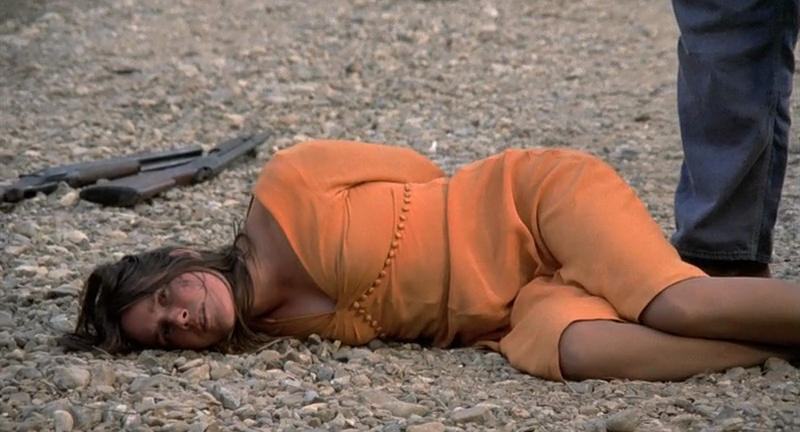
“Boxcar Bertha” (1972)
As he did with so many young talents, Roger Corman gave Martin Scorsese one of his first big breaks with the opportunity to direct the exploitation flick “Boxcar Bertha” as his second feature (his first was “Who’s That Knocking On My Door“) for Corman’s company American Independent Pictures in 1972. Starring Barbara Hershey and David Carradine as a young couple lovin’ and robbin’ on the road with their badass gang, the film took advantage of two 1970s New Hollywood tropes: nostalgia (the film is set in the 1930s) and exploitation (nubile Hershey is frequently nude, probably per Corman’s standards and practices). No doubt capitalizing on the “Bonnie and Clyde” success of 5 years prior, “Boxcar Bertha” is a film that pushes the boundaries of that already boundary-pushing film, upping the sex, violence and gore that 1970s audiences expected, despite the period setting. The sexiness of ‘Bertha’ was even captured in a fully-nude Playboy spread featuring real-life lovers Hershey and Carradine (it seems only appropriate that another Carradine appears in “Ain’t Them Bodies Saints” to keep up the tradition). But for all the exploitation-y goodness of ‘Bertha,’ the film is quite artfully made, despite the time and budget restraints, and showcases the kinetic and dynamic style that Scorsese would come to be known for, as well as his willingness to probe the darkest wells of human nature. Hershey and Carradine are riveting, as well as perennial favorite Bernie Casey (of “Revenge of the Nerds“) representing the racial tension of the time. A quintessential and often overlooked example in the Lovers on the Run genre. [B+]
“The Honeymoon Killers” (1969)
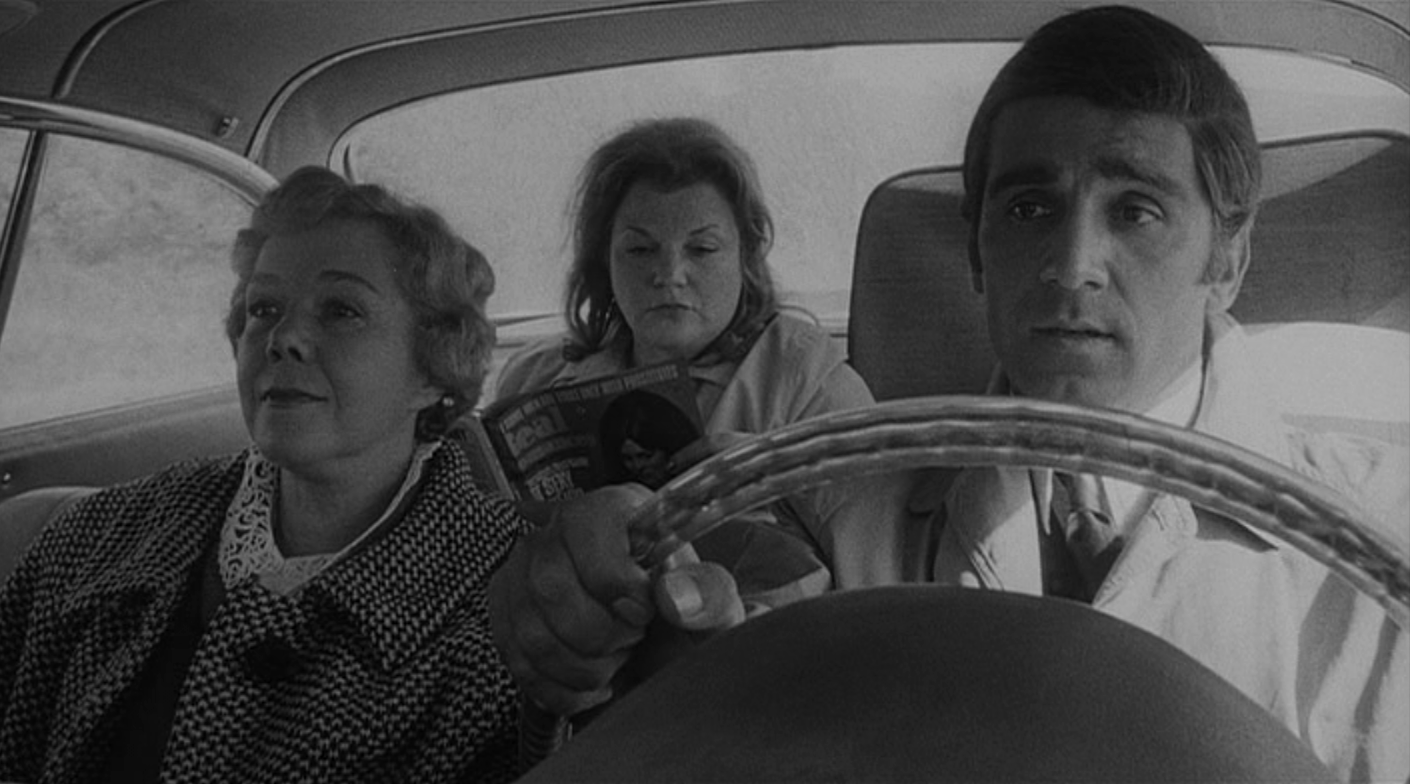
There’s a kind of freak-show fascination that holds you in its dark embrace while watching “The Honeymoon Killers,” a movie that had at least three directors attached throughout various points of the production (including Martin Scorsese, who was fired for working too slow; some of his scenes can still be seen in the movie). The movie stars Shirley Stoler and Tony Lo Bianco, in a story based on the infamous “lonely hearts killers” Raymond Fernandez and Martha Beck, who were convicted of killing several people and suspected of murdering at least a dozen more (retold in 1996’s Mexican film “Deep Crimson“). Shot in a grimy, low-rent kind of black-and-white that suggests both newsreel footage and pulpy film noirs, “The Honeymoon Killers” is wonderfully lurid, to an almost sickening degree. A lot of this has to do with the cheap-ass filmmaking but just as much of it can be attributed to the two lead performances, which are somehow both deliciously over-the-top and frighteningly real. Stoler and Lo Bianco have a low-rent energy that suggests how in love they are and how potentially psychotic they could become. There is something decidedly “off” about them, which enriches the movie with a gritty realism that might have been missing had more accomplished, manicured actors taken the roles. While the movie has obtained a degree of cult movie notoriety over the years, it still remains something of a curio, and one that not everyone is capable of watching. Even though their love story is oddly moving, it’s still a tough watch, the kind of thing that makes you want to take a shower after you’re done watching it. Maybe with someone you really, really love. [B]

