




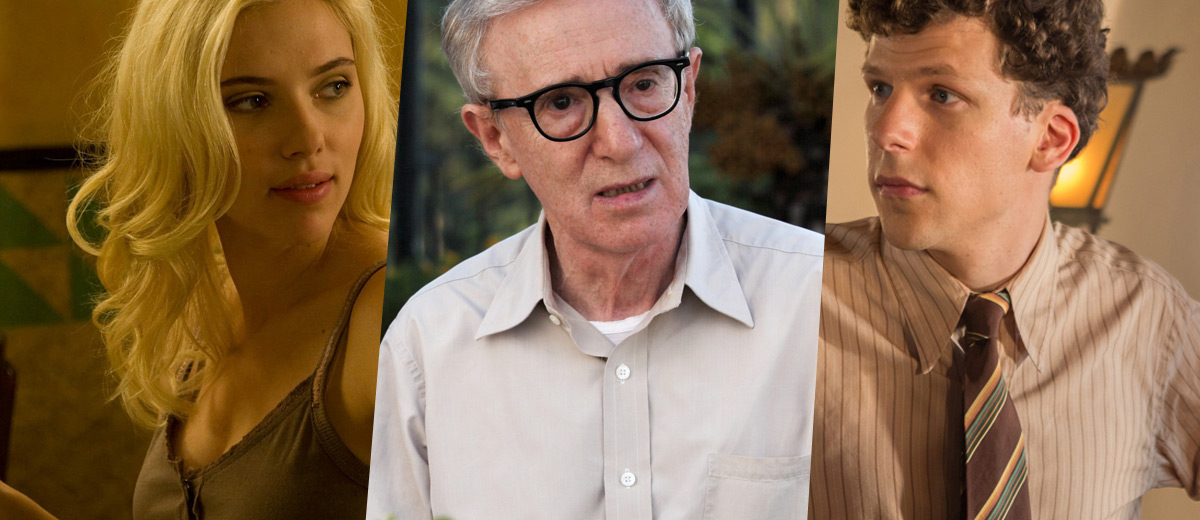
 40. “A Midsummer Night’s Sex Comedy” (1982)
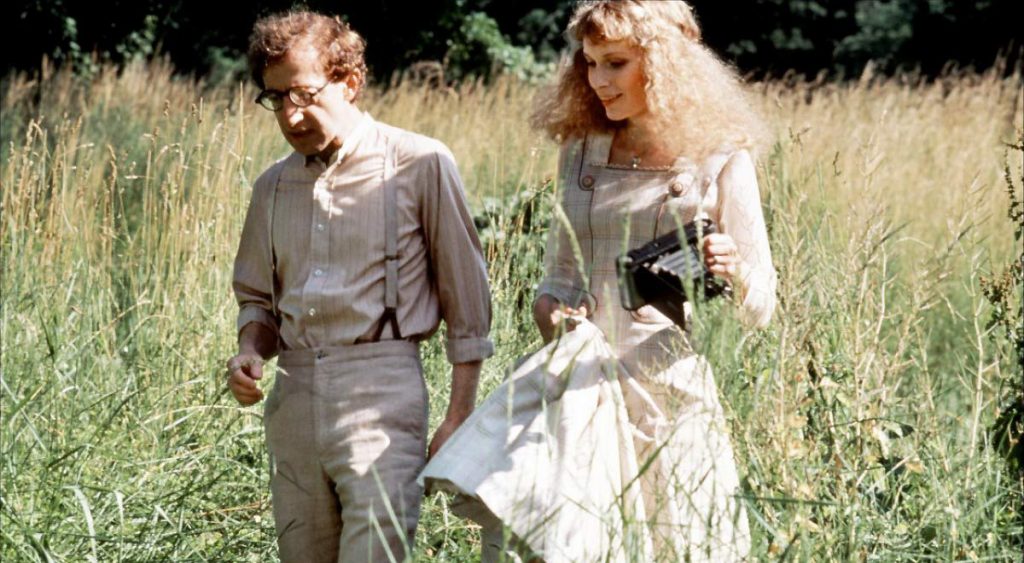
You’d think a movie called “A Midsummer Night’s Sex Comedy” would not be boring. But you’d be wrong. This often agonizing grind of a film is loosely based on Ingmar Bergman’s “Smiles of a Summer Night,” but the witty reinvention impulse seems to peter out after the (admittedly kind of brilliant) title. Despite or maybe because of Allen’s reverence for Bergman, he can’t seem to make this homage catch fire —everything about it is dull, including its period setting, its straightforward philosophical discussions that border on rote dissertations and the flat cinematography. Even the talented cast (including Mary Steenburgen, Tony Roberts and Jose Ferrer among them) can’t do much to up the energy levels of this hopelessly sleepy movie. Yet the cast provides one interesting footnote when viewed in the context of Allen’s filmography and biography: this was the first movie to star his future ex-partner Mia Farrow. Of all their possible beginnings, it seems in retrospect not to have been the most auspicious imaginable.
 39. “To Rome with Love” (2012)
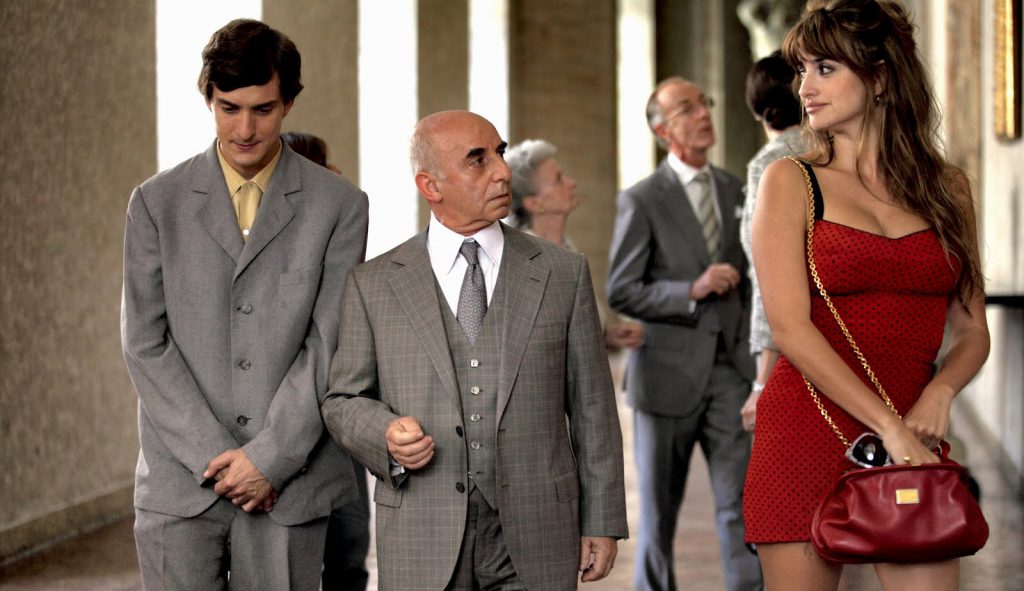
There’s nothing particularly obnoxious about Allen’s de rigeur Italian stop on his tour of the major cities of Europe that brought us a run of mostly ho-hum films over the past couple of decades. But there’s nothing particularly distinguished about it either, and with a cast that includes previous Allen ringers Judy Davis and Penelope Cruz along with fresh faces Jesse Eisenberg, Ellen Page and Greta Gerwig and the Eternal City as a backdrop, you can’t help but feel it should be more substantial. Part of the issue is a worse-than-usual melding of the film’s four separate strands, so that jumping from one to the next feels jarring rather than fluid. But this is mostly a story about romantic inspiration and obsession that feels uninspired and oddly cool to the touch, despite the hot Latin passions that the city of Fellini and Mastroianni should surely have evoked in as dedicated a cinephile as Allen. All of his Euro films have in some ways been love letters to their settings, but it’s not really fair that Rome gets little more than this hastily scribbled postcard.
 38. “You Will Meet A Tall Dark Stranger” (2010)
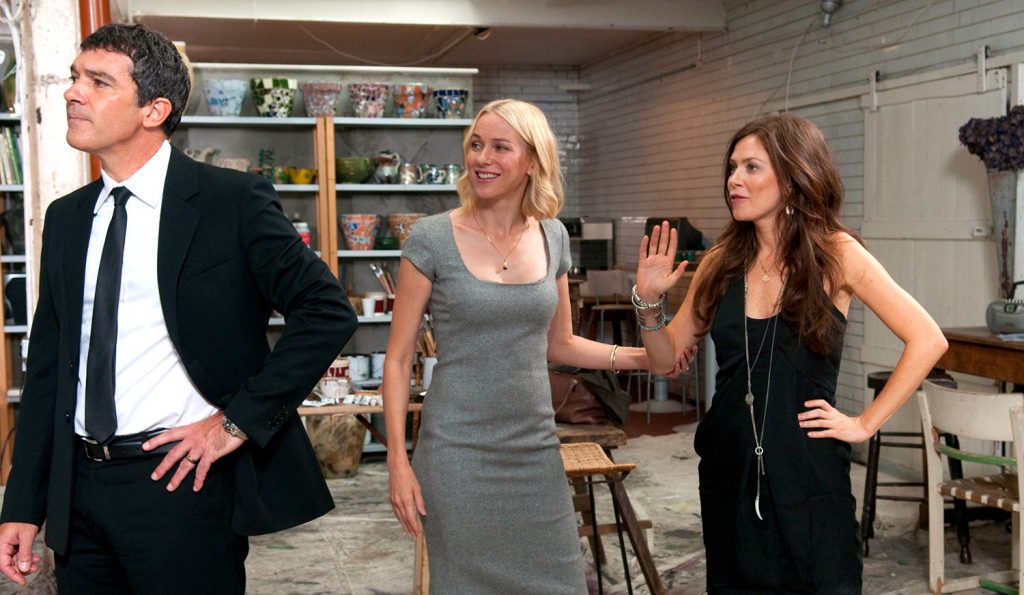
Even on release, “You Will Meet a Tall Dark Stranger” was largely overlooked, despite its unstoppable cast (Anthony Hopkins, Josh Brolin, Antonio Banderas, Freida Pinto and Naomi Watts are among the actors filmed by genius cinematographer and regular collaborator Vilmos Zsigmond) and its glitzy premiere at the Cannes Film Festival. And in the years since, it’s disappeared into a black hole. The film is largely about faith, which is fitting, considering that those who love the film have to be Allen’s most uncritically adoring fans, believing against much evidence that he still has a lot to say about the human condition. For the rest of us, despite some diverting subplots and preoccupations, ‘Stranger’ feels more empty than usual, is oddly anonymous and its interwoven storylines feel far too based on happenstance and coincidence to even have the more ironic twists really bite. It’s no wonder that when asked to name as many Allen films as we can off the top of our head, we always, but always, forget about this one.
 37. “Melinda and Melinda” (2005)
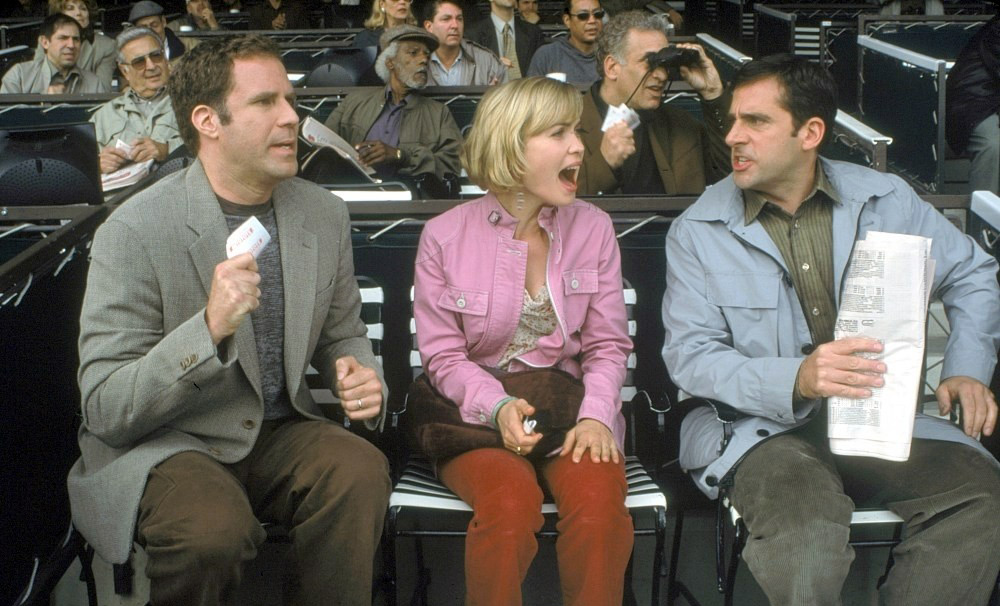
In its premise, “Melinda and Melinda” is a charming doodle — the titular character (played by the perpetually underrated Radha Mitchell) goes through mirrored storylines, both romantic, with one played as comedy, while the other is a tragedy. So far, so good, right? Sadly, it’s much more tedious than it sounds, and besides some occasionally sparkly performances (Will Ferrell makes a better Allen surrogate than you’d think, as his nervous tics are blown to oversized proportions), it’s a bit of a drag. Before the second half of the movie concludes, you’ve already grown weary of its conceptual trappings, and the rest is not at all dynamic, despite supporting turns by Amanda Peet, Steve Carell and, in the rare instance of a black actor in a Woody Allen movie, the wonderful Chiwetel Ejiofor. His velvety smooth performance is almost enough to save the movie from banality, but only almost. Fun fact: the Ferrell and Mitchell characters were written for Robert Downey Jr. and Winona Ryder, both of whom were uninsurable at the time. Wonder if they’ve gotten over the disappointment?
 36. “New York Stories” (1989) (Segment: “Oedipus Wrecks”)
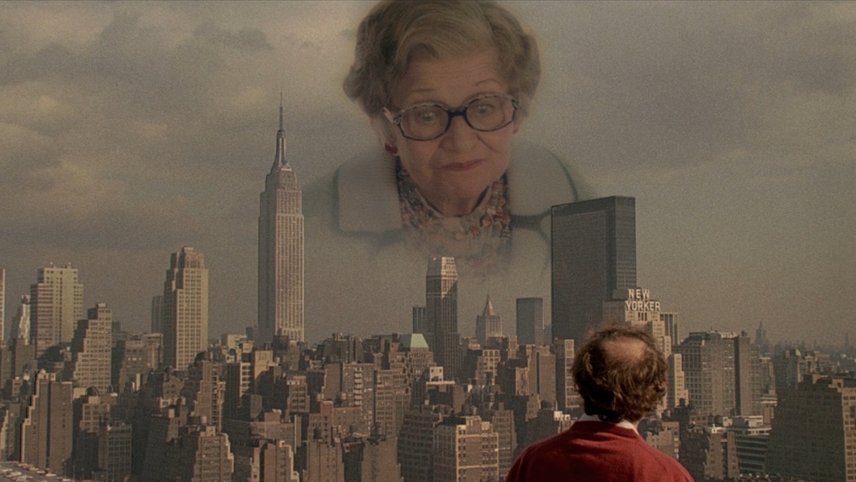
A short film in the omnibus triptych “New York Stories,” which featured other segments by Martin Scorsese and Francis Ford Coppola, Allen scores the distinction of being the “just OK” short sandwiched between one great one (Marty’s) and one bad one (Coppola’s). Allen’s love note to his mom and being a mama’s boy, “Oedipus Rex,” is a lighthearted comedy about a mother disembodied and transported into the ether above New York City after a magic trick goes awry (check the pre-‘Curb’ Larry David-with-hair cameo). She proceeds to visibly appear as a gigantic apparition over Manhattan’s skyline announcing embarrassing facts about her son’s personal life that New Yorkers soon become accustomed to; tolerating and then even ignoring her awkward motherly gushing about her son. It’s a little bit more high-concept and surreal than is the norm from Allen (it feels very much like his short story writing), but essentially, it is much the same old gag about neurosis and self-deprecation, only here the funnybone remains largely untickled.
 35. “Whatever Works” (2009)
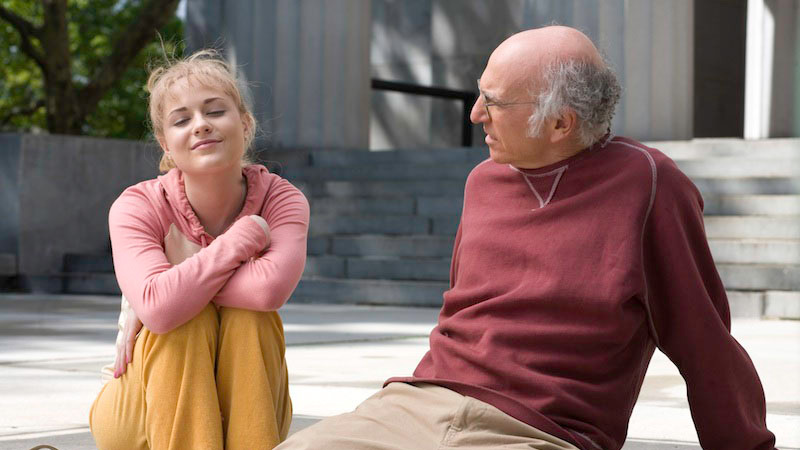
“Whatever Works” came out the same year as Ricky Gervais’ “The Invention of Lying,” a vanity picture some took as a latter-day incarnation of one of Allen’s high-concept comedies of the early 1970s. The film was, much like Gervais himself nowadays, a proud bore that asked you concurrently to pity it whilst taking it for the most hilarious thing ever made, evoking Allen’s legacy by stealing his favorite font (Windsor-EF Elongated, typography fans) for its opening titles. Audiences would have done better to check out Allen’s own work, which promised a return to New York after a muddled European caesura, a reworking of a lost script from the 1970s (a screenplay originally intended for Zero Mostel) and one of Allen’s heirs apparent in the lead role. It doesn’t even come close to following through on that sublime set of circumstances, but “Whatever Works” is still fun for dyspeptic atheists everywhere: pitting the lacerating Larry David as a failed physicist against a world of “submentals” and “inchworms.” The Bible Belt hicks are way too broadly drawn, and a romance with Evan Rachel Wood brings in extraneous (and icky) autobiography, but “Whatever Works” is at the very least better than its reputation suggests.
 34. “Magic in the Moonlight” (2014)
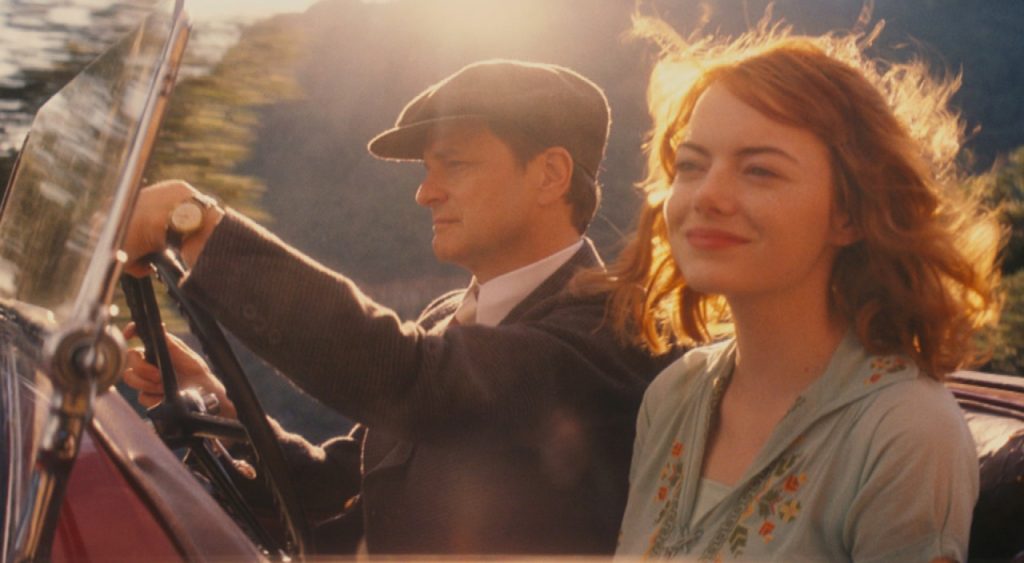
If not among the ranks of the very worst Allen films, then certainly one of the twee-est, this unconvincing but essentially well-meaning story sees Emma Stone and Colin Firth — both charming actors who do summon a little chemistry, though it’s far more platonic than romantic — lark about in a very poorly plotted mess of spiritualist malarkey. Wearing very pretty clothes — we’ll give it that — and decked out in appropriately lush Downton Abbey detailing, the warmed-over plot concerns a spirit medium (Stone) and the skeptic (Firth) whose determination to debunk her is complicated when he develops feelings for her. Words like “frothy” and “insubstantial” can often be turned into minor compliments, but here we mean them in the not-so-positive sense: “Magic in the Moonlight” is clearly supposed to be as feathery as gossamer and as ephemeral as moonlight, but there’s a fine line between airy effortlessness and treading water, and sadly it’s a line Allen crosses here. Still, it just about passes muster on a long-haul flight.
 33. “Alice” (1990)
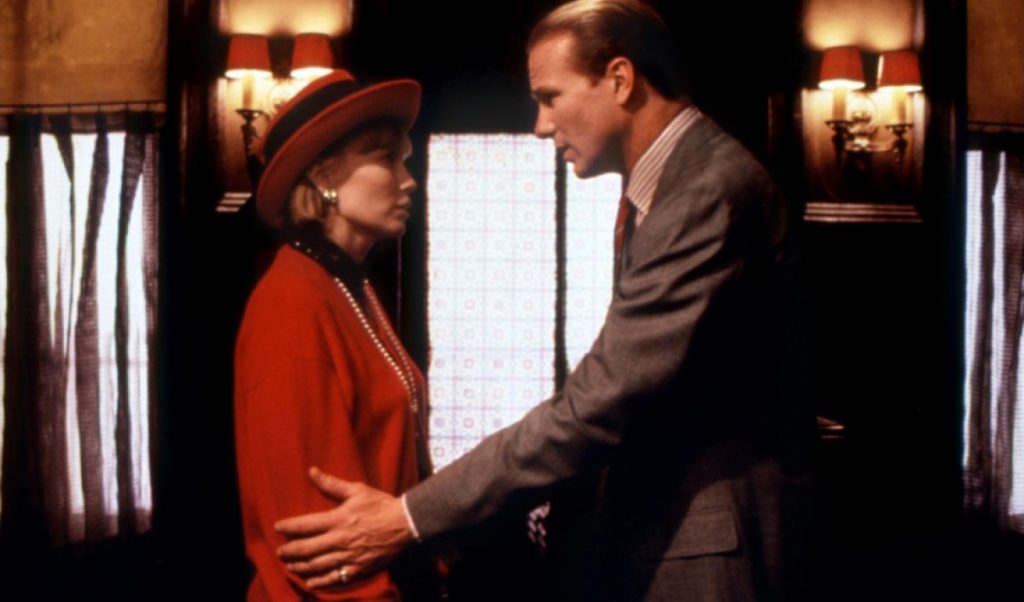
A dissatisfied and spoiled middle-aged Manhattanite who gave up her career to raise a family (Mia Farrow) has her mundane, yet hyper-privileged world turned upside down when she meets what she believes is the man of her dreams (Joe Mantegna) at her children’s school. Feeling guilty about adultery she hasn’t even committed yet, Alice seeks out a Chinese herbalist and things take a turn for the whimsical and romantic. One herb gives her sexual confidence, another grants her powers of invisibility which she abuses to spy on the object of her affection, and another brings back a ghost of her past (Alec Baldwin, playing a reckless old boyfriend as an apparition) which allows her to relive old memories. Co-starring William Hurt, Blythe Danner and Judy Davis, while mildly cute the film — a loose reworking of Fellini’s “Juliet of the Spirits” with elements also clearly referencing episodes from “Alice in Wonderland” — is a little forgettable. But if it’s something of a misfire, it’s at least a well-intentioned and largely harmless one.
 32. “Deconstructing Harry” (1997)
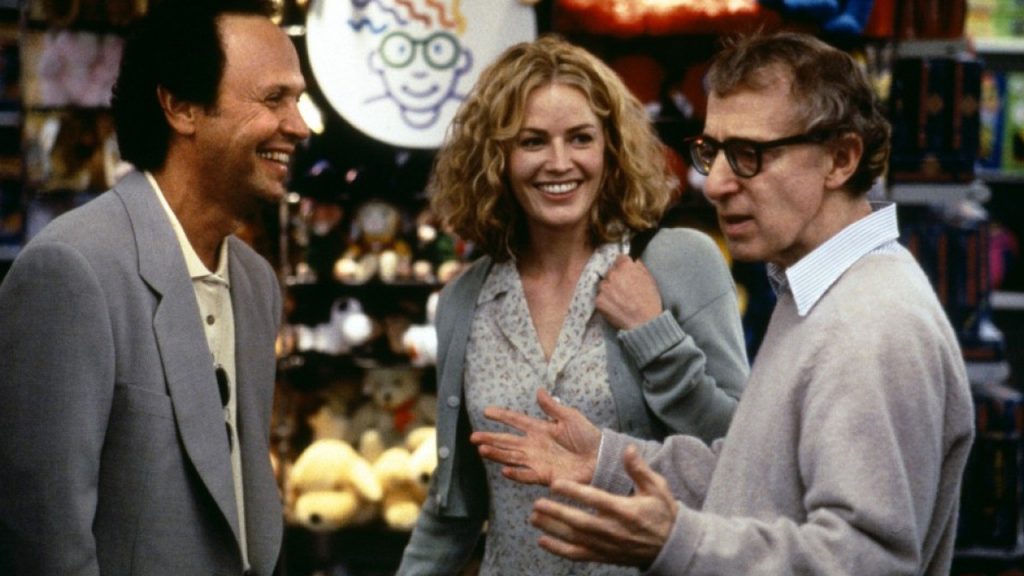
One of Allen’s most uncompromised, angriest works, “Deconstructing Harry” is unfortunately just too messy to really capitalize on its punchy energy. Allen plays Harry Block, a tortured writer who is undergoing a breakdown in his twilight years, as fantasy and reality begin to merge. While he has used his friends and family for inspiration frequently, his works start to come to life and intermingle with his own, throwing him into a tailspin as he also deals with a lover and a career honor he feels is undeserved. The film is one of Allen’s most autocritical works, taking to task both his critics and his own more onanistic tendencies, but it’s also filled with a number of absurdist touches provided by a peculiar all-star cast — look out for Billy Crystal in a memorable cameo as The Devil. “Deconstructing Harry” has moments of free-form hilarity, but the self-serving pettiness of his characters, while refreshingly unadorned, also make it difficult to really connect with this portrait of an artist in crisis, flailing and railing even as his work begins to cannibalize him.
 31. “September” (1987)
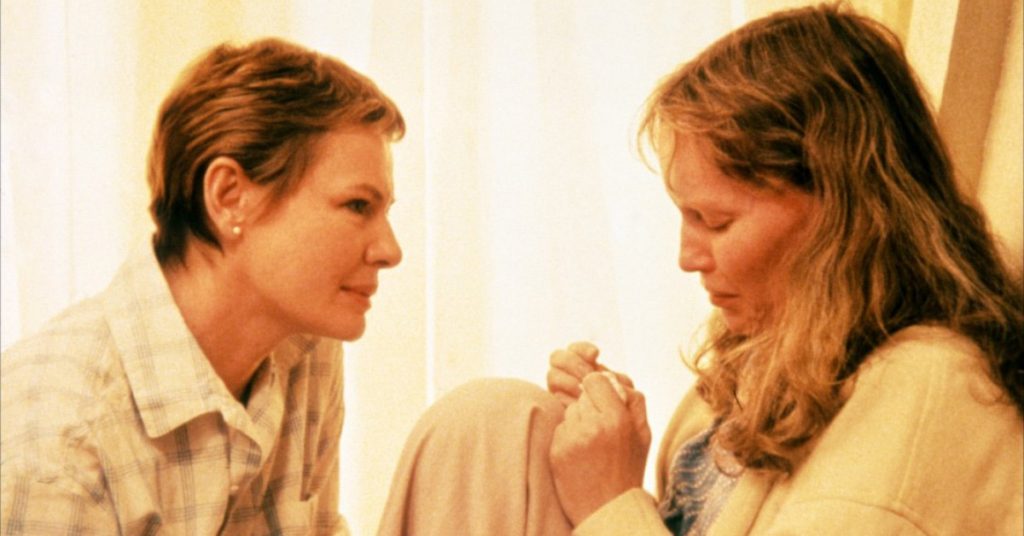
Marked by a fabulous performance by Elaine Stritch, who plays an awful, incorrigible, selfish and self-centered mother, Allen’s “September” is a film play, for better and worse, marked by long takes and few cuts. An ambrosial picture about secrets and lies, unrequited love, and crushed hopes, it is a somber, Bergman-esque chamber drama about the deceits and romantic betrayals that occur during a late summer weekend getaway in upstate New York. The bittersweet-but-mostly-bitter drama stars Stritch, Mia Farrow, Dianne Wiest, Jack Warden, Denholm Elliott and Sam Waterston, and shows Farrow’s depressive character and others all pining for objects of affection they can never attain. The picture is no “Autumn Sonata” (Bergman’s 1979 late-era masterpiece, which this mother-daughter-centric film vaguely resembles), but it’s not without its powerfully emotional scenes, generally between Farrow, Wiest and Stritch. Interestingly enough, the picture was shot twice, as early attempts with Sam Shepard, Maureen O’Sullivan and Christopher Walken failed to create sparks.


