


6. “Batman Returns” (1992)
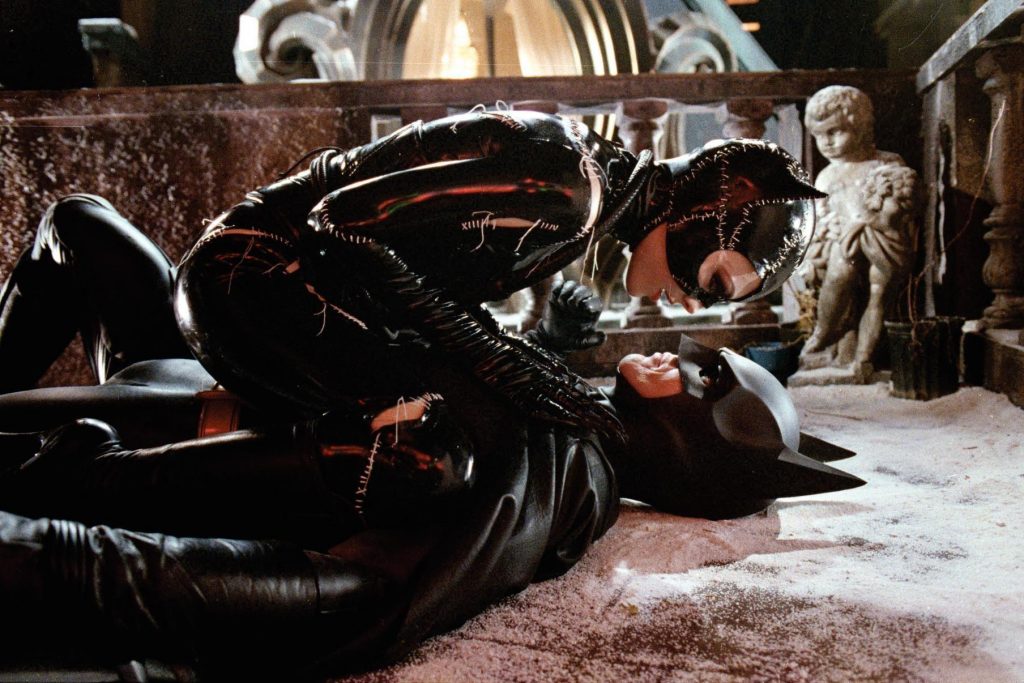
The success of “Batman” didn’t only reignite the superhero blockbuster genre it also helped foster the “inevitable sequel” age in which we live. But “Batman Returns,” Burton’s second go-round was in many ways as exemplary a superhero sequel as its predecessor was a franchise-launcher. Unlike the modern-day “bigger, blander, brasher” approach, Burton got to parlay his success into a darker, weirder and more stylized follow-up, surely one of the strangest superhero sequels ever. He does go the “throw in more baddies” route, but here Michelle Pfeiffer‘s defining Catwoman (sorry, Anne Hathaway, apologies Halle Berry, excuse us, Julie Newmar), Christopher Walken‘s corrupt Max Schreck and Danny DeVito‘s quite startlingly unpleasant Penguin make up the trio of freaks Batman will face down, and each of the three (Schreck to a lesser extent) are dignified with their own storylines. It does amount to a film that is far more about villainry than Michael Keaton’s Batman heroics, but the uncompromising take that Burton delivers, and the utterly gorgeous slick-noir aesthetic, delivers one of the most pleasurably perverse big-budget blockbusters ever to grace the multiplex. It’s still a testament not just to its director’s disturbed playfulness, but to a time when superhero sequels could feel, of all things, personal.
5. “Sleepy Hollow” (1999)
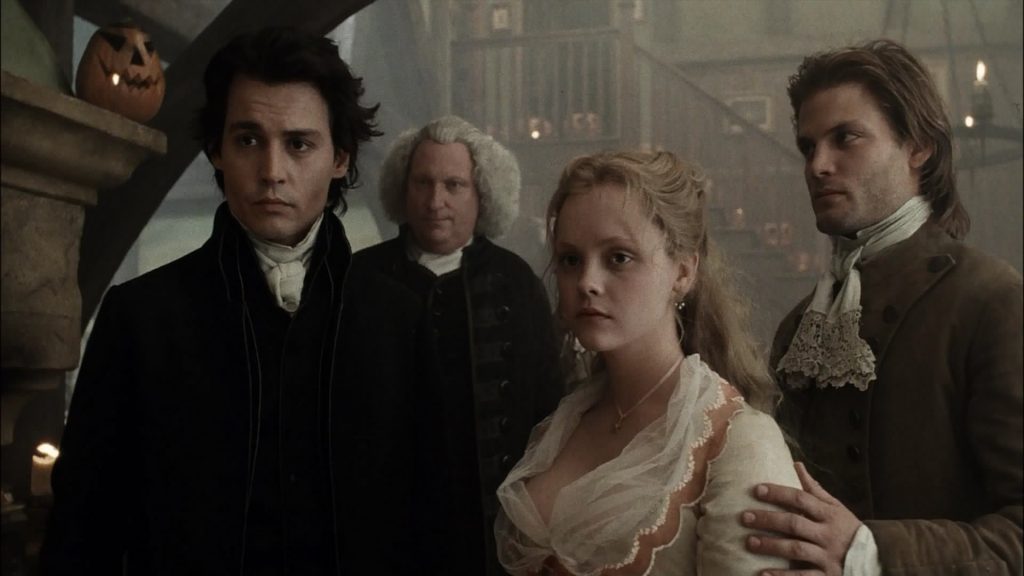
It’d be a mistake to call “Sleepy Hollow” one of Burton’s deeper works. Sure, his particular fetishises give it some auteur cred, but even the “Batman” films felt a little bit more personal than this. But in terms of immaculately-made blockbuster entertainment, of a kind that felt old fashioned at the time, let alone nearly two decades later, Burton and “Seven” scribe Andrew Kevin Walker’s retelling of Washington Irving’s story is hard to beat on his resume. The pair turn the story into a sort of Agatha Christie by way of Hammer Horror adn Roger Corman’s Edgar Allan Poe pics, with Ichabod Crane (Johnny Depp) a scaredy-cat police detective sent to the upstate New York town to solve a series of gruesome decapitations. Walker’s script winningly mixes witchcraft and post-Revolution American politics into the police procedural mix, while Burton’s autumnal world is one of his most fully realized universes, complete with a murderer’s row of character actors who would have fit in beautifully among Vincent Price et al (Michael Gambon, Christopher Walken, Miranda Richardson, Richard Griffiths, Ian McDiarmid et al). Even the action, never a Burton strong point, works. It’s reasonably hollow compared to some of the films above it on this list, but it’s so much fun, and so gorgeous to look at it (it might be Burton’s most beautiful film, not massively surprising when you consider that it was shot by Emmanuel Lubezki) that you don’t mind so much.
4. “Edward Scissorhands” (1990)
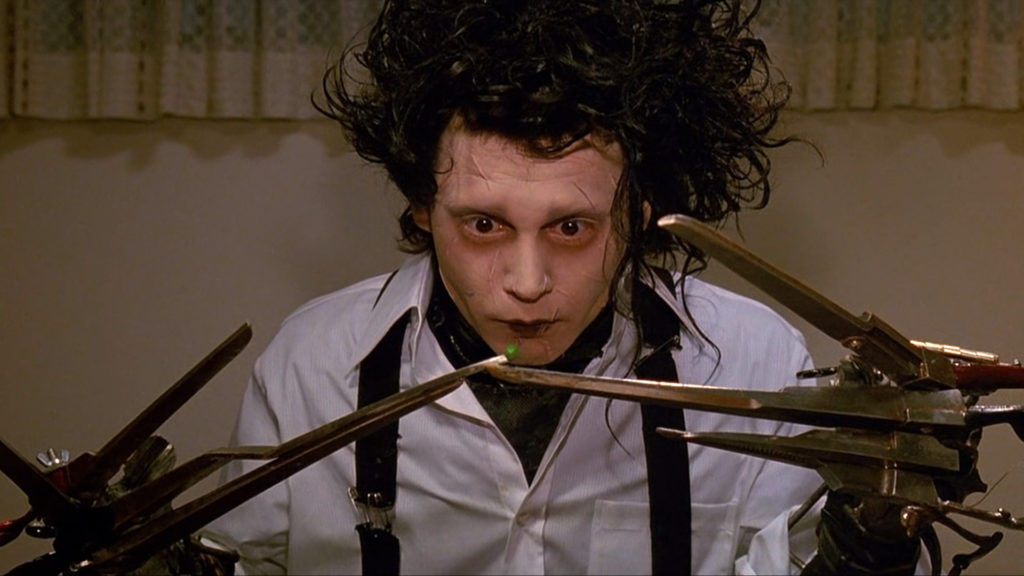
In response to his career-making, era-defining, franchise-launching blockbuster megahit, “Edward Scissorhands” was the intimate, deeply personal “little” film that Tim Burton chose to follow up “Batman.” A teenage automaton (Johnny Depp, heavily scarred and fright-wigged in an effort to kill his teen heartthrob, “21 Jump Street” image) falls in love with a beautiful all-American girl (a winsome Winona Ryder) but is literally doomed to destroy the things he touches because his hands are made of blades. The movie reportedly originated as a high school doodle emblematic of Burton’s loneliness and isolation, but the film goes much deeper, evoking a beautiful sense of tremulous, incredulous first love. Danny Elfman‘s score swoops from the dreamy to the operatic to the apocalyptically gloomy, while it also emerged as a redefining triumph for Depp, whose soulfulness in this role provides such marked counterpoint to the cartoonish gimmickry of his more recent, heavily disguised Burton roles, while Dianne Wiest — perhaps the greatest and most frequently underrated character actress of this era, is perfection as the sweet-natured Avon lady matriarch who first takes Edward in. Its themes of innocence exploited and purity despoiled are fairy-tale obvious, but delivered with such sincerity that, like Edward’s fingers, they cut deep.
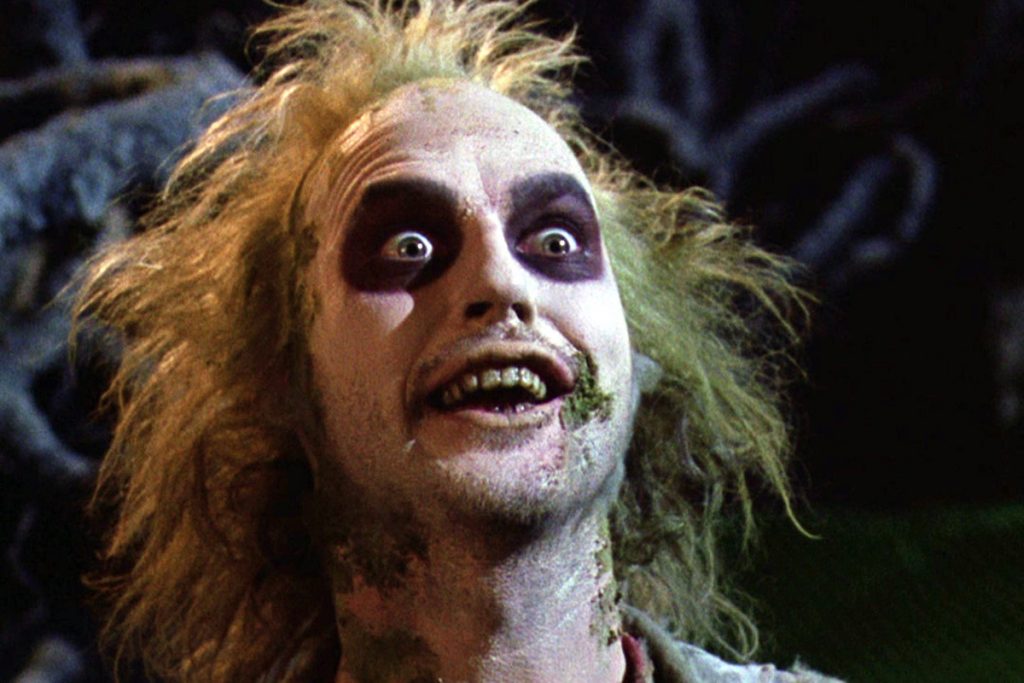
3. “Beetlejuice” (1988)
The computer age has given us so much, but it has also taken away: just compare the deliciously twisted, deeply gross but lovingly rendered stop-motion segments of “Beetlejuice” with any of the garish excesses of Burton’s latter-day CG fests. Aesthetically, there’s no contest, but “Beetlejuice” also wins out on a story level, delivering possibly the defining early Burton work (whether or not it’s the best): philosophically morbid, death-obsessed, full of nasty things festering in dark corners, melamcholic and very, very funny. It derives a great deal of its internal energy from Michael Keaton in the role of the titular “bio-exorcist” and he’s insnaely good, pivoting from morally ambivalent trickster to downright malevolent demon even to occasionally forlorn and pitiful outsider. Alec Baldwin, Geena Davis, and Burton talisman Winona Ryder are all somehow perfectly attuned to Burton’s skewed take on the nuclear family, but what really raises this film above most all others in Burton’s career, and certainly above his recent run of disappointments, is its invention and its heart. It might take place in a weird purgatorial netherworld, it may be dark, disgusting and morally gray, but it’s also surprisingly moving, a grotesque, anarchic, snot-nosed anthem for the lonely little freak inside us all.
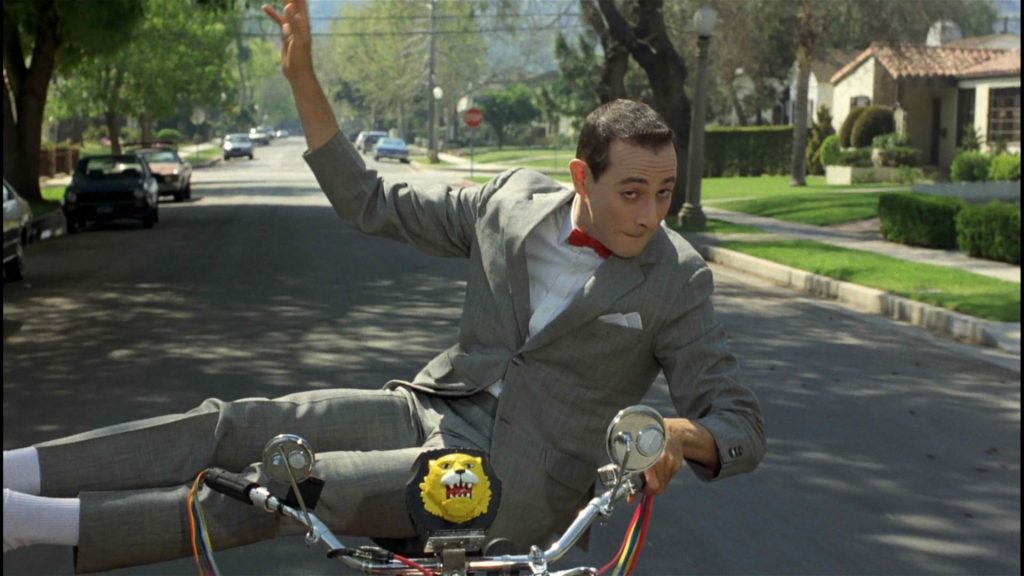
2. “Pee-wee’s Big Adventure” (1985)
Essentially modeled after the 1948 Italian classic “The Bicycle Thief” by Vittorio De Sica and tweaked for a modern update, Burton’s classic feature debut (Criterion why hast thou forsaken us?) is essentially an odyssey plucked from the pages of Joseph Campbell or Greek mythology. It’s a mini-masterpiece (not often acknowledged as such) that tells the simple story of a boy who has his most beloved possession stolen. Sure, it’s just a bicycle (the way this movie is just a kids’ film) but it is really a best friend and a spiritual companion that he will go to any lengths to retrieve. And so the boy (Paul Reubens) sets out on a quest to find it, traveling cross country and running into friends, foes and freaks along the lonely road (remember: there’s no basement in the Alamo). This is Burton at his distantly-remembered best— using demented, circus-like elements, but always in service to the story, so the film is not only eminently quotable and hilarious, it has a pitch perfect, three-act structure that would make Robert McKee green with envy. Co-written by the great Phil Hartman, with Reubens and Michael Varhol, and featuring all the Burton hallmark sensibilities that would later curdle so frustratingly into self-parody, this is a tragic arc retold as a celebratory story of joy, reunification, love and bright red bicycles. I know you are, but what am I?
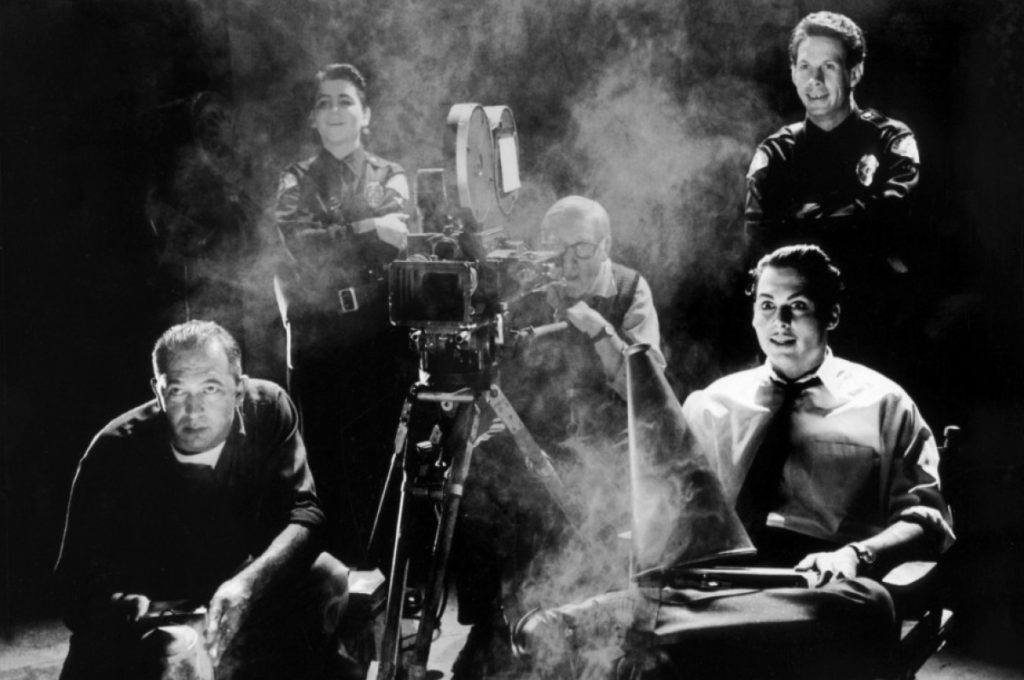
1. “Ed Wood” (1994)
The so-dubbed “worst director of all time” gets a hugely risky but vastly rewarding, heartfelt biopic in Burton’s acknowledged pinnacle “Ed Wood.” Doing more to ensconce Wood, the mastermind behind such trainwrecks as cross-dressing parable “Glen or Glenda” and wobbly effects masterpiece “Plan 9 From Outer Space” in the history books than any of his cronky, cheapo films, this delightful, artful and deeply melancholy tribute treats its pie-eyed subject with such love and understanding that it almost makes you want to revisit his films (until you do). Burton’s Wood was a man of boundless ambition, immense energy and zero talent and as embodied by a never-better Johnny Depp with puckish, toothy, can-do enthusiasm, it becomes a remarkable portrait not just of one eccentric, but of a whole category of nearly-men (especially valuable in a genre dominated by portraits of exceptionalism). The film is a cleverly subversive take on standard biopic tropes — shot in luscious black and white, it wisely limits its focus to Wood’s attempts to get “Glen or Glenda” off the ground, and to his strange, bittersweet friendship with legendary screen actor Bela Lugosi, played in an unendingly heart-squeezing turn by the great Martin Landau. Rounding out the cast are Sarah Jessica Parker as Wood’s squeeze Dolores Fuller, Burton regular Jeffrey Jones as a creepy TV psychic and the patron saint of cool Bill Murray, as Wood’s drag-queen pal Bunny Breckinridge. Beautiful to look out, steeped in a love not just of filmmaking but of those who loved filmmaking so much it dazzled and maybe even destroyed them, humane and deeply weird — how strange that this director should make his cinematic masterpiece profiling the opposite of a cinematic master. But then that’s dark irony for you, and that’s Tim Burton.
–with Rodrigo “I’ll Kill Anyone Who Says ‘Pee Wee’ Isn’t a Masterpiece” Perez


