


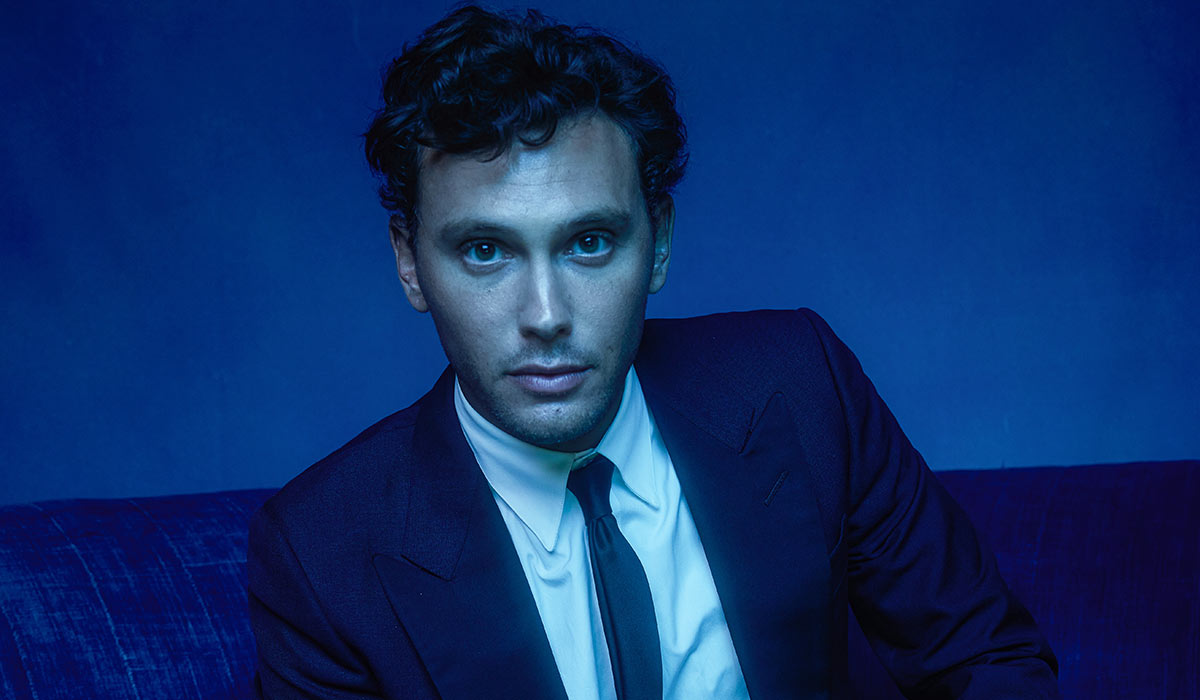
A decade from now, most people may not remember where they first saw Cooper Koch. Maybe it’s Luca Guadagnino’s upcoming drama “Artificial.” Perhaps it’s a limited streaming series. Maybe a future A24 or NEON horror movie. Or, maybe they will remember his Emmy-nominated performance in “Monsters: The Lyle and Erik Menendez Story.” Whatever the case, the role has been a two-year journey for the LA native, and has seen him transform from a relatively unknown actor looking for his big break, to being recognized on the street — the power of starring in a massively popular Netflix series.
During our conversation earlier this month, Koch did one of his last deep dives into playing Erik Menendez, one-half of the pair of infamous brothers who almost got away with killing their parents in 1989. Their subsequent murder trials forever shaped popular opinion over their sentences, even when there was ample evidence to prove both men had been abused in a variety of ways since they were children. Koch eloquently explains why he believes in the appeal of their life sentences, and why not meeting Erik before he filmed the series was the best course of action.
The relatively private Koch (he decidedly does not have a public Instagram account, rare for a Netflix star) hints at how much his life has changed since the show dropped on the streamer last fall; praises co-star Ari Gaylor, who plays the brothers’ lead defense attorney Leslie Abramson; tells us as much as he can about “Artificial”; and much more.
This interview has been edited for length and clarity.
_____
The Playlist: You earned a Golden Globe nomination and other recognition for your performance, but what did the Emmy nomination mean to you?
Cooper Koch: I mean, this is the big TV one, so yeah, it means the world. I feel so honored, and it’s so special, and yeah, I just feel like it was definitely relieving. You never know what way it’s going to go, but you kind of hope for the best. Definitely relief, and it means the world. I’m just so happy and grateful.
I know you’re making the Luca movie right now, or you were making it...
Yeah, still in it. We kind of switched locations. We started in San Francisco, and then I’m going to Italy on Friday to keep going.
So is this, this Emmy stuff a weird distraction from your actual day-to-day?
I mean, I’m not so busy. I think it’ll get busier when I get to Italy, but I have a nice sort of pocket of time this week where, yeah, I’m kind of like in both places.
“Monsters” has to have been your biggest break, the best thing that happened in your career. Do you remember the scene in your audition that might have gotten you the gig?
Yeah, it was the scene with Dr. Oziel where Erik confesses in the park. All the scenes were from episode one, and there was the scene back in the office with Dr. Oziel when Erik’s like, “Tell me I’m not a bad person. Tell me I’m not a bad person.” He kind of has a panic attack. And then it was the actual night of the event. So, the scene where the brothers are at the car and Lyle’s like, “You have to shoot first so you don’t chicken out.” And Erik’s like, “What?” And then they’re like, “I love you, I love you.” And then they go in and shoot them. That was one of the scenes. And then the last one was singing “Blame It on the Rain.”
They made you sing?
Yeah.
Did you know the song beforehand?
Yeah.
O.K. In all of that context, you get the role. You must be super excited. When did you find out about that episode five is essentially one-shot just on you? I think it says 27 minutes online. It felt longer than that.
It’s 34 minutes.
When did they give you that sort of heads-up, and what was your reaction to it?
I found out the day that I got the job when Ryan told me that I got it, and he told me about the episode, and I got the script that day, and I just cried.
Cried tears of stress or joy?
No tears of joy, and just gratitude, and just a realization of, “Oh, everything that I’ve done in my life, acting-wise up until this point has gotten me prepared for this moment. This is sort of the culmination of everything that I’ve been working on, also in my personal life as well, just like I’ve been given this opportunity, and my whole life has led me up until this moment.” So, I think just an overwhelming amount of joy and fear, and then reading it too was just like, “Wow, O.K., this is it.”
Did you at least have a couple of weeks with the finished script to rehearse?
The script never changed. From the first time that I read it. I got it in May when I got the job, and then we didn’t shoot it until March, so I think that’s like eight months, and it never changed, minus a couple of little tweaks that Ari and I made ourselves.
When you have something that long, is it hard not to overthink it in your head? Maybe it’s not.
Yeah, I don’t know if I ever overthought it because there’s not so much happening. It’s really just a conversation, and so I always kind of looked at it like that, and I wasn’t sort of in my house running the lines of the scene or practicing how I wanted to do it. I always wrote it out or thought it in my mind, or really, I was trying to make it more active of picturing the things that I’m reciting to because when you recite a memory of your own, you sort of take yourself back to that place and you’re like, “Oh, yeah, yeah, I remember that 4th of July and, oh, we were at this place and see how I’m out here.” You start to visualize it and put yourself there. So, I had to go and create all of those minute details of the experiences that I was then going to go and tell and talk about, so that when I did go and tell them and talk about them to Leslie [Graynor], they were out here and real and would affect me emotionally.
So this has been a two-year journey for you. Did you ever in a million years think that the reaction to the show would prompt the Menendez brothers to potentially have their sentence reduced or anything like that? Can you just talk about the sort of impact of the show, and I guess for everyone that was involved with it, what you guys all sort of think about the off-screen developments?
Yeah, for sure. I hoped that there was going to be a push, but I don’t want to say that the show takes all of the credit for what’s happened in the last year with them in real time. There’s been a lot of players who have been pushing for this to happen, and I actually think it started in COVID when the entirety of the trial got posted on YouTube and on Court TV. And it was the Gen Zers who took to TikTok and created this whole movement behind them. And then there was the Menendez Minuto documentary that came out, and there was another documentary. So, I think the push was already kind of happening, and then the show kind of was the, trying to figure out a good analogy. It was like the straw that broke the camel’s back. It kind of gave it that last final push to get it going. So yeah, just the fact that I was able to be a part of that, I’m just so grateful.
I’ve read that you met Erik after you’d shot the series, and a number of you went and visited the prison for an event there, but had you reached out or tried to contact him beforehand, or was that not possible?
No, I wasn’t. We were told not to do that, and I think that was probably for the best. I think it probably would’ve added even more pressure and perhaps could have gotten me in my head even more in a way I didn’t really need to. The Erik that I was playing, I had so much access to that Erik. I had hours and hours and hours and hours of footage of him. So in that sense, I didn’t need to talk to this version of Erik until afterwards. And I think because I was sort of always on his side and always very protective of him and was so passionate about doing him justice and playing him as authentically as possible, I sort of felt confident going in without having his grace or without having connected with him because I already felt so connected to him.


