


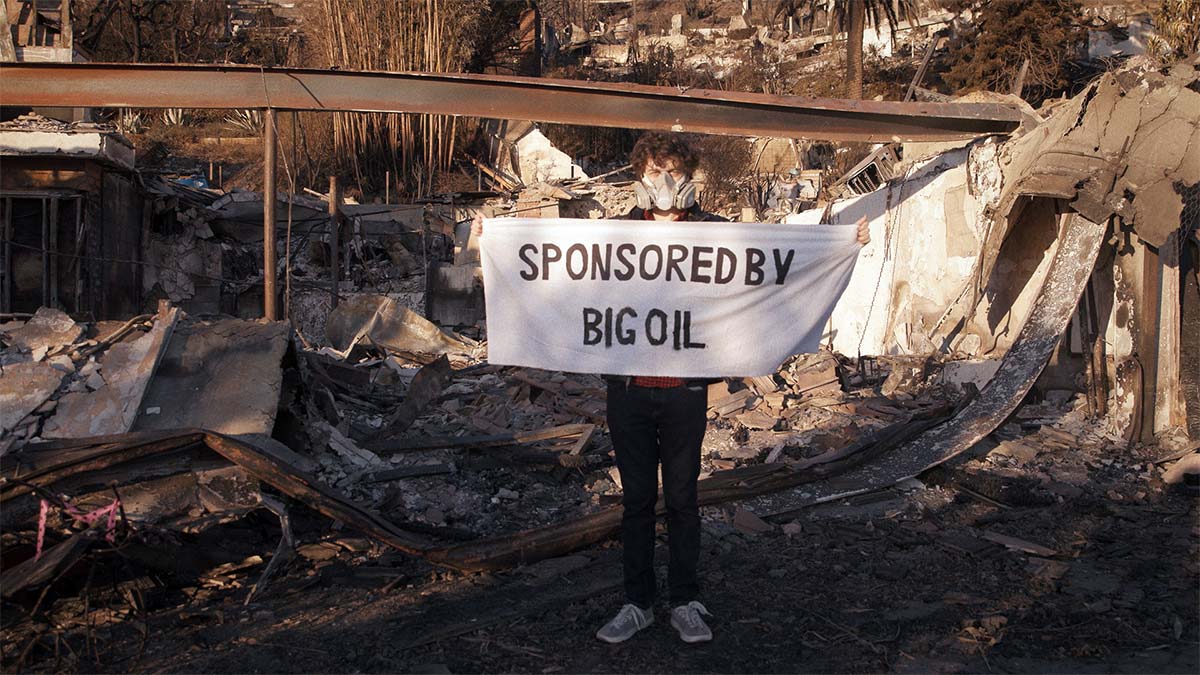
An excruciating journey of misplaced passion, unfocused energy, and wasted potential, “Just Look Up” strives to inspire hope for climate activism in the 21st century, yet somehow ends up accomplishing the opposite. Nauseating in its best moments and downright painful during its worst, this hagiography’s only achievement is an accidental incitement of anger: not at the politicians exacerbating the planet’s environmental collapse, but at the quality of the opposition fighting them.
The documentary opens in January 2024 at a Bank of America speaking engagement in Massachusetts for CEO Brian Moynihan. The founder/executive director of Climate Defiance, Michael Greenberg, leads a small group of protestors into the venue to shout down and disrupt Moynihan, calling attention to the bank’s financial support of fossil fuels. The demonstration is loud, disruptive, non-violent, breaks up without any arrests, and follows the script Greenberg and Climate Defiance repeat at other events for public figures.
Throughout “Just Look Up,” Greenberg attempts to outline the nebulous mission of their organization, telling Congressman Ro Khanna at one point that they want the climate emergency to be “front page of the news every day.” Eschewing Republican targets to attack the “mushy middle” within the Democratic establishment instead, Greenberg disrupts Senator Joe Manchin during a couple of different events and leads a small cadre of idealistic twenty-somethings through the planning and debriefings of these missions. Greenberg frames the success or failure of the work in the “views” the stunts get, and while they make it clear who and what they are against, their goals and objectives are less clear.
Directors Betsy Hershey and Emma Wall find a few opportunities to flesh out these questions through interviews, interactions, and fundraisers where Greenberg is the focus, yet they go nowhere. Journalist Oliver Milman presses Greenberg at one point about the tactics of Climate Defiance, and how their use of profanity and literal nose-to-nose screaming has the potential to alienate otherwise sympathetic onlookers. The rushed, unprepared response is that this approach garners the most views, something Greenberg deploys time and again whenever there is any discussion about the success of Climate Defiance’s initiatives.
There’s another moment when the leaders of Climate Defiance gather in Greenberg’s apartment to discuss strategy and the potential for the organization’s growth. The other members all tense up when the topic of shared leadership of the group comes up, a point Greenberg is hesitant even to discuss, let alone agree to (to the visible disappointment of everyone else). These fleeting scenes outline a fascinating struggle within a well-meaning organization that dares to be courageous. Yet, none of the skills, tact, charisma, organization, or practical leadership to see its mission through. And that story is a far more interesting one than the skin-peeling cringe clinic on display, which is as rudderless as its subject.
Yet for all the missed opportunities to lament for the roads not taken, the documentary also has the misfortune of serving as a depressing treatise on the state of progressive resistance in America. For Greenberg, the climate crisis is an existential emergency that is the most important political topic of the moment, and that’s an understandable position. Yet for a trans man in Idaho, or a Ukrainian woman in Florida, or a pregnant teenager in Alabama, or the child of immigrants in Minnesota, other issues are just as important, if not more so, in the immediate sense.
Climate Defiance isn’t out there building political coalitions, phone banking for down-ballot candidates, or establishing media connections to spread their message: they’re fundraising for themselves and making half-hearted endorsements for Harris during the presidential election. Just Look Up” is little more than an extension of these narrow efforts and is less of a documentary and more of a commercial for Michael Greenberg and, to a lesser degree, Climate Defiance. And while there’s a lot to admire about Greenberg and what their organization is trying to do, the same can’t be said for Hershey and Wall’s film, which is a well-meaning cinematic book report and little more. Their documentary refuses to critically engage with its subjects, the audience, or the world it inhabits, opting instead for a showcase of Gen-Z protestors more interested in their follower counts than in pursuing meaningful change.
How does Climate Defiance work? Do Greenberg and their regular cohort have day jobs, and if so, are these protests an after-hours, weekend-only thing? If they don’t have day jobs, how do they support themselves while doing this work? What are the quantifiable targets for Climate Defiance: are they related to greenhouse gas emissions, passed legislation, political representation, spending/donation capital, or something else? Does Greenberg speak for the entire organization, or is there room for discourse and strategy debates within Climate Defiance?
There aren’t any answers to these questions or others like them in “Just Look Up,” just footage of Greenberg leading protest disruptions, talking about the same, and sort of winging it through every crisis or decision point. If the documentary had been about how the best intentions inevitably run up against the cold reality of 21st-century politics and the unfocused enthusiasm of Gen-Z, that might have been worth watching. In a sad development for not just audiences, but the environment, this documentary very much isn’t. [F]

Warren Cantrell is a film and music critic based out of Seattle, Washington. Mr. Cantrell has covered the Sundance and Seattle International Film Festivals, and provides regular dispatches for Scene-Stealers.com. Warren holds a B.A. and M.A. in History, and his hobbies include bourbon drinking, novel writing, and full-contact kickboxing.


