



During the pandemic of 2020, Oliver Hermanus spent half his work week collaborating with Kazuo Ishiguro on the eventual Oscar-nominated drama “Living” and the other half of his time with author Ben Shattuck adapting that author’s novel “The History of Sound” for the big screen. Despite having Paul Mescal and Josh O’Connor attached, “History” took four years to get in front of cameras. “Living,” which starred Bill Nighy, was in theaters by 2022. Considering the popularity of the former duo, sounds a little strange, no?
Thankfully, despite numerous delays, strikes, and financier issues, “History” not only debuted at the 2025 Cannes Film Festival but will be released by MUBI in multiple territories, including the U.S., next month. Before that opening, Hermanus’ period drama on true love lost between two men will have one last festival stop at the 2025 Telluride Film Festival. Catching up with Hermanus earlier this month, the South African director shared some genuinely shocking anecdotes in the long journey to get the movie in front of cameras. Including the fact that A24 wanted to skimp out on the budget for a Paul Mescal and Josh O’Connor movie (yes, re-read that sentence again).
“That’s a moment where you have to go, ‘Thank you so much, A24, but I’m gonna, you know, have to roll the dice somewhere else because I’m not prepared to let go of that aspect of the storyline.’ So, then you start from scratch,” Hermanus says. “There are those moments where you are confronted with a choice and you have to decide what you’re prepared to do. And you know, the one thing that we had to do in the end, which was a compromise, was the availability of everyone and the timeline. We had to change the setting of their trip from a summer trip to a winter trip because we shot the film in the Winter. That was something that came my way, and I go to the writer, and he’s like, I think I can make that work.’ And so that becomes a creative solution that we can work with. But, of course, there are many other things.”
And then there was the paparazzi…
This interview has been edited for length and clarity.
____
The Playlist: I was reading your statement in the press notes, and one of the things that really struck me was that you said the film is about the idea that your first love might also be your greatest and your last. And I don’t necessarily disagree with that, but are you personally that pessimistic about love?
I don’t think it’s pessimism. I think if you assume that, if you assume that in your life, you will have a first, a great, and perhaps a last. That there will be separate things. Then there’s always the risk that they could all arrive in one. And I don’t think that’s necessarily a sad thing. I think it’s a great thing if you recognize it in the moment, and then you will live the rest of your life with this one person. And perhaps that’s what we refer to as true love, which, you know, whether that exists or not. But there’s also the version, which I suppose the film is kind of leaning toward, which is that you might not recognize it in the moment, and so you will only come to realize it much later in life. And so then it becomes a reflection of something that was very brief and perhaps not fully explored, but had enough of it for you to know that it was, it was the great love of your life.
I don’t necessarily disagree with you. I always have hope that someone will find another one.
You might, but it might not be as pronounced. It might, it might not. Because I think the assumption is that a lost love is not necessarily in scale as a great love. And the first love is also not as in scale as a great love. I suppose. It’s like this idea of a, a pyramid or a mountain that you climb, but if it’s all in one, then, you know, that’s, that’s, that’s pretty hard luck.
What about this short story initially piqued your interest?
It’s the feeling. What appeals to me, or what I think appeals to most people when they read something, whether that’s a book or a script, is the wisdom of that piece of work. If there’s a wisdom to it, if there’s something that you can touch in terms of an idea that just feels very near or profound or concise and is being told to you in a way, it was being communicated to you in a way that feels incredibly wise and incredibly intuitive. And that’s the quality of Ben’s writing. He seems to know something about what it feels like to miss something. For something to happen, and then to go in one direction, and to get to a new point, and then look back and realize that there was a moment where things could have gone another way, and that would’ve been a different life. And I think that’s a very powerful idea. And I was very moved by his ability to communicate this old man sitting in his apartment, reflecting on this in the short story, and then thinking about how that could be expanded into a movie, and explore the same theme. You know, a big misconception perhaps about the movie is that we happened to put Paul Mescal and Josh O’Connor in it. But when I decided to make it, Paul Mescal and Josh O’Connor were just two very interesting actors who I had met and were considered by the majority of the world to be TV stars. And, they’re just great, brilliant actors. And these were great roles, and it was gonna be these two actors had the same interest that I did, which was this feeling, this exploration about the nature of relationships and love. And then Paul and Josh become Paul and Josh in the way that the internet now sort of likes to think of them. And then the context of the movie or the sort of interpretation of the intent of the movie has completely changed. Not from the inside but from the outside. But how, you know, the three of us have been trying to make this movie for many years. Our interest was this same interest, which was that we responded to this, to this profound and moving idea.
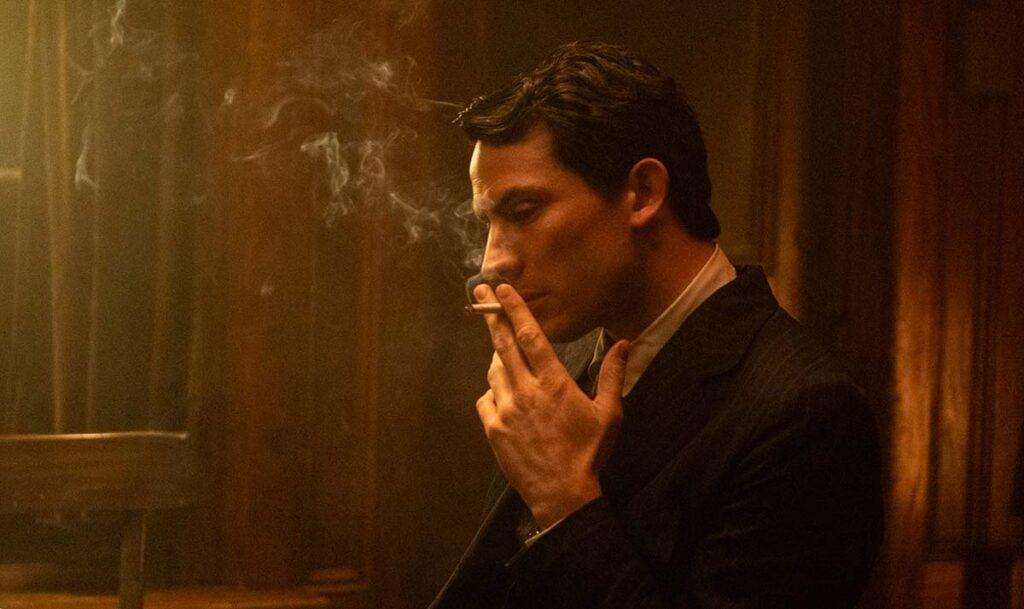
During the pandemic, you were spending half your time working on “Living” and the other half working on this. Were you ever afraid, I don’t wanna use the word waste, but that the efforts that you were putting towards adapting “History” would lead to nothing? Or were you always confident that you would get some version of it off the ground?
I never know. Like the movie that I’m currently trying to get off the ground, I’ve also just put in two years of work in that one while I was making “History of Sound.” So it’s never a question of what it will cost. The reason why you doubt whether it will get made is just the fact that show business is a casino. You just never, never know. And I think there were many moments in “The History of Sound” journey where it felt like, because we had internal kind of delays, you know, Paul had to go do “Gladiator,” Josh had to do “Challengers.” I was going to make a TV series, then there was the actor strike, then there was the writer’s strike, or the other way around. And so the delay of the strike meant that Paul hadn’t finished “Gladiator.” And Josh was about to go on a world tour for “Challengers” promotion. So, our window to shoot this movie was shrinking, and Paul was still enormous physically. And so we were just checking every day. But then October of 2023, I just decided to move to the US. It was still the strike. And I was like, “I’m just gonna go and I’m gonna start working on this movie on the ground and I’m gonna roll the dice and the actors are gonna roll the dice and we’re just gonna assume that we’ll get it.” And miraculously, thankfully, the strikes ended. Paul finished “Gladiator” and then starved himself for a good couple of weeks. And we generally stuck to the schedule that could fit everything in. And you have to believe. You have to roll the dice, you have to take the risk. And they, they did the same thing, the actors for sure.
Do you think there was any benefit in that two-to two-year delay? Do you feel like you learned anything that you, that made the movie what you initially conceived?
No, no. I think maybe I learned more about the nature of the film industry in the US and the UK. I think I learned a lot more about the power of fame in a way. Because Paul and Josh, I mean, I went everywhere with this movie. I pitched it to everyone. You name the studio, you name the company. Everyone loved the screenplay. Nothing changed. The screenplay did not change for two or three years. It was the same screenplay. We saw everyone in 2020. It was literally just the world, the economics, and show business overall had to come around to see the value of these two actors in this movie. And so that’s what I kind of learned is that you have to accept that the outcome has to be right sometimes.
It seems like the making of the movie was a big adventure. You’re like shooting in New Jersey, trying to make it look like Maine. You’re shooting in the UK and you’re trying to avoid paparazzi in Rome and climbing up hills to shoot in this great big mansion. Did it feel like an adventure or did it feel like a battle?
Oh, no. “History of Sound” was really one of those great filmmaking experiences. You know, everyone, everyone comes to a movie, especially in the United States, people come to movies, there’s the crew they all work with, and so they all have their own experiences, and they sort of have an experience of how things work and how things go. And I think they just could not keep up with Paul and I because Paul and I have the same energy to a degree, which is that we’re highly impatient. And so we run around. And so it was, I think there’s always this upset, “Oh, the director’s gonna be, you know, really wanting to go, go, go, but the actor is gonna be, you know, no, this is my time.” Whatever the opposite is true of Paul and I, where I could literally just text him while he was in hair and makeup. We were like, “The light is correct,” that he’d come running from his trailer with makeup and hair people and assistance running behind him because they can’t run fast enough. And so we were very organic. We were all about creating and being there for the right reasons. And so there was always that feeling that whenever there was an idea, it was worth interrogating. And we, there were just silly things. The paparazzi were very insane in Italy. And we were sort of baffled by this because we, we had to all kind of remember, “Oh yes, Paul, it’s a name.” But at the same time, that’s why he’s Paul Mescal. He’s totally worth the fame. But we were so in our own little world. And we were in such a strange part of Italy, it was just odd to us that people had an interest and in New Jersey we once we saw a paparazzi photograph and we had to try and work out where those people were because we were shooting on a lake and we were pretty certain that from where the vantage point of what they shot, they must have been on a boat because there was nothing in that lake. So, they took the time to, like, cheat their way into this private reserve and then hide that boat, ’cause we would’ve seen that boat. Like, the effort to take [those photos].
Wait, I knew there was paparazzi in Italy. I didn’t realize they went to New Jersey. Were these like UK photographers trying to do this?
No, this is American paparazzi, well, whatever. And I think every director hates it because, yeah, you don’t want people to see the costume or the things. And like, you know, when movies get shot in New York, you’re seeing this right now with “The Devil Wears Prada 2.” They can’t avoid it. It’s the price you pay for shooting in New York is that you can’t close things off. I’ve never shot in on the streets of New York, so I dread that actually. But in shooting in a nature reserve in the middle of nowhere in New Jersey, you feel pretty confident that you’re on your own. But then the next day we saw photographs of them on the dock, and we’re like, “That must have been on a boat.” It’s just mind-blowing.
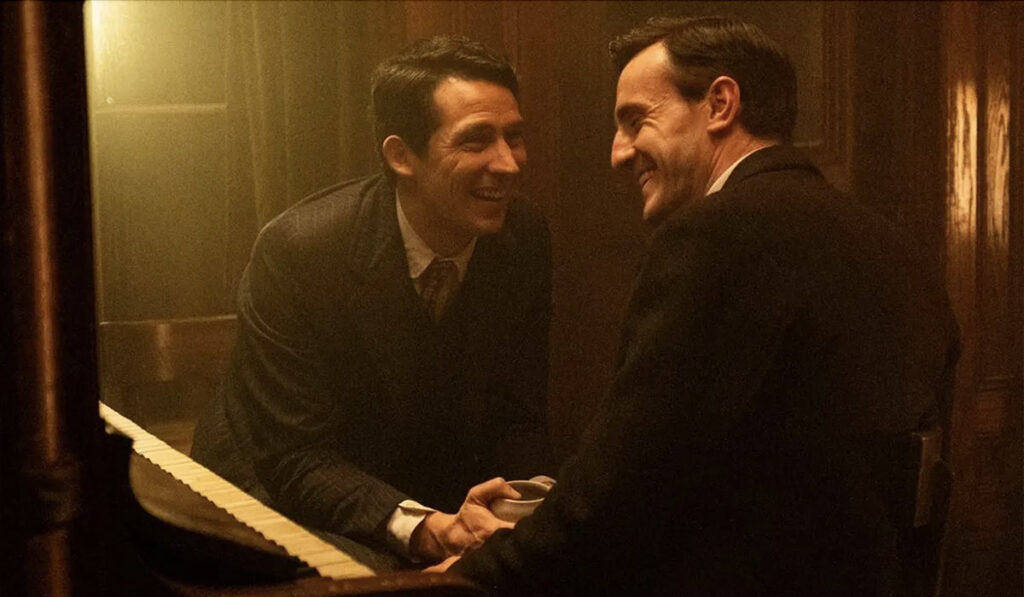
You mentioned the Internet’s view of Josh and Paul, and you no doubt hoped that they’ll have chemistry together and that it would work on screen. Were you nervous at all that it, that maybe it wouldn’t work? Or was there a moment on set you were like exhaled and exhaled and was like, phew?
You know, I think Paul and Josh are such phenomenal actors that they know that it’s part of the success of their performances to have chemistry. They know that that’s a big part of the nature of the story. And so they put the work in. They got to know each other. They became friends years in advance. And they organically built a connection with each other that by the time of making “History of Sound,” they were incredibly close. And so they had found things about each other that they admired and loved and adored. And, so that’s the sort of, like, the quality of their craft, these two people’s work. They don’t just arrive and like hope for the best. They have meticulously thought about what they do. I mean, both of them are performing in pretty complicated accents that neither of them speak naturally. And Josh does not play the piano, but learned how to play the piano pieces that he had to learn. So, there’s all that technical stuff, but that’s just what I love about actors like Paul Meco and Josh O’Connor, famous or not famous, is that they are incredibly hardworking.
The music is an essential part of the film. I’m wondering, did the extra years give you more time to really lock down what you needed to have? Did that time help at all?
Well, no. I kept changing my mind about the music because it was also that same thing of a collaboration with the actors and the composer, and the writer. As we got closer to making the film, we sort of started defining our favorites and sharing music, and we recorded many different things with both actors to hear them, and they made choices based on that. So, it’s generally how I like to work. I can make hard decisions about certain things in advance, but I also don’t like to be too closed off because that’s just, I suppose, the way that I was trained as a filmmaker from my education in England. But, more so, I think this is kind of how I intuitively make films. I like to be organic, but I have to be working with people who I trust and whose taste I trust and whose creative input I trust. And so it is a closed circle, but it is still very much a live collaboration.
I have read about how tight the budget was to make the movie. And some choices had to be made in what was adapted from the novel. Was it literally a Sophie’s choice of “We can have his storyline be in the Alps” or “We can go to Rome”? Pick one or the other?
The first outing for this movie to financiers, A24 loved the screenplay. And they were like, “Yeah, we could give you $8 million, we’ll make the movie for $8 million.” And I was like, “But for $8 million, I can’t go to Europe. Like, that’s not possible.” And they’re like, “Well, yeah, they, maybe they should go like, you know, Las Vegas or something.”
In 1917, yeah. [Laughs.]
So it’s like, well, that doesn’t work. Like this is a big part of the short story. So that’s a moment where you have to go, “Thank you so much, A24, but I’m gonna, you know, have to roll the dice somewhere else because I’m not prepared to let go of that aspect of the storyline.” So then you start from scratch. There are those moments where you are confronted with a choice and you have to decide what you’re prepared to do. And you know, the one thing that we had to do in the end, which was a compromise, was the availability of everyone and the timeline. We had to change the setting of their trip from a summer trip to a winter trip because we shot the film in the Winter. That was something that came my way, and I go to the writer, and he’s like, “I think I can make that work.” And so that becomes a creative solution that we can work with. But, of course, there are many other things. And then the biggest thing in a period film always is the number of bodies you have in the film. Because wherever there are bodies in the film, you have to dress those people. And that’s money. I learned that lesson, making “Living” with the great Sandy Powell was like, your budget’s gonna go to the people because the costumes cost a fortune. And so that’s always the compromise. It’s like you want the world to be populated, but small movies like this are a very, very difficult little magic trick that you have to do to be able to make that believable.
You’ve now made four period movies in a row, which is remarkable for any filmmaker. Are you dying to make something contemporary, or is it just whatever story that appeals to you that you wanna tackle?
I don’t think I think about it like, “Oh, I must make something contemporary.” It just so happens that I’m making something contemporary, hopefully next, which is contemporary in an exciting way, ’cause it’s sort of about class and ultra wealth in the United States. So, it’s contemporary in a way that is like a different kind of melliu, but one that feels like it’s equally kind of juicy to sort of dig into.
“The History of Sound” opens in limited release on September 12

Editor-at-Large Gregory Ellwood is one of the entertainment industry's most respected journalists and critics. Based in Los Angeles, he's the only current awards expert who previously worked on Oscar campaigns at a major movie studio. Over the years, he has written for the LA Times, Variety, The Hollywood Reporter, and Vox, among others. He also co-founded the entertainment news site HitFix, which spawned a legion of influential Emmy and WGA Award-winning alumni.


