


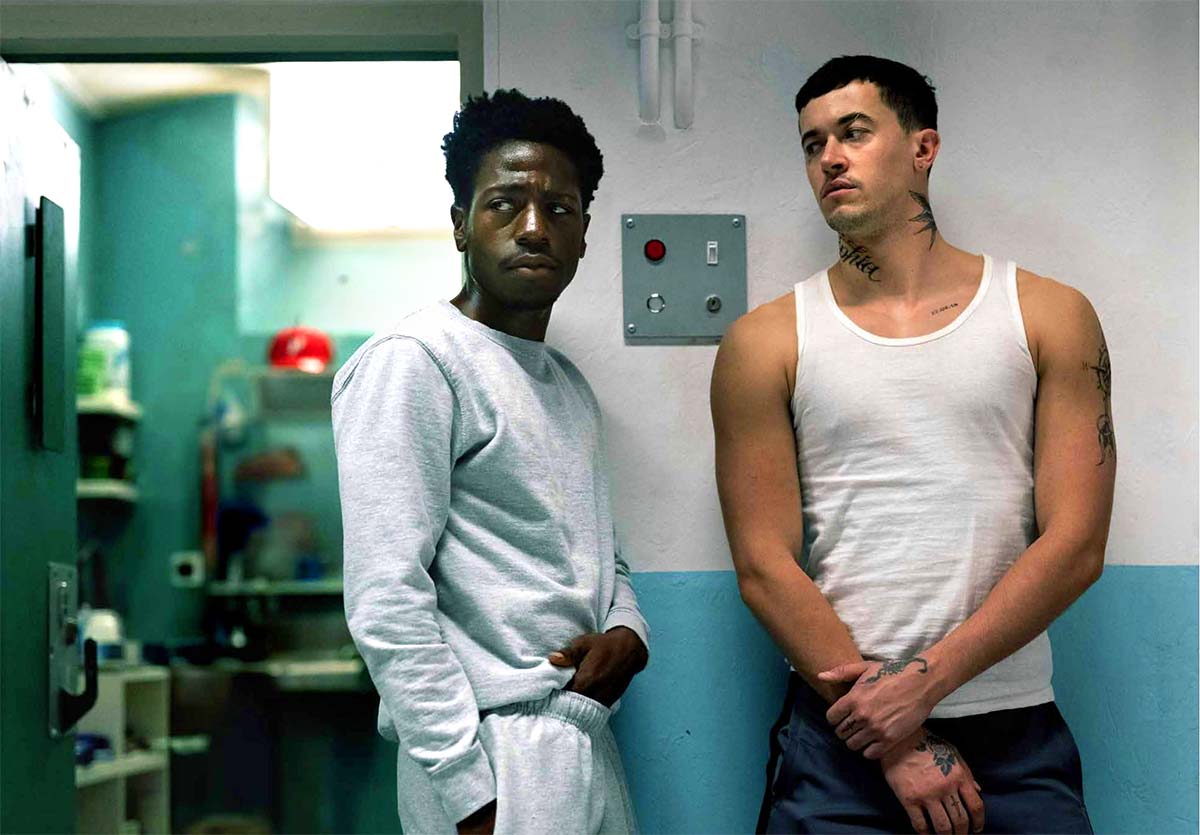
A brutal two-hander that manages to rise above its obvious influences and cliches, Cal McMau’s directorial debut “Wasteman” stares deep into the dehumanizing aspects of prison culture. Acutely aware of the more recent intersection of social media and prisoners’ lives, told through Tik-Tok’s and other short-form videos filmed on contraband phones, “Wasteman” twists what is on the surface a fight between a psychotic prisoner and his meek cellmate into a compelling meditation on how prison can strip away one’s humanity.
READ MORE: The 150 Most Anticipated Films Of 2026
It also features a nuanced performance from David Jonsson, who is quickly becoming one of the most compelling actors of his generation. He plays Taylor, who’s been incarcerated for years now but, finally, is given a shot at freedom. Throughout, Jonsson toggles quickly between resignation, fear, and confidence as he navigates his now-staid routine and begins to imagine a life outside bars, where he could maybe make amends with his son, whom he left when his son was just a baby. He’s quite literally the title character for a time, a man wasting away his existence in a concrete-block purgatory.
That stupor is upended by the arrival of Taylor’s new cellmate, Dee (Tom Blyth), a charismatic sociopath. Hauling in an air fryer, a Nintendo, a smartphone, and enough drugs to sedate the entire cell block, Taylor quickly becomes enamored with Dee’s dick-swinging confidence. They bond and party together, with Taylor eventually moving Dee’s drugs throughout the block. But, if you’ve seen a single prison movie or, perhaps, an episode of “Oz,” you’ll know how this goes.
Dee upsets the prison hierarchy, sparking warring factions, with Taylor in the middle. His meekness is exploited by Dee, who thinks that he can boss around his more passive counterpart. Yet, if the contours of Hunter Andrews and Eoin Doran’s script feel almost regressive on how liberally they borrow from any number of UK prison dramas — “Starred Up,” “Bronson,” etc. — Blyth and Jonsson especially elevate the material. While Blyth has the more outsized role, playing a preening psycho who thinks they can run the show, it’s really Jonsson who has the meatier role. Weary, reserved, and gaunt, Taylor’s years of imprisonment have obviously made him numb to emotion. He cuts hair, works in the kitchen, and occasionally talks to his former girlfriend. The arrival of Dee obviously reactivates his humanity, as he begins to socialize, reach out to his son, and become more alive in his day-to-day life.
Here, Johnsson subtly showcases how Taylor’s lifeforce slowly comes back, only to ebb and flow based on Dee’s mood swings, as his cellmate eventually forces him into a role as his lackey, until enough happens for him to begin to scheme a way out from underneath him. It’s an interesting back-and-forth, but it’s also very obviously moving towards a pretty telegraphed ending. Of course, these two will be on opposing sides and, no surprise, one will come out victorious.
Less central but perhaps more interesting are the quick cuts McMau makes to highlight how prison life is translated onto social media apps. The film often cuts to vertical video, as some inmates use their contraband phones to showcase a beating, riot, or even someone being let free. The encroachment of modern life and the digital footprint of what is, ostensibly, one of the last remaining places outside the scope of the internet is a fascinating motif that runs throughout. But it’s also never exactly developed beyond the aesthetic choice to switch the image ratio and presentation. While Taylor uses Dee’s phone and Instagram to reach out to his son and begin reconnecting with the outside world, the performative nature of these videos becomes less interesting to McMau as we move closer to the film’s end, where schematic design and plot become much more important.
What we have, then, is a film that is so obviously in debt to the kitchen-sink prison dramas that came before it. While “Wasteman” doesn’t break any new narrative ground, it is nevertheless a calculated and enticing debut from a director to watch, in addition to featuring a performance from an actor already on the rise. [B+]


