



The curves and crevices of Hong Kong’s architecture adorn the boxy frames of Kogonada’s latest feature, “Zi,” which returns him to the more subdued and small-scale humanism of his acclaimed debut, “Columbus.” The densely populated metropolis comes across as innately cinematic and ideally suited to the dreamlike quality the filmmaker seeks in this new visual poem. “Zi” tacitly serves as a palette cleanser from his less-than-successful recent foray into larger-budget, studio moviemaking with “A Big Bold Beautiful Journey.”
READ MORE: Sundance 2026 Preview: 30 Films We Can’t Wait To See
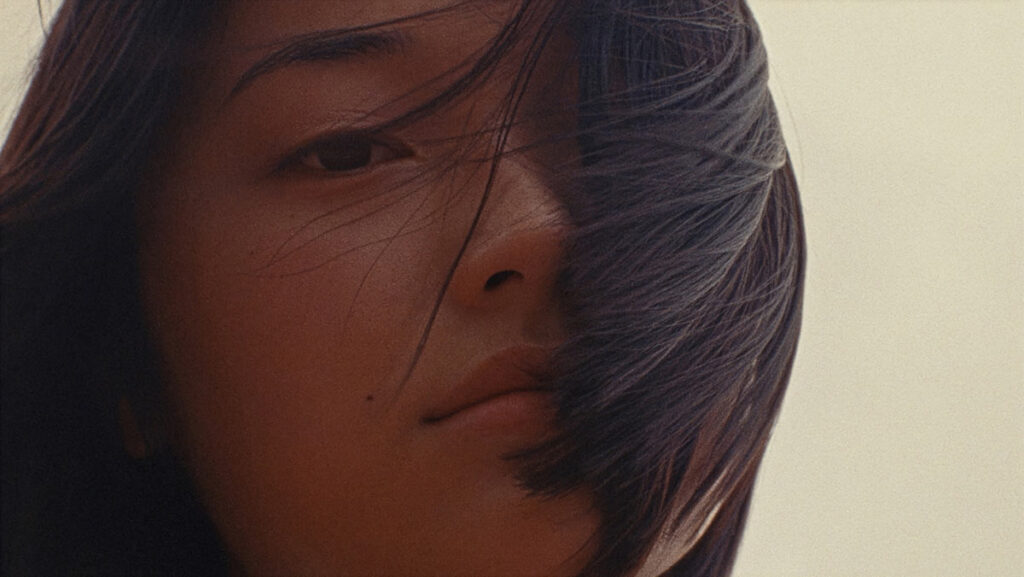
Back to his essayist roots, Kogonada opens with ethereal images of Zi (Michelle Mao), a young musician awaiting a neurological diagnosis, who sees herself almost as if detached from her body. The present is sleeping away from her, so much so that her psyche now has trouble determining whether what she’s experiencing is a memory or taking place in the moment.
That timeless effect is achieved through the film’s elliptical construction and cinematographer Benjamin Loeb’s shooting style, procuring each shot feels part of an ethereal stream of consciousness. Zi is essentially standing on the border between what she feels subconsciously and what is real. Kogonada, also the editor, is invested mostly in ambiguity and fragmentation here, but that might actually make one more aware of how thinly drawn the story that unfolds within the hazy approach is.
As Zi wanders through Hong Kong in a catatonic state, she runs into L (Haley Lu Richardson), a dancer wearing what’s clearly a wig. The encounter may seem random, but the immediate interest this American woman shows for Zi is cause for suspicion. At a distance, a young man appears to be observing them, suggesting that these two strangers may know more about Zi than they led on. In a scene where L dances for Zi, in part to soothe her, the camera angles shift to make one aware of the space, a reminder that Kogonada has a keen eye for the shapes that build our environment. “Columbus” follows two architecture lovers quite literally on an informal walking tour.
Eventually, the two women visit Min (Jin Ha), L’s ex-fiancé and the person who appeared to be following them earlier. He happens to know more about Zi’s possible condition. The couple’s untimely breakup after years together remains a difficult subject between them, in part because Min had agreed to return to Hong Kong for L’s sake after living abroad. The intricacies of their relationship take up more time than one might expect, given that Zi is the focus. Still, the characters in “Zi” are secondary to the overall intent of creating an atemporal vision. And what the viewer learns about them mostly suggests that Hong Kong represents either escape or dread for each of them.
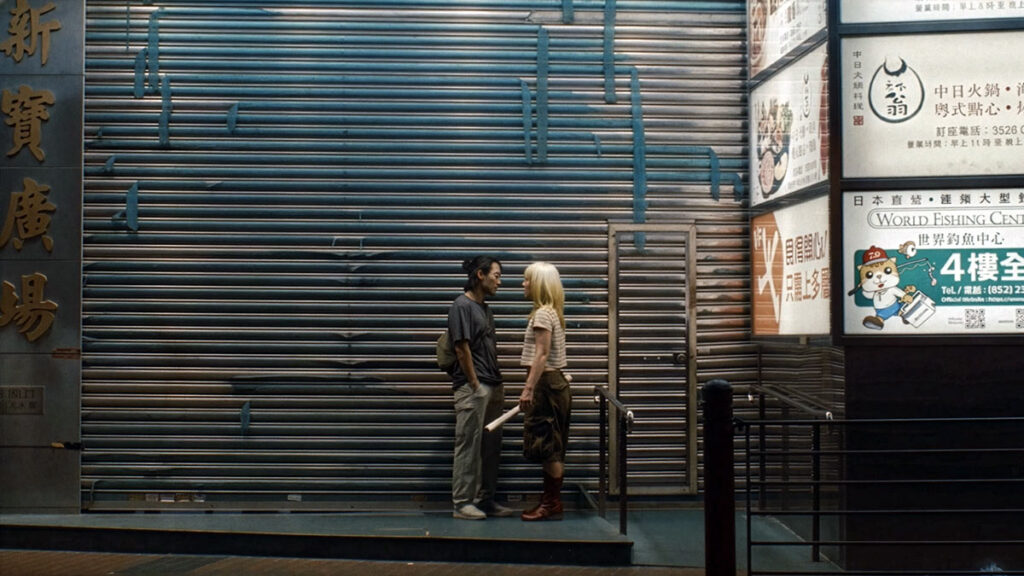
Indebted to Wong Kar-wai’s “Chungking Express,” not only in their shared location and the blonde wig detail, but in its aesthetic spirit, “Zi” acts as a visual poem about a city, though much less frantic than the reference film. While in “Columbus,” Kogonada’s characters could walk down streets without crossing paths with another resident and bask in the beauty of local structures, in “Zi,” the bustling urban area, which truly seems to never sleep, almost refuses to offer them any privacy. When Zi (played by Mao, with the anxiety of someone who is an enigma even to herself) runs away from Min’s apartment, the trio is plunged into the crowded streets, where trains, pedestrians, street karaoke, and food stalls overload the senses.
For all its entrancing imagery, “Zi” is ultimately contrived in how the few concrete details of the narrative come together. The result is more experiential than thematically substantial. That “Zi” was shot on location over a period of three weeks, with six of Kogonada’s friends and a loose outline, may be the cause. And yet, that a filmmaker who’s established himself with films ranging in size and ambition would be willing to essentially make an experiment of a movie with kindred spirits feels compelling in and of itself. More directors should take a step back to recalibrate rather than going after constant growth. Perhaps it’s best to consider this as a transitory project for Kogonada, who, like Zi, may be in between two realities, in his case artistic ones, and trying to figure out where he fits best. [B]
Follow along for all of our coverage from the 2026 Sundance Film Festival here.


