


There are very few films or nominees we’re actively rooting for this awards season, but on that short list is Clint Bentley’s “Train Dreams.” A world premiere at the 2025 Sundance Film Festival, the adaptation of Denis Johnson’s novella became one of the most critically acclaimed films of the year, earning a slew of accolades and even making this critic’s top 10 list. And, now, it’s on the verge of something truly special, almost a year to the day from its first public screening, a Best Picture nomination.
READ MORE: Joel Edgerton Is Finally Getting His Flowers For ‘Train Dreams’
The fourth feature collaboration between Clint Bentley and Greg Kwedar, after “Transpecos,” “Jockey,” and last year’s Oscar-nominated “Sing Sing,” we caught up with the former late last month to discuss the film’s incredible scope on an indie film budget, Joel Edgerton‘s “another level” performance, the key scene Edgerton and Felicity Jones improvised, how startling contemporary the film is and so much more.
This interview has been edited for length and clarity.
_____
The Playlist: This book was a finalist for the Pulitzer Prize. I’m sure a ton of people were interested in adapting it. How did you and Greg get involved in the project?
Clint Bentley: Yeah, Greg and I wrote the script together. So, there were some producers who got the rights to the book when it came out. Marissa McMahon…actually, Ashey Schlaifer and Will Janowitz, who also produced the film, had the rights, and they’d been looking for a filmmaker for a while to adapt it, and I think just having trouble doing so. And then they saw “Jockey” at Sundance, and they reached out to me about adapting it. And I had loved the book from the time it had come out, but I didn’t actually think about it as a movie, and don’t know if I would’ve had the courage to do it as a movie had they not asked. Then, when I went back and read it again, thinking about it as a movie, I just fell in love with it all over again and saw so much potential in it. And then from there, it’s all A to B to C, but very tough to write the script. But Greg and I got to work, and then Joel came on board, which fun fact: Joel had read the book a few years earlier and had wanted to adapt it as well. When he inquired about the rights, they were already taken. And then it came back around to him as it did for his character, Robert Grenier, as well.
Am I wrong in suggesting that you take it in a different direction structurally than the book?
No. I mean, the book has a structure, but it’s hard to find the structure for that book because it’s so stream of consciousness. It’s all over the place. It’s only 116 pages, and he meets Gladys [Jones], and then a page later, they’re married, and then five pages later, she’s gone in a fire, and then she comes back. He dies on page 68, and then he is back alive. It’s all over the place. And so I wanted us to find a structure for it to make it make sense. Maybe if I had made it three films from now, I could have done something more all over the place if I were a better filmmaker. But for now, I think finding a structure that could make it work as a film narratively, but then also not lose that wooliness that it has as a narrative. And there’s something very special about how it just jumps all over the place that I wanted to definitely try and retain as much as possible.
You made this as an independent film with an independent film budget. And yet, the amount of period detail and scope you have is incredible. You didn’t shoot this in Calgary, either. You shot this in the U.S. You didn’t get some massive tax credit. How hard was it to pull this off compared to the other films you have worked with in the past?
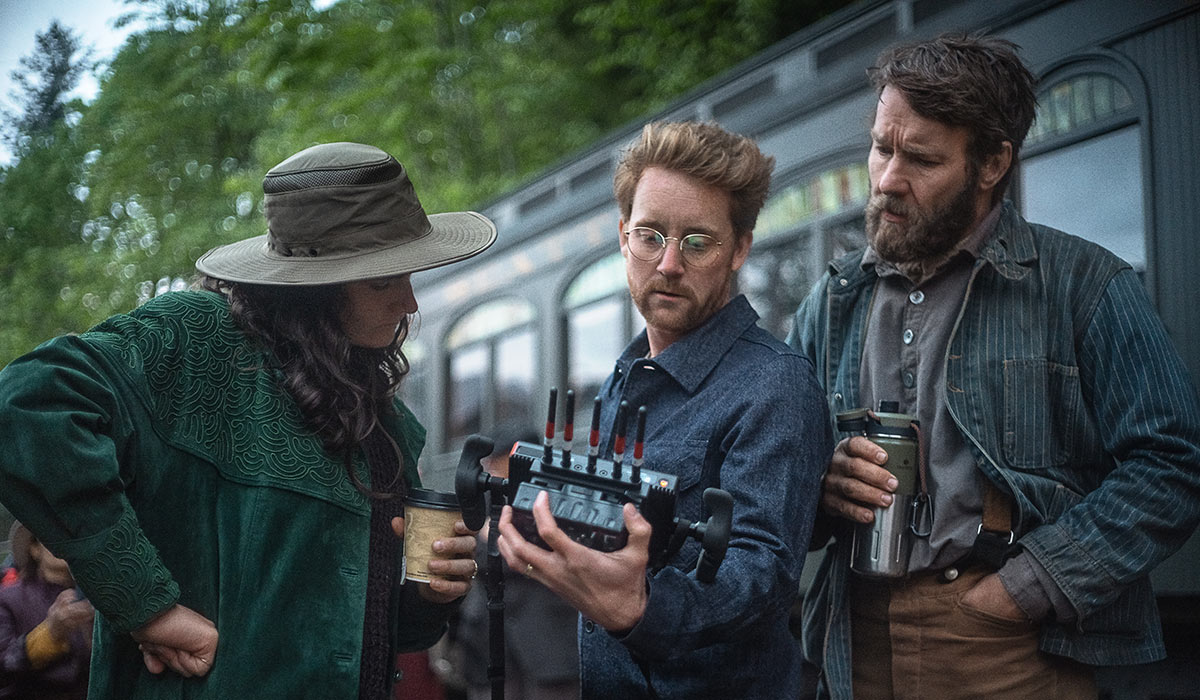
I mean, every film that I’ve ever worked on has been incredibly difficult. We made “Jockey” in 20 days with 15 people for 350 grand. And this one, I have to say props to BlackBear Pictures and Teddy Schwartzmar. They were the only people who put in an offer on the film and believed in it. And we shot this one in 29 days. Yes, in Washington State, out in the woods, out on location. You don’t have the money to just do whatever you want, but what gets exciting about this process of making a film is that it forces you to come up with very creative solutions to things. And I think we couldn’t have done that without one, a cast who’s f**king on it and can just pivot on a dime and is so phenomenally talented. But also the crew, our department heads, Adolfo [Veloso], you can walk out into a parking lot, and he can make it look like the most beautiful thing you’ve ever seen. And then Alexandra Schaller, our production designer, and her department. A couple of examples of things that they did that we couldn’t afford – that little train that comes across the tracks at the beginning of the film. We’re shooting on a real old trestle bridge from the 1910s that we had found out in the woods. And we couldn’t afford to get a little old locomotive out there. So, they built one out of built a shell of one that we could pump smoke out of. And a lot of those trees, those old big trees that the guys are standing on that looks like they’re cutting into this thousand-year-old tree and they’re the guys laying in the notch, they built this 12-foot tall stump and painted it, made it look like a tree, and it was built out of plywood and fiberglass or whatever, and then put moss in it and everything. And then the actors could actually cut into it, and then we extended up the top with VFX. And so there are a lot of things like that that we were able to just be scrappy. And I’ll say there’s a ton of VFX in the film, and I’m proud to say it because I think it’s mostly invisible. Our VFX supervisor, Ilia Mokhtareizadeh, is incredible.
You got ahead of me with one of my questions. Were you able to avoid cutting down any trees at all, or did you cut down just one? For that one shot?
We only cut down a couple, and none of us wanted to do the very thing that we’re criticizing in the film in terms of the destruction of nature. So, the few trees that are cut down in the film, we went into logging areas where they were already cutting down trees, and we just asked them, “Hey, what trees are you going to cut down next week, and can we film it while you cut it down?” And so they were in areas that were being managed by logging companies already, and then we were just like, “Can we just bolt a camera to a tree while you cut it down?”
You just said you shot this in 29 days. There are so many images that are quick, five-second, 10-second shots. You’re out in the woods, you’re out and about. Were you going with Alfonso with the second unit or just shooting what you needed to? Was this all storyboarded out? How did you get that depth in such a short amount of time?
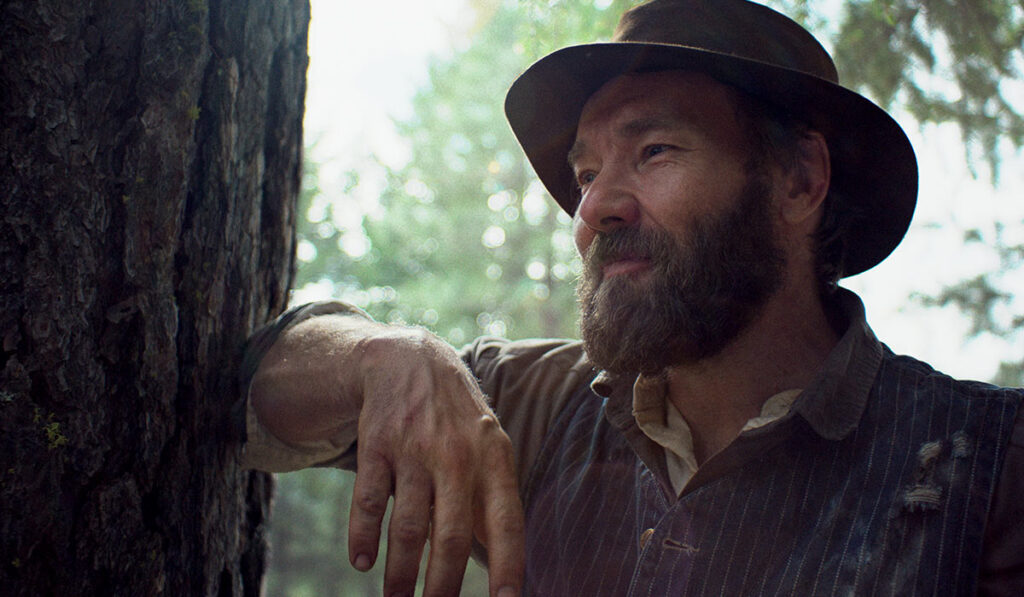
It’s a combination of all of these things. I think there’s part of it with a lot of the nature shots that are just nature, Adolfo and I, or just Adolfo would slip off and just grab shots of things in between things that we’re doing. So, it’s like we were shooting in this forest that had been ruined by a wildfire, and then we were walking to go over to shoot a scene and just saw this bird nest in a tree, and we’re like, “O.K., grab a shot of that. ” Or we’re setting up for something, and the moon just looks perfect, and I would just point to it, and Adolfo would just shoot it for a minute. And so we’re trying to grab those things along the way. Or while I was working with the actors and prepping with Joel and Felicity, I would see Adolfo just over to the side, shooting something. And then we’re also trying to get things as we were coming together. So, a good example is the scene where Joel and Felicity are hunting, and she shoots the gun. That was one where, in between us going from where we landed with the cars and the trucks to stop, we’re walking over to the part where we know we’re going to shoot the scene where she’s going to shoot the gun. And on the way, Adolfo and I are just shooting with Joel and Fulicity, all these different moments and shooting the trees and stuff like that. Picking up all this stuff along the way, and Joel and Felicity are creating these moments together as characters that then sometimes they’re used in the scene, and sometimes it gives you that material later as a flashback or some sense memory. I like to have a lot of material to go into the edit with because you never know what idea you’re going to have from editing the material together. Where you’re going to go “Oh, that would illuminate this moment a bit more.”
I spoke to Felicity for “The Brutalist” before “Train” debuted last year, and she was glowing about the experience, saying it was unlike anything she had ever shot before. It sounds like this is why this could stress other actors or even line producers out. How do you keep everyone on board that everything’s going to get done, but “Hey, I’m going to take two minutes and go shoot this, and I’ll be right back”?
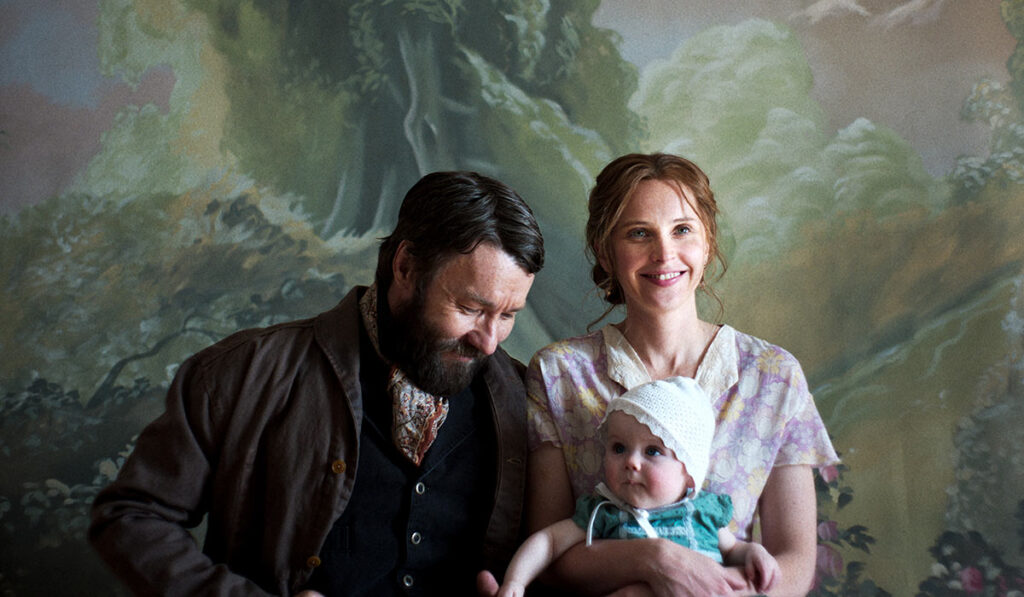
I think part of it is just having a plan going in. I think this applies to anyone, even as a film watcher, watching a film. I might not know where it’s going, but if I feel like the filmmaker knows where it’s going, I’m like, “Yeah, let’s do it.” And I think having that going in with a plan and saying, “Hey, here’s what we’re going to do. And if we have time, we also might pop over and do this or do that, or here’s why I want to do this.” I think being open and being honest with people, especially people who are as professional and as experienced as Joel and Felicity. And then also being honest. I was very honest with them at times where I was like, “I don’t know if I’m going to use this or not, but I might, and we’ve got a minute.” So, that scene where they’re cooking when he comes home, that was never scripted.” That was something where we wrapped a little early on an earlier scene, and we had the stuff there, and I was like, “Hey, we haven’t filmed that part of the cabin yet. Let’s put a little moment together in five or 10 minutes, and maybe we’ll use it, maybe not.” But we just ad libbed our way through it, and I would throw out ideas, and then they would expand upon them, and then we did it a couple times, and it’s like, “O.K., great. If nothing else, it was a nice acting exercise for you guys.” And then when we got to the edit, people weren’t connecting. When we cut it to the script, they weren’t feeling their relationship. And then we cut together that little moment and popped it in there. And just them trying to tell each other about what’s been going on the past few months while they’ve been apart, it totally solidified their relationship and the audience’s mind. So yeah, I don’t know. Have a plan. Do not seem like you’re just going off half-cocked, but also trying to include your actors and the crew, trying to find magic together, which is the hardest thing with a film.
Before you went into production, was there one sequence or scene you were most concerned about pulling off?
Yeah, the fire. The fire was a big one because it was huge. I mean, again, “Jockey” barely had any VFX. Just some cleanup stuff and no special effects at all, much more documentary-based. And now we’ve got this big sequence. That scene has to work for the movie to work, and fire is incredibly hard to do, not only practically, but also on the VFX side. And that scene is a big mix of choreographed special effects. We’ve got Joel, and we’re in this forest that has been burnt by a forest fire, so that’s our palette. We’re pumping smoke in, pumping ash and embers in, and then also lighting fires in the space so that we have the real texture of real fires, and then adding to that with VFX fires and trying to do it again to your earlier point on an independent film budget. I put a lot of time into that and thinking about it, and with the whole team, and invited the department heads in to help me figure it out because I didn’t know what the limits were of VFX or not. I didn’t know how much it costs to have a smoke machine or anything like that. And so I’m proud of how that one turned out, but a lot of time and thought went into that.
Was there any moment on set where you realized just how stellar a performance Joel was delivering?
I’ll say on a macro level, there were so many moments where he’s doing this incredibly emotionally taxing role. He’s also speaking in a very specific accent in the film that we had worked on for a long time. Like, what does “O” sound like in this guy’s mouth? How Canadian is the “A” that this guy uses? And yet between setups, he would just be off talking to a crew member about their kids or something like that, having a nonchalant conversation in his Joel Australian accent, and then we’d be like, “All right, Joel, we’re ready to step in.” And then he would just get into it. And there was a complete lack of fussiness around something incredibly difficult that he was doing that blew my mind. He makes it look easy almost. But I think that scene where he breaks down about his family with the elk. Well, that one came later, and that’s another amazing moment. But when he’s with Ignatius Jack [Nathaniel Arcand], and he cries, and he realizes his family’s not coming back. That was kind of the first big emotional moment that we filmed. And we’re in this space where we’re out shooting on location. The sun’s going down. A fake dead elk is lying here that was just this plastic thing. And there’s all this pomp and circumstance around a film set with all these people over here on a dolly track over there. And he just broke my heart watching it. And he did it six takes in a row. And I was like, “That’s on another level.” So then by the time we got to the moment with Carrie, we were all expecting him to be great by that time.
When I rewatched it before our interview, I’d forgotten how unintentionally timely the movie is on several levels, beyond just the fact that you were at Sundance after the LA fires. There’s that moment at the beginning where Chinese immigrants are being rounded up, and it’s a little bit of a, “Whoa, this has happened before, will happen again.” Were you cognizant of that while you were making it, or did you think that this was more of a period piece?
Honestly, it was something that I was cognizant of in reading it, where I was like, “Oh, this is speaking to so many things about today.” The tragedy that befalls the Chinese immigrants is something that we’re doing now on an insane level, but we’ve been doing it for a while, and to both Hispanic Americans and Hispanic immigrants in general. But that struck me. We went up to make this film in the fall, late summer, early fall of 2022, I think, and then we got shut down by the strikes and had to go home. But while we were out there, there was a huge wildfire that swept through the area. And it’s just something in that in Washington state and Oregon, they just call it in that area of Canada, they’re like, “Yeah, it’s fire season. This happens every…” It’s horrible, and it’s tragic, but I grew up in Florida, where we had hurricane season. It’s the same thing. We were already thinking and talking about the impact of AI on our lives when I was reading the book to think about it as a movie, and I was like, “Oh, technology leaving people behind and making people relics in their own time was true about whalers when that industry collapsed because of an over amount of greed and logging and coal mining and now maybe everything from AI, who knows?” But those universal things felt tragically timeless. And I think I had no real interest in making a period film to reflect some other time in and of its own self as just a time capsule. But I really wanted that sense of we’re repeating cycles that we’ve been in since we’ve been humans, and maybe we can find our way out of them, hopefully.
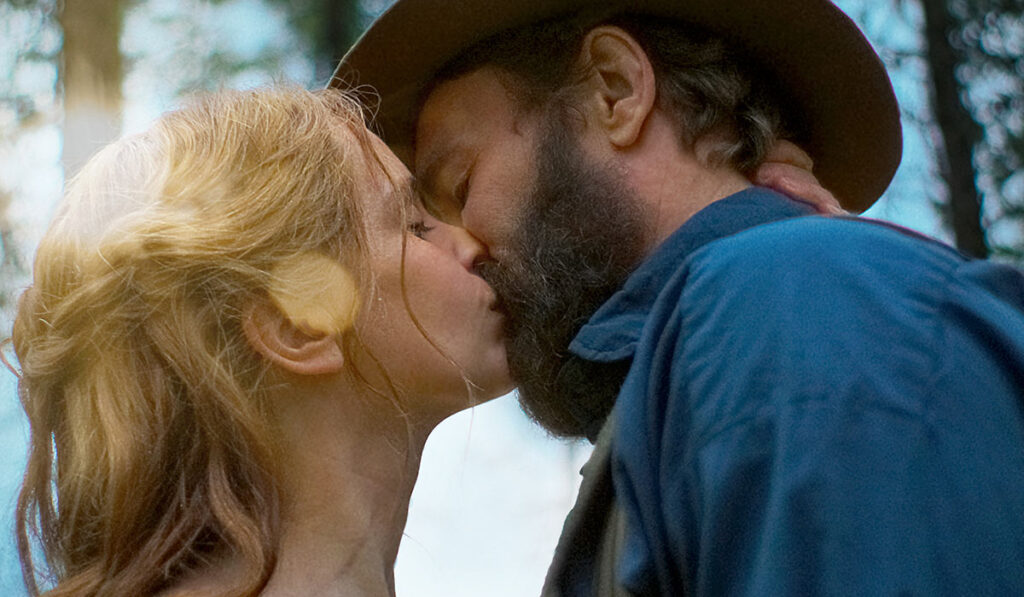
The film debuted at Sundance in January 2025. It’s been almost a year. I know you’ve been busy over the last couple of months promoting it, but do you have anything else you’re prepping? Or are you still trying to find the next project?
I’m trying to figure it out. I’m tinkering with a few things, but I don’t know what it’ll be. I’m fine with it. I’ll need to make money at a certain point very soon, but we can figure that out.
“Train Dreams” is available on Netflix worldwide
Follow Gregory Ellwood on Bluesky
Follow Gregory Ellwood on Threads
Follow Gregory Ellwood on Instagram
Sign Up For The Breakdown Newsletter


