


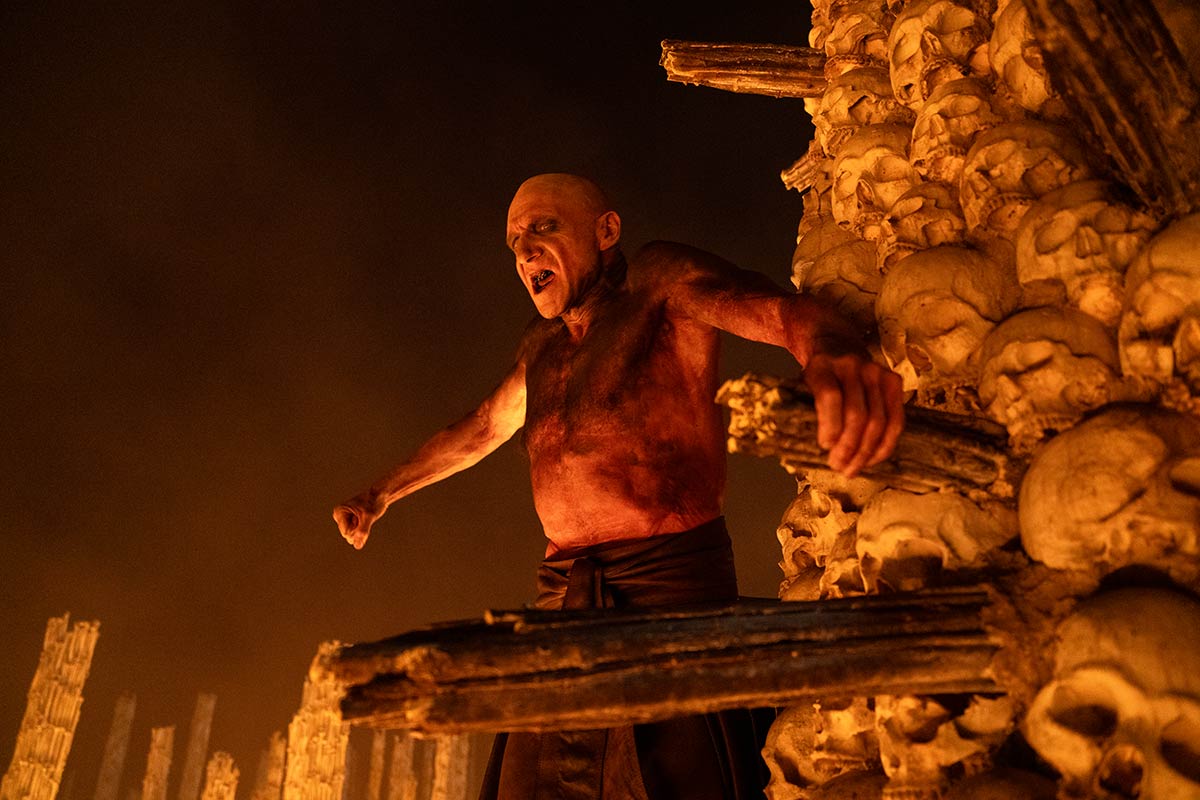
After an uneven start with the sometimes-haphazard and tonally chaotic “28 Years Later,” the virus-horror franchise snaps back into vicious form with the sequel “28 Years Later: The Bone Temple,” a terrific, edge-of-your-seat thriller from filmmaker Nia DaCosta that also stays strangely atmospheric and serene, with bigger ideas burrowed beneath all the torn flesh and screaming.
A film of extremes and dualities, with some outrageously bonkers moments, there are two films threatening to emerge underneath the layers of its rotted skin. One is the gripping zombie-rage-infection thriller, directed by DaCosta (“Candyman”), which is far superior to its wobbly precursor; it’s gruesome, frightening, moody, and often properly horrific. The second one is the larger trilogy framework scripted by Alex Garland, an existential thread that clearly aims for something weightier, even if this middle chapter still feels like it was holding back part of its final thesis point for the third entry.
READ MORE: The 150 Most Anticipated Films Of 2026
DaCosta out-rages Boyle’s “28 Years Later,” which struggled with coherently merging its new tone of horror, absurdism, and elegiac dreaminess. And DaCosta puts the franchise and its aims into focus. Her film hits nastier and sharper than its precursor, yet stays oddly tranquil—patient, almost dreamlike passages where the countryside goes quiet and the beauty lingers just long enough before the next burst of bloodshed. Bigger ideas sit under the ripped flesh and screaming, but the real charge is the contrast: calm horizons, then human cruelty, as if every still frame dares you to keep looking.
The plot picks up where the previous chapter leaves off, passing the narrative baton to Spike (Alfie Williams), the young lost boy in the woods, now captured by the sociopathic, self-imposed evangelical figure Sir Lord Jimmy Crystal (Jack O’Connell), leader of the “Jimmy” tracksuit cult. Crystal also carries a nasty bit of continuity: he’s the original survivor from the earlier ’28 Year Later’ prologue—the boy in the church, all grown up into a zealot with a doctrine stitched together from violence, superstition, and showmanship.
But while Spike provides the forward motion, the moral and empathic center pivots hard to Dr. Ian Kelson (Ralph Fiennes), the doctor who reads as “gone mad” in the first chapter and turns out to be something more unsettling here: a man clinging to curiosity and empathy in a world that rewards savagery. Drenched in red iodine that prevents infection from spreading, Kelson moves through the countryside coated in a frightening, bloody-rust color, studying and sedating the fearsomely massive Alpha from the first film, which he dubs Samson (Chi Lewis-Parry). He drugs the brute with morphine, keeps him docile, and—absurdly at first—tries to learn from him, to understand what’s left of a mind under the disease, even to spend time with him like companionship is a form of research, but also compassionate outreach to a man seemingly suffering inside. Moreover, a cure may surface in their strangely shared madness.
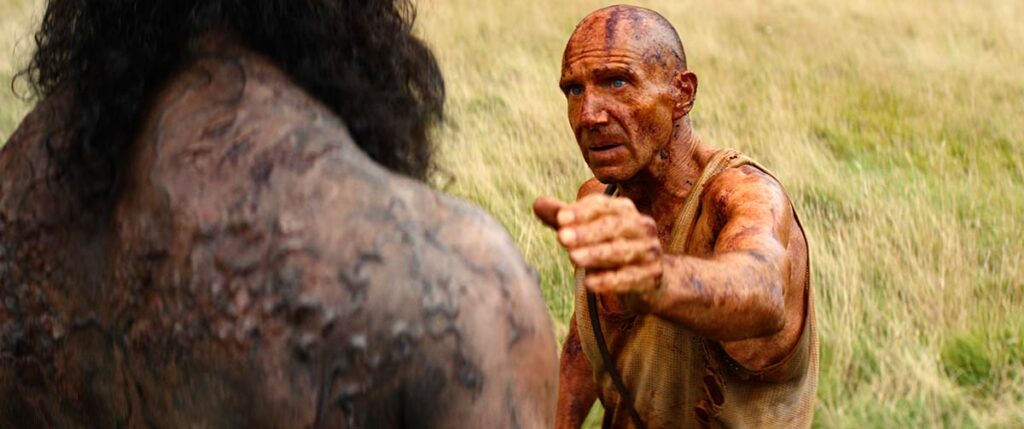
Kelson’s scenes are where DaCosta’s contrasts shine: quietly funny, eerie, and oddly tender. Instead of constant sensory assault, the film leans on silence and distance, letting the unease come from watching someone extend some kindness towards a rage-induced prison.
Spike’s track, by contrast, stays brutal. Captured by Crystal’s posse, he survives a savage initiation ritual and is forced into the gang as they wander the English countryside terrorizing survivors who’ve managed to elude the infected hordes. The Jimmys include the psychotic Jimmima (Emma Laird from “Mayor of Easttown”) and Jimmy Fox (Sam Locke), but the closest thing to a heartbeat among these cold-blooded marauders is Jimmy Ink (Erin Kellyman from “The Falcon & The Winter Soldier”), who functions as the group’s vague moral compass—still complicit, still dangerous, yet not entirely hollowed out.
Eventually, after the Jimmys maim and torture an innocent family of survivors—one sequence escalating into a shocking act of malice that crosses into skin-crawling nightmare—the two seemingly separate tracks finally entwine. And to this end, the plot is pretty bare bones: the Jimmys, wreaking chaos, come across Kelson, and from afar, he looks like a demon consorting with one of the most terrifying infected known to man.
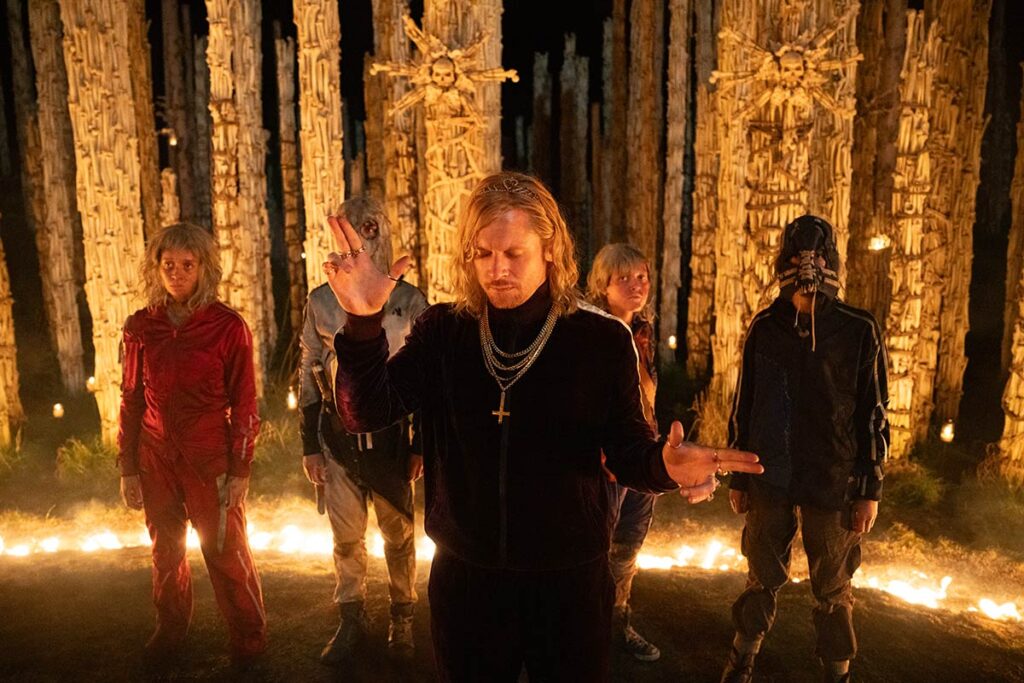
However, their discovery of Kelson also slips neatly into the folklore and mythology Crystal abides by. In the cult leader’s warped cosmology—part evangelical fervor, part Satanic pageantry—Kelson becomes “Old St. Nick,” the devil in iodine, the boogeyman of a world where belief has curdled into permission.
When all the characters collide together in the film’s crescendo, it’s wildly awe-inspiring. Without spoiling the details, it’s a batshit, visually arresting, and howling showstopper of a sequence, part dazzling musical, part jaw-dropping sideshow horror, but also tragic, heartbreaking, and moving. It’s the film’s central idea made physical: splendor and slaughter sharing the same stage, a moment that can feel ecstatic and sickening in the same breath.
And yes, Jim (Cillian Murphy) from “28 Days Later” does briefly appear near the end, but it doesn’t land as a cheap stunt. It plays more like a seamless epilogue that teases what’s coming while still allowing ‘The Bone Temple’ to function as a complete stand-alone story.

If the story mechanics feel stripped down, it hardly matters because the film is rich where it counts: in theme, mood, and the unflinching clarity of its worldview. In a landscape crawling with killer infected, the movie argues that it’s still people—organized, righteous, self-justifying—who are the most cruel, most dangerous, and most morally bankrupt. The infected are a catastrophe; the cult is a contagion. DaCosta and Garland load the film with (often perverted) religious iconography—charity and mercy, salvation and saviors—then drag those concepts through ritualized violence, asking what belief becomes once compassion is removed from the equation. Here, the scourge isn’t only the virus; it’s what survivors choose to worship.
Cinematically, ‘The Bone Temple’ also announces itself as a gear shift. DaCosta confidently eschews Boyle’s frantic visual vocabulary—less overcutting, fewer shaky-cam shots, and fewer Dutch angles—opting for patience and stillness without losing intensity. The fear doesn’t come from the camera screaming in your face, and it’s a nice aesthetic relief. That new approach extends to fresh collaborators: cinematographer Sean Bobbitt (“The Marvels” and “Hedda”) and composer Hildur Guðnadóttir (“Joker” and “Women Talking”), who help shape dread that can feel peaceful one moment and shattering the next.
Maybe it’s because a third film is still to come, but you might expect a story about a planet-altering infection—arriving in the shadow of an actual global pandemic—to say something more explicit about the spread itself. And yet, to contradict that impulse, “The Bone Temple” does have plenty on its mind about illness and outbreaks—perhaps the sickness that is mankind and the freakshow we doomscroll witness every day— it simply buries those thoughts under layers of bloody viscera and wreckage. That’s the movie’s defining tension: beauty against barbarism, hush against havoc, and the fleeting possibility of grace pressed up against the certainty of carnage. [B+/A-]

Rodrigo Perez is the founder and editor-in-chief of The Playlist, which he launched in 2008. He has worked in entertainment journalism since 2000, including at MTV, and has written for SPIN, IndieWire, Pitchfork, Complex, Magnet, and various music, film, and entertainment publications over the past two decades.

