


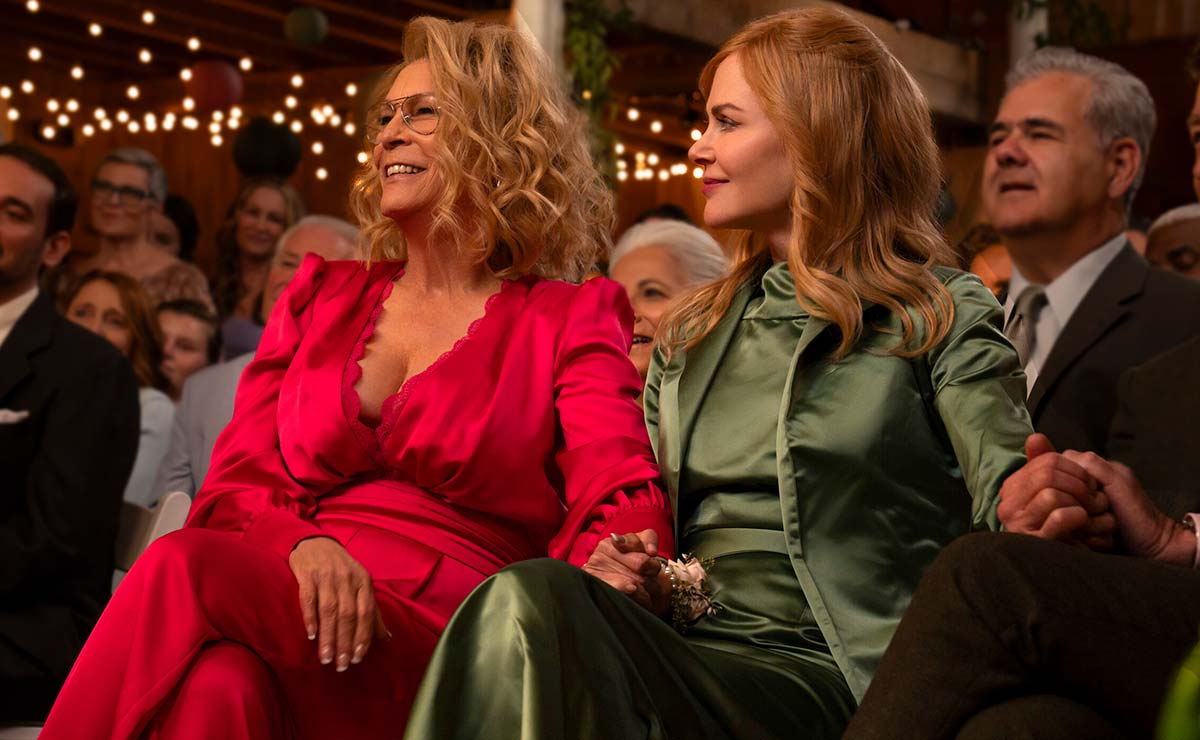
Crime fiction has rarely produced a protagonist quite like Kay Scarpetta. For decades, Patricia Cornwell’s bestselling novels followed the brilliant forensic pathologist and medical examiner navigating grisly cases while balancing the messy emotional realities of family, love, and professional obsession. Now, the long-awaited adaptation has finally arrived in the form of Prime Video’s new series “Scarpetta,” starring Nicole Kidman as the iconic medical examiner alongside Jamie Lee Curtis, Ariana DeBose, Bobby Cannavale, Simon Baker, and more.
The show is shepherded by creator and showrunner Liz Sarnoff, whose writing résumé includes “Barry,” “Lost,” “Deadwood,” and “Marco Polo.” The series takes an ambitious approach to Cornwell’s world by weaving together two timelines: one set in the late 1990s and another in the present day, allowing the story to explore both the early years of Scarpetta’s career and the more seasoned version of the character audiences meet decades later.
On this episode of The Playlist’s Bingeworthy podcast, Sarnoff joins host Mike DeAngelo to talk about finally bringing the beloved character to the screen, why the show merges multiple books into a single narrative structure, how Kidman approached the technical realities of forensic work, and how the series distinguishes itself from typical procedural storytelling.
For Sarnoff, the connection to “Scarpetta” dates back to the 1990s, when the books first exploded in popularity.
“I wanted to do it because I am a fan of it,” she explained. “I read them in the nineties when they came out with my mom, and was very heartened by Kay Scarpetta. She was the first sort of female boss lady that had a really cool job… There weren’t a lot of examples of women flying around that were the chief of anything.”
Scarpetta’s appeal, she noted, wasn’t just about the forensic puzzles. The character always felt fully realized, with a personal life and emotional complexity that extended beyond the morgue.
“She loved very deeply. She was dedicated to being a parent to her niece. So she had a full life on top of trying to do this basically impossible job,” Sarnoff said. “And the mysteries were incredible. Back then, no one was doing that kind of forensic storytelling.”
The show’s structure reflects that same desire to explore the character across different phases of life. Rather than adapt a single novel per season, Sarnoff chose to combine storylines from two different books.
“We do two books a season,” she explained. “I started with the first book she ever wrote for the series, ‘Postmortem,’ because it was such a good introduction to Kay and all the characters. And then book twenty-five is ‘Autopsy.’ That was the first book she wrote where the characters were older and living a different part of their lives.”
The dual-timeline approach allows the show to juxtapose those eras directly, highlighting how the same characters evolve across decades.
“Crime solving in the past is very different than the present,” Sarnoff said. “In 1998, they didn’t have all the tools that exist today. Now everything’s available in 2026. So it was exciting to figure out what was available to them in each era.”
Adapting such a beloved series of novels inevitably required changes, but Sarnoff says the goal was expansion rather than reinvention.
“I think we were loyal, but we needed more,” she said. “For me to write about these characters, I had to understand their childhoods. Once we started talking about what happened to them earlier in life, it was like, ‘Well, we should see that.’ That’s where the flashbacks came from.”
Behind the scenes, the series boasts an impressive lineup of collaborators. David Gordon Green (“Halloween,” “The Righteous Gemstones”) directs several episodes, bringing a cinematic visual style to the show that surprised even Sarnoff.
“Between David and the DP Mike Simmons, the show is really beautiful,” she said. “I don’t think I expected it to be as cinematic as it is. That was all that they brought to the table.”
Green’s, known for his relaxed collaborative temperament, also helped shape the production environment.
“He’s very chill,” Sarnoff said. “You can’t really rile him. And he had a great relationship with Jamie and Nicole. Once we rehearsed together, it just felt like we were all in it together.”
Kidman, who also serves as a producer on the series, dove deeply into the technical side of portraying a forensic pathologist.
“She wants to be in the dirt,” Sarnoff said with a laugh. “You can’t just go in there and pick up a scalpel. Everything has to be right. She worked a lot with our medical examiner and was really dedicated to getting it right.”
That dedication extended to the entire creative team, including Patricia Cornwell herself, who remained closely involved during development.
“She likes reading the scripts and correcting us on the forensic stuff,” Sarnoff said. “And she even appears in the first episode. She’s the person who swears Scarpetta in and says, “Good luck.” It was like she was giving us her blessing.”
As the first season ends with major developments for the characters, Sarnoff is already deep into the next chapter.
“We’re shooting season two on Monday,” she revealed. “Which is kind of nuts because the show hasn’t even aired yet.”
Future seasons will continue expanding the world while maintaining the same dual-timeline structure.
“We’re going to do two books again,” she said. “One mystery in the past and one in the present. And we’re adding more characters as we go. The way we left everyone, they’re all in their own little crises. Season two is about how they come out of that.”
Listen to the full Liz Sarnoff interview below:
Bingeworthy is part of The Playlist Podcast Network, which includes Deep Focus, The Discourse, and more. We can be heard on Apple Podcasts, Spotify, Soundcloud, and most places where podcasts are found. You can stream the podcast via the embed within the article. Be sure to subscribe and drop us a comment or a rating, as we greatly appreciate it. Thank you for listening.

Entertainment journalist, podcaster, and host of The Discourse and Bingeworthy podcasts, with bylines at Variety, The Hollywood Reporter, and IndieWire.


