




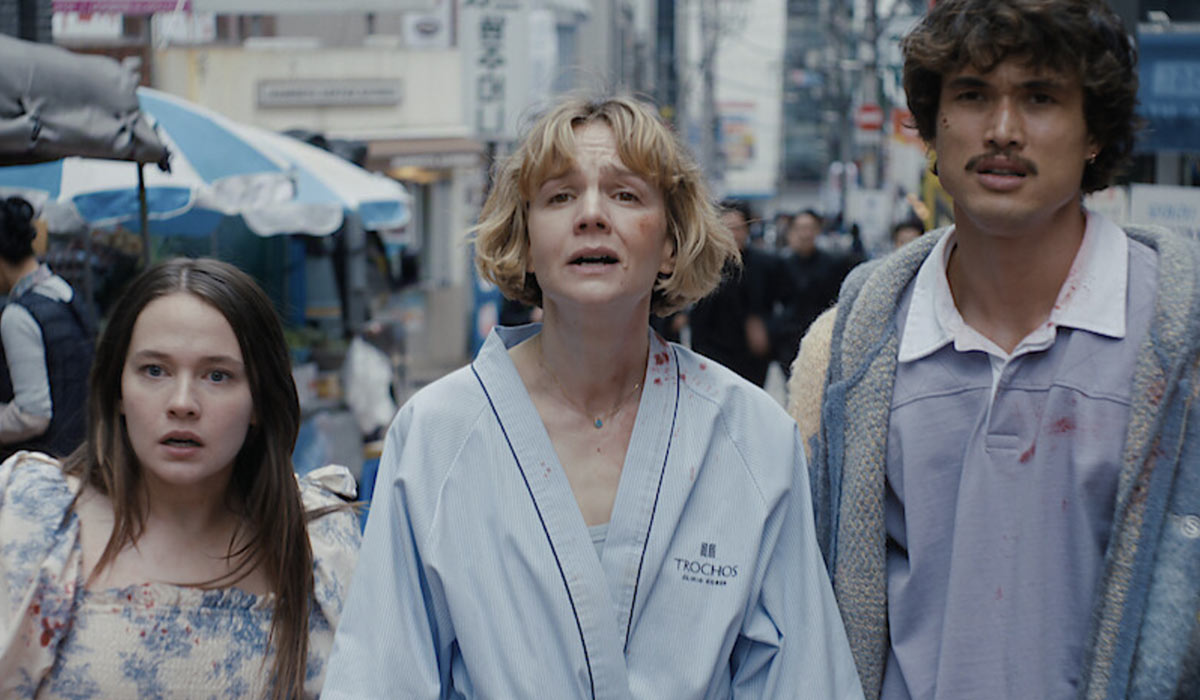
You don’t hear his name enough with the great cinematographers of this era, but James Laxton‘s resume speaks for itself. He’s the director of photography on Best Picture winner “Moonlight” and the Peabody Award-winning masterpiece “The Underground Railroad.” Now, he may be one of two cinematographers that see “Beef” win another Limited or Anthology Series Emmy for its second season.
During a conversation last month, Laxton spoke to The Playlist about collaborating with showrunner and co-director Lee Sung Jin, also known as Sonny by his good friends, as well as co-director Jake Schreier (“Thunderbolts”). The trio worked together to give the series, as Laxton describes it, a “tableau” aesthetic that often mirrors moments in earlier episodes. Laxton also reflected on working in South Korea for the first time and his affection for the cast, which includes Charles Melton, Oscar Isaac, Carey Mulligan and Cailee Spaeny.
| Oh, and yes, he and longtime collaborator Barry Jenkins have not one, but two films set to film soon. |
This interview has been edited for length and clarity.
_____
The Playlist: History tells us you did not work on season one. How did you get involved on season two?
James Laxton: I was a big fan of season one. Saw the show, loved the show, thought it was unique and personal to Sonny, of course, and felt like that’s the kind of filmmaking I love. Obviously, the kind of stories I love telling personally, but also the ones I love experiencing. And so when I heard season two was coming around and they were looking for someone to collaborate with, it was really easy to have that first conversation with Sonny. And very quickly, I’d say within that conversation, it felt to me like we were already starting to make the show. We were already starting to talk about what things could look like and where to push one way or the other. But it was really just a very classic like, “Hey, let’s have a meeting and see what makes sense,” kind of a process. I didn’t know anybody on the show previously, directors included. I hadn’t had exchanges or personal relationships with anyone. I’d known Quitao Sacharai personally for a while, but yeah, anyway, yeah, it was a fresh start for me really.
When you started having conversations about actually shooting the series, where did Jake and Sonny want to take it? Compared to season one.
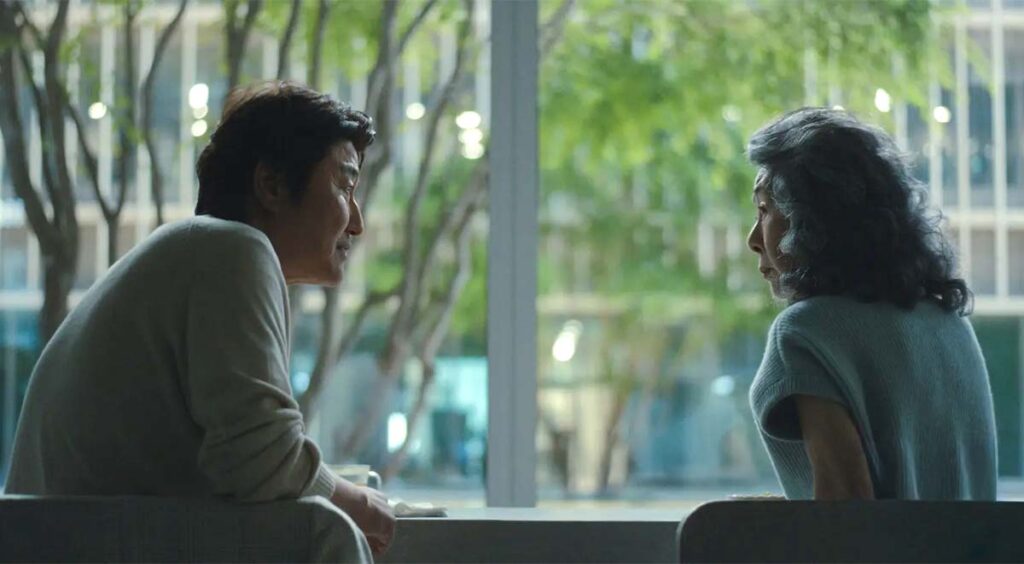
I think the first thing to say, which was really important for me, was to make sure that there was something about the show Beef that has a visual language that, whether it’s season one or season two or 10. That there’s always going to be something about what the show, on a visual grammar level, would remain true. So, that was really important for me too. I love what Larkin Seiple’s work looked like and how Jake and Sonny and Larkin and others moved the camera last season. It was really important that we balance all of those things and make sure those are always going to be present. Being an anthology, of course, is going to require a different approach at times as well. So, there was a balance. It was about doing both things at the same time. This season, being about generational love and how we love each other in different parts of our lives and what’s important and all those different things it’s talking about had a different perspective on what the camera and cinematography specifically wanted from it. For me, the differences were just about providing a grander scope at times than what season one was. And a lot of that you see play out in some of the tableau shot structures we have that blend with the more sort of intimate character study visual language that season one had as well.
Did you want to differentiate the Southern California aesthetic in how it was lit compared to the first season?
I mean, it’s interesting. The way the light plays, Larkin and I probably share some similar aesthetics in terms of providing a sense of realism of how light plays within spaces. So, I think that inherently there are some things that do remain through line light-wise from season one to season two. What was on my mind anyway, though, was that I was sort of activated towards this sort of beautiful Southern California, warm sunlight, sun-kissed aesthetic to provide a counterpoint to what was going on under the surface. All these relationships that were kind of falling apart or at times blending, finding themselves to be in love again. All these different sorts of elements wanted to navigate themselves under the blanket of this sort of Southern California golden shower of light, basically.
Was there that when you saw in the script, you were like, “O.K., this is a day.”
There’s probably quite a few. Every day with actors with the range of Oscar and Carey were probably big days that I had some needs to make sure I was bringing the A game with. But the one that comes to mind right now was the day we sort of mirror the opening shot of season of the show, episode one, with the mirror of that moment where now it’s Ashley and Austen – Charles and Cailee’s characters – on the stage now and making sure the elements between the camera movement, all those things match each other quite specifically so that you really drive home the point this is a cycle of love and cycle of generations of aging, et cetera, because it was a huge element of what the show for us was about. These sort of big oner shots have a lot of choreography involved to make sure we’re hitting marks within the timeline. So, there’s a lot of technical stuff that I knew was going to be hard there and a challenge. That’s the one that comes to mind right now because it was a blend of the technical challenges meeting a very important visual representation of what the show at its core is all about.
READ MORE: Finneas On Scoring “Beef” Season 2 And “Music With Cinematic Aspirations” [Video Interview]
It’s funny, I feel like I’ve interviewed so many cinematographers and I don’t know if I’ve ever asked this question, but what about just the day-to-day job makes you nervous the most? Is it the actors not being ready? Is it production not being potentially ready? Is it the weather?
It’s a good question. I never worry about actors. I mean, I’ve been lucky enough to work with such great people in my career so far that I never, ever for a second worried about actors not being ready or not bringing their game to the set. I find that in my personal experience, they’re just incredible human beings that can do so much. And so I’m in awe of actors, and I always have been. There’s always the element of the unknowns and the uncontrollables- the weather – things like that always sort of play a part. I think the thing that I always get nervous about more than anything else is not bringing my own game to the set. I think that’s always this nervousness that I have. Or more specifically, maybe what I’m trying to express is an idea that I might have that sounded great when I was in the shower in the morning that made sense as I talk about it, but it makes no sense in practicality. That happens a lot. You can talk yourself into great, terrible ideas. You can present an idea that sounds wonderful on paper, and that’s my favorite part about this job is that it’s not an on-paper medium. It’s something that has to have the ability to navigate with different department heads, different key collaborators. It’s all of the different muses all finding themselves within this light-capturing box. And they have to blend with each other, and you have to get to know people really well. And that’s a wonderful intimacy about that kind of collaboration that I’ve always really loved about this job in general.
What excites you the most?
I mean, yeah, really hard to answer that question. I think what it is in the end is always most important for me. We’ve all been on set where something happened, and the most magical thing appears in camera, and the sun flares in a way, the clouds come over, and it does something. Some element happens. And those are really exciting moments that you look around the set, and you just think magic struck. So, that’s always lovely. That all said, none of it matters until it’s the right thing that happens on the screen for audiences. So, if something’s not ringing true in the edit room, we can always shake our hands and be proud of one another for the moment that happened on set, but really it’s that final thing in the end that matters the most.
So, you did shoot in Korea, correct?
Yes.
What was the most challenging aspect of that? What was the most rewarding aspect of it?
Oh gosh, yeah. I think they’re kind of one and the same. The challenge, as you might imagine, I have no relationship to Korea. I do not know the language. The amount of information I know about the country comes from cinema that I maybe have seen in the past, or photography, or stories I’ve heard. And so going there was an incredible experience. You show up, and you have to find a way to collaborate with your crew there and absorb the energy and the spirit of the city, the spirit of the people, and find a way to transcribe that back onto the screen. Because it’s really important for me that while maybe I don’t have a personal relationship with a place, I represent it as best I can so that people who do have a relationship with that place recognize it. Wherever I travel in my work, the biggest joy I have actually is being able to have access to different cultures and learn and glean and be inspired by and mix my relationships with them to find their way on screen. It’s the joy of the job. So, while it’s a challenge, because it’s like this fresh start, it’s an unknown space I’m entering into, it’s in the same breath, it’s also the most incredibly rewarding one as well.
One of the most memorable shots from the entire show, and this will obviously be a spoiler, is when Carey’s character comes back and kisses Oscar’s character as he’s being taken away by the nicest police ever.
Yeah.
Can you talk about just structuring that shot? And was that recorded for slow motion playback or an editing choice later on?
No, we recorded it that way. This is an episode that Jake Schreier directed, and I give him a ton of credit for how that worked out. It’s another one of these examples that I think Sonny is so brilliantly able to do: these genre-blending, counterintuitive choices that sort of, all of a sudden, when all of these things are synergized together, it makes sense. And what I mean by that is like, we’ve all seen these classic moments of the camera spinning around to young lovers in love, and the future is bright for them. And as an ending to a story, we experience the joy, their love, the music swells, and it’s in slow motion. As all these things are happening within this shot we’re talking about now, while under the surface of that shot, and this is again, going back to my love of Sonny’s writing and Jake’s directing, is this ability to conjure the underlying topics that are unsaid within these moments because we know in that moment it’s not going to work out for them. It’s too late for them, and they’ve gone through too much, and they’ve broken too many things within their relationship. This is the sadness that came over me when thinking about how this would work as a scene, but it also comes over me when I watch the scene now. It’s this innate knowledge that something inherently is broken within their connection, and it’s not going to work out.
Is there one image from shooting the show that either pops in your mind the first thing you think of or you just remember as your favorite from shooting the show?
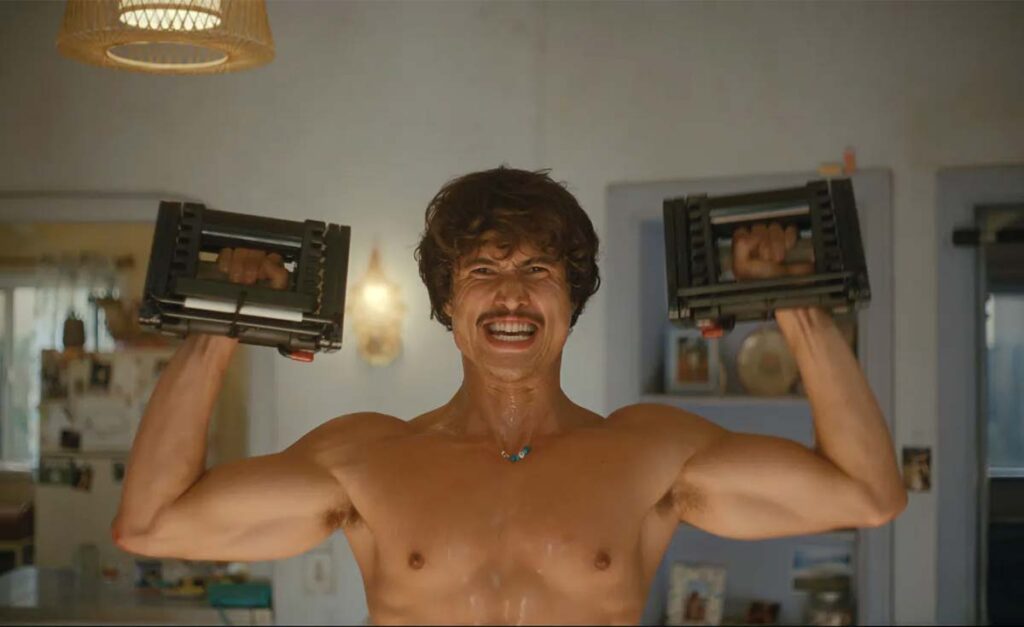
There’s two. The first one’s a silly one. It’s the shot of Austin, Charles Melton’s character, lifting weights. This moment where he pushes it over his head and he’s screaming to the camera. And I remember the moment of filming that and just thought there’s just such a “Beef” -ness about that moment. Symbolically, metaphorically, absurdly captures for me what “Beef” is about as an anthology show. The other ones that I love are, I guess, a series of them, but they’re all of these wider shots of the characters. I’m going to speak to one specifically. Oscar and Carey’s characters, in their home, are in these wide, sort of split screenshots. There’s another one at the retreat in episode five, I want to say, where Carey’s character is in this cool blue environment outside by the pool, and Oscar’s character is inside in a warm light, and there’s this dividing line between them. And I just love some of that storytelling in this sort of tableau language that has this lovely way of, in combination with some of the intimate perspectives we have with the characters, driving home some of the broader topics of what the show seems to want to be expressing.
You shot this last spring. I don’t know if you’ve shot anything since or if you’re about to.
I haven’t shot anything long form. I’ve been doing other things, but the next thing for me is likely another Barry Jenkins project that’s intending to shoot in the fall. If not the fall, it’s going to be early next year, but nothing about them is secret. I’m going to be a bit cagey about them because we don’t know when they started and we don’t know which one’s going to go first. So, I’m not going to spill too many beans, but there’s supposed to be some films in the fall or next year from Barry that we will hope to see on the screen in 2027, but yeah, we’ll see.
“Beef” season two is available on Netflix
Follow Gregory Ellwood on Bluesky
Follow Gregory Ellwood on Threads
Follow Gregory Ellwood on Instagram
Follow Gregory Ellwood on TikTok
Sign Up For The Breakdown Newsletter

Editor-at-Large Gregory Ellwood is one of the entertainment industry's most respected journalists and critics. Based in Los Angeles, he's the only current awards expert who previously worked on Oscar campaigns at a major movie studio. Over the years, he has written for the LA Times, Variety, The Hollywood Reporter, and Vox, among others. He also co-founded the entertainment news site HitFix, which spawned a legion of influential Emmy and WGA Award-winning alumni.


