




No matter who you are, finding even a sliver of new life when making a zombie movie is no easy feat.
Tackling a horror subgenre with such a long history of talented filmmakers poking and prodding it in new directions means that there’s usually a good chance someone has already done the thing you’re thinking of doing before you get the chance. Thus, while some can and still do offer interesting new takes, there are still many more who have succumbed to merely reanimating what can feel like the same rules and sequences we’ve seen many times before, with little bite of their own.
READ MORE: 27 Most Anticipated Films From The 2026 Cannes Film Festival
Yet it’s precisely this state of the subgenre that made director Yeon Sang-ho’s terrific 2016 film “Train to Busan” such a joyous breath of fresh air. A masterfully staged work of zombie cinema whose increasingly inventive filmmaking and focused approach made it all leap off the screen just as it teased out a surprising amount of heart, it managed to stand apart from a crowded field. Even as its strange sequel, the largely forgettable “Peninsula,” didn’t manage to follow in its footsteps, this didn’t take away from how great it was.
Thus, learning that the director was returning to zombies with “Colony,” a film about a group of people trapped in a building where a bioweapon of sorts is released, meant his latest would inevitably carry both great anticipation and pressure. Once you’ve made such a strong work like “Train to Busan,” everything else that follows will be measured up against it by those who’ve seen what heights you’ve managed to reach.
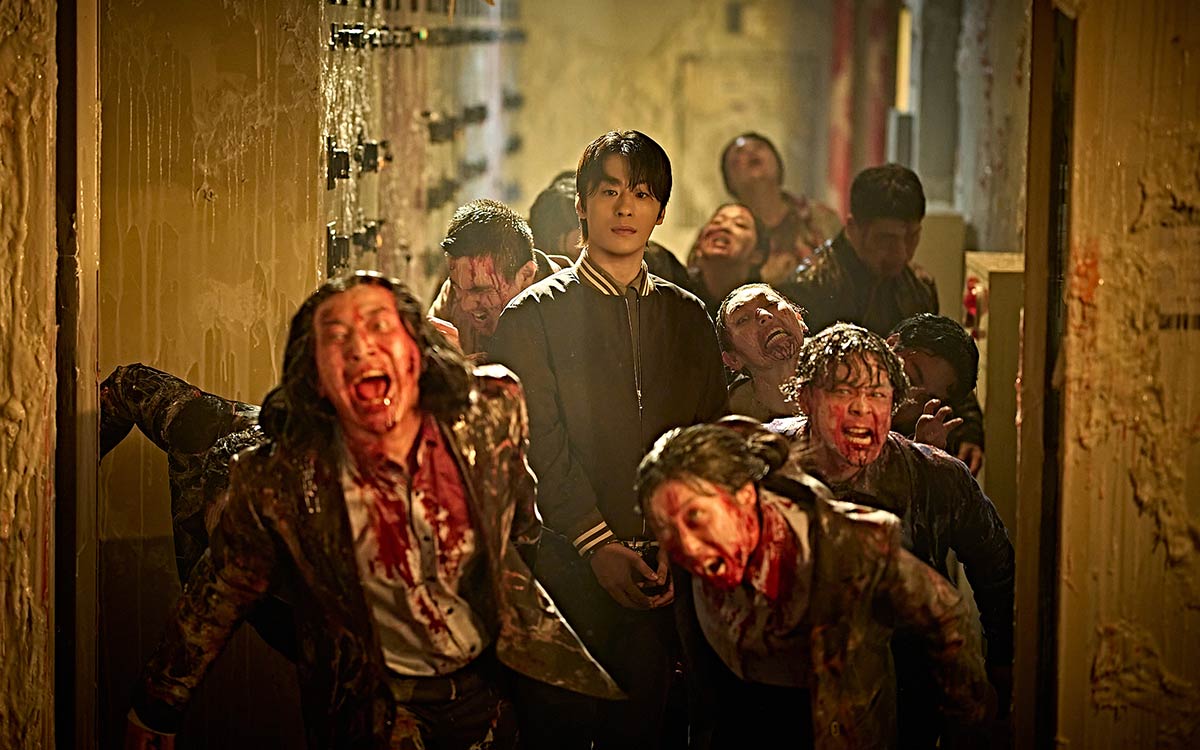
It’s then perhaps perfectly fine and to be expected that “Colony” doesn’t come close to reaching the high highs of that prior film. It does find clever ways to introduce new zombies and has them evolve over the course of the film, with the way their broken bodies go from contorting on the ground to communicating with each other proving quite chilling. Unfortunately, it also falls prey not only to overexplaining itself the longer it goes on, but also to far too much excess monkeying around (sometimes literally, with weightless CGI primate characters thrown into the mix). It takes what could be a lean, mean little zombie movie and jams in too much excess noise, when the most impactful bits came from keeping things simple. Even as it’s not without its merits, it’s a film that can’t keep getting out of its own way, constantly stacking more and more nonsense on top of itself until it nearly buckles under the weight.
Centering on a smattering of largely underdeveloped and one-note characters who soon find themselves trapped in the mall floor of a massive building where an outbreak of zombies is causing chaos, the film doesn’t waste too much time building up to this moment. We get to know the closest thing the film has to a protagonist, Professor Se Jeong (Jun Ji-hyun), as she goes from attending a conference in the hopes of getting a job to then fighting for her life. But as it turns out, the two might not be so far removed, with a key speaker at the conference, rather conveniently, explaining the way these new zombies might be operating. It’s this knowledge that will allow the professor and her fellow remaining humans to make their way past the newly undead in the hopes of getting the one thing that will allow them to escape.
Though there are initially some shades of George Romero’s zombie classic “Dawn of the Dead” in how we see the mall becoming a place of survival rather than shopping, “Colony” is much more interested in its zombies than in the people trying to fight them. There are some strained references to our inability to communicate and to how this colony of the undead, analogized to ants, could become a more functional way of living. It’s silly and not something worth taking seriously, though the film does insist on spending quite a bit of time telling us all this. Some of this is to set up an unnecessary human antagonist who becomes, essentially, a supernatural villain in how he can communicate with the zombies. Still, it takes away from the simple pleasures of seeing the characters scrapping together ideas on how to survive the nightmare that surrounds them. It ends up struggling to find the brains or the heart that it needs.
There is still a great deal of “Colony” that really works. Seeing all the creative, even if they’re also slightly contrived, ways that characters get out of jams is good fun and brings that same tense focus that “Train to Busan” had. Unfortunately, the more the film repeatedly cuts to the world outside the building and an investigation running in parallel to the main events of fighting zombies, the more it starts to turn itself in circles. It doesn’t add anything to the experience; it just pads it out.
Whatever revelations we get from the investigation are largely obvious, and the cost is the film repeatedly grinding to a screeching halt whenever we keep coming back to it. It takes what could have been a clever little gem that thrived in teasing out more confined terrors and makes it into a merely fine mixed bag. There’s much to appreciate, with the willingness to really go for broke with the zombies giving everything a jolt of energy, but there’s increasingly also far too much dead air that holds it back from fully coming to life. [C+]

Chase Hutchinson is a film and television critic whose work has appeared in The Wrap, The AV Club, IndieWire, the Seattle Times, IGN, and Roger Ebert's Far Flung Correspondents, among others. He is the President of the Seattle Film Critics Society.

