




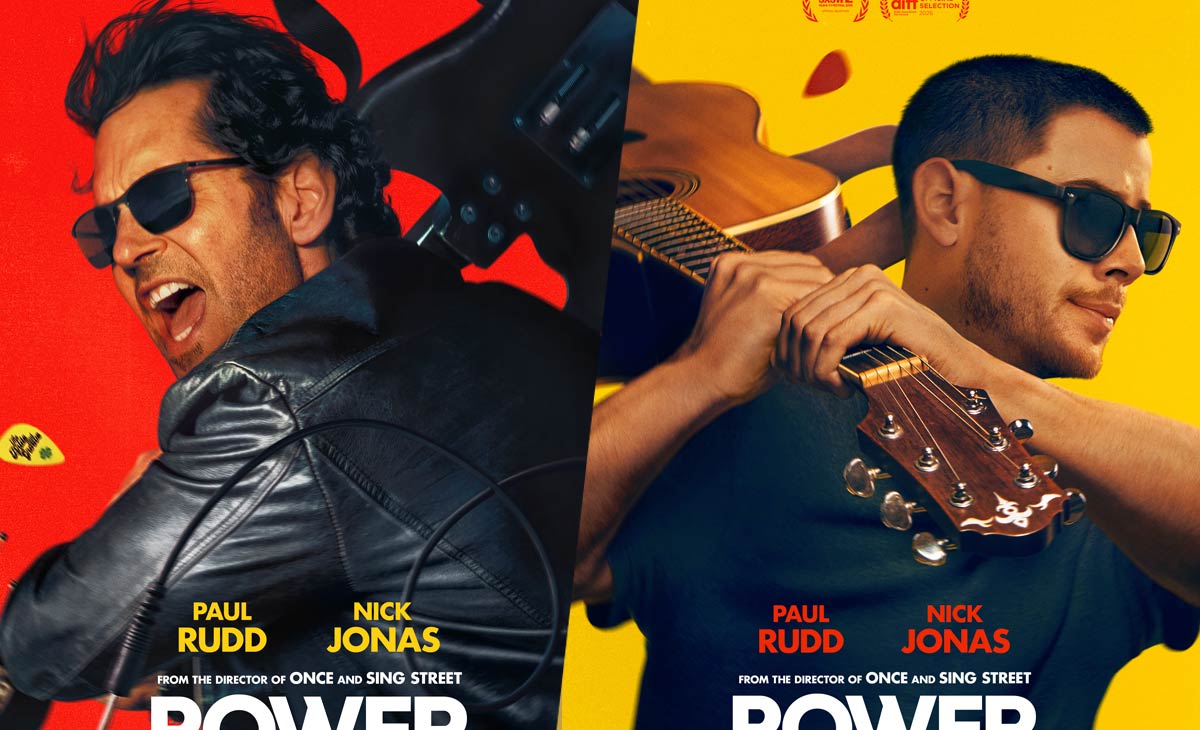
If you hadn’t already learned this from his multiple films about it, director John Carney has a bit of a music fascination. Not just music as a catchy tune, but music as a way of connecting and as a means of expressing repressed emotion that we may not be able to otherwise.
In everything from “Once” to his subsequent works, “Begin Again,” “Sing Street,” and “Flora and Son,” Carney has returned to similar questions, with slightly different musical genres, narrative contexts, and personal conflicts woven throughout. Sometimes, especially in the case of “Sing Street,” he’s been able to find a resonant chord that transcends the familiar narrative and musical beats he’s taking us through. Even as you recognize the tune, he still frequently sweeps us up in his crowd-pleasing, if often contrived, stories once the songs get going.
READ MORE: SXSW 2026: 26 Films To Watch In Austin
Unfortunately, the same cannot be said of the misfire that is “Power Ballad.” A film about pride and masculinity that, ironically, ends up feeling far too caught up in itself to cut deeper beyond the safe, predictable developments you can see coming from a mile away, it’s all almost entirely one-note. Where Carney’s past films felt like they had genuine complications that were meant to push and pull the well-worn narrative paths into slightly new directions, this one proves inescapably superficial.
Making matters worse, the songs, even the supposedly life-changing one at the center, are just not all that good. That they end up being only one shortcoming of many makes this Carney’s most hollow and contrived films yet. For the first time, even as it has felt like he was looking in on the industry from more outside perspectives in his past works, this one feels like the director has gone Hollywood. There are still small glimpses of the filmmaker he once was, but they can be hard to see when everything else is just so by the numbers.
Some of this tension could be productive if the film did anything with it, but “Power Ballad” mostly is content to riff on itself and the same broad ideas without taking us any further into them. Though defined by a bit of a more tense conflict than some of Carney’s past works surrounding the authorship of a repetitive pop song that’s made into a smash hit by a former boy band turned solo artist Danny (Nick Jonas) despite him workshopping it with the former touring musician turned lead of a wedding band Rick (Paul Rudd), any promise to this premise gets squandered.
Some of this comes down to how Carney seems unwilling to leave behind the increasingly cloying and unearned crowd-pleasing elements of the story to dive into the thornier, more thematically interesting elements of his film. Just as the filmmaker has always been interested in music, he’s often explored the tension between the process of creation and the commercial forces that lurk in the shadows. But here, despite seeming like he would want to confront the way commercial forces can corrupt one’s music more head-on, Carney ends up saying very little about the industry, creativity, or authenticity beyond trite greeting card-esque lines.
Were the characters more complicated or rich, perhaps this wouldn’t be such a huge issue. Unfortunately, they end up proving just as flat as the story. Rick, even when Rudd plays him with believably rugged charm and profound insecurity, is defined by his grievance to such a point that you start to wonder who he even is as a person outside of it. Yes, he’s right and was wronged, though you need to feel something more with him beyond this for the film to work. When he says that his reality has become broken by this obsession, you’re left wondering what was so important about his reality or the rhythms of his life before all this happened.
You could say that Rick is a father and husband, though his relationship with his family is so broadly sketched that this doesn’t mean much of anything. He tells us he had to give up his dream to raise his daughter with his wife, but neither of those supposedly important people in his life receives much care in Carney’s writing. Though it’s clear that Rick is the one who is the one who needs to do some major growing up here, the way “Power Ballad” proves uninterested in giving its female characters anything in the way of depth or interiority holds everything back.
But all of this is nothing compared to how shockingly shallow everything to do with Danny is. Some of this is by design, as he’s the sellout star who took the song they were playing together during a drunken post-wedding jam session. However, when a character is defined by how vapid every part of his world is, it only makes it that much more important to get into how a person like Danny is shaped by it.
By the time “Power Ballad” comes to a close, you have only a slim idea of who this pop star is, let alone what changed with him over the course of the film. Though it seems to refer to real aspects of Jonas’ perceived persona and story in the public imagination, that’s not enough to give his journey in the film any weight. When Danny’s own romantic partner is written out in a quick blink-and-you-miss-it headline that flashes by, this supposedly significant development is never acknowledged beyond that. That Jonas doesn’t have much in the way of acting range only further limits what already feels like an empty shell of a character.
Even with some perfectly fine comedic gags, “Power Ballad” can never overcome the emptiness of its characters and the equally flat, overlit visuals that make the entire thing look more like a bad TV episode than an actual film. When things invariably fall apart and then get put back together in the film’s sappy conclusion, you wonder why it was that Carney even wanted to take on this more potentially complicated story.
It certainly seemed like there was something more heavy that was weighing on him, with one conversation that gets interrupted between Danny and Ricky near the end seeming like it was getting there. But it all pulls back, tying everything up in a nice little bow that gives itself an easy out. Like Paul’s wedding band, Carney’s film seems ultimately not only content to play the hits safely, but also fearful of doing much of anything new while it still has the stage. [C-]
“Power Ballad” premiered at the 2026 SXSW Film & TV Festival. It opens in theaters on June 5.
Follow along for all our coverage of the 2026 SXSW Film & TV Festival.

Chase Hutchinson is a film and television critic whose work has appeared in The Wrap, The AV Club, IndieWire, the Seattle Times, IGN, and Roger Ebert's Far Flung Correspondents, among others. He is the President of the Seattle Film Critics Society.

