


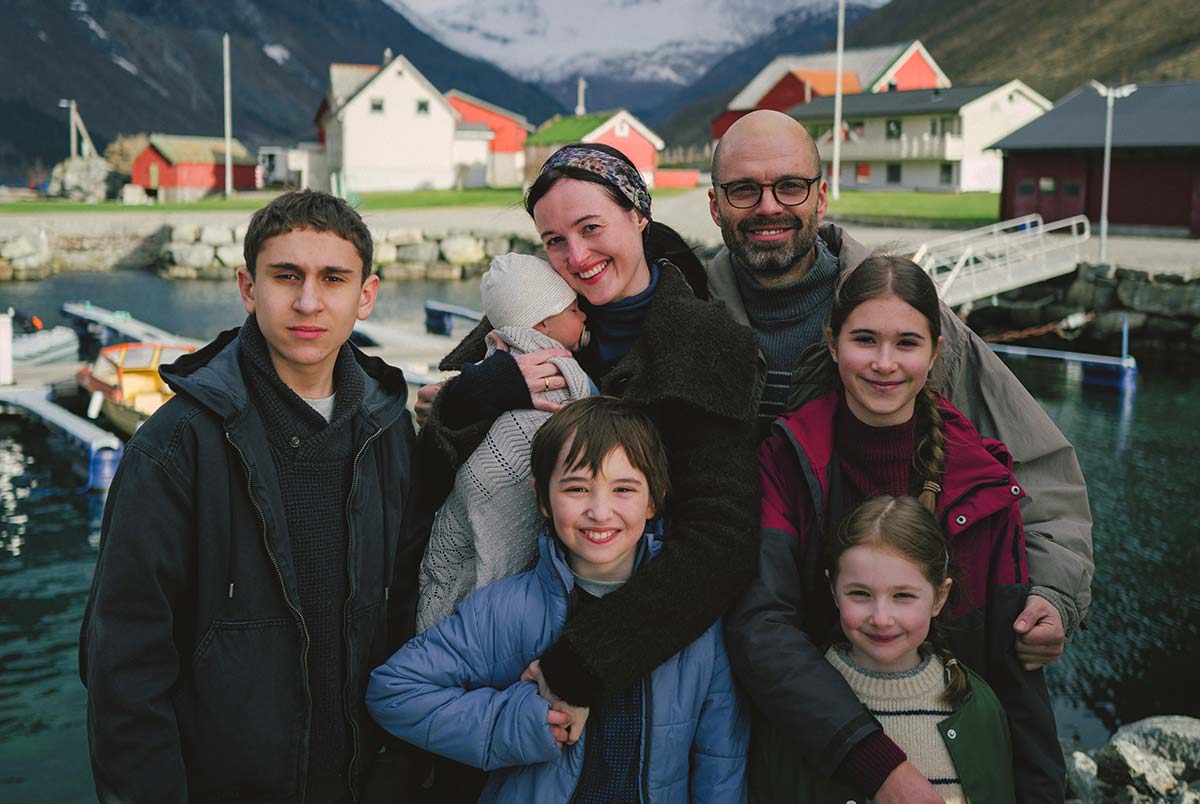
Tackling family, society, faith, abuse, punishment, and community, Cristian Mungiu’s fascinating yet flawed “Fjord” is a film that attempts to map the many conflicting tensions that come when all these elements intersect. Centering on what happens when a deeply religious couple (Sebastian Stan and Renate Reinsve) in a small, otherwise largely progressive community in Norway is suspected of physically abusing their daughter and is subsequently separated from all of their five children for a period of time while being investigated, it’s clearly interested in exposing a raw, culture-war-esque nerve to see what can come bursting free from it. It’s also one that unfortunately doesn’t cut deep enough.
READ MORE: 27 Most Anticipated Films From The 2026 Cannes Film Festival
Some of this is by design, with both Stan and Reinsve giving understated performances that are almost intentionally devoid of anything resembling greater complexity. From the very opening introductory scene, we immediately understand how they’re just a couple of rather boring, ordinary people going about their days as they move to this new community in the hopes of getting a fresh start. That is, until they aren’t, with a more hateful interaction suddenly making things much more fraught, and the warm welcome they initially got turns ice-cold. Yet rather than ground the film in something authentic, it’s so consistently, impenetrably frozen that you haven’t even begun to meaningfully chip away at it by the time it all wraps up.

Though the film itself certainly feels like something Mungiu has had on his mind for a good stretch, especially as he seems to be drawing in large part from the real story of a couple in Norway, Ruth and Marius, from 2016, there’s still so much that proves disappointingly superficial with his latest. Where his previous film, the riveting 2022 drama “R.M.N.,” managed to capture the many conflicting desires and fears of a small multi-ethnic village in Transylvania, Romania, he isn’t able to fully achieve the same here. That film managed to explore how the real anxieties of the working class can far too easily turn to paranoia and cruelty while, at the same time, showing how the most supposedly compassionate of people can also be forces of harm when it benefits them. It was a film that didn’t shy away from confronting our own collective ability to push others down to get a leg up, managing to be searing and sinister before building to a shattering finale.
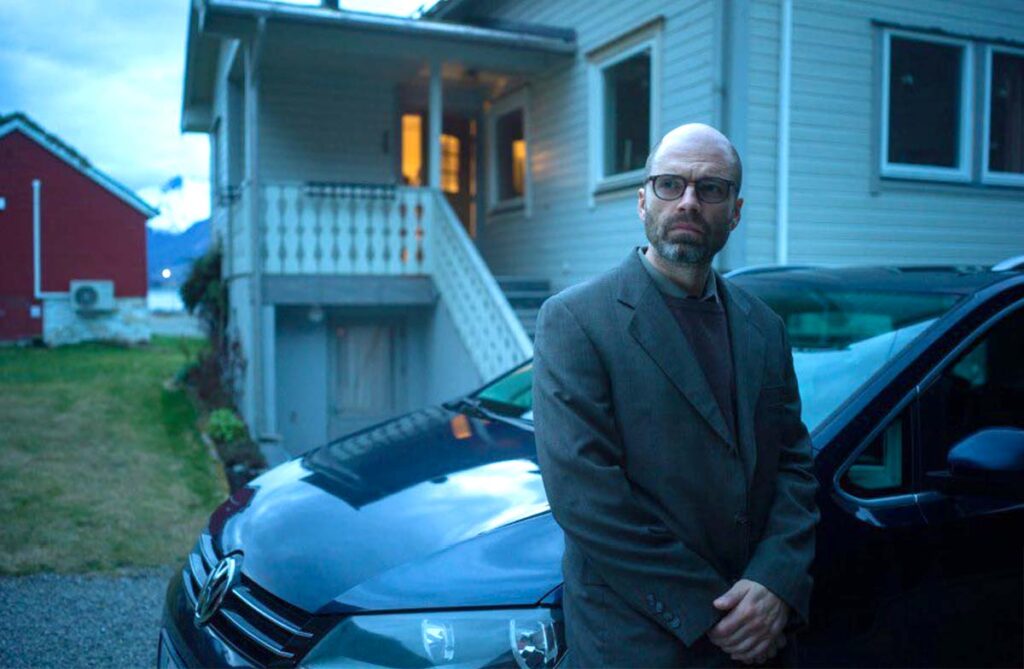
The reason this is worth looking back on is that “Fjord” is not entirely dissimilar in how it structures itself. Both narratively and formally, it’s like one is the mirror image of the other. Both frequently use long, extended takes in which there is no escaping the social and emotional discomfort that threatens to swallow you up. But where “R.M.N.” builds to its knockout one near the end, “Fjord” has it nearer to the beginning and plays it much more quickly. It’s not only as if it doesn’t want to sit with that same discomfort for too long, but that it almost can’t. Instead, we get immersed in the cruel bureaucracies of court procedure, which often feel like they sanitize everything slightly. Rather than show how ugly people can be to each other, be it their neighbors or children or both, it continually seems like it doesn’t want to look any deeper into their respective psyches.
Perhaps this is because so much of the film is about a family moving to a new place and finding themselves to be perpetually at a distance from everyone around them. But rather than burrow into these distances, Mungiu seems content to remain high above it all, mostly. Both also include some critical notes on how children can become caught up in their parents’ pain. However, in “Fjord,” just when those children are taken away, it seems to forget all about them or care to show anything from their perspective. That is, until it needs to bring them back in the end for an ending that it doesn’t fully earn.
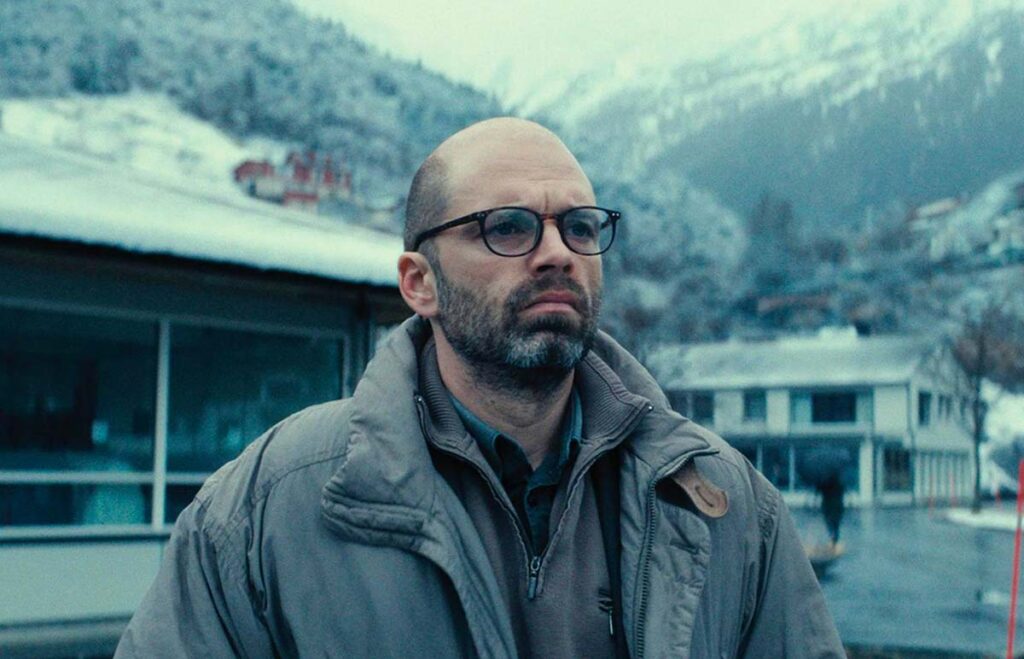
There are many promising pieces here and some great performances, though little in the way of actual meaningful insights. There are plenty of worthwhile ideas the film gestures at about how much easier it is to turn to punishment rather than find communal ways of working together, but “Fjord” remains uninterested in putting in any work of its own to dig into them any deeper. Instead, the facts as we see them in the film, which opens with a genuinely alarming exchange between father and daughter before making explicit that at least some physical violence is happening, never have that much feeling behind them. As it turns out, facts don’t care about your feelings and vice versa, leaving a film that ultimately feels like it underserves both. It’s a film that still feels like it could spark plenty of conversations, but ultimately is frequently lacking in anything substantive of its own to say. [B-]

Chase Hutchinson is a film and television critic whose work has appeared in The Wrap, The AV Club, IndieWire, the Seattle Times, IGN, and Roger Ebert's Far Flung Correspondents, among others. He is the President of the Seattle Film Critics Society.

