


Liz Meriwether has spent much of her career finding pain inside comedy. “New Girl” wrapped its feminist sensibilities inside a warm sitcom, “The Dropout” let the humor curdle into something darker, and “Dying for Sex” found heartbreak in cancer, friendship, and female desire. “Furious” is the next logical step in that evolution: a full-on psychological thriller that retains flashes of dark humor while plunging into much nastier territory.
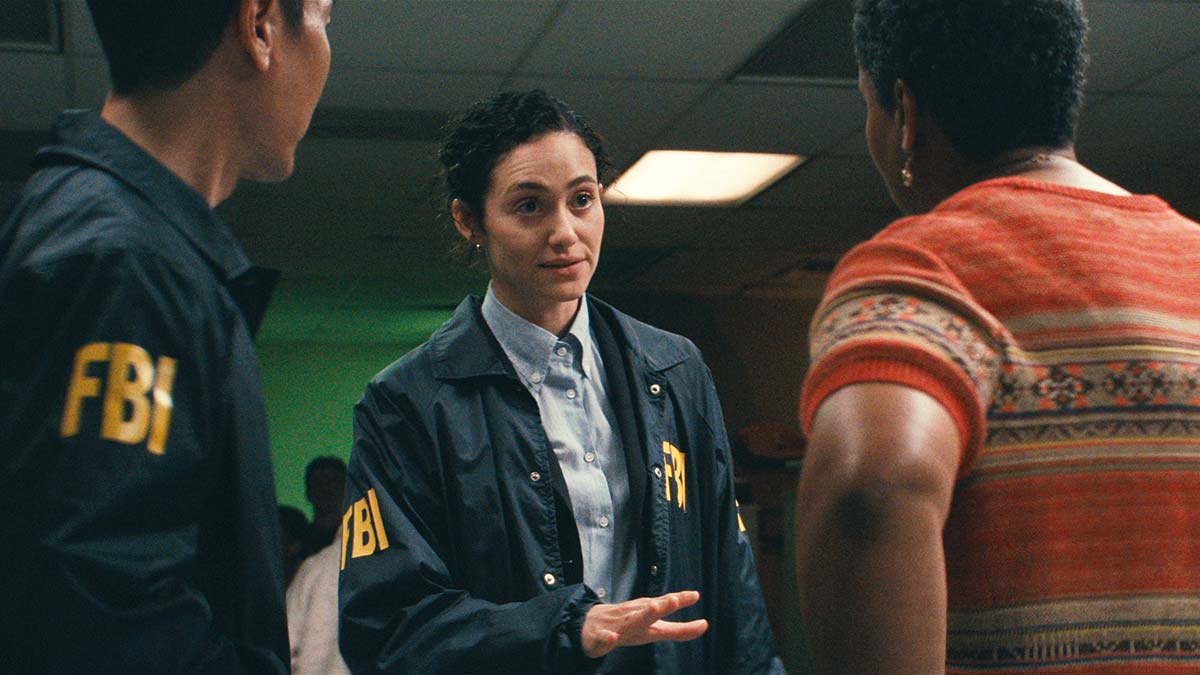
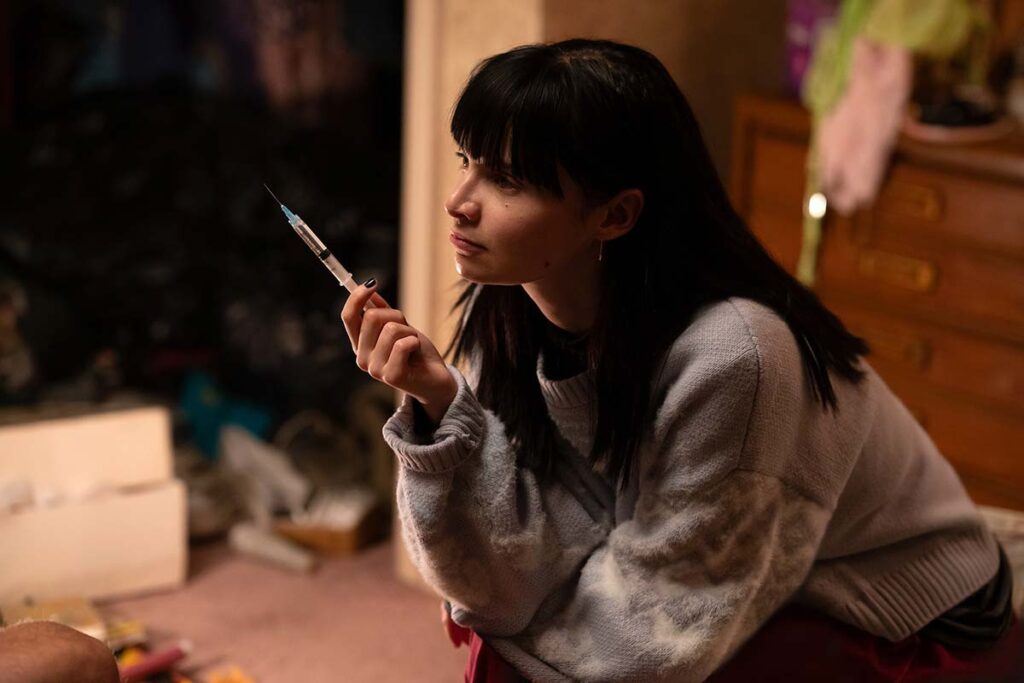
The eight-episode Hulu series follows Alice Black (Emmy Rossum), a former NYPD detective rebuilding her career from the FBI’s lowest rung. Eager, adroit, and hungry to prove herself, Alice eventually digs her way into an investigation targeting Catherine Grace (Lola Petticrew), a chameleonic serial killer who manufactures intimacy with wealthy men before murdering them. The pursuit soon exposes a sex-trafficking operation, a dying Epstein-like predator, and the accomplices who spent decades enabling him.
It should be said, as engaging as it ultimately is, “Furious” does not entirely convince at first. Its opening episodes resemble a familiar “Silence of the Lambs”-esque procedural about an inexperienced female FBI agent underestimated by her male colleagues. It takes several episodes for the series to reveal its own color, but it eventually blossoms into something angrier, stranger, and more emotionally complicated: an examination of how women respond to abuse and what happens when systems designed to protect them defend their abusers instead.
Yet, the series can be frustrating precisely because it is so human. “Furious” runs headfirst into the contradictions of people: victims can be manipulative, avengers can be murderous, and brilliant women repeatedly make choices they know will hurt them. They crave love while rejecting anyone capable of offering it. Meriwether refuses to flatten them into noble survivors, righteous vigilantes, or inspirational symbols.
That complexity is most vivid in Alice, a fiercely intelligent investigator who is also damaged and dangerously self-destructive. She can stare down murderers, then unravel around Marshall (Jake Lacy), her former boyfriend and fellow cop, who brutally abused her yet remains on the job, protected by a toxic police brotherhood that punishes anyone who breaks its code of silence. That betrayal is part of what drove Alice from the NYPD to the FBI, but she remains drawn to Marshall and meets men through dating apps specifically so they will beat her during sex, even though what she clearly needs is care and comfort.
Admittedly, it can be maddening to watch someone so perceptive continually place herself in danger, but that makes Alice human rather than another one-note hyper-competent television detective. Meriwether’s keenly observed show acutely understands that people do not respond to trauma logically. Instead, they return to abusers, recreate violence, confuse degradation with intimacy, and push away those capable of treating them with tenderness.
Rossum is exceptional at holding Alice’s contradictions together. Her desires, shame, fury, and self-destruction make her difficult and occasionally frightening, but never incoherent. Lacy, meanwhile, weaponizes his approachable charm as an abuser who has transformed his guilt into resentment toward the woman he harmed. Alice knows reporting him would expose her to reprisals from an institution always more invested in protecting its own than serving real justice.
Catherine undergoes an equally striking transformation. At first, she seems like a wicked little nymph using sex and deceit to enact a bloody revenge fantasy. Petticrew plays her as cool, deliberate, and faintly amused by the men foolish enough to believe they control her, but the character initially threatens to become a one-dimensional seductress.
As “Furious” expands, it exposes the scale of what Catherine endured: not just the abuse inflicted upon her, but the suffering she witnessed as the same network of predators brutalized friends, lovers, and vulnerable girls. Her violence never becomes morally uncomplicated, but it becomes comprehensible. By the time the series reveals the full depravity of her targets, it is difficult not to cheer on her horrific odyssey of vengeance.
That shift is among the show’s most provocative accomplishments. Each revelation uncovers another predator, client, enabler, cop, or careerist protecting himself at the expense of abused women. These people are, pardon my French, such sickening f*cks—and the institutions surrounding them so determined to prevent justice—that Catherine’s murders begin to feel increasingly justified. You may not approve of everything she does, but eventually you want to strangle them right alongside her.
Petticrew is the show’s breakout, shifting between wounded, seductive, funny, and terrifying, sometimes within seconds. Her bond with Alice grows out of shared trauma but remains manipulative and dangerous. Both women were shaped by men who used affection, authority, and intimacy as weapons. They also understand that suffering does not automatically make people kind or grant them moral clarity.
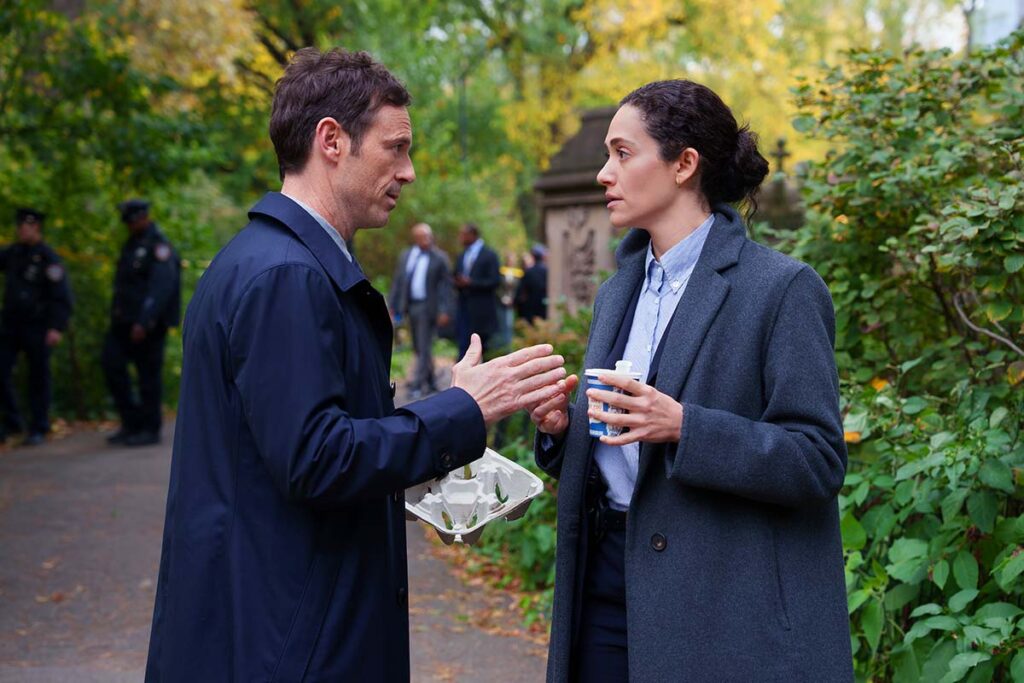
Alice finds her only consistently humane male ally in Danny (Scoot McNairy), a world-weary NYPD detective deeply in love with her. In a story populated by predators and careerist cowards, Danny stands apart because he possesses dignity, loyalty, and an actual capacity for empathy, even though he is visibly sickened by the systems around him.
McNairy once again proves what an extraordinary supporting actor he is. Danny winces at everything Alice endures, knowing he cannot undo it or love the trauma out of her. He sees her anger and self-annihilation without diminishing her into a problem he can solve. McNairy gives that decency a bruised, unshowy tenderness.
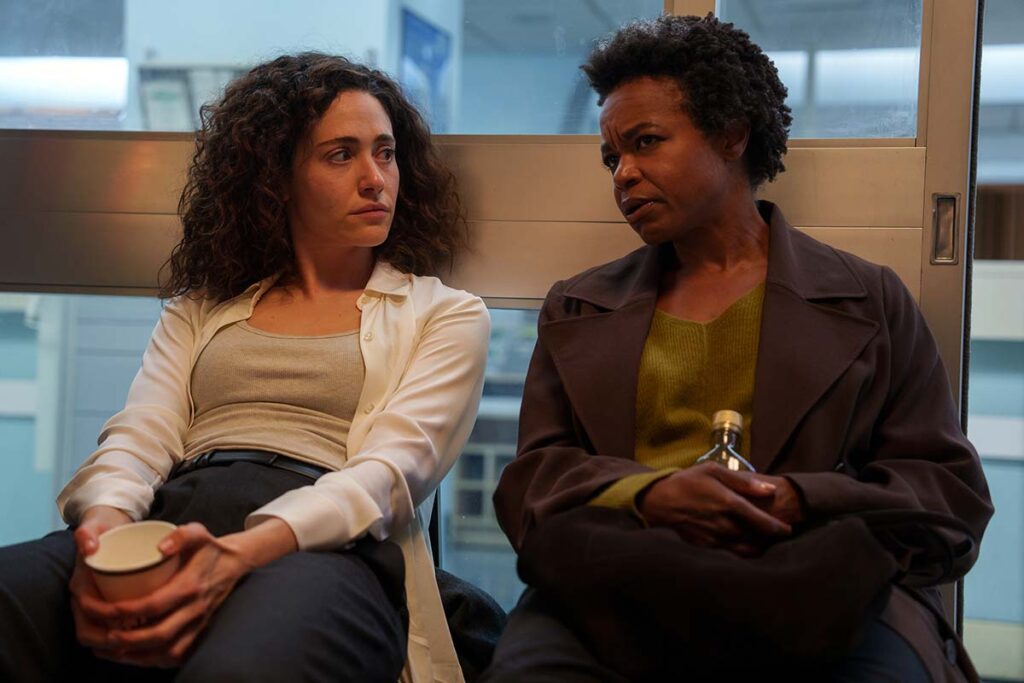
Quincy Tyler Bernstine is equally compelling as Nora, Alice’s alcoholic FBI superior. Nora is cynical and profoundly jaded after decades of watching the institution she serves fail victims. Drinking appears to be the only way she can tolerate participating in a machine whose compromises she understands too well. Yet Nora still tries to train Alice and push her beyond what she considers impulsive, bush-league NYPD tactics. Nora wants the FBI to play the long game and build cases that bury its targets, but her hardened mien conceals a calculating patience that can look indistinguishable from the institutional paralysis protecting powerful men. Bernstine is terrific as both a severe mentor and an exhausted woman numbing herself enough to survive.
Much like the Epstein case informing its story, “Furious” becomes less interested in one monster than the ecosystem allowing him to thrive. Rob Delaney is excellent as a wealthy sleazebag who cloaks his behavior in superficial concern. He can almost seem caring, but every sympathetic gesture is another maneuver by a man accustomed to purchasing intimacy and escaping consequences.
Hope Davis and Campbell Scott are even more diabolical as enablers orbiting the trafficking operation. When consequences threaten them, both insist they are the real victims. Davis and Scott play that grotesque self-pity beautifully, showing how quickly people who enabled horrific abuse will rewrite history to save themselves. They are so convincingly awful that their eventual comeuppance provides a rare, deeply satisfying release.
The plotting remains the series’ primary weakness. “Furious” throws so many institutional obstructions in Alice’s path that viewers may feel trapped in the same bureaucratic loop. Perhaps the show does not quite balance that frustration with enough momentum.
Yet its refusal to provide easy catharsis reflects the reality it depicts. “Furious” wants to provoke anger because these are grave injustices committed against vulnerable people by institutions that value self-preservation over accountability. Even when that approach does not entirely work dramatically, it gives the frustration a purpose.
The final stretch converts that anger into something rawer and more propulsive. Director Cory Finley (“Thoroughbreds,” “Bad Education,” “Landscape with Invisible Hand”) pushes the closing episodes into white-knuckle procedural territory without abandoning their damaged heart.
“Furious” is imperfect and occasionally tests the viewer’s patience, but it is well worth watching. The performances are terrific, the writing grows increasingly complex, and the direction ultimately generates genuine tension. Rossum is riveting as a woman who can pursue justice for everyone except herself, Petticrew delivers a fearless performance that should make her a star, and McNairy gives the series its wounded, compassionate soul.
Perhaps “Furious” does not always balance its desire to provoke anger with the demands of a satisfying thriller. But maybe that is the point. These injustices will enrage you just as much as they break your heart. [B+]
“Furious” premieres with three episodes July 27 on Hulu and Hulu on Disney+, followed by new episodes every Monday through August 31.

