


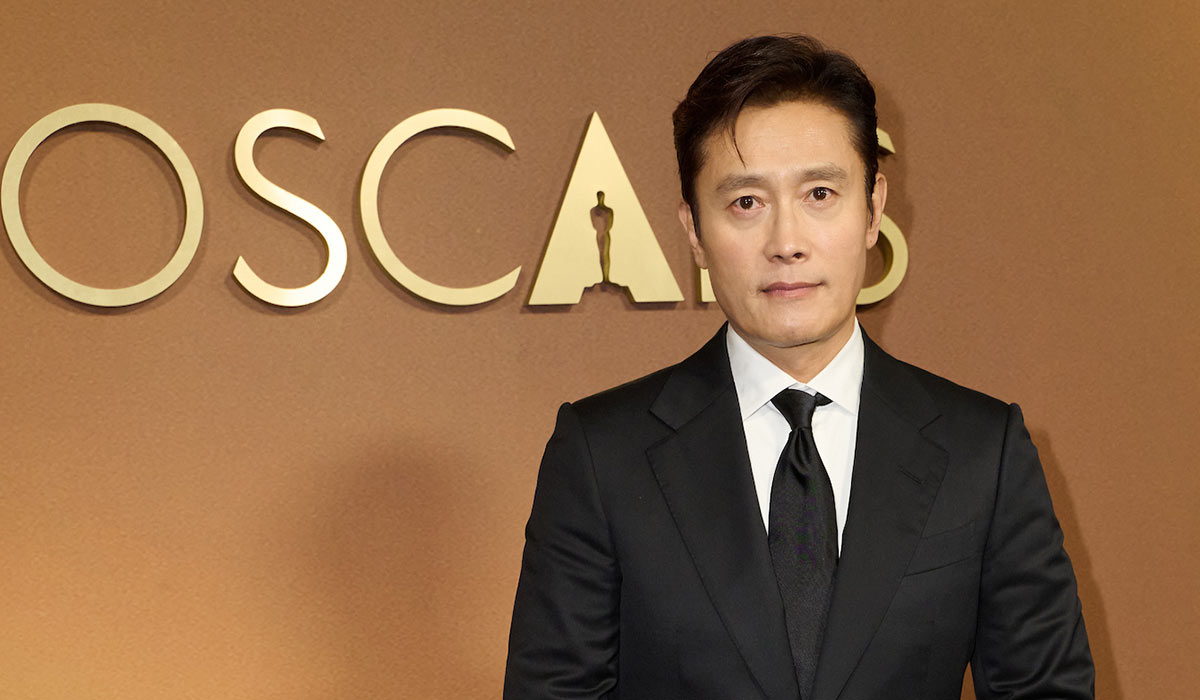
Lee Byung-hun knew what he was getting into. The veteran South Korean actor has worked in the Hollywood ecosystem for over a decade, appearing in the “G.I.Joe” franchise, “Red 2,” and “The Magnificent Seven,” among other projects. But he’s never really had a shot to show the depth of his talents to Western audiences until Park Chan-wook’s acclaimed dark comedic thriller, “No Other Choice.” And with that has come an invitation to the awards season circus.
READ MORE: Park Chan-wook On How “No Other Choice” Became Inherently More “Timely” 15 Years After He Began Writing It
From Venice to New York to the Governors Awards and everywhere in between, Byung-hun has found a deserved spotlight as one of the world’s greatest actors. It’s also found him landing his first Golden Globe and Gotham Award recognition. With Oscar nomination voting in play, he has a shot to make history, but whatever the case, “No Choice’s” success ($3.7 million domestic, $26 million worldwide so far) has once again put him front and center with global cinephile audiences. And if “No Other Choice” lands one of five International Film Oscar nominations? The journey will continue.
When we caught up last month, the “Squid Game” and, yes, “KPop Demons Hunters” star reflected on reuniting with Director Park after 20-plus years, eventually understanding his character’s decision to kill his job-hunting competitors, the toughest scenes to film, what surprised him about American audiences’ reaction to the movie, and why Korean films and television programs are resonating with audiences so strongly this decade.
____
The Playlist: What has the reception for “No Other Choice” meant to you?
Lee Byung-hun: I think being nominated for the Globes, it just means that a lot of the critics or the people who are part of voting really enjoyed the film, so that feels really great. And I’ve heard that it’s the first Korean film nominee for the Globes as well, so that’s really exciting.
Had you and Director Park been trying to work together more recently? Were there other projects that had fallen through?
We’ve actually worked together before, 25 years ago on “JSA,” and then after that, 21 years ago, we worked on a short film called “Three Extremes,” which is a runtime of about 40 minutes, and it’s kind of a triptych. And since then, even though it has been 21 years since we worked together, we’ve maintained a close friendship, and we’ve been close colleagues, so we’ve stayed in touch throughout that entire time, so it actually doesn’t feel like it’s been that long.
I know Director Park was working on this script for a long time. Do you remember when he first brought it up to you?
15 years ago, director Park was just passing by LA, and we had a meal together, so we were just talking about what projects we were working on, and that was when he first mentioned the acts, and that was when he was developing it as an American film. So, I actually didn’t even really know the details of the story. He was just telling me it as something that he was potentially going to be making. However, two years ago, when it was decided that “No Other Choice” was going to be made into a Korean film, he gave me a call right away, and that’s how I ended up being a part of the project.
When he brought it up to you then, did you realize how timely it was in terms of the storylines and themes about people fighting for trying to survive in tough economic times? That it might resonate with people beyond just being a great thriller?
So, I have always waited to collaborate with Director Park again after “JSA.” So, even before he sent the script, I knew I wanted to work on it. And when it became a Korean film, I knew that during the project, even though it had all these depressing elements because it had the veil of black comedy, that it was still going to be really funny, and people were going to laugh while watching the film. It had more humor than any previous project that Director Park had directed before. So, despite it being a very dark story, I think you intuitively begin to laugh so much while watching the film. And even though it’s based off of older novel, I think the issues that it deals with are very timely.
When you read the script, did you actually laugh? Is it funny in context, or was it funnier in context, shooting it on set?
I actually think Director Park and I have a very similar sense of humor, so I think we’re very well matched in that way because we don’t necessarily enjoy comedy for comedy’s sake. We really appreciate ironic humor that is based on realistic situations. So, in that way, it was a really great matchup for this film.
Was there one particular kill or sequence that you enjoyed filming more than the others?
I think I would definitely have to say that the first murder because it took us the longest time to shoot, but also, there are so many components to it. For example, Man-su is observing Beom-mo [Lee Sung-min], and he is attempting this approach over a sequence of days. Also, he gets bitten by a snake, and he catches Ara, Beom-mo’s wife [Yeom Hye-ran], cheating. There’s a lot that happens. So, we spent a lot more time on this first murder than on the subsequent murders. Also, I was asking myself the question, “Who, just because they’re fired, really goes on to commit murder?” So, I really needed to be convinced by Man-su and his motives first in order to express that emotion with truth to the audience. And if you see the film, you’ll see that the three victims of Man-su all have pieces or aspects of Man-su within them. So, these murders are in fact a huge metaphor because he begins to empathize and pity his own victims, especially Beom-mo, because it’s the first murder. And I think because it’s the first murder, Man-su finds this particularly psychologically difficult, and that’s why he is turning on this loud music, and it’s almost as if he is screaming at himself. I think this is a lot of hidden meetings and metaphors within this scene that I was trying to deliver to the audience. I think that’s why Director Park and I, we put so much effort into this sequence in particular.
You’ve been a part of “Squid Game,” which at its core is about economic disparity and people struggling to survive. And “Parasite,” a Korean movie that resonated around the world, also dealt with these themes. It feels like Korean filmmakers have been able to unlock the key to telling these stories in a universal way. Why do you think that is? Or do you think it’s just a snapshot of a couple of filmmakers out of tons of Korean productions just sort of breaking through?
I think it really comes down to finding this subject matter, because I think these issues are really universal globally. So, regardless of your country, your culture, or your language, I think a lot of people share these issues and are also because of that interested in these issues and are able to empathize with characters that go through the same problems that they do. So, I think in many ways Korean directors have sort of unlocked this key to be able to connect with a wider audience.
When watching this movie with an audience, was there any scene they reacted to that surprised you?
I forget whether it was Toronto or New York, but it was one of those two places, and we actually got a lot of laughter during the course of the second murder, where Man-su is trying to cover his victim’s face before he is about to shoot him. And there was a lot of laughter during that scene, which I thought was interesting because when we were shooting that scene, none of the actors or crew members were laughing or found that moment humorous. And it made me realize, hearing that laughter from a Western audience, that maybe this situation, the audience is so in it that they’re able to really get the humor of that moment.
Was there laughter on set during any of these moments when you were shooting, or did it feel pretty, pretty serious?
In terms of that second murder, the mood was very somber on set. There was no laughing or joking around because it’s really a moment when Man-su is…he’s just an ordinary person who is facing this very extreme decision. So, I think people feel pity towards him. However, there is a moment on set when we were laughing a lot. Both Director Park and I were laughing so much during that scene where Man-su is being chased by A-ra down the mountain, and he has to rush into the car.

You’ve had tremendous success both in Hollywood, American English language films, and obviously, “Squid Game” and Korean language films have sort of popped over the past decade. Do you have faith that Korean content can continue to expand its global reach?
Of course, I hope that this moment of Korean content it really persists. As a Korean actor myself, I do ask the question, “Oh, I wonder what direction it’s going to go in.” The first wave of this Korean wave started actually quite a while ago, within Asia, where Korean content was being exported into Japan and China. But I think the pitfall there was that we were really too focused on what those audiences want, and we were trying to churn out content for them. So, I think it is more so we should focus less on what the global market wants, but do as we’ve always done. And I think that will keep the power of Korean content going.
“No Other Choice” is now playing in limited release
Follow Gregory Ellwood on Bluesky
Follow Gregory Ellwood on Threads
Follow Gregory Ellwood on Instagram
Sign Up For The Breakdown Newsletter


