



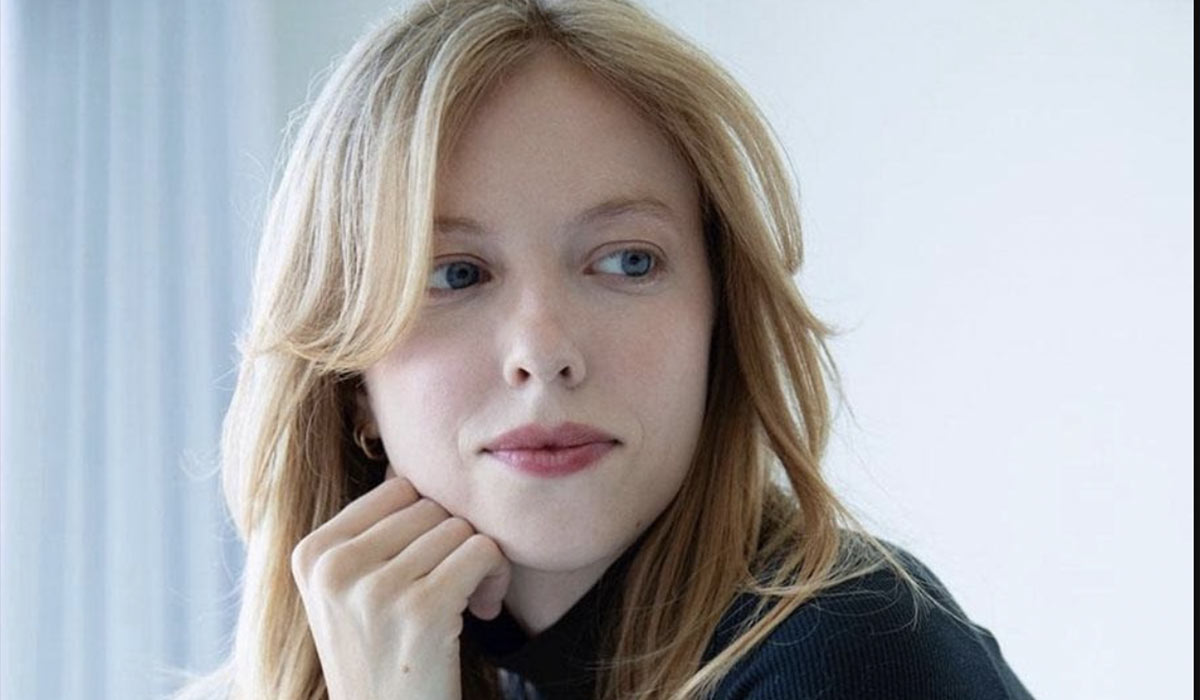
If there is a quintessential Sundance movie in 2025, it’s “Sunfish (& Other Stories on Green Lake),” a world premiere at the festival this past January. It’s the sort of movie Robert Redford would have championed as an example of the creativity of the independent film movement and for heralding the arrival of a new auteur. In this case, writer and director Sierra Falconer.
Set around the environs of Green Lake in Michigan, “Sunfish” is an anthology of loosely connected stories set over one lazy, relaxing summer. The first chapter, “Sunfish,” follows a teenager dropped on her grandparents’ doorstep for the season. “Summercamp” centers on a violin player under so much pressure to make first chair that he doesn’t have a moment to breathe, let alone have fun. “Two Hearted” finds a single and a fisherman go on a “Bonnie and Clyde” adventure for a legendary fish. The final chapter, “Resient Bird,” where two sisters run their father’s bed and breakfast, is the most personal according to Falconer. One sister experiences her first summer romance while her older sibling prepares to leave for college. The fact that Falconer and her producing partners initially conceived this entire endeavor as her MFA thesis film for UCLA is utterly remarkable. And that’s one of the first subjects we discussed in our conversation last month.
Before we begin that Q&A, it’s disheartening how tough it will be for many to catch “Sunfish” in theaters. It has distribution, but the plan is scattered. When the movie hits PVOD or digital download sites, make it a priority to find it. You’ll be glad you did.
_____
The Playlist: I have thought about this movie often since catching it at Sundance in January. I’m so curious about how it came to be because it looks like you shot this back in the summer of 2023?
Sierra Falconer: Yeah, it’s been a while.
And this was your MFA thesis film for UCLA Film school?
Yes.
This feels ambitious even for an MFA thesis movie? Maybe I’m wrong…
No. [Laughs.]
Can you talk about what made you make a feature for your thesis?
Because why not? I guess I’m like, if it’s not now, it’ll be never. You can get away with a lot when it’s a student film. You can ask for very large discounts. So, it felt like the right time. I knew I wanted to film in Michigan, and the flights to get everyone to Michigan were so expensive that the rest of the movie, just keeping them there a couple more weeks, seemed inconsequential. So why not?
When you wrote it, did you think of it as a feature? When I was in grad school, I remember thinking, “I’m doing this to get my degree, it will help me get something else,” but I never thought it would be festival-ready. Do you remember your mindset tackling it as a full-length?
Yeah, I took it very seriously. I did an undergrad in film as well, and that was more of the mindset of I’m fulfilling my degree requirements, and I came to UCLA, and I entered during the COVID Pandemic. I didn’t even know if I wanted to go back to school, but there were no jobs, so I decided to go back to school and was taking it very seriously, hoping that I would come out with a portfolio to launch my career. I was hoping to make something that wasn’t just going to fulfill my degree requirements, but yes, it was ambitious, and I was treating it like a full feature. I think the anthology format – there were a lot of creative reasons I decided to do that, but it also, in part, I think, helped it to get approved. They really discourage features, so pitching it as an anthology of shorts and ones that really stood alone, I was able to say, “If I don’t get the financing, I still can just shoot the first one. It’ll be fine.” And so they were comfortable with that.
Was it always these four stories? Did you have a laundry list of ideas at first?
It was three originally, but I didn’t know if I could get away with a 65-minute feature. I was hoping maybe 70 minutes. I’d watched “Petite Maman” and I was like, Céline Sciamma did a 73-minute movie, maybe I can too. But no, I was like, “I need to add a fourth.” The summer camp one, the second one was the last to come in. I didn’t actually know if Interlochen would ever let me shoot there. I was a little worried they wouldn’t let me on their campus, but they did. And so I added that one last, it was an additional 10 pages to fill it out to make it. I think the shooting script was 75, 80 pages.
Out of the other three stories, which one was your entry point? What was the first one you remember putting into the script?
The first one was the first one that I wrote because I think I was starting from my grandma’s cottage, that we filmed in. And that story is the one that feels the most personal, really. I mean, my grandparents were big birders. They were obsessed with the loons. They loved “On Golden Pond.” It was really like for them. So, I started with that one and kind of moved from there.
I would’ve guessed potentially that the last one might be your most personal. The one about two sisters who are running a bed and breakfast for their father.
Correct.
And their father’s away while they’re dealing with the people who are staying. And the oldest sister’s going to go off to college, and the youngest one is very emotional about it. Is that from your real life as well?
I’m the oldest of three sisters, and when I left for school, I was so ready to go, and I was like Robin [Emily Hall] in the story. I was like, “Hey, bye, see you, you’ll be fine.” And I didn’t realize until many years later that that was the end of childhood and nothing would ever be the same. And even though I would go back in the summers to see them, or now I just go back for Christmas, it always feels a little different, and nothing is ever the same. And it was a really emotional time. I’ve had conversations with my sister since then. My leaving them felt like an abandonment in a way. And so there’s a lot of that in that story, and something that I didn’t realize at the time, and it was just kind of starting to realize as I was writing a story and discovering how pivotal that moment was. It doesn’t seem like that big of a deal. It feels like a new beginning for Robin, but at the same time, it’s such a big end of a chapter of childhood and adolescence.
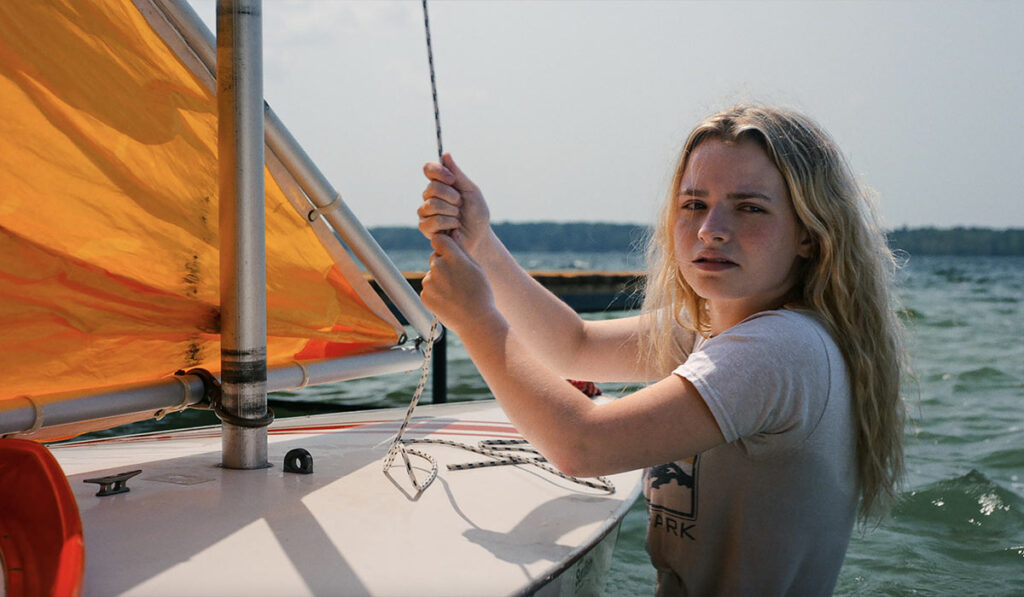
The actress who plays Robin’s sister, Blue Jay, Tenley Kellogg, how did you find her, and were you surprised by the depth she could hit in her performance? Especially in that almost final scene?
She is so good. She is actually from the same town as me. She lives in LA now, but she originally auditioned for the part of Lu in the first story. I loved her, but she has this spunky energy that I don’t think Lu really has. So I was like, “You have to audition for this other part.” And she was so perfect for it. And then she told me in the callback, like, “Hey, I think this is my hometown.” She was noticing all these weird things in the script that are crazy.” So, very weird connection. She brings such good bubbly energy to the set. I remember the day we were shooting that final scene, she showed up to set, we were starting with that scene, so sad and so down. And she had been getting into character all morning, and she was just lying in the hammock waiting for us to shoot. And I went over to talk to her, and she was listening to just the saddest music ever and just really getting into character. And then we shot the scene, and everyone on set was just silent. Everyone with just tears in their eyes watching that happen. And then after it was over, she was just happy again. She’s like, so her energy is so good.
One of the things I love about the film is that you just let the movie breathe. And it’s not just through editing, it’s how you shoot it. It’s how you frame so many shots. How conscious of that were you when making the film? Is that something you feel is inherent to you as a filmmaker?
Yeah, well, and I think it really was important for this story specifically to have. I talked to my DP about this a lot, but we wanted equal emphasis on the location in the characters. So we did a lot of wide framing. I didn’t want the location to be in the background. I wanted it to be kind of centered with the characters, especially since certain stories were more forward than others. We really wanted to let the locations come through at the beginning and end. But I also know that growing up and living on the lake, so much time is just empty, and you just aren’t doing anything. And especially going there in the summers, I was just bored constantly as a teenager. There was no cell service at the cottage, and there was no wifi. So we would go, and it was like a bubble, and you’d have no communication with anyone else, and you just rummage through the garage to see what you could find, go lie on the dock, pick grass. There was nothing to do. I remember one summer, my grandpa told us all we had to pick up acorns off the grass so he could mow the lawn. So, I spent two days just picking up acorns, and that was all you really did. So, I wanted the movie to have that feeling of, without boring people to death, we’re really sitting with it and we’re feeling the emptiness of the lake, which I think is very healing.
You have these four stories, you’re making them on a very indie budget. Was there any moment where you were like, “I don’t know if we’re going to be able to pull this off?”
I mean, it was kind of every day, constantly, but it was also a pretty smooth set. I’m sure there’s a lot of stuff that happened that I wasn’t aware of. The SAG strike happening right before we started shooting was the biggest nightmare and the moment when I was like, I really don’t know if this is going to happen, but we got our interim agreement the day before, and then while we were on set, the most challenging things were the water shots and the boats, the boat that Annie and Finn are on. And the third story I bought off Craigslist for just a few hundred bucks. He told us it didn’t run. The engine didn’t work. We were like, “That’s okay, as long as it floats.” And he’s like, “Yeah, it floated last time I had it in the water a few years ago.” So we were like, “O.K.” [Laughs.] So, we did a float test. My husband and I, the producer, just sat on the boat for a whole day before everybody showed up. Just make sure it floated. It did, but it kind of had a leak in it, so we’d have to take it out at night. It probably would’ve sunk. And so that boat needed to be towed around by another boat because it didn’t work. And then I remember we were shooting the scene of Annie [Karsen Liotta] and Finn [Dominic Bogart] talking about their dreams and their whatever. It’s a very serious scene, and their boat’s not working. Our towboat is somehow just working. And then we had to find a third boat to come tow both boats back to shore. And we were doing a lot of towing and whatever. The boat stuff was hard. Our picture boat, which the police were on, broke down on its trailer on the way to set. And that was the one day we had to sort of shut down early, wait for that boat to get here. So, I don’t recommend shooting on boats. But no, we got through.
You got through! And you shot, I guess, in the summer of 2023. Do you remember when you wrapped?
August, early August.
So it was tough to try to make it for Sundance 2024.
Yeah, we didn’t get it in time. I think we had a really early cut, but it wasn’t picture locked yet. And we decided we would wait until the next go-around.
After having started this in 2022, assuming waiting a whole other year to see if it got into Sundance was the hardest part?
Yeah, especially as I really like things happening. I am bad at sitting in the quiet. For as much as I grew up in Michigan, I need movement. But it was hard. And we, of course, didn’t expect to get into Sundance. That was way beyond our wildest dreams. And so it was just kind of sitting with the movie for almost a year, finished, realizing more and more every day, maybe no one will ever see this movie. And it’s really sad. And I think a lot of filmmakers have to sit with that and just praying and hoping that someone will find it. But it was a long time sitting with the uncertainty of whether anyone would ever watch the movie.
But you took a chance. You could have submitted to SXSW. You could have tried Tribeca or TIFF, but you waited. Did someone say you had a shot? Hold onto it?
I did an early graduation screening, and people came out of the theater buzzing. And at that moment, someone told me, “This is the best movie I’ve seen all year.” And I was like, “Oh wow, somebody I really trust.” And so I decided we should wait, and I’m glad that we did. But yeah, I could have started submitting it earlier, but sometimes you just have to go for it.
What did the Sundance premiere mean to you?
Oh geez. Changed my life, really, seriously. It was really overwhelming and surreal, and I still can’t believe that happened.
How did the very British Joanna Hogg come in as an executive producer? I do not believe she lives in Los Angeles…
No, but she did live in Los Angeles for a few months, and when she did, I was working as her assistant. So, I met her, it was 2022, I think, or early 2023. Yeah, early 2023. I was in prep on “Sunfish” at the time, but I worked as her assistant, and then she moved back to London. And when the film was totally finished, it was after that UCLA screening where everybody was buzzing. I sent it to her and just said, “I finished that movie,” and she was really complimentary, and yeah, came on board and helped us a lot with our submission to Sundance.
Do you have anything that you’ve been working on next? Are there other scripts that you’re trying to get made?
Yeah, I am very excited. I have a teen sports comedy that I love. I played a lot of tennis growing up, so it’s kind of like a tennis movie. But yeah, a couple of things. Very ready to get going on the next one.
“Sunfish (& Other Stories On Green Lake)” is still playing at the IFC Center in New York. You can find other screenings across the nation this fall here.


 went from MFA thesis film to Sundance)