



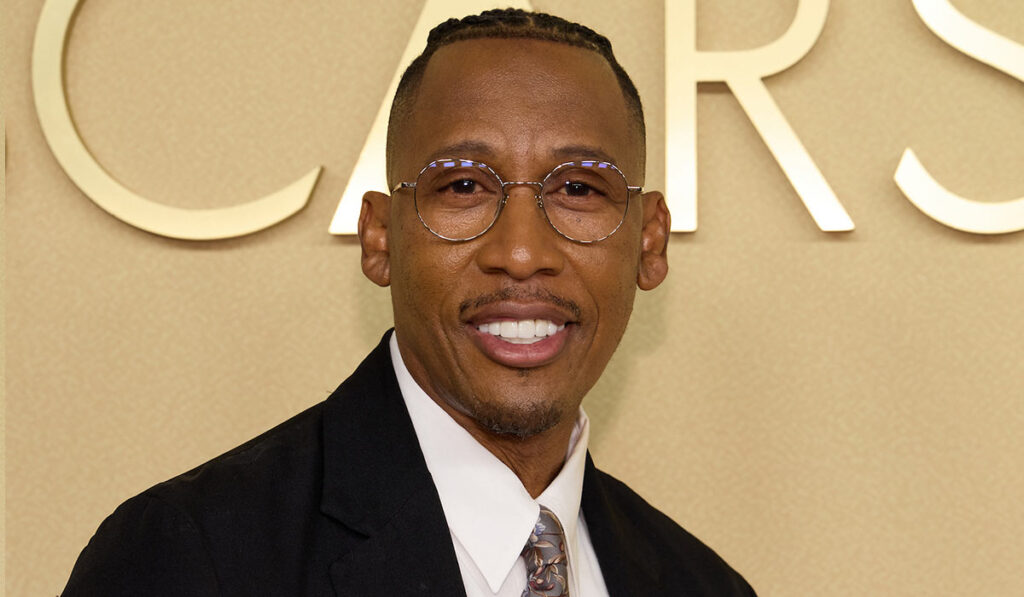
It feels good to be Raphael Saadiq. The legendary R&B singer, songwriter, and producer is celebrating his second Original Song Oscar nomination for “I Lied to You” from “Sinners.” He was previously nominated in 2018 for “Mighty River” from “Mudbound,” but he’s been part of popular movie soundtracks and playlists for decades. This, however, may be the icing on the cake.
READ MORE: Delroy Lindo On The “Brilliant” And “Contemporary” Story In Ryan Coogler’s “Sinners” [Interview]
Best known as part of the influential Oakland hip-hop trio “Tony! Toni! Toné!,” Saadiq’s songwriting skills have been on display for decades. He was already an Emmy nominee for his contributions to “Lovecraft Country” and written songs for movies such as “Brown Sugar,” “Queen & Slim,” “House Party 2,” and a trio of John Singleton films: “Baby Boy,” “Higher Learning,” and “Boyz n the Hood.”
“I had a lot of experience and directors telling me what the script is without me reading it,” Saadiq says. “ John Singleton did the same thing when I worked on ‘Boyz n the Hood.’ He just came to me and said, “I need a song for this movie, and it’s going to be Nia Long and Cuba Gooding, Jr. in the locker room making out.” And then I wrote this song called ‘Me and You.’ And then in ‘Higher Learning,’ he just told me it’s a part in the film where this girl’s running track, and her name is Deja, and I wrote this song, and it became a hit. So, I had some exercise from the late great John Singleton, who was also an awesome person to pitch movies. So I had some experience in doing this. I guess you could say I was prepared.”
During our conversation earlier this month, Saadiq reveals how Coogler’s love for a Beyonce song he co-wrote put him on the director’s radar, the blues influences in “I Lied To You,” when he actually heard the final track (you’ll be shocked), his favorite Grammy win, and much, much more.
This interview has been edited for length and clarity.
_____
The Playlist: How did you get involved in writing “I Lied To You?”
Raphael Saadiq: Ryan Coogler went to Beyoncé’s concert, and he heard one of her songs that I worked on, and he was like, “Who did that? ” He heard “Cuff It,” and then he went and read who did “Cuff It.” He’s like, “We got to call Raphael for ‘Sinners.'” And then Ludwig reached out through a friend of mine, Dominique Dunn, a young lady who worked for a friend of mine, No ID. And she worked in the same building as me in my studio. And she was like, “Ludwig Göransson is looking for you.” And I’ve known Ludwig, but I don’t know how it came through, but she told me. And after that, I went and met with him that day, and then I spoke to him and Ryan. And Luwig kind of pitched it to me, the whole story of ‘Sinners,’ the script as good as he could. And then we got on a FaceTime with Ryan, and then Ryan pitched it to me, and then it was clear what we needed to do from that point.
Was the idea to come on the project and work on a bunch of songs, and this is one of the ones that finally made it in? Or was it for a particular song that was needed?
It was more about that song, but I didn’t know the actual scene. So, they just said we needed an authentic blues song for this film. And it ended up being in that piece. It ended up spinning off everything to me to score and everything.
Oh, so this was at the beginning, beginning.
This is the beginning. Ludwig had done no music for it. This was three days before they left to go to New Orleans to actually film this. And I think he scored on the set. From what he told me, he had a room, and he scored that film from New Orleans.
Wait a minute, time out. So, three days before they were going to go shoot the movie, they did not have this song yet?
No. No.
How quickly did you guys put this song together?
In maybe two hours. So, what happened was he says to me, he and Ryan, well, they said we’d leave to shoot this in three or four days. So I’m thinking “I could go back to my studio and come up with something.” And I’m a huge Howlin’ Wolf, Muddy Waters, and Hubert Sumlin fan. I’m thinking in my mind that’s what I would do, but I had the opportunity. So I’m thinking I can get a chance to go back to my studio and maybe come up with something, see if they like it. They both said, “We would like it if you did it now.” I’m like, “Now at my place?” They’re like, “No, if you recorded it here right now.” And so I said, “Let’s go. Let’s go. ” And so I picked up the guitar and started riffing. Ludwig picked up his guitar. He started riffing with me. We started playing licks and coming up with different vibes. And once we did that part, I walked over to the mic, and I recorded all my vocals, and I wrote all my lyrics right there and wrote the song right there.
Was there one lyric inspiration? Is there a through line in your head? How does it normally gestate for you?
Normally, I work with music first and then lyrics, but with this one, for some reason, “I lied to you” was the perfect thing that popped up in my head. “I lied to you,” and “I love the blues.” And I had this concept that I should make these little funny jokes about if you … I even know if I should say this, but I have to because it’s just the truth. If you love somebody and you don’t want to let them know something happened, you were younger or something, and then they find out that you lied. And then they ask you, “Why did you lie?” You say, “Well, they say the truth hurts, so I lied to you. I didn’t want to hurt you.” So, I always had that kind of little thing in my mind, not knowing that the character himself sang by Miles Canton, that his character was going to be him lying to his father about he was going off to work. When he was actually going to a juke joint, he wanted to play blues. He was leaving a church. And I grew up like that with a lot of friends who were preachers’ kids, and they couldn’t sing R&B music. So, they would tell their parents that they were going to play instead of playing with [Tony! Toni! Toné!] they were going to sing with Commissioned, the gospel group. But then we would end up on nighttime television, and somebody would tell them, “We just saw your son playing keyboards with Tony! Toni! Toné!.” So, it was a lot of that going on when I grew up. Talented musicians didn’t want to tell their father that they were trying to play secular music. And I had that sort of experience.
At one point in my life, I was afraid to sing secular music because of COGIC, Church of God in Christ. “You sing this music, you’re going to hell.” And so my dad worked at a Naval Air, the Navy base, and he told me, “Well, if you scared, you don’t want to do that. I can get you a job any day. I can get you on down here in Naval Air.” He said, “Well, but I want to tell you, the key, he said in church, the key E-Flat is the same key E-Flat in R&B.”
And so once I textualized what he was saying, I wasn’t scared anymore, but I was very fearful of that growing up. And so that character that Miles plays is sort of like how I grew up, but I didn’t have to sneak off in my house. There was a lot of blues in my house. There was a lot of B.B. King, a lot of Muddy Waters, a lot of Albert King, a lot of Blowfly. It was a lot. My stepdad listened to a lot of blues. My dad actually sang a lot of blues. So I grew up in church, and the Baptist Church is not as hardcore as COGIC or Pentecostal. Those churches, girls couldn’t wear a fingernail polish, they couldn’t wear pants, they couldn’t do a lot of things. And you couldn’t listen to certain music, you couldn’t smoke cigarettes. But in the Baptist Church, people walk outside and smoke a cigarette, and they go home, and they drink a beer and go fishing.
I grew up in a house like that. It was pretty loose, more loose church, but my friends were heavier church, and I paid attention more to the end of life, a life and death going to hell for burning in eternal hell. That attracted me more than my parents having this looser church. I just thought Baptist was just a little loose and COGIC was maybe sort of the truth, but then my dad came and said, “O.K., you can do this, and you can do that. ” So, when the script came to me, it made so much sense. And what Ryan was saying to me was that his uncle was a blues guy, and he dedicated this movie to his uncle, [who] was explaining to him about church and state. Blues people had church at the Juke joint, and church people had church at their temple. But for so many years, blues has been frowned on because of that, because of its in the juke joint, there’s liquor, there’s all these things, but he introduced Ryan to blues. And after he passed, Ryan fell in love with the blues. So Ludwig and Ryan were being really authentic to the sound of blues and Ludwig’s wife, Serena McKinney, by going to Clarksville, Mississippi, and grabbing the people who are young people that are still playing the blues today, authentic. And so I didn’t even know all of that was going on. I got two 10-minute pitches, and I wrote this song. And then once it was done, Serena called me, she heard it and she goes, “Well, the song that you did that you guys came up with, I just want you to know that it’s going to be all over the movie.” And I’m like, “O.K., O.K.” I forgot what the song sounded like because I recorded it, and I left, and I never got a copy of it.
When they recorded Miles singing the version that’s in the film, you didn’t hear it until you saw the movie?
I didn’t hear it until they showed the movie at IMAX. Ryan invited me out to see it, and that’s the first time I seen it. But I actually was in New Orleans the day that they were going to film that scene. I don’t tour that much, but I happened to be playing the Essence Festival in New Orleans, and that was the day they were filming that big, big scene. So, I went there, I still hadn’t met Ryan face-to-face, and Ryan wasn’t there. He was somewhere eating lunch. So I was sitting on the set by myself with the Lugwig and the Serena. So, I’m looking at the set, but I couldn’t stay because I had to go do a show. I had to soundcheck. And so I saw what the set looked like, and then I saw the movie, and that was it. And so now with all the Oscars and the interviews, it’s really surreal a little bit. I’m trying to catch up in real time with what’s going on.
Just to clarify, you got on the phone and then, within two hours, were already writing the song?
Yeah.
In that context, you hadn’t read the script. How much information did they give you about what the film was even about? How much narrative background did you have to even think about while writing it?
Like I said, Ryan gave me this idea. He told me the story about his uncle loving the Blues and explained that his uncle said that blues gets a bad rap from the church. And he said, “Church was this and blues was this, but it’s frowned upon basically.” And I knew that story, so this movie talks about, he talked about the characters of the demons of Pick Poor Robin Clean, and basically, I saw the vampires just sort of trying to suck the soul out of this kid. And so I sort of put that in my head, but as he was talking, I was already formulating, “Oh, they want me to do this now.” So I’m listening, but I’m thinking about how I have to go and write this song right now. But Ryan’s a very prolific storyteller, too. So, he just told me the story, a little different than Ludwig would tell the story, but it was close in approach. They told me it was a really small movie.
That was not a small movie. [Laughs]
Not like “Black Panther.” This is going to be a very small movie.
Oh, sure. But it’s still a gigantic movie.
Yeah, but I don’t think it was going to be that in the beginning. I think it grew. So, I think they were being honest, but I think it grew. But I would say I had a lot of experience and directors telling me what the script is without me reading it. John Singleton did the same thing when I worked on “Boyz n the Hood.” He just came to me and said, “I need a song for this movie, and it’s going to be Nia Long and Cuba Gooding, Jr. in the locker room making out.” And then I wrote this song called “Me and You.” And then in “Higher Learning,” he just told me it’s a part in the film where this girl’s running track, and her name is Deja, and I wrote this song, and it became a hit. So, I had some exercise from the late great John Singleton, who was also an awesome person to pitch movies.
So I had some experience in doing this. I guess you could say I was prepared.
This is the most naive question from someone who is on the film and television side of business, who does not know how to write a song. Is it commonplace to write something so quickly? And if you write something much longer, if you spend days on something, do you freak out and overthink it because you’ve spent too much time working on a song?
No, I like to work both ways. Sometimes you can write a song, you could like it, and you could let it sit for weeks and then go finish it. Sometimes people could finish songs that day. I like to let music marinate, but sometimes it all happens right there. I was talking to one of the Porocaro, one of the brothers of Toto, and he wrote a song called “Georgy Porgy “Putnam, and he told me that everything came out while he was playing and singing it all the way through, and he was done. Sometimes it happens in different ways. Sometimes it’s a touchdown, sometimes it’s a first down, sometimes it’s a fumble.
But how do you know it’s not a fumble? When you finished that day, were you like, “Oh, wait, we nailed it”?
No, I wasn’t like we nailed it. I knew I finished planning. I felt like I had performed as well as I could perform it. We had an intro, we had a hook. I felt like the hook was really big with the hums. I felt like the verse felt like the guys that I honor, Buddy, Guy, B.B., and I felt like they could sing that song. So, I was more performing for the people before me who sang Blues. And I knew if they heard it, they would go like, “O.K., now that’s something.” And once I felt like that, I knew it was complete.
They must have cast Miles Canton because they were leaving in three days. Did they say, “Hey, Miles is singing this. He sings in such and such a register. It needs to be in this.” Is he singing in the register you thought he would sing it in?
Miles sang it in the exact key I sang it in.
Oh, wow.
And I didn’t pick a key. I just picked the key that the guitar was going to sound really good in playing blues. And I knew they told me about the character a little bit, but I didn’t know he had this huge voice as he has. That song is more for a voice like his, not mine. I have to mimic people. They say the truth. I kind of sing it like they were singing in the ’40s. [Miles] did an amazing job, but he has that huge voice. He’s 20 years old, but you think about it, those dudes that were singing the Blues were 19, 17 singing with those kinds of voices.
When you saw the movie for the first time, how did you feel about how it depicts the history of African-American music?
I met all the people from Mississippi and Clarksdale. So to know how much they really incorporated the authentic players and the people bringing Buddy Guy back, doing “Wang Dang Doodle,” all the songs like “Smokestack Lightning,” these are all the songs that I’ve been listening to for years. And even just to take the two characters that Michael B. Jordan is playing and make the twins Smoke and Stack, I was in, I’m like, “Oh, this is me all day.” This is a part of me that people really don’t know. My upbringing is Blues. I don’t have the voice to sing that type of blues, but there are a lot of people who sing blues that don’t have that voice. My voice is more suited to sing blues than maybe 80% of the people who try to sing it today. But I respect voices that just could open their mouth and be talking, and they could just talk it, and it just sounds like it. So, I was really excited and glad I saw the through line of the film that they really went for it, and they went on a whole tour. Ludwigand Ryan went on a whole blues tour and went back to Mississippi and Clarksdale, and they went through, and they met all the people and went on these blues tours. I think they did the work. And I’m glad they called me because it just brought all the sides of me for all the blues players to know, yeah, I can do that.
Two quick questions for you. One, the song is being performed at the Oscars. Are you going to be part of that?
I am, yes.
Oh, are you excited?
Yeah, I’m excited. Yeah, it’s cool because I got a chance to just sing it a lot. I sang it on my tour, my one-man show. I went through my whole body of work because I worked on so many films since back in the day, all the way from “House Party” to “Lovecraft Country” to… I’m a part of so many. I’ve done so much music and film that I have to go back and see everything that I’ve done. So, I’ve always been able to jump from making records and jump into film because I always thought looking at Donny Hathaway and Miles Davis and Quincy Jones to some of the bigger composers that are working now, how they carry themselves in this business. And in my business, when you’re a musician, they call you the artist. “The artist is always late,” or “the artist this,” or “he’s the artist.” And I used to hate that. “Why they keep saying the artists? Are we stupid? The artist.” So, I knew when I got into film that that could change because when you’re working in film, everybody’s important. The key grip to the first AD, the actors, to the trailers, everybody’s important, and they always honor everybody on the film at the end of the film. Even when they passed on, they have these things, and they honor the people who worked on these films. And I said, “You know what? If I work in film, they’re going to know I’m an on-time person because you can’t be … ” Because in film, you can’t be an artist and go, “Well, let me see if I can get back to you next week.”
Behind you in your bookcase, there’s a Grammy. Do you know which Grammy it is?
This is my first time doing an interview from this angle. I never show any awards. It has to be “Cuff It.” One is up there. There’s two: “Texas Hold ’em” with Beyonce, and one is for “Cuff It” from Beyonce, and the other one’s at my mom’s house.
That was my last question for, I think you’re now a three-time Grammy winner?
Man, I never keep up.
Which one means the most to you?
I would say “Cuff It,” Beyonce.
That song is f**king awesome. A classic.
Definitely.
“Sinners” is available on HBO Max.
Follow Gregory Ellwood on Bluesky
Follow Gregory Ellwood on Threads
Follow Gregory Ellwood on Instagram
Sign Up For The Breakdown Newsletter


