


When looking at the genre of surreal comedy, it’s easy to focus on the efforts of the likes of Mel Brooks or Monty Python. However, millennials likely found kinship in the works of David Wain, in particular his cult hit “Wet Hot American Summer” and the like-minded films that followed. Never afraid to take a scene past the point where things stop making sense and what could easily be dismissed as the opposite of a joke ends up hilarious, Wain’s absurdity was in full effect with his 2001 debut, his work with comedy trio Stella and later classics none more quotable than 2008’s “Role Models.”
READ MORE: The 150 Most Anticipated Films Of 2026
It should come as no surprise, then, that Wain himself plays an onscreen role in “The Napa Boys,” a film with all the hallmarks of the director’s own filmography with plenty of nods, whether unintentional or otherwise, to the bizarre side of funny, even if at times the sensation of being odd simply for the sake of being odd becomes glaringly palpable. It is for this reason that describing the plot becomes near-useless, though almost immediately a subtitle appears indicating this is actually the third sequel in a franchise either riffing on or supposedly spawned from 2004’s “Sideways.” Is there any truth to this?
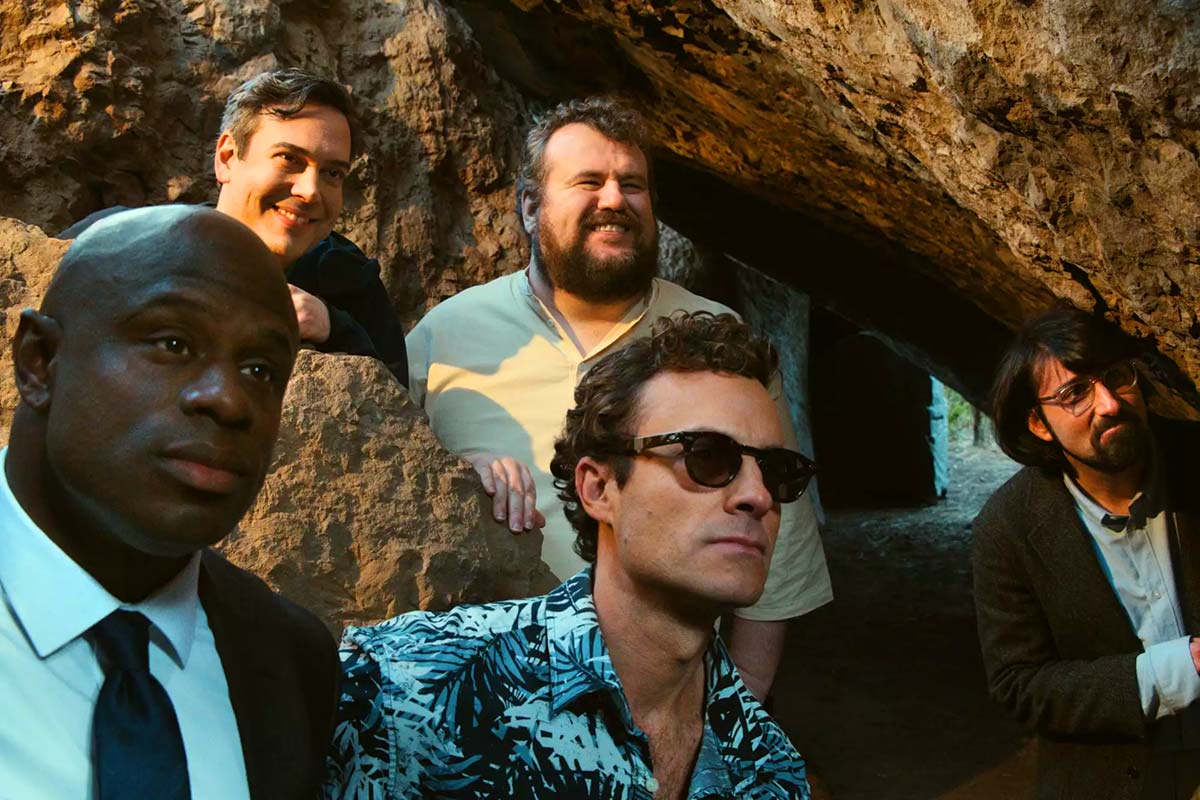
Obviously, none whatsoever, though even without knowing of its connection to the Alexander Payne masterpiece it’s easy to draw similarities, as the film follows the misadventures of two legendary wine connoisseurs, Miles Jr. (Armen Weitzman, also co-writer), and Jack Jr. (director-co-writer Nick Corirossi), the former of whom still reeling from the loss of his family and also the creator of a comic book carrying the film’s title. It would seem The Napa Boys have garnered a massive following, and as the two venture to California wine country in search of a near-mythic sommelier as well as take part in a wine competition in which winery owner Mitch (Mike Mitchell) hopes to take home the, paths will soon find themselves crossed with Squirm (Paul Rust), Mitch’s competitor and de facto villain, Puck (Sarah Ramos), a Napa Boy hopeful, and the oddly named Stifler’s Brother (Jamar Neighbors), bearing no resemblance whatsoever to Seann William Scott’s now-legendary “American Pie” centerpiece but simultaneously supporting a riff on DTV sequels so signature to that particular franchise. Indeed, is this, somehow, a satirical take on such a concept?
Ultimately, it remains hard to follow, though Wain plays it straight in his periodic appearances as a wine judge; a recurring third-act joke, though, feels a touch tone-deaf by today’s standards. A cameo by none other than Jay and Silent Bob (Jason Mewes and Kevin Smith) sees the two fully commit to the bit, and just when the film starts to lose the audience, it reels everyone back in with another delightfully baffling moment. Unafraid to shy away completely from the occasional crude humor, especially an early scene begging to be led by Will Forte, it fortunately never overstays its welcome, and for those who enjoy the payoff of hanging onto every line of dialogue, the best jokes throughout are the ones tacked onto the ends of conversations, almost as a comedic afterthought. It’ll make sense once you watch, more so than the plot itself.
It’s likely not for everyone. Some might find it difficult to work their way through the strangely dense, off-putting tone and perplexing momentum. Worth making it to the credits? Absolutely. You may not come away better for the experience. Still, in enduring The Napa Boys’ fourth jaunt through surrealism, you’ll hopefully find something, whether it’s an unusual 90 minutes of film or an excuse to be weird simply. In this day and age, who could ask for more? [B]


