


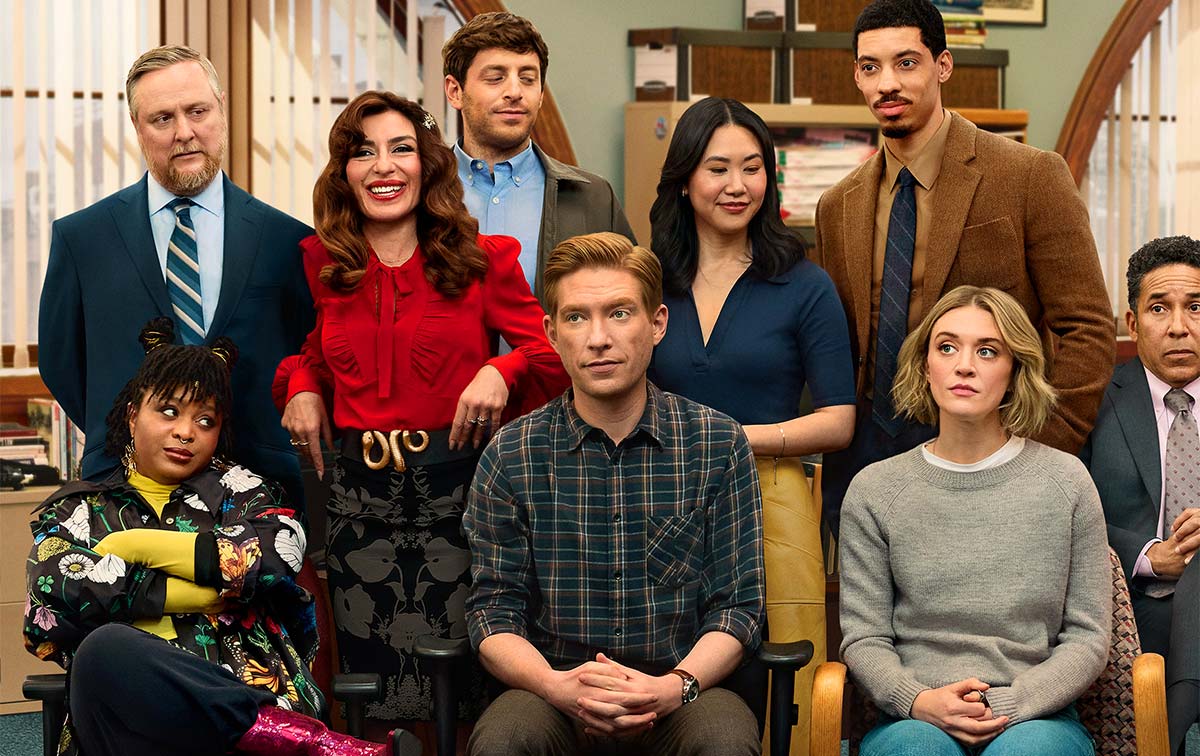
Grievously unfunny with nothing of interest to say, “The Paper” is a sad mimicry of a time-bottled comedy series best left to enjoy its legacy through nostalgia-fueled binges and discoveries by new audiences. It’s been twenty years since Steve Carell led the mostly funny ensemble of “The Office,” and while there’s been plenty of elements that fail to age well, plus specific personal gripes about characters and romances, the spinoff series is proof that sometimes, you just had to be there. And, more than that, most of the time, series made popular in the 2000s are best left there, too.
The 75 Most Anticipated TV Shows Of 2025
Greg Daniels is synonymous with some of the more era-defining comedies. From his work on series such as “King of the Hill,” “The Office,” and “Parks and Recreation,” plus his writing credits on “The Simpsons,” “Saturday Night Live,” “Seinfeld,” and more, his voice is notable. He has a clear eye for talent, building strong ensembles around a central player. That said, not every project is a winner, and it’s clear in the early moments that his most recent, co-created and written by Michael Koman, is a major miss.
Despite an updated setting and ensemble, “The Paper” doesn’t stray far from the familiar. The series leaps from Scranton, Pennsylvania, to Toledo, Ohio, where the same documentary team is now following the Toledo Truth-Teller. This historic Midwestern newspaper, like most, has seen better days. Ned (Domhnall Gleeson), who, despite having no prior experience working at a newspaper, is the new editor-in-chief, is trying to help revitalize it.
Ned is clearly filling the Leslie Knope archetype, careening into the picture with an embarrassing level of aw-shucks style earnestness. He’s sincere yet bumbling, at one moment declaring his admiration for Clark Kent instead of Superman before bungling the name of the character he works for. Ned alerts us to the kind of show “The Paper” is—half-baked and treading water, searching for meaning. It’s only fitting that the anchor to the series is a character who, like the show, has all the components of better material but not enough focus, passion, or insight to deliver on it—manifested as hot air.
Throughout the season, we watch as the entire newsroom transforms into something more fitting with Ned’s vision of what a newspaper should be. The company can’t afford to pay for a whole staff of writers (the series knows how to go for the jugular of any tired writers), so, instead, the existing staff volunteers their time to write for free. This means that Mare (Chelsea Frei) no longer must drag and drop AP news alerts in her role as a compositor in a thankless position that she clearly hates. Now, she can share her own writing.
Mare is the most interesting character introduced, so much so that she feels better suited to be the series’ driving force. Frei plays her with just the right amount of dry humor that barely hides her genuine thrill at being able to chase leads and investigate news.
On (pardon) paper, a lot about the series seems hopeful, mainly due to the strong ensemble on board of familiar and less familiar names. Yet Gleeson has so rarely been this joyless despite moments of broad comedy. His performance is flat, and he can barely elevate half-hearted writing without wit or energy. And while Frei manages to imbue a sense of life into her character, not every character receives that same triumph.
Esmerelda (Sabrina Impacciatore) is cartoonish to the point of distraction, failing to blend into the otherwise naturalistic format and style of the series. And others, such as Melvin Gregg Detrick, Gbemisola Ikumelo as Adelola, and Ramona Young as Nicole, don’t have enough to do despite their natural charm. This worsens due to a negligible lack of chemistry. It’s not just that it takes a while to warm to the characters. The most glaring issue is that we’re supposed to believe them warming to one another, but that sense of camaraderie is absent. At the very least, “The Office” most often seemed committed to making the characters dislike one another.
Tim Key’s misuse stings the most, especially after his charismatic performance in this year’s “The Ballad of Wallis Island.” Despite his affinity for off-the-cuff rebukes and veiled humor, his role is so underwritten, so underutilized, amounting to a waste of a character. Yes, he fills the role of a vague antagonist, but nothing is compelling or engaging about his character. He’s simply there to be an obstacle for Ned and co to clear.
More than anything, however, “The Paper” is boring. Each episode lags in pacing, delivering jokes that feel like afterthoughts or yesterday’s news. A gag with a phone filter already feels dated—ditto a storyline about catfishing. There’s nothing new or fresh about the story as it reaches for easy, exhausted jokes. Comedy has dramatically changed in the twenty years since “The Office” premiered. From dramedies and dark comedies, where series such as “Fleabag” and “You’re the Worst” share space with “Hacks” and “It’s Always Sunny in Philadelphia,” there’s a greater room for comedies to redefine themselves as more than mere punchline assembly lines. But the shared desire should still be to squeeze out at least one laugh.
“The Paper” can’t even manage that. Sloppily composed with no sense of logic or spark of life, there’s no draw to continue the series once the premiere stumbles its way to the credits. Not even Oscar Nunez reprising his role can generate any sense of fun. Despite the passion Ned is chasing and the idyllic hope he pushes onto the newspaper, none of it transfers over into the final product. Instead, it’s a listless, meandering series that feels both like a relic and forced, corporate-induced nostalgia-bait. It’s not worth the time and energy, and we quickly get the sense that the writers’ room realized that too little, too late. [D]


