




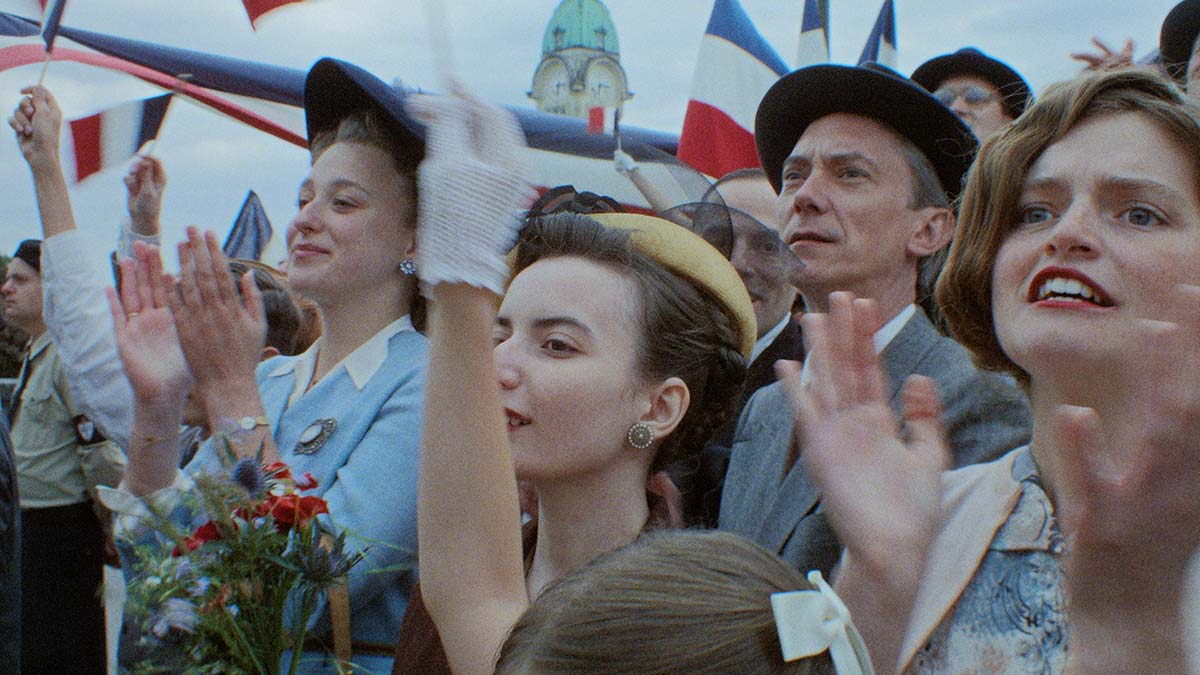
France’s past as a country that collaborated with the Nazis has long been an obscured or minimized aspect of its history, with the Resistance and General De Gaulle’s calls from London the focus of most retellings. The rising tide of fascism worldwide in the last few years, including within France itself, as well as governments’ reactions (or non-reaction) to the global conflicts, have pushed some towards a more frontal reckoning with this shameful past. In approaching that era from the perspective of the individual, Emmanuel Marre’s “A Man of His Time”—which played in Competition at the 2026 Cannes Film Festival and won the Best Screenplay award—feels like a film of our time. Add climate change to the grim list of international catastrophes that make our present, and one could argue that questions of personal responsibility and agency have never been more front of mind.
READ MORE: 27 Most Anticipated Films From The 2026 Cannes Film Festival
Ironically, this relevance only makes Marre’s film come across as dully patronizing, pressing a point we are hopefully well familiar with by now. “A Man of His Time” is based on the writing of Marre’s great-grandfather, Henri Marre, an ideas man desperately trying to get a job in the Vichy government. His main motive, it soon becomes clear, is to shift copies of his book “Notre Salut” (the film’s title, meaning “Our Salvation”), a manifesto on how to rebuild France post-capitulation, which are gathering dust in his apartment.
If 2026 is an age where many are questioning their complicity in the various systems of oppression that govern us, it is also one where others choose to go in the complete opposite direction: we are in an age of grifters. Social media is rife with “influencers” who become rich by selling their advice on how to become rich, and a debt-ridden crook is the president of the United States. Audiences today are well-equipped to spot frauds, and if we are to retain anything from the recent tidal wave of TV shows about real-life scammers, it is that the psychology of such con artists is about as mysterious or interesting as the deliberation process of the Palme Dog jury.
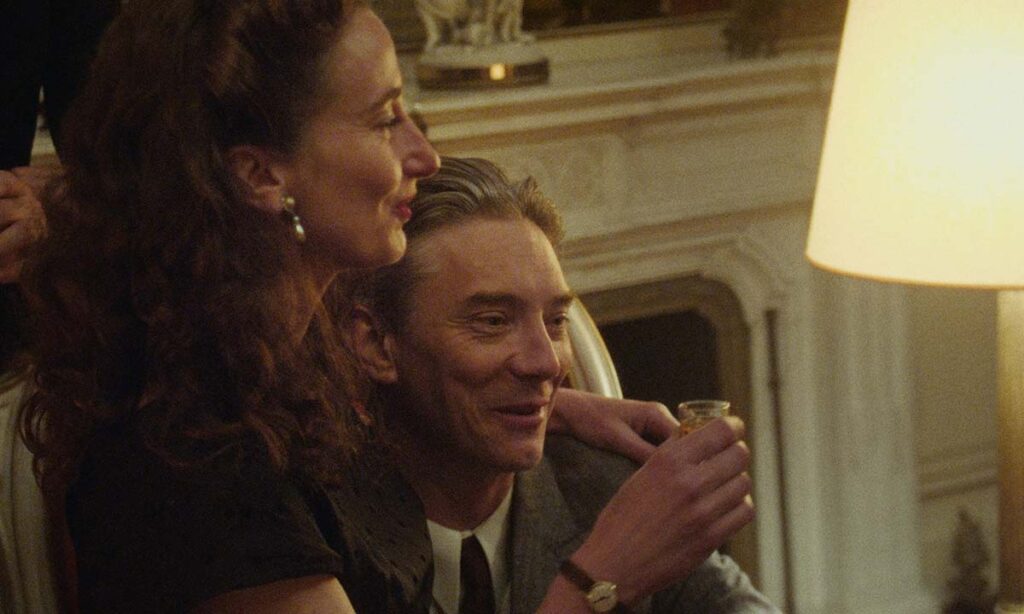
Yet the big central performance from Swann Arlaud (better known outside France as the hot lawyer from Justine Triet’s Palme d’Or-winning “Anatomy of a Fall”), together with Marre’s insistent, nervous visual style, seems to suggest there is more to Henri than meets the eye.
The film opens with a showy sequence—the first of many—introducing the film’s main formal conceit: a documentary-like aesthetic meant to give a sense of reality caught on the fly. The actual effect is more that of a fashion shoot, with Arlaud obviously aware of the camera’s position at all times, his performance of casualness so mannered that he is practically posing. Meanwhile, Marre deploys a lightning scheme familiar from the documentary. Still, in the realm of fiction, it evokes Michel Gondry’s “Eternal Sunshine of the Spotless Mind” instead: a big flashlight is attached to the camera, illuminating the characters who pretend it’s not there. This annoying gimmick highlights the immaculate work on costumes and set design to the point of fetishization—subtlety does not seem to be Marre’s strong suit.
And so, in this opening sequence, Henri’s position is loudly signposted as well. Standing in the middle of a crowded living room during what looks like a salon, he is unable to get into the flow of any of the conversations around him. For a moment, it seems that he may be harboring some doubts about the company he is keeping: these are proponents of the Vichy government, all in favor of France’s capitulation to the Germans, though some of them are more reserved about the leader of Vichy France, Marshal Pétain. As it turns out, it’s on that later point that Henri feels most alienated from his peers. He loves Pétain and sees this new government as a chance for a clean break from what came before.
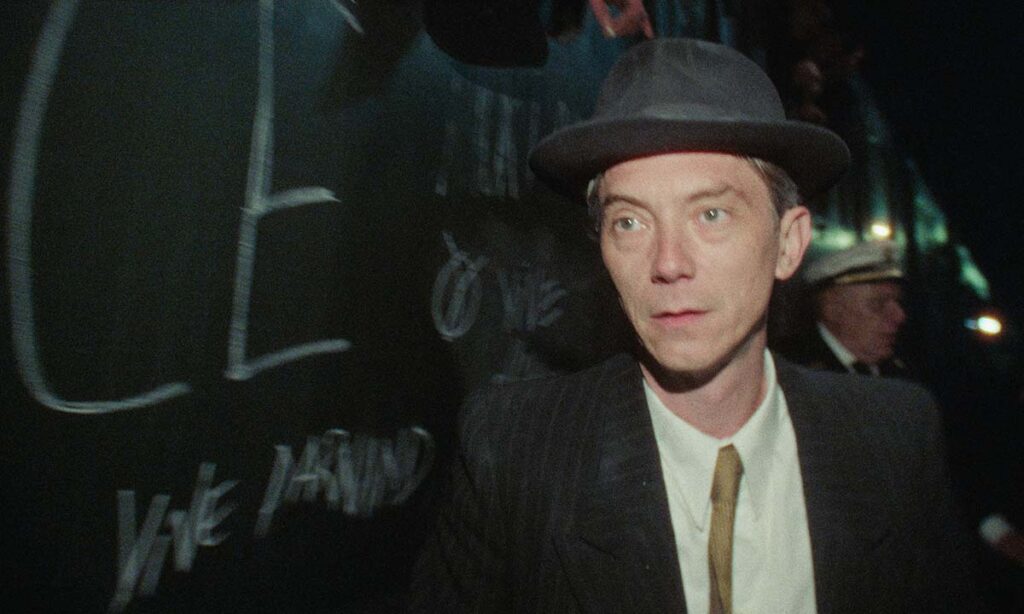
There, Marre—who also wrote the film’s screenplay—touches on an intriguing aspect of Vichy reality: the fact that it was seen by some not as a defeat but as a pragmatic compromise. Later on in the film, as the extent of the Nazis’ violence begins to come to light, some of the peripheral characters will come to regret this pragmatism. Not Henri, and Marre appears to expect his audience to be shocked that a miserable grifter would be an opportunist to the end.
Marre and Arlaud indeed seem keen to present Henri as a tragic figure, a somewhat tortured man in search of answers. After living in poverty in Vichy, he eventually humiliates himself enough for a self-interested bureaucrat to give him a job in the Department of Work in Limoges. There, although he finally has a salary and a large flat, he does not tell his wife, Paulette (Sandrine Blancke), to join him straight away with the children. Why? Just as confusingly, Paulette’s letters to Henri oscillate between words of encouragement and bitter resentment, before she turns back into the perfect, loving wife once in Limoges. Marre devotes much of the film’s latter half to this baffling relationship, as though to suggest that it might be a passionate, complicated love story. Like Henri’s scammy book, I don’t buy it.
This is grandstanding, macho cinema that purports to stare into the abyss until it stares back at us – fans of Brady Corbet’s “The Brutalist” or Todd Field’s “Tár” might be sensible to the film’s morbid charms, such as they are. But this dramatic, grandiose treatment ultimately feels forced, ill-suited to a character who, despite the director and star’s joint efforts to mystify him, never ceases to come across as ordinarily mediocre. [C]

Elena Lazic is a French film critic, curator, and writer based in London, UK. She is the founder and editor of online publication Animus Magazine, and a Production Manager at Radiance Films.

