



Twenty years after the thriller “Tell No One,” versatile French director Guillaume Canet returns to the film mode that brought him the most success with “Karma,” playing Out of Competition at this year’s Cannes Film Festival. The film’s runtime—no less than 149 minutes—and its somber subject matter could suggest a certain ambition; after all, “Tell No One” wasn’t especially brief either. But that film was a tight, action-packed thrill ride, while “Karma” meanders too often. More interested in capturing its actors and the very dramatic emotions they are consistently, relentlessly given to perform, “Karma” sacrifices rhythm and suspense at the altar of drama with a capital D.
READ MORE: The 27 Most Anticipated Films From The 2026 Cannes Film Festival
Marion Cotillard’s Jeanne begins the film in a state of already extreme distress, barely able to get out of bed in the morning and only ever lighting up when she gets to see her six-year-old godson, Mateo. Living in a small village in northern Spain, she is almost entirely unresponsive to her loving and patient partner, Daniel (Leonardo Sbaraglia), who, we soon find out, knows nothing of her past. Jeanne day-drinks to forget her secret sorrows and keep her panic attacks at bay; when Mateo disappears one day while in her care, this clearly disturbed woman quickly becomes the prime suspect. By the time the police connect the dots and come to pick her up, she has left the village and traveled to a mysterious community on the other side of the French border. At the heavy wooden door, she begs to be let back inside, despite having left the place many years ago.
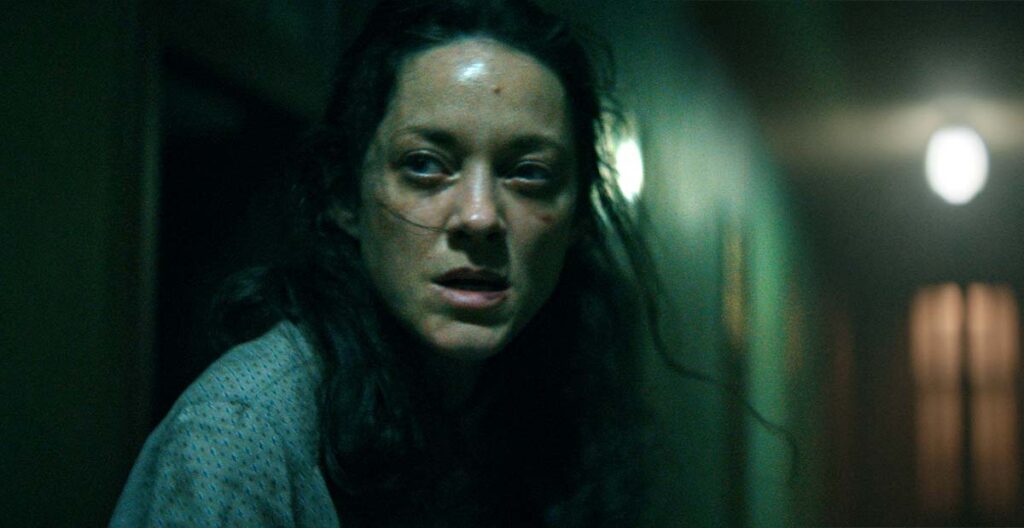
To the credit of Canet and his co-writer Simon Jacquet, they manage to underpin the lengthy introduction to the religious cult that follows with some degree of narrative tension beyond basic, morbid curiosity. To do penance, Jeanne must suffer all kinds of degrading treatments before she is fully welcomed back in, and her fortitude is a real question mark: why would she want to return to this? And why would religious leader Marc (Denis Ménochet, in his menacing register) welcome her back in?
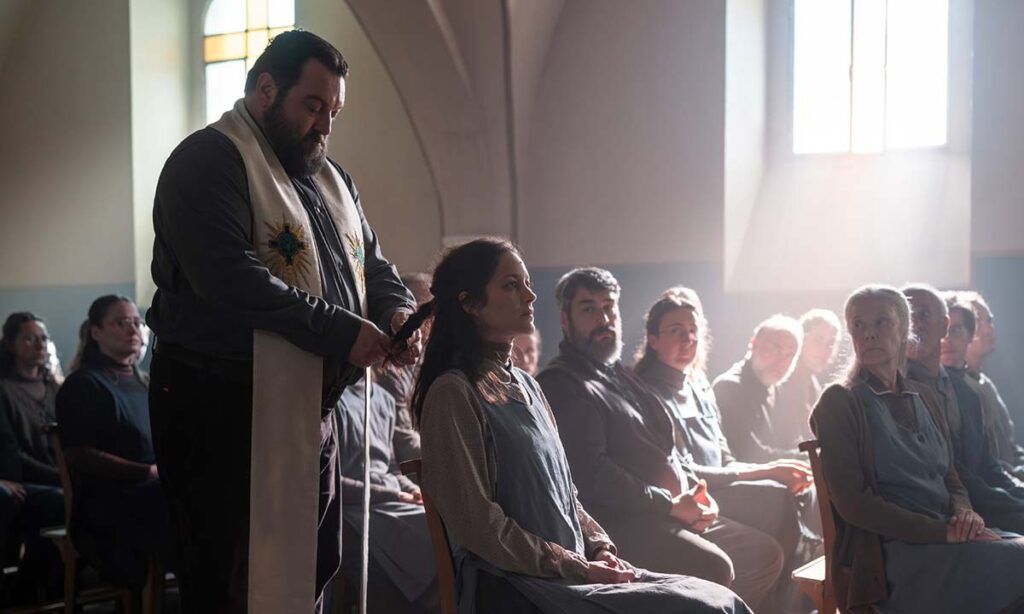
Still, those scenes of Jeanne’s reintegration into the cult have a slightly over-the-top emotional tone, like a corny melodrama. While Daniel’s parallel investigation into Jeanne’s past essentially grinds to a halt, nothing truly significant happens inside the locked-off community: for a long time, Marc suspiciously watches Jeanne, as do we, wondering whether she is truly devoted to this life or not. All there is to do in those sequences is admire the acting chops of Cotillard and Ménochet, which are significant, but stretched to their limits by a repetitive, one-note script.
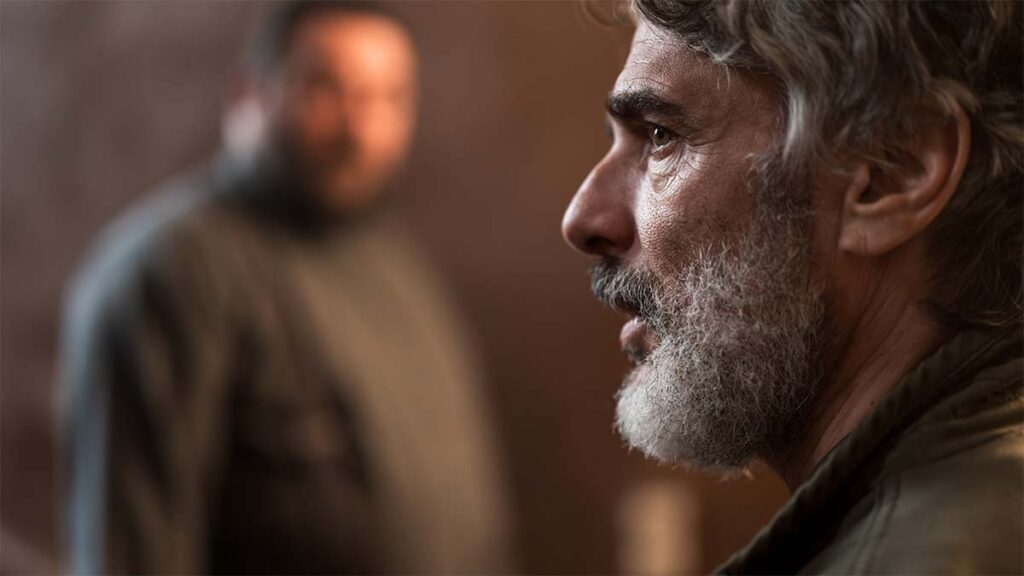
It takes a very long time for the film’s genuine thriller elements to kick in and move “Karma” in a more dynamic direction. As Jeanne’s intentions finally become clear, a reasonably suspenseful cat-and-mouse situation develops—though these trashy genre pleasures jar somewhat with this grim story of a sexually abusive cult leader. The film’s unrelenting tone of somber despair helps Canet paper over these tonal discrepancies to some degree—Jeanne always seemed like someone capable of setting an entire building on fire to save someone she loves—but it makes “Karma” a rather dour affair. [C+]

Elena Lazic is a French film critic, curator, and writer based in London, UK. She is the founder and editor of online publication Animus Magazine, and a Production Manager at Radiance Films.

