




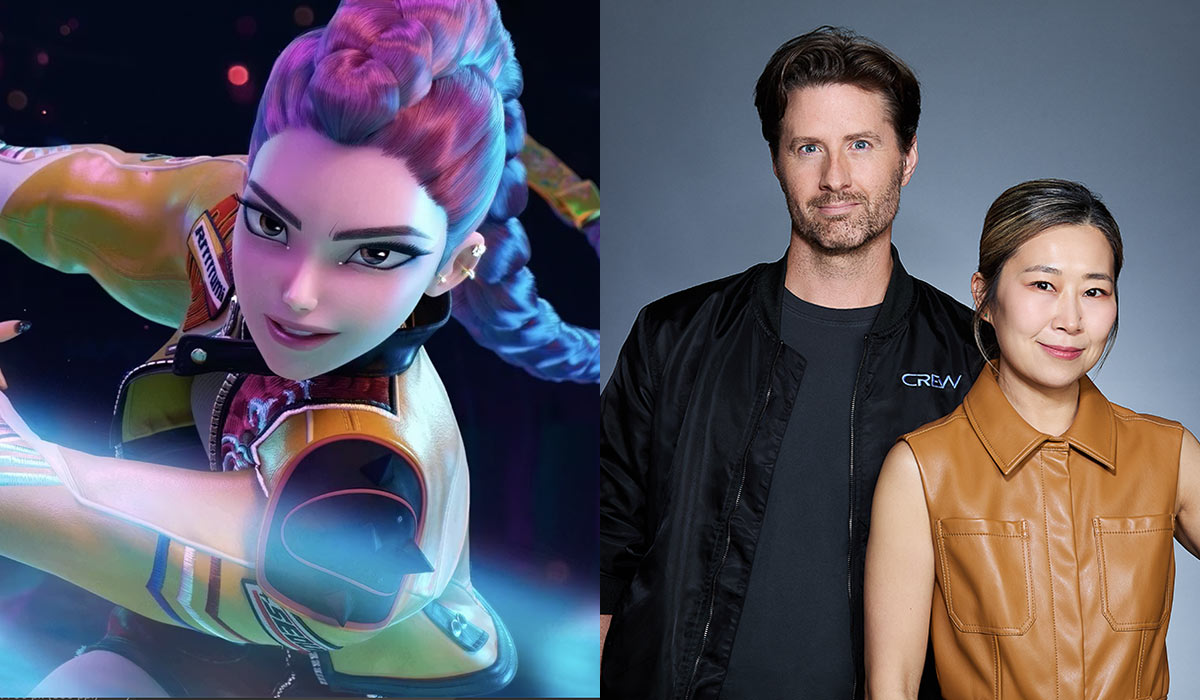
A little over six months ago, “KPop Demon Hunters” was just another Netflix animated release for the summer. A Sony Animation Pictures project that would likely entertain some teenage girls – and maybe K-pop fans – between vacations and summer camps. Then something completely unexpected happened. “KPop Demon Hunters” became a global phenomenon.
READ MORE: “Kpop Demon Hunters”: EJAE Cried Writing The Demo For The Smash Hit “Golden”
Over the course of the rest of 2025, “Demon Hunters” became the most viewed movie in Netflix history, with, at publication, 325 million views so far (the movie is still currently in the U.S. top 10). The film’s soundtrack spent two weeks at no. 1 on the Billboard 200. The song’s title track, “Golden,” spent eight weeks at no. 1 on the Billboard Hot 100 and topped the charts in more than 30 countries. The song has 1.2 billion streams on Spotify alone. Oh, and you wanna talk year-end awards?
“Demon Hunters” has won a slew of Best Animated Film or Best Animated Feature honors from organizations such as the New York Film Critics Circle and landed Golden Globe and Critics Choice Award nominations. It also earned a stunning five Grammy Award nominations, including the prestigious Song of the Year category for “Golden.” And awards season has a long, long way to go.
After spending seven and five years respectively, working on “Demon Hunters,” the reception has been understandably beyond the expectations of its directors, Maggie Kang and Chris Appelhans. During our interview, the duo reflected on the long journey of getting the film to the screen, coming to terms with the idea they’ve made a “movie musical,” that one sequence they worried about the most, whether they’ll get a break before the inevitable sequel, and so much more.
This interview has been edited for length and clarity.
_____
The Playlist: Congratulations on the movie. That must be the understatement of all understatements.
Chris Appelhans: Yeah, we’re pretty happy.
The Playlist: When did you realize that this just wasn’t going to be a nice little successful movie on Netflix and that it had become something beyond anyone’s imagination?
Maggie Kang: Oh man. There’s a lot of little moments. I think that they kind of started to just pile up a little bit. Just the response from the fans, from K-Pop fans, and creating content so quickly. I think I was watching the movie right when it released, right at midnight, and checking Twitter, and there was already stuff on there. I was like, how are they doing this? Did they already finish watching it? And then seeing our songs chart and just so quickly, that was really surreal. I think for me, that was when I was like, “Wow, this is beyond just a movie now.” It’s reached the bigger audience, past the K-pop audience, the animation fans, and now it’s kind of traversed into all the fans that we didn’t even think that we were able to hit.
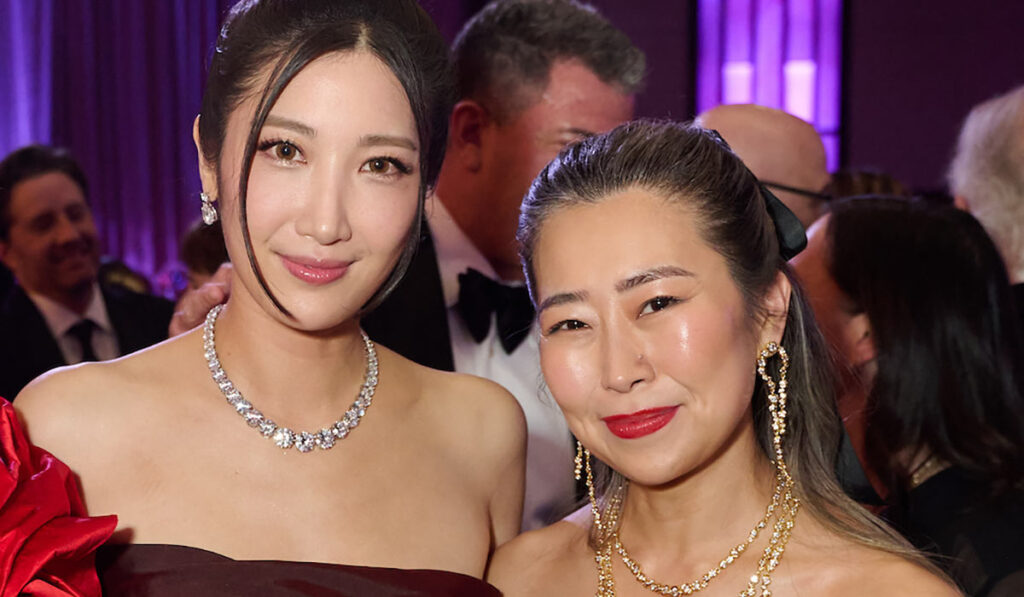
The Playlist: I have friends who I never in a million years thought would be a movie that they’d be into, and now they are superfans. Some have watched multiple times. Have you had people come out of the woodwork you weren’t expecting to embrace the movie?
Chris Appelhans: Yeah, I think we’ve been talking about one of our favorite sorts of trends, which has been the dads of TikTok reluctantly from the edge of the kitchen, making dinner slowly sitting on the couch, and then watching it when their kids aren’t even home. That’s kind of the beautiful thing about the proliferation of a streaming service like Netflix. You can capture people inadvertently. You can snag people with word of mouth and with just a passing, “What song was that?” And I think that it’s really great. As filmmakers, it means we just have to make something good, and that has some universal truth to it that people will be interested in, and then it’ll just continue to grab and continue to pull in an audience.
The Playlist: I know it’s always hard to create something and then look back and ask, “What are the magic elements that sort of made it so broad and popular?” But can you look back now and say, “Oh, it’s because we did A, B, and C”?
Maggie Kang: It is a really personal film for both of us. And when you’re making a movie like this, and it takes you so long to make these, and it’s almost impossible to make it thinking about what other people would think and how they would receive it, you really have to just make a movie that you believe in. And we both strongly believed in everything that we were doing in this movie, and it’s really a collection of everything we wanted to see in animation, what we loved about music, what we loved about art, and we’ve made a movie for ourselves and not for anybody else. And I think there’s so much truth in that reflected in the movie, and just bearing our souls into it. And I think people can feel that, and that connects with people. So we wonder if that’s really kind of the secret ingredient in it.
READ MORE: “KPop Demon Hunters”: Arden Cho Thought She’d Retired, A Netflix Phenomenon Has Changed Everything
The Playlist: Maggie, do you remember what the spark was? What was the initial sort of gestation of an idea for the movie?
Maggie Kang: I was actually kind of forced to come up with something because a producer friend of ours, who produced “Wish Dragon,” was at Sony. His name is Aaron Warner, and he was wanting to find another project that was very international and director-focused. And so he asked me, “Do you have something that you can pitch me?” We were trying to find a project to work on together, and I said, “Yeah, of course,” even though I didn’t have anything. So, that night I just tried to come up with something, and my husband, who’s also a director and writer, we were in a car driving around the neighborhood while our kid, who was one at the time, was sleeping in the backseat. And we were like, “O.K., let’s come up with something for Aaron.” And I had a few different ideas that I was kind of thinking on one about Korean demons, another thing about these weird girls, and just kind of put those together and felt like, “O.K., that’s kind of like a demon hunter type of thing with Korean demons.” That’s kind of fun, but it felt like it needed another element to kind of take it to the next level. It needed another Korean element. And it just happened to be K-pop, and it felt kind of weird and silly, but also kind of fun and exciting. And so we just ran with it, pitched it to Aaron the next day, and he was like, “I love it. Let’s do this.” And here we are, seven years later.
The Playlist: Seven years.
Maggie Kang: Yes. From the original pitch to the release date is almost exactly seven years to the day.
The Playlist: And neither of you worked on anything else during that time? It was just “KPop Demon Hunters”?
Maggie Kang: For me. I started in 2018, around July, and then Chris joined about a year after that.
Chris Appelhans: Yeah, yeah. So only five and a half years. A short stint.
The Playlist: Are you already thinking about the sequel? Are you hoping to work on something else in between?
Chris Appelhans: I think we’re so swept up in the love of the fandom right now, and just we talk a lot about making this personal movie and watching it find an audience, and then almost, you almost have to let it go and just be itself, like a kid out in the world. And watching that reverberate is inspiring. It definitely inspires us to start thinking about all the other chapters of these characters and this concept that could be explored. I think nothing’s official, but we’re definitely, definitely excited.
The Playlist: Have you gotten to take a vacation? I’m guessing…no.
Chris Appelhans: We’re kind of joking that our life is the couch, couch, couch, couch, couch, couch scene where the girls sit down and then have to stand right back up and get out there. Yeah.
The Playlist: Have you scheduled one? Have you told them that at some point you need…
Maggie Kang: No, I don’t think we’re allowed to quite yet. [Laughs.]
The Playlist: Well, I do hope at some point you do because you deserve it. I also wanted to ask, animation is an iterative process. The script at the beginning is not always what the movie’s eventually going to be. What was the toughest obstacle to sort of overcome in making this film? Was there a story element? Was there a music element?
Maggie Kang: Not really. The story was just very challenging. It was really challenging to tell a non-origin story when we were creating new types of superheroes with new lore and mythology. But we really wanted to do that kind of story because we really wanted to just start the movie with the girls as idols. That’s the promise of the movie. We didn’t really want to see the lead-up to that. And another big reason is we wanted Rumi’s shame to be this lived-in shame that she just carried with her for years. And so for the emotional story and for the concept, it just felt right to not do an origin story. And that made it very, very challenging, a challenging story to tell, especially in the timeframe that we had. And it was a weird movie where we knew we wanted to start with the mythology and the setup of the girls, and how we wanted to end with this big climax concert scene where the fans join in, and it’s that power of the fans and the idols together recreating this Honmoon. And it was a lot of work to earn that moment emotionally. So, it was a lot of mostly heavy lifting and recrafting the middle parts of the movie. A big challenge was how do we balance this story between Rumi and Jinu and their journey, and the three girls. So, I think the first two screenings, the Rumi and Jinu story was very strong, and it felt very satisfying, but then the girl’s story wasn’t as strong. So, it was a lot of kind of balancing and finding those scenes that really connected those two storylines together.
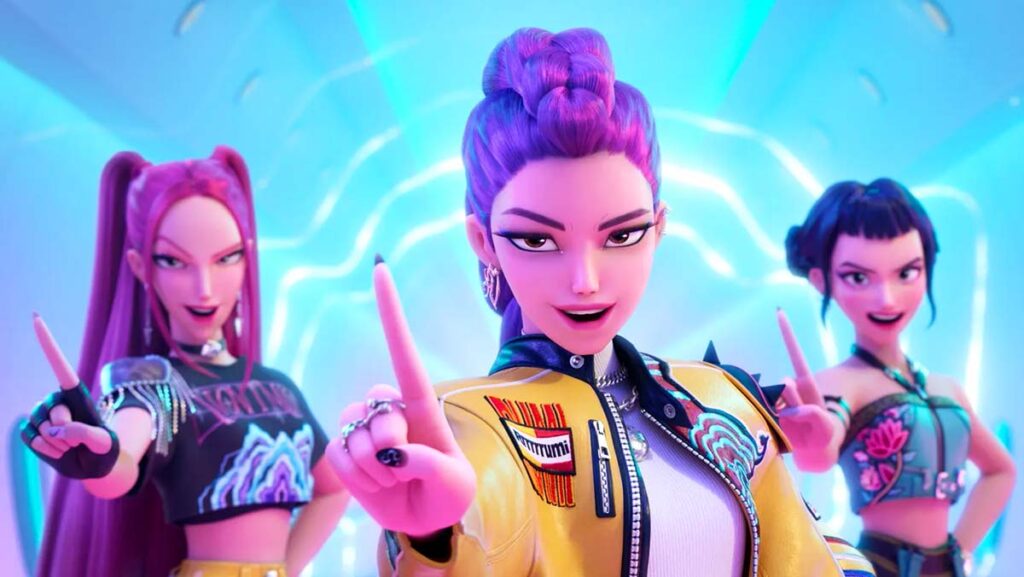
The Playlist: Many would categorize “Demon Hunters” as a musical because of all the songs and how the songs move the story forward. Did you guys feel like you were making a musical at the time?
Chris Appelhans: We were in denial.
Maggie Kang: Yeah, we were in denial for a while. [Laughs.]
Chris Appelhans: Yeah, I think we knew. I think one of the first things that Maggie and I really bonded on was this idea of the power of music, the way it connects us, the way it can heal us, the way it can facilitate so many good things. Which is a very earnest idea of making a film. And so you would think that if two people thought that was what their music was about, they’d be like, “We’re making a musical book.” We’re like, “No, we’re not making a musical. It’s a concert film.” And I think we sort of created something new in trying to do that. It’s a musical, but it is also a concert film. And we really tried to limit the moments that characters without the motivation of an external circumstance broke into song. So, the opening song is prompted by the fact that we’re going to have to fight these demons who have ambushed us, and also because then we’re going to land on stage, and our fans are waiting. And even a song like “Golden,” which is a plot point, is just a pop song released that is an anthemic, joyful thing. I want a song hidden underneath that’s actually about each girl. Where they started and what their fears are. What they’re trying to get out of each other, and what their dream is. And so I think with the help of our exec music producer, we kind of found our way to a deep story purpose for every song, and then tried to make sure that they lived within the story naturally.
The Playlist: Do you remember how many songs you thought were going to be in the movie early on? Did it end up being significantly more or sort of what you always envisioned?
Chris Appelhans: It’s about the same. It’s about the same.
Maggie Kang: Yeah. Yeah.
Chris Appelhans: And I thought what was nice was these moments would arise where, for example, “Free,” which is probably the closest thing to a traditional, “we’re just going to sing with each other” thing. One of the things that really made it fit into the movie nicely was this plus subplot with Rumi and her voice, and the fact that she’s literally struggling to have it function. She’s struggling to sing one song, which is kind of toxic to her and internally triggering. And then she goes to meet Jinu, and she’s literally saying something about the relationship we have about the things we talk about. “The way I feel when I’m with you” is lifting this kind of…
Maggie Kang: There’s motivation to.
Chris Appelhans: And so she’s singing as a way to sort of test out whether or not this is a real healing thing.
The Playlist: Is there one song in particular that, when you heard it for the first time, you got super excited about?
Chris Appelhans: I think “Your Idol” was a banger, right?
Maggie Kang: Out of the gate. I think that was the banger right out of the gate. Yeah. I don’t think we did too many revisions on it. It was just exactly what we needed for that moment.
The Playlist: And was “Golden” always the sort of signature song that’s going to move the movie forward? Were there other songs that were sort of in the mix, and then you hit on it?
Chris Appelhans: It was the last song.
Maggie Kang: It was the last song, yeah. It was a very hard song to kind of land because we didn’t realize the story that it needed to carry till pretty late. And it was the last song that we kind of finalized, and it was one of those, “Well, we hope we get it in time.” And Rumi singing in front of the mirror. That very vulnerable moment was one of the last shots that we animated almost. I think second to last shot that we animated, because we didn’t have the song yet. The final version, so we’re writing on it.
The Playlist: Before it was released, was there any one scene that made you feel confident, like, “Oh, all this work was worth it.“?
Chris Appelhans: What’s extra stressful about animated projects? The analogy we talk about a lot is, do you remember in “Children of Men” where they have to carry a baby through a war zone? We talk about how you could take the baby safely to the 99th percentile, but if you drop it at the last staircase, it’s all for nothing, right? So I dunno about Maggie, but for me, literally the third to the last shot we animated and lit was this incredible one-camera shot of the ancient hunters coming down and swirling and twirling and fighting and singing. And the whole premise of this movie requires the audience to buy into that idea. About a minute into the film: We’re women who sing and fight together. And so if that shot doesn’t make you feel something and doesn’t get you on board, everything that comes after it could be kind of unsuccessful. So, I felt really stressed until we had that. All this other stuff is working great. It’s 99% done, but…
Maggie Kang: It was the last one we approved, which is a little stressful.
The Playlist: You were making the movie for Netflix, which was always part of the deal. What was the experience like for you to be able to see it in theaters with an in-person audience?
Maggie Kang: Yeah, it was something else. And then I can’t imagine what it’s like to sit in a theater with people who haven’t seen your movie, and I don’t know what that experience is like, and I’m kind of happy that I don’t. But to watch it with a crowd that already loves it and wants to be there with other people to celebrate it, it was like being at a concert, and it was incredible. It’s just the energy of everybody, and everyone just singing their hearts out and just loving every moment of it. And it just makes the movie feel different. You’re enjoying it on a different level. It just blew my mind.
The Playlist: Again, I know you don’t want to talk about a sequel. I know nothing’s been announced, but there must be some ideas in the back of your guys’ heads about if there ever was a sequel, about what you might do. Am I wrong to assume that?
Maggie Kang: No. When you write movies like this, you have to write all the backstories for characters, and you have to think about so much, but then show so little in the movie that you’re actually working on. So there are a lot of stories that we’ve figured out that would be fun to share. And so yeah, there are things that we’ve thought about and things that we can think more on and new ideas that we can come up with. But it’s a fun universe, and there’s a lot to be told in it.
“KPop Demon Hunters” is available on Netflix
Follow Gregory Ellwood on Bluesky
Follow Gregory Ellwood on Threads
Follow Gregory Ellwood on Instagram
Sign Up For The Breakdown Newsletter


