


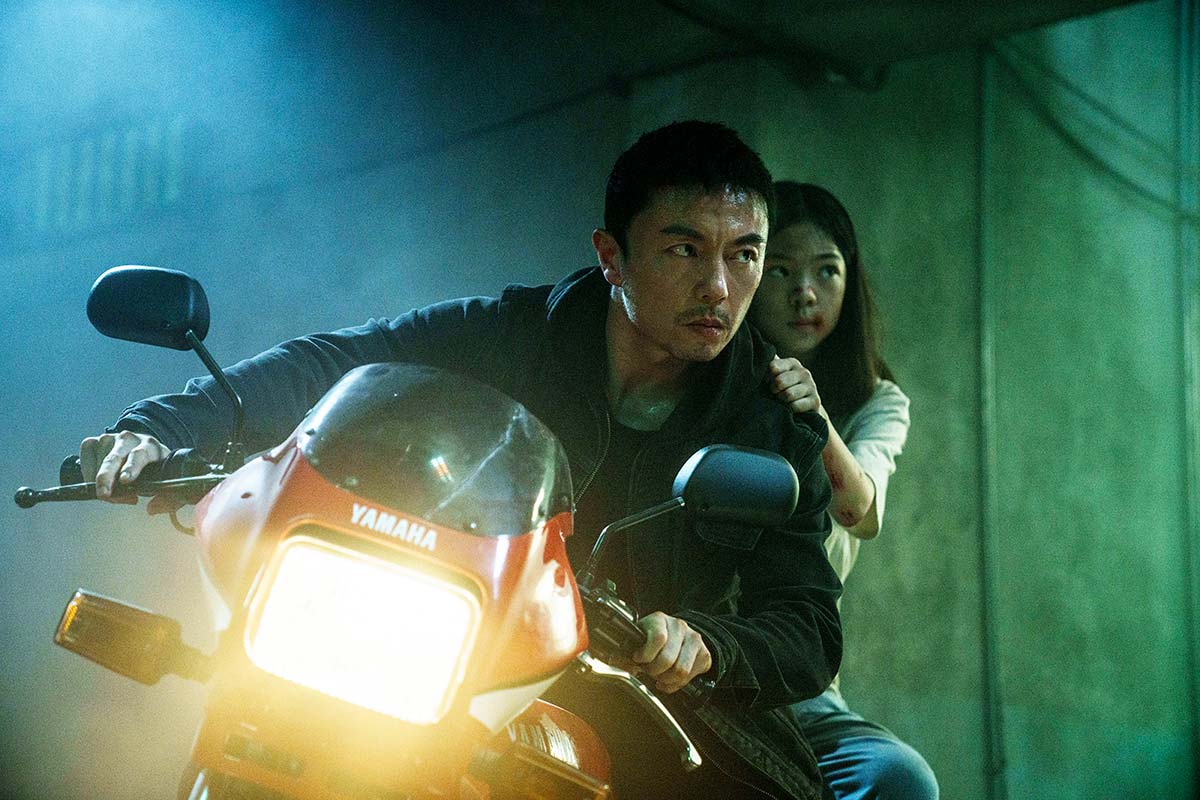
Producer Bill Kong approached Kenji Tanigaki with a seemingly simple request: make the ultimate martial arts movie. No pressure, then. Just cobble together everything that’s come before into an action buffet of gigantic proportions. Anyone can do that, right?
The result of that request is “The Furious,” a fittingly bone-rattling, globe-trotting martial arts showcase that brings together an international cast of action performers, including Joe Taslim, Xie Miao, Yayan Ruhian, Brian Le, and Joey Iwanaga.
With its long takes and wide angles, the film has an almost religious trust in its performers to put in the work and nail it every time; it is as much a new gauntlet as a throwback. In a time when most action is cobbled together in postproduction, “The Furious” demands to be witnessed. And if festival audiences are to be believed, Tanigaki and his team may have actually succeeded in creating, if not the example of everything a martial arts movie can be, at least a wild ride that can stand shoulder to shoulder with the best of the era.
For Tanigaki, a veteran action director and choreographer stepping fully into the director’s chair, the mission was to return to basics while pushing the form toward something almost operatic. For Taslim, who helped redefine modern action cinema with “The Raid,” the appeal was in finding a new mountain to climb, one built out of pain, precision, trust, and what he calls the “beautiful jazz” of the film’s chaotic final fight.
The Playlist spoke with Tanigaki and Taslim about the impossible logistics of “The Furious,” comparisons to “The Raid,” why action performers cannot really cheat pain, and the Sub-Zero story Taslim still hopes to tell in the “Mortal Kombat” universe. Below, you can first read the transcript of our Joe Taslim conversation, followed by an interview with director Kenji Tanigaki.
Congratulations on “The Furious” here, man. It’s really, really good. You all did an amazing job.
Taslim: Thank you so much. I’m glad you enjoyed it.
So, producer Bill Kong said to Kenji Tanigaki, “I want to make the ultimate martial arts action movie,” but a lot of people who have seen “The Raid” films say, “Well, Joe has already been there and done that. He has reached the top of the action mountain.” So what did “The Furious” have to offer that felt like a new challenge for you?
Taslim: I’m very grateful for the last decade. No debate. We’ve got to give it to “The Raid” franchise. Those two films really changed how people watch action, and they inspired many action filmmakers and performers. And then “The Furious” will probably be the movie that elevates or changes the game again. After this movie, I know for sure a lot of action performers and action filmmakers will be like, “Alright, this is the bar.”
I think “The Raid” did something amazing in terms of action. It was all about effectiveness and seeing actors perform those fights themselves. But “The Furious” added something that, in my opinion, is complexity in terms of choreography. It’s a complexity that people haven’t really seen before, especially in the final fight, with two versus two, and then one wild card coming in to change the flow and change the dynamic. It’s beautiful jazz, but at the same time, it’s chaotic. It’s also beautifully balletic.
That final fight sounds almost like a story within a story, where alliances and threats keep shifting. Was that part of what made it feel different from anything you had done before?
Taslim: So I’ve got to give it to “The Furious” for adding something so beautiful to the action genre, and something people are often afraid to do because it’s so hard to create. I was so nervous when Kenji pitched the idea. I was like, “What do you mean? We’re fighting, and then one guy comes in and ruins the flow? And sometimes we have to work together with our opponent because this guy is threatening us more? And at the same time, we’re still trying to kill our opponent, but our opponent is helping us fight this guy who is even more dangerous?”
That storytelling within the fight, for me, is the highest level I’ve ever seen in an action scene and an action movie. So now I understand why Kenji hired all of us. He needed us to achieve that.
That’s hugely ambitious, and he pulled it off. Gareth Evans has said “The Raid” action probably couldn’t be made in the U.S. because it would be too dangerous. Do you feel the same about “The Furious,” or does Kenji run a different kind of set?
Taslim: With Gareth, we know some directors like thousands of takes, right? I’m being hyperbolic, but Gareth likes 20 takes, 30 takes, even for simple movement. At one point, Iko Uwais and I were like, “What the heck does this guy want? I think we already hit each other for real.” And then he’s like, “Another one. Again, again.”
The difference with Kenji is that he understands what he wants. I believe Kenji prepped very carefully because we didn’t really have the flexibility of shooting for three or four months. We knew we had a certain amount of time to finish the movie. Kenji and Kensuke Sonomura are maestros in action design.
So was that the key difference, that Kenji knew exactly what he needed before you were on set?
Taslim: They designed everything and prepped everything beautifully, and then they hired people who could really perform those designs. They didn’t gamble by hiring people they would have to train again for a month or two before the shoot. From that perspective, Kenji and Sonomura managed to find a beautiful balance. They were trying to reach something impossible, but they were very smart.
They knew that by hiring Joey Iwanaga, Brian Le, me, Yayan Ruhian, and Xie Miao, people who can really achieve that, they wouldn’t waste time in terms of shooting. With “The Raid,” we were young. Yayan Ruhian and Iko were young. We were not experienced, so the process of shooting that one was almost like we were shooting and training to get better and better with each take.
We managed to get it done, and it became a movie that is part of world action cinema, but there was a lot of sacrifice in the process.
And when you say sacrifice, are you talking about the physical toll of doing that kind of action over and over again?
Taslim: I’ve got to say, “The Raid” was more painful to shoot. I remember at one point, Iko and I were looking at each other with this emptiness. We knew we just had to do it, no matter what. If Gareth were going to ask us to do it a 50th time, we’d look at each other and go, “Just do it. Let’s go for it.” This one was smarter. It was prepped smartly, and they hired the right people.
Everything was very much on point in the way they prepped this movie. I think it’s very ambitious, especially the five-way fight. If they had hired even one of us who couldn’t really perform that flow, I don’t think that scene could have been done. It would have been impossible. But everybody was so talented. We were almost like all-star NBA players working together, trying to do something special.
Well, that, and I’m surprised to hear that you didn’t have as much time here because it’s gorgeous. The cinematography looks beautiful. So did it feel like you were doing a lot more with a lot less here?
Taslim: Yeah. I think experience matters. After “The Raid,” I worked for 16 years in so many action movies, like “The Night Comes for Us,” “The Swordsman” in Korea, and a couple of Hollywood movies. So by the time we got to “The Furious,” me, Yayan, Xie Miao, especially Xie Miao, who started when he was a kid, we had so much to deliver.
We have our bodies and our muscle memory for reactions, understanding fight scenes, and performing half-seconds of feeling during the process of fighting. It’s a very complex choreography, but the time we had wasn’t six or five months like “The Raid,” where we prepped for at least four or five months. But this time, we were ready. We’re players. We know our game so much.
So it becomes less about training from scratch and more about everyone arriving with that shared language already in their bodies?
Taslim: And then Kenji challenged us to do something impossible, and we said, “You know what? Let’s do it.” There was a lot of pain in the process, I’m not going to lie. Close to the end of that final fight, everybody was sore. Not seriously injured, but sore here and there. Hamstring problems, swelling, and bruises.
Makeup had to patch continuity issues. It wasn’t swelling before, but I got hit for real, so now it’s swelling. A lot of that happened, but in a beautiful way. Because when we’re talking about action movies, you cannot really cheat pain and agony. Dramatic actors talk about method acting because they go so deep into a character psychologically. But when you do action, pain and agony are part of the game.


