

Strangers chafe each other over standard issue oopsies every day of the week and twice on Sundays. This is, at once, the thesis, intention, and foible in the first season of Lee Sung Jin’s tragicomedy Netflix series “Beef,” in which a vehicular micro inconvenience between its co-leads, Steven Yeun and Ali Wong, molders into a sustained display of breathtaking road rage; their knockdown-dragout dispute mercifully allows for a brighter outcome and a welcome reprieve from the real world, where situations like theirs are as liable to end in bitter adjudication as death.
READ MORE: 15 Must-See April TV Shows: ‘Beef,’ ‘Euphoria,’ ‘Margo’s Got Money Troubles’ and More
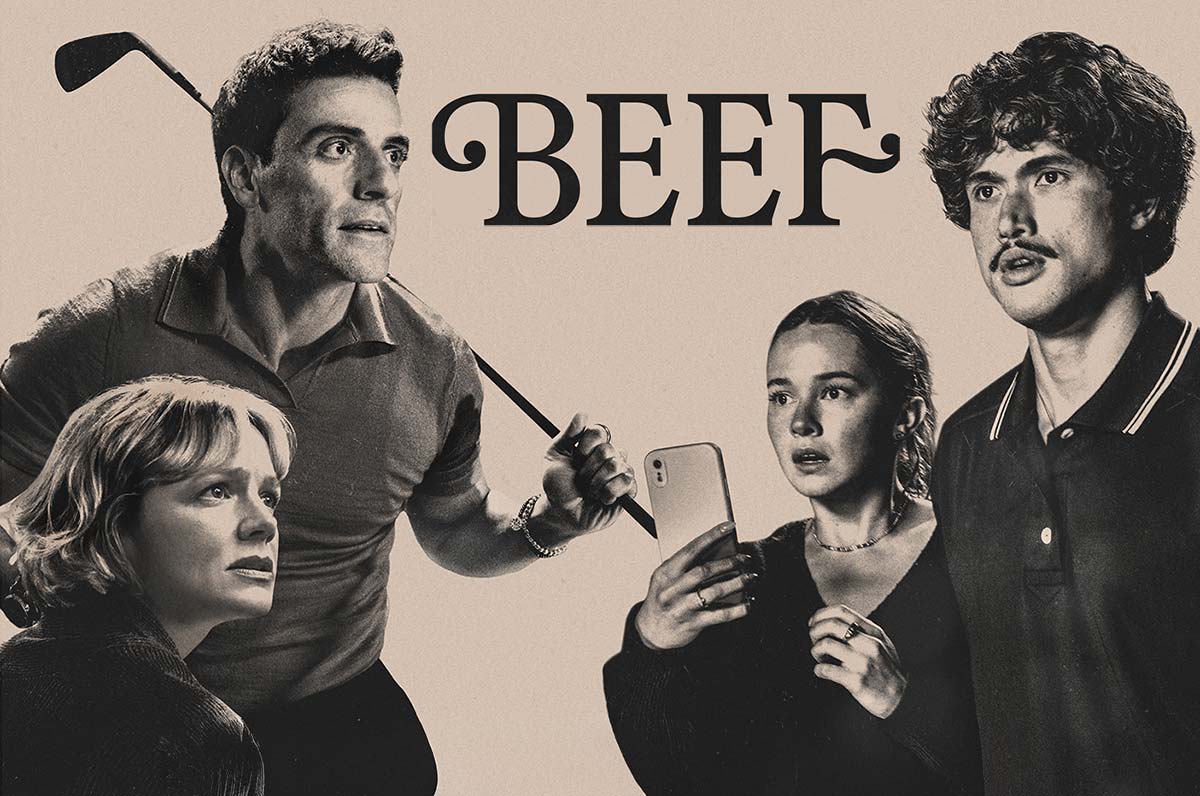
In its second season, “Beef” clings to no illusions as prototypically fictional as the happy ending, though getting into whose end is happiest as Lee’s new narrative resolves would, of course, ruin the enterprise. Where Lee focused on burdens both intergenerational and domestic in the last series, he has his eye glued firmly to matters of the heart here, setting two couples in competition against one another from the outset: Josh (Oscar Isaac) and Lindsay (Carey Mulligan), and Austin (Charles Melton) and Ashley (Cailee Spaeny). Josh manages the fancy-pants country club where Austin and Ashley work; Lindsay, an interior designer, manages his ego at fundraising events, her exasperation with other women in the club’s membership, and her malaise over her life’s course. For their part, Austin and Ashley seem genuinely, blithely in love, as twentysomethings short on adult experience are prone to be. They’re sweet. They’re cute. In the “Beef” universe, this cannot stand.
The series’ plot unfurls like a corpse flower, spurred by a shocking incitement: Austin and Ashley catching Josh and Lindsay on camera in the middle of a fight at their home. Later, once the former have seen too much and the latter have set aside their corroded intimate partner dynamic for damage assessment, Lindsay attempts to gaslight the young lovers with calculated lines about the nature of marriage: she, having been with Josh for years, suggests that perhaps it’s Austin who should be worried about his relationship to Ashley; they don’t fight, ever, and what kind of couple doesn’t fight? Key to Lindsay’s smooth talk is the gulf between conflict–healthy, normal, something every couple will endure because it’s human nature–and fighting. There’s nothing healthy or normal about emotional abuse, reactive abuse, or other forms of abuse, because “abuse” comprises a range of behaviors that Josh handily demonstrates in his and Lindsay’s confrontation in the first episode.
Despite the set-up, and despite its payoffs, “Beef” isn’t about terminally awful people. It’s about privilege and wealth as radioactive surfaces that afflict people exposed to them with illnesses ranging from greed to jealousy to vanity to egotism. Lee takes care to show his viewers who Josh and Lindsay were in better days, back when he was a musician, before he took on management responsibilities at the club; as the story inches toward its climax, we’re given to reflect on how much Austin and Ashley resembled their foils prior to their own ensconcement in the club’s culture and operations. In its idiosyncratic way, “Beef” functions as a flow chart leading to the consequences of proximity to elite class lifestyles. Money’s great. We could all use more of it, especially now, when every political force in the world seems insistent on making everything more expensive for the overwhelming majority of us who don’t have enough in our bank accounts (no matter that we may have more than others). But there is “having money,” and there is “inhabiting an ecosystem where money is the air that we breathe”; Lee takes the latter as his secondary concern in “Beef’s” sophomore season.
Chiefly, though, he’s interested in how romantic love evolves with the passage of time; his narrative reads as a companion to piece to recent films like “Erupcja” and “The Drama,” in which past choices and present actions alter the shape of their leads’ relationships. Lee’s perspective is informed through comparisons: the ones his dueling couples make between one another, and the ones they make with other characters in the cast, like Troy (William Fichtner), a club member and Josh’s non-reciprocal chum, and Ava (Mikaela Hoover), his significantly younger wife (and other club wives, for that matter); or Ashley’s apathetic parents; or Eunice (Seoyeon Jang), Austin’s surprise work crush and personal assistant to Chairwoman Park (Youn Yuh-Jung), the club’s incoming new owner, who eventually emerges as the season’s overarching antagonist. Echoing great villains of contemporary South Korean cinema, Park wields deific power through the cudgel of wealth. She may literally have more money than god, with the downside of being less easily appeased. (In bygone ages, burning bones and entrails did the trick. Park holds loftier expectations.)
You’d think mortal men would rally against the entity threatening their livelihoods. “Beef” isn’t that simple. Rather than making easy commentary about busting out guillotines for billionaires, the show invests in the corruptive power of temptation, whether in the form of comparison or capital. Austin, Ashley, Lindsay, and Josh each want what they don’t have and what their peers do; they’re each keenly aware of what their peers get away with in order to have, and what more than can get away with once they have. But Lee’s a generous storyteller. He sees the good in his principal characters, whether they strive to cover it up, struggle to preserve it, or weaponize it as cover for their misdeeds (or, in Lindsay’s case, to deflect from her dire marital circumstances), and bathes them in goodness through his visuals; “Beef” emphasizes light, as well as its absence, in its shot compositions, because, as Josh acidly tells Lindsay during a squabble, “everyone loves light.” (The immediate cut from Mulligan scowling to Spaeny practically glowing under early evening’s sun is on the nose, but nonetheless an effectively vicious punchline.)
The clash between Lee and his chief quartet’s empathetic touches and the inhumanity brought to bear as the season unfolds lends “Beef” heightened maturity. There are no bad guys here, not even Park, though nevertheless she’s pretty goddamn bad; there are bad decisions, bad influences, bad aspirations, and bad systems in place that let shocking ills go unanswered by legal or moral authorities. What’s lost in this confluence of negativity is, in the end, love, the ultimate sacrifice made by the show’s characters for the sake of either self-preservation or advancement. Strife is inevitable. We’ve all had low moments with our friends, our family, our coworkers, and folks we bump into on the street. But no dustups tears at our selfhood like the ones we have with our spouses. Pain like that drives people to become unrecognizable to their loved ones, not to mention themselves. [A]

Bostonian culture journalist Andy Crump covers movies, music, television, politics,, and way too many other subjects for way too many other outlets, perhaps even some of yours: JoySauce, The A.V. Club, Pop Heist, Time, Men's Health, and more. You can follow him on Bluesky and find his collected work at his personal blog. He’s composed of roughly 65 percent beer. Right now, he desperately needs a haircut.

