


![Mike Mills On His Criterion Box Set, Memory As An Antidepressant & The Joy Of Loving Things [Interview]](https://cdn.theplaylist.net/wp-content/uploads/2026/07/23105410/Mike-Mills-On-His-Criterion-Box-Set-Memory-As-An-Antidepressant-The-Joy-Of-Loving-Things-Interview.jpg "Mike Mills On His Criterion Box Set, Memory As An Antidepressant & The Joy Of Loving Things [Interview]`")
Filmmaker Mike Mills’ gentle, humanist movies often feel like family albums assembled by someone who knows a photograph can never hold the whole story. His empathic films and characters annotate their lives with voice-over, old music, political history, documentary fragments, and memories that change depending on who is doing the remembering. Personal experience and the larger currents of time are never very far apart.
READ MORE: 53 Must-See Films To Watch Summer 2026
That makes “I’ll Remind You of Everything: The Films of Mike Mills” an unusually fitting title for his new Criterion Collection box set, which arrives this week. Borrowed from a tender promise made by Joaquin Phoenix’s character in “C’mon C’mon,” the phrase hews even closer to a creative credo when placed alongside “Beginners” and “20th Century Women,” as well as the short films, music videos, and other experiments that helped Mills find his way toward those features.
In a wide-ranging conversation with The Playlist, Mills discussed the healing potential of memory, depression and isolation, his love of filmmakers like Hal Ashby, Yasujirō Ozu, Federico Fellini, Jean-Luc Godard, Errol Morris, and Jim Jarmusch, and why commercials and music videos became his personal film school. He also reflected on directing Christopher Plummer, Annette Bening, and Phoenix, his recurring interplay between documentary and fiction, and the still-unannounced film he plans to begin shooting this fall.
This interview has been edited for length and clarity.
I rewatched the films again, and then at the end of “C’mon C’mon, when Joaquin says, “Don’t worry, I’ll remind you of everything,” I thought, “Omg, that encapsulates you and your work perfectly!” Then I realized the entire box set is called “I’ll Remind You of Everything” [laughs].
That was lucky. Kim Hendrickson was my editor at Criterion, and we started with this very nice, big, open conversation about what it was all about. We had to come up with a name, and she figured out that the films are about people, places, memory, and the connections between people. We were trying to figure out how to turn that into a title, and I remembered that Joaquin says that line.
The title also seems to describe your larger artistic purpose. The work is about memory and is memoiristic; there’s a documentary quality, as well as a journalistic aspect to your approach. It feels embedded in the fiber of everything you do—almost like your raison d’être.
I have a friend who says all my work is very Pisces. I’m a double Pisces. She says, “You’re basically talking from the dead. You’re giving an elegy for everything and everyone around you, and that’s the only way you can talk. It’s elegiac.” That feels very true. It’s a role that feels very treasured to me. It feels very anti-depressing and anti-capitalist to be the memory holder for my parents and for my kid. More generally, it’s about our shared experience—my generation’s shared experience and our American shared experience.
To remember feels like part of what happens in therapy: the recuperative, nutritive, healing part of memory. It’s part of what Marx and Freud are about: How did we get here? We are products of this waterfall of history, and to remember is to liberate yourself. If you don’t know from whence you came, you’re going to repeat all these things unconsciously. It has a lot of promise in it. I also like the impossible grandiosity of “I’ll remind you of everything.” You can’t, right? It speaks to human fragility, and it speaks to the inevitable failure of love, which I find human and great.
Your films can be melancholy, but they’re also deeply tender.
Part of that is because I’m a person who deals with depression a bit. Not major depression, but chronic, mild depressive stuff. I grew up in a family where there was a lot of depression circulating, undiagnosed and unhelped. If I were making Michael Haneke movies, I would just off myself. I need some help. I need someone to show me the light a little bit, give me some oxygen and elbow room within the limitations of being a human in love with other humans. Help me out here a little bit.
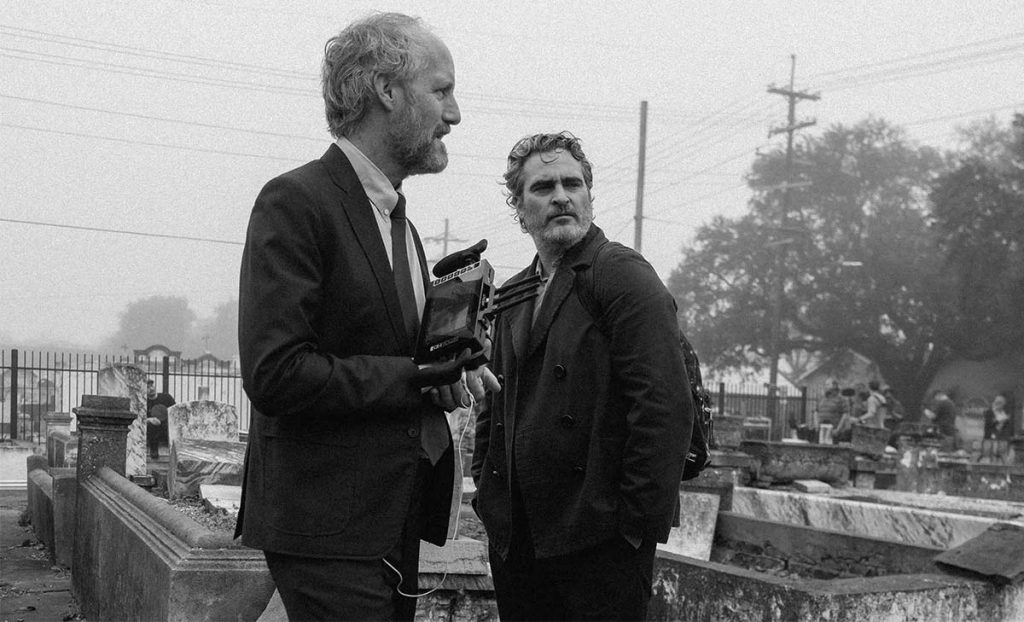
There’s still a seed of Hal Ashby in everything. Hal Ashby was one of my main initial entries into filmmaking. “Harold and Maude” is drenched in this idea: life is not going to be what you thought. It’s filled with contradiction and disappointment, and it’s all you’ve got. Let’s enjoy some part of it, or not treat those pains simply as disappointments. “Opportunity” sounds way too easy, but it’s all you’ve got.
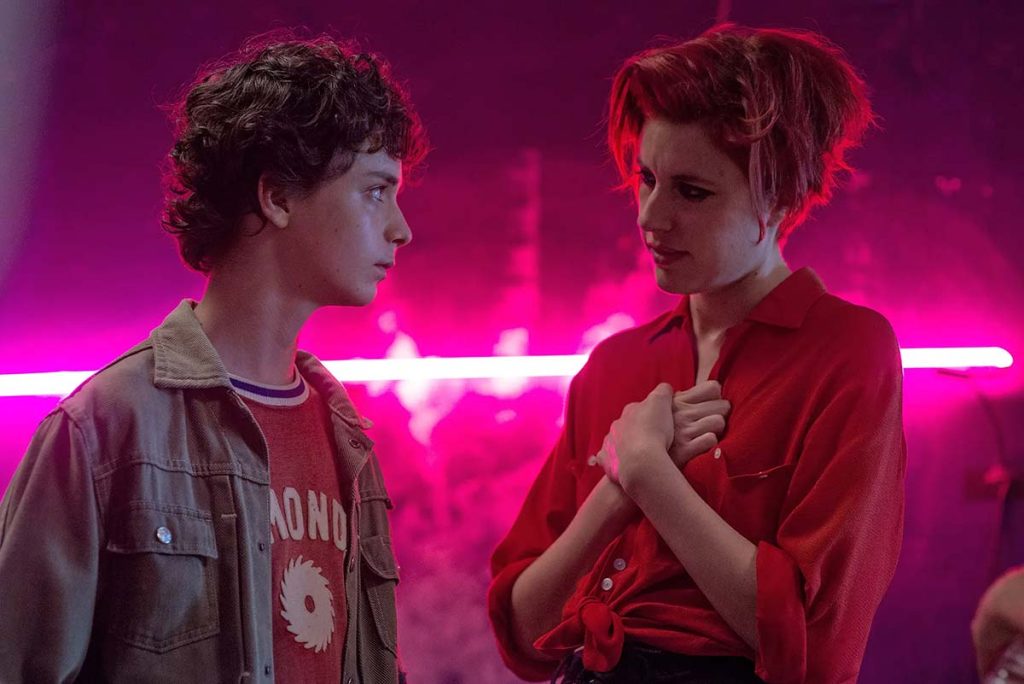
In “C’mon C’mon,” Joaquin’s character asks children what they think the future will be like. There’s also a similar idea in “20th Century Women”: Greta Gerwig warns the young protagonist: you don’t know what your future will be like. Why does that idea recur so often in your work?
If you talk about the future, you’re also talking about the past. You suddenly bring awareness to the fact that we are on this river of time. We’re on this river of different things being available, impossible, or illegal. If you think about my dad in “Beginners,” he could not express his sexuality without the threat of going to jail, being sent to a psychiatric ward and receiving shock therapy, losing his job, or experiencing all those other consequences. That which is most interpersonal and mysterious to him is also part of the flow of history.
That’s a big part of my life because my parents were 40 when they had me in 1966. They were born in the 1920s, and I was born in 1966. That’s a huge generational divide. There were these completely different moments in history living in the same house and not understanding each other. When I bring up the future, it’s really about how we are subjects of history. We are little emotional blobs in time. I’m always looking at it that way: How is the most personal point tied to the larger historical point?
How do varied, disparate influences as different as “The Thin Blue Line,” Ozu, Fellini, and Gordon Willis come together?
They’re different, but they’re all observational. I never thought of that. They all play with an observational quality. They’re often working with 35mm lenses and longer, looking at things from a distance. That’s such a bouquet of things you just brought up. My dad was a museum director and an art historian. I went to art school. I love things. I’m surrounded by things that I love, and that’s part of why I make things.
“C’mon C’mon” is me loving “Alice in the Cities” by Wim Wenders. “20th Century Women” is me loving “Amarcord” by Federico Fellini. “Beginners” is me loving “Lovefilm” by István Szabó. That gives me a feeling of company. It’s not competitive, but it’s like, “Fuck, I want to be like that. I want to do something half that good.” It gives me a sense of community and of being with people.
I love to love things. That’s something I love about Patti Smith. She’s constantly talking about her heroes. Maybe it’s an antidepressant to come out of isolation and try to be with someone, even if it’s somebody you’re never going to meet. “The Thin Blue Line” was a movie I saw when I was about 25 or 27. I thought, “I could do that. That’s really interesting. I could make a movie like that.” I came from a graphic design and art background and had zero film training. I saw that movie in conjunction with early Jim Jarmusch films.
When I was watching those early Jarmusch movies and loving them, I didn’t know that Jarmusch was obsessed with Ozu and filming things in a similar way. All those films have a quiet, meditative, recursive quality. Ozu called himself a tofu maker. He essentially made the same film over and over again. The stakes are very small, but the level of care is very high, as is the curiosity about this limited world.
Fellini is really different. Fellini was more of a later-life discovery for me, and it’s not only his films, but also his writing—his writing about directing and about himself. He’s like the [Buddhist nun and writer] Pema Chödrön of filmmaking to me. He’s the wisest, weirdest Buddhist you’ve ever met. He’s so interesting about the idea that whatever you thought was going to happen and whatever you planned is only the beginning. It’s not as interesting as what will actually happen, which is going to be really different.
Your script and intentions meet the reality of filmmaking and the reality of a set. How can you transform those problems into interesting opportunities or growth that you never could have seen coming? The larger answer is that I love to love things. It makes me feel less alone, happy, and interested.
Can loving art function as an antidote to depression?
Music is huge. Albums are like figureheads or markers. They tell you, “I’m going that way.”
Albums become signposts in our lives, right?
Absolutely. To me, depression is isolation, so the healing move is to come out of isolation. One way to do that is to say, “Fuck, Talking Heads are fucking amazing.” Think about the growth and self-adventure they put themselves through on those first four records. That’s like a little bit of sunshine or vitamin C in a world that can be very cloudy. It’s positivity.
Do your shorts and smaller projects serve as workshops for later films? Like your National short film, ”I Am Easy To Find,” starring Alicia Vikander, looks a lot like “C’mon C’mon.” Almost to the point where it looks like the same locations.
They weren’t shot in the same place, but “I Am Easy to Find” is how I met The National guys. Aaron and Bryce Dessner from the National ended up doing the score for “C’mon C’mon.” I was writing “C’mon C’mon” while making that, and I was definitely practicing how to work in black and white.
I think this comes from going to art school rather than film school. In art school, you have a studio practice where you simply go and practice things. It’s comforting and fun to do smaller things where you’re experimenting, trying things, and working on how to do what you do. A career like Agnès Varda’s, with so many short films and so many different mediums and formats, has always made me think, “That’s great. That’s my way.” I was so happy that Kim at the Criterion Collection wanted to put all these shorts in and recognized that they are part of the whole body of work. They’re not lesser works. They’re different modes.
The short “A Mind Forever Voyaging” also seems like it anticipates the interviews in “C’mon C’mon”?
I definitely workshop things. I also make advertisements. That’s how I make a living and get health insurance—all the good things. I’ll try to pick an ad where I can say, “I want to try Steadicam,” or, “I want to see what it’s like to use motion control.” I can make that ad and practice it.
As a filmmaker, it’s really difficult to practice. You need a lot of money, a crew, and all these other things. I didn’t go to film school, so I learned how to be a director by making videos and advertisements. That’s how I came up. I’m especially grateful for the music video part. It’s a deep part of me. First, because I love music. If I could be a musician, I probably would be. I was in bands forever. Second, when you make a music video, you’re writing and directing. You’re coming up with the idea. It taught me how to be a writer-director.
Michel Gondry and Todd Field have also described ads as filmmaking workshops.
Absolutely. Michel is French, but if you’re an American filmmaker coming up within capitalism, how do you practice? I was a little behind career-wise. Spike Jonze really helped me, and Spike turned me on to Michel. Spike showed me Michel’s reel at one point.
It was a real model for me. I hadn’t gone to film school. How was I going to make a living, learn how to do this, and develop a relationship with people watching my work? Those two in particular—and a few others—showed me one way to do it.
What did you learn from Christopher Plummer, Annette Bening, and Joaquin Phoenix?
Interestingly, the bigger you are and the more history you have, the more aware you are of how far the fall is if the work isn’t good. They have the most at stake. That’s really interesting. It creates higher stakes when you’re helping and enabling them. Those three souls are so different, and every actor you deal with is different. It’s like dating seven different people at the same time.
Part of the job is figuring out, “Christopher loves the first three takes,” or, “This other person gets good after take four.” What helps each person is unique and different in every case. I love trying to find out what their thing is, what is going to make it come to life, or how to put them in a strange situation that helps them open up in a way they might not always.
With Christopher, I would never say “cut.” Christopher was such a theater actor. He would come into any shot knowing that he had divided it into three parts. It was like a little three-act scene within one piece of coverage. He understood the audience and the story so well. My approach was to never say “cut.” He would find himself drifting at the end of the scene, in this slightly unknown space. Eventually, he learned to say, “And cut, Michael.” He learned how to regain control.
Those little things can help put an actor in a place they haven’t quite been before. Mostly, I think of directing as hosting a dinner party. The actors are your guests. How do you make your guests feel comfortable? How do you respond to them in a way that honors them without making a big deal out of it, but simply makes everything copacetic?
Does every new group of actors make each film a completely different problem?
When I was making my first film, it was very difficult. Spike Jonze was being nice and helping me. I asked him, “It gets easier, right?” He said, “Oh, no.” I said, “What are you talking about? It has to get easier because you made this film, and now you know more.”
He said, “Yeah, but each film is different. It’s a different polar bear that comes and kills you every time. Every time, you’re going to get killed by the polar bear.” You’re never going to stop making mistakes. You simply learn how to recover from your mistakes better. That’s the secret.
That sounds like a metaphor for life.
Totally. He gave me all these examples, which I can’t share because they involve famous filmmakers. He would say, “Remember this scene? He totally fucked that up, and this is how he fixed it. Remember this scene in that movie? That is completely different from what it was supposed to be.” I thought, “Oh, OK.” Filmmaking involves so many elements that have to work out within a single 30-day period. It’s never going to work out the way you thought. It’s like war.
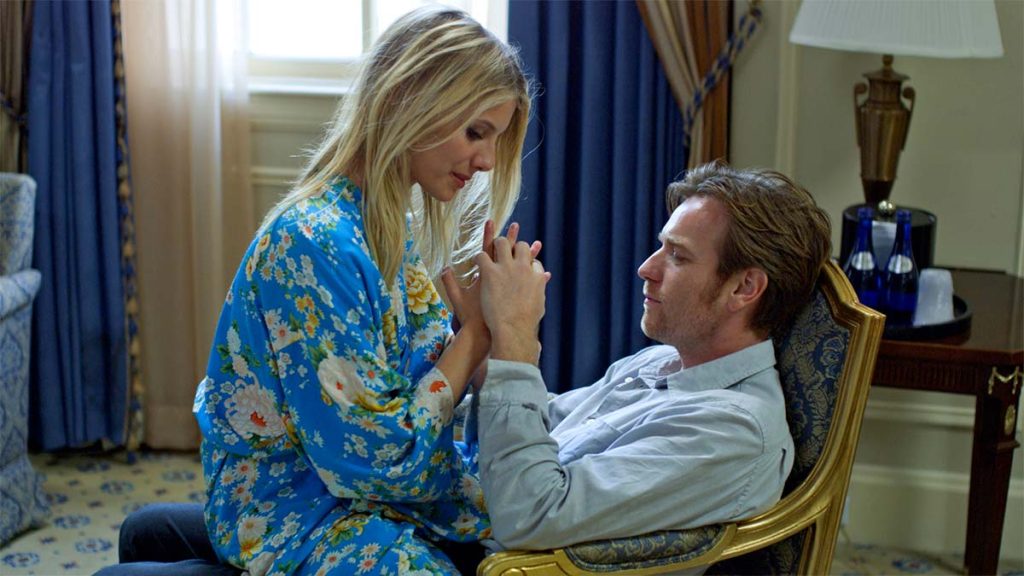
The set suggests an informal trilogy about fathers, mothers, and parenthood. What comes next?
I think that’s my jam. I’m going to start a film in the fall, and it’s on the same planet. I am very interested in the parent-child situation, or how we make each other—the intersubjective world of “I become myself through my relationship to you.” Those primary relationships are key.
Yes, all my films have a family situation. The family is always broken in some way or not totally traditional. That’s a key element for me. It’s about who shows up when you’re in need and becomes the constellation or community within which you discover yourself.
The next film has a very different quality to it in one way. I can’t really talk about it because it hasn’t been announced. In another way, it’s very much the same thing: how we affect and discover each other through relationships.
I think the best filmmakers often repeat themselves while finding something new each time.
Hopefully. Making this box set and having to watch the films consecutively so we could recolor them and do all that work, I thought, “Oh my God, I repeat myself so much. It’s ridiculous.”
Not to get too personal, but you always draw from your life in fascinating ways; could your experience of divorce ever enter your work?
No. There are different things I choose to take from my lived or observed life, and I choose them very carefully. There are a lot of things at stake and different issues at play. That isn’t something I want to go to.
I’ve been joking that I want to pitch to Richard Linklater that the next “Before” trilogy film should be about divorce.
We’ll see. We’ll see what the gods do with that.
Did “C’mon C’mon” intentionally pull back on what you describe in the commentary tracks as “avant-garde shenanigans”?
Each film has its own DNA that you slowly discover. You begin to realize, “This is what this film needs and wants.” There were a few things I shot for “C’mon C’mon” that were more formally inventive. In the edit, it became clear that they weren’t helping. They felt unindigenous to what I was trying to do.
To me, the interruption or French New Wave move in that movie was the interviews. They were unscripted, real interviews conducted in those children’s real environments. That was the way I approached it. I’m always looking for a part of my films that I didn’t author—something that exists outside of me. It could be moments from history. It could be using “Koyaanisqatsi” in “20th Century Women” or Jimmy Carter’s speech. I’m looking for those elements.
In “C’mon C’mon,” it became something I filmed, but it was still something I didn’t author. It brought in the spice of different voices. That’s very much me. I went to art school, not film school, so I’ll always have some of those moves. That’s part of what makes me want to make a movie. To me, “C’mon C’mon” has it. It isn’t different, although I can understand why you’re saying that.
How important were the French and Czech New Waves to that formal playfulness?
For better or worse, and in very complicated ways, that part of Woody Allen’s career—“Annie Hall,” “Manhattan,” and “Stardust Memories”—and the way he played with personal life was very influential. That’s also how I learned about Gordon Willis. The idea of filming a comedy in a very beautiful, cinematic way was influential. I’m indebted to all those movies. I learned a lot from them.
Godard too. My first love wasn’t only the French New Wave, but also the Czech New Wave and parts of Italian filmmaking from that same period.
When you say Czech New Wave, are you thinking of “Daisies”?
“Daisies,” and all of Věra Chytilová’s work, including her other films and shorts. That kind of playfulness, formal interruption, intervention, and fucking with what a film is remains part of what makes me excited.
I always say that Godard was the best and most influential graphic designer for me. When I worked as a graphic designer, I thought about him constantly. He was really amazing.
Do you know Kim’s Video in New York? That was my film school because I didn’t attend film school. I went to Kim’s and started moving across the shelves. The Godard shelf was the first one I made it all the way through. That was the beginning of my personal film school.
What stylistic direction are you considering for the new film?
It hasn’t happened yet. Part of my process is that I’ve been writing it for years and have ideas, but it hasn’t encountered reality yet. I discover it as I go. I’m interested in being a little less sweet, a little rougher, a little more feral, and having a larger bandwidth of feelings. I want that a lot.
All my work has this play between documentary and narrative. That remains endlessly interesting to me: filming things in a way that contains both of those histories.
You seem to never work with the same cinematographer twice. Will that approach continue with the new film?
That will be the same this time, simply because of scheduling. There are people I would love to work with again, but they’re all busy.
It was a joy to revisit your work. Thank you.
You’re welcome.
“I’ll Remind You of Everything: The Films of Mike Mills,” the new Criterion Collection box set, is available now. Below is a collection of music videos and short films directed by Mills, many of which are included in the set.

Born in Chile, raised in Canada, now living in Brooklyn, NY, Rodrigo Perez is the founder and editor-in-chief of The Playlist, which he launched in 2007. He has worked in entertainment journalism since 2000, including at MTV, and has written for SPIN, IndieWire, Pitchfork, Complex, Magnet, MuchMusic, and various music, film, and entertainment publications over the past two decades.

