




When the titular puppet is first brought back from death in Guillermo del Toro’s “Pinocchio,” the divine entity who once jolted him to life is quick to dampen all the excitement about his newfound immortality. “Life can bring great suffering,” she tells him. “Eternal life can bring eternal suffering.”
READ MORE: 2025 Venice Film Festival Preview: 23 Must-See Films To Watch
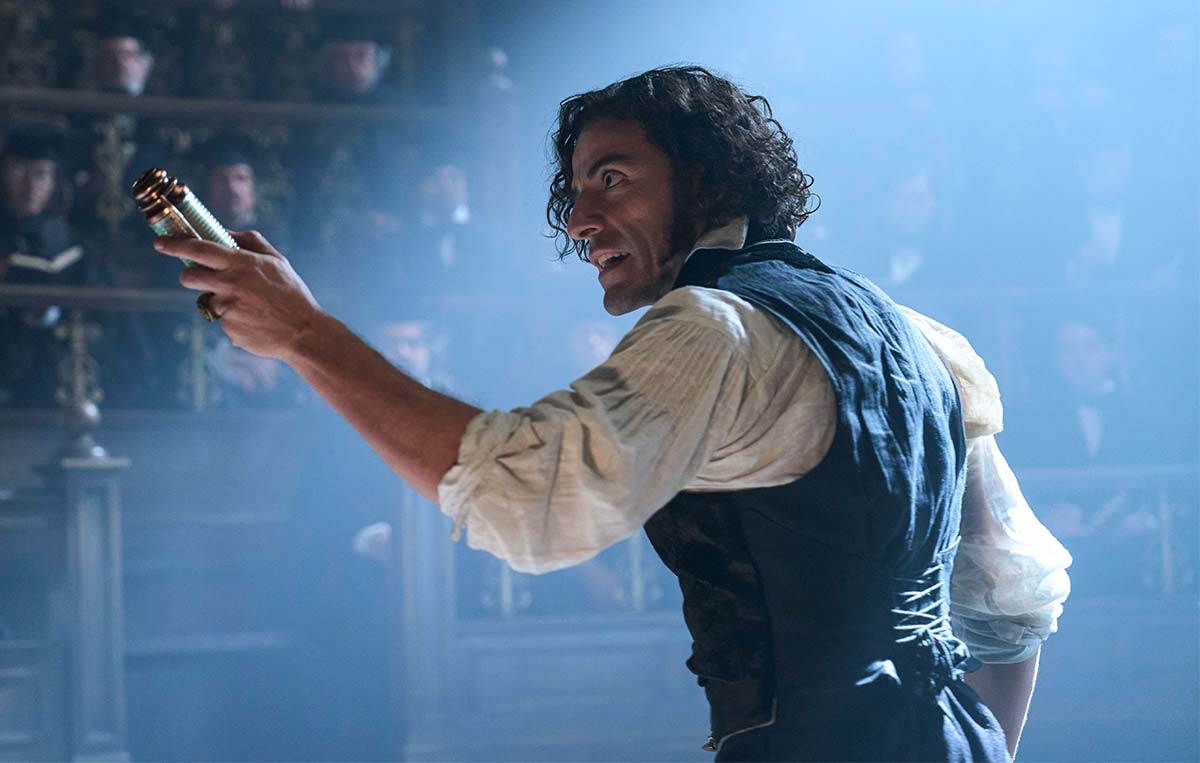
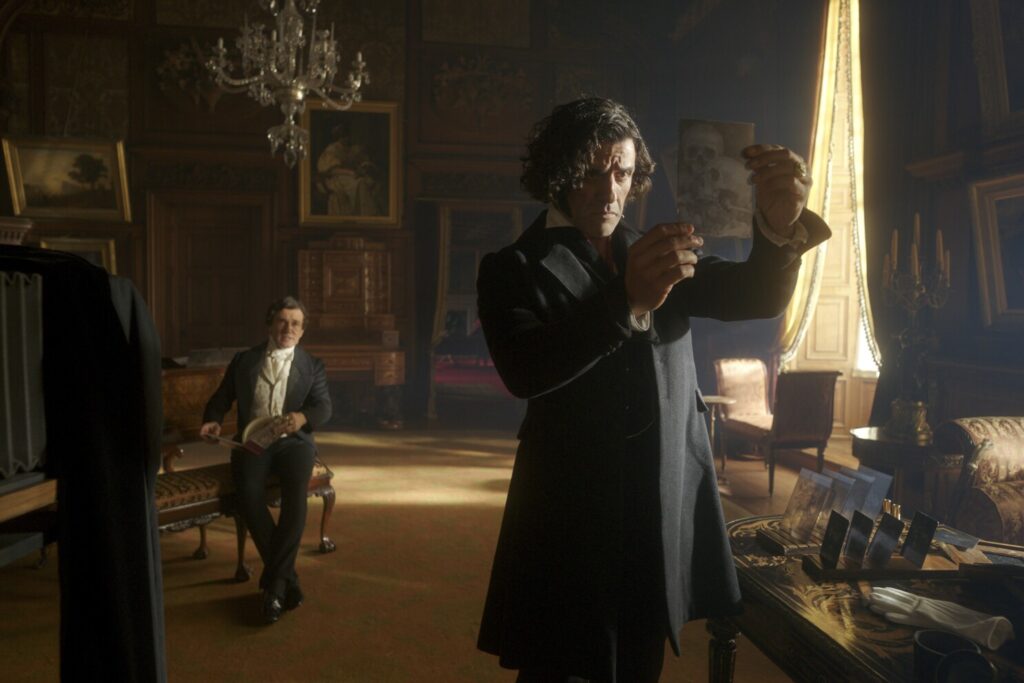
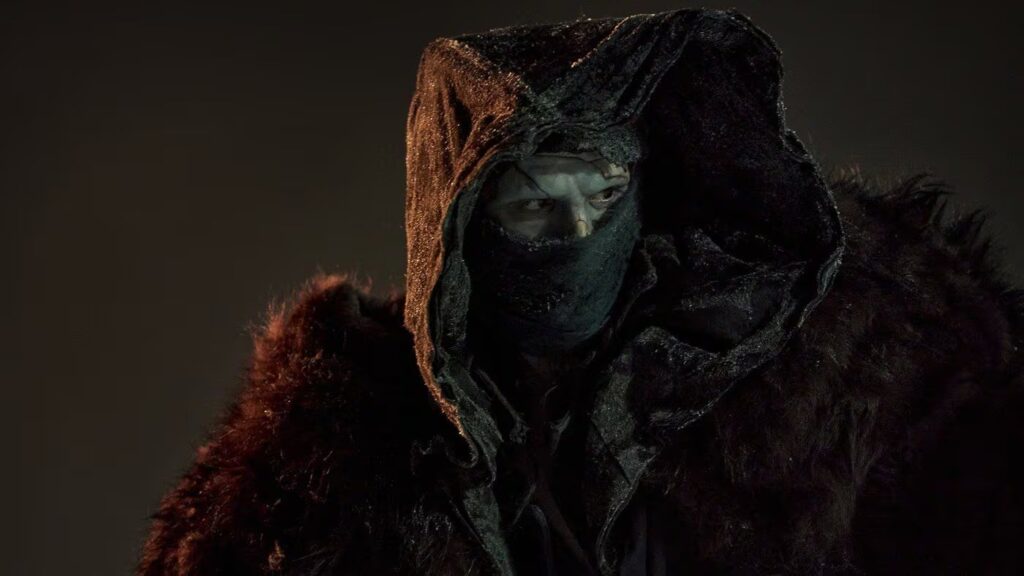
This passage summarizes del Toro’s follow-up, “Frankenstein,” his passion project adaptation of Mary Shelley’s classic novel that the Mexican filmmaker dreamed of directing since watching James Whale‘s 1931 version in the cinema as a child. In this dark cautionary tale, the hands that give life to a once inanimate being are not that of a benevolent mystical creature but the flesh and bones of a man blinded by ambition. That man is Victor Frankenstein (Oscar Isaac), who we first meet withering on the Arctic ice and hunted by his life’s work: a gnarly human jigsaw come to life, played by Jacob Elordi in heavy prosthetics.
Adapting Shelley’s story feels not only natural for del Toro — a director long fascinated by ghouls, creatures, and monsters — but also as an obvious follow-up to “Pinocchio.” Both films deal with the grandiose complexities that shape the relationship between maker and creation, along with the finer, more tenuous undercurrents of grief and a primitive yearning for kinship. del Toro nests both films right at this intersection between the violent hues of natural cruelty and the corrosive aching of loneliness, imbuing these classic tales told many times over with a signature aura of melancholy that reflects a creative plagued by deep philosophical questions about human nature but unwilling to accept the answer that paints his kind as anything but deserving of redemption.
The look of del Toro’s Creature, designed by the director alongside prosthetics expert Mike Hill, defies the established notion of the monster as a rigid, yet approachable, square-headed figure. Here, the creature is envisioned as a marble statue, with skin of a translucent white cut by deep rivers of red and purples and greens. His cumbersome body is at once battlefield and map, leading curious eyes to the truth of its making, and the voice that powerfully emerges from within the caverns of his lungs seems at war with the quiet hesitancy of its delivery.
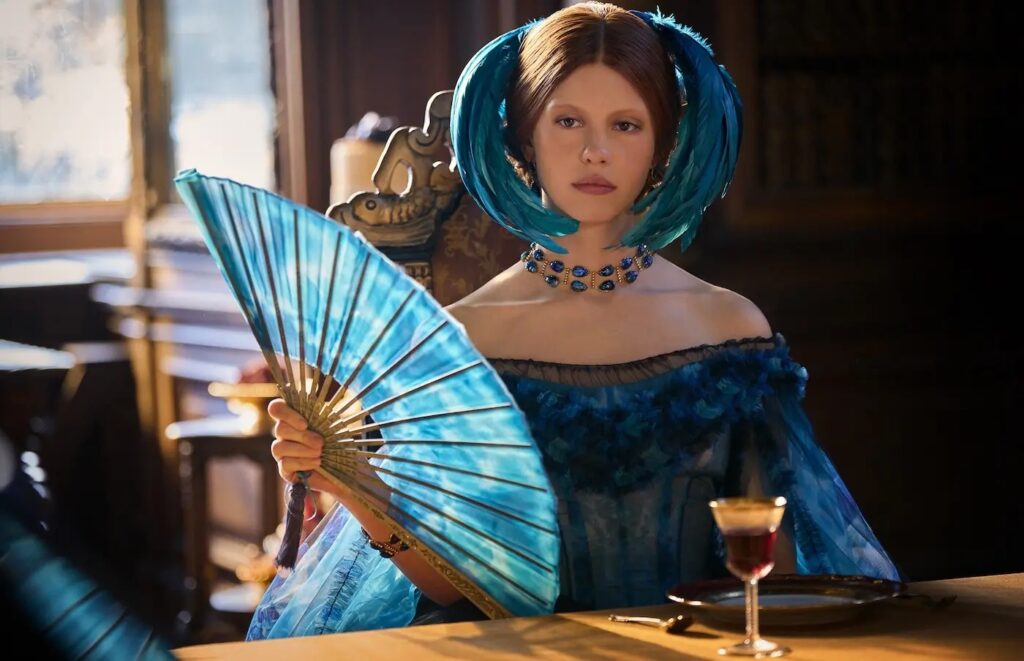
Cocooned inside, Elordi is a revelation in a turn made even more impressive given the “Priscilla” star joined the project last-minute and only had a few weeks to prepare. The Australian actor’s consciousness of his physicality lends itself perfectly to a role that requires a sharp hold of the space he occupies — and does he ever. But it is his big, beaming eyes that crown his take on the Creature, piercing through blood, sweat, and dirt, always alive even in death. Those brown eyes hold wonder and fury but, most of all, great curiosity. Supported by a solid ensemble, which includes Isaac in a welcome return to a meaty leading turn and a surprisingly restrained Mia Goth as Victor’s sister-in-law to be Elisabeth, this is very much Elordi’s stage, and he occupies it beautifully and fully.
And what a treat to see Elordi’s creature wander a world wholly envisioned to house his story, with del Toro, as always, favoring practical effects over digital resulting in a feast of set, costume, and production design, as well as a diverse selection of intricate props and odd little trinkets. Elisabeth’s bright Victorian dresses work as a dome, and the veiled bonnets always tied around her head help further sanctify her to the eyes of the men that swarm nearby. Victor’s laboratory is flooded in light, making it impossible to obscure his guilt with the models designed for the doctor’s experiments equally horrifying and awe-inducing. del Toro’s adaptation is sensitive yet attentive to the violence at the core of “Frankenstein,” and delivers some gruesome, bowel-turning sequences.
Although the narrative is faithful to the book, del Toro rewrites the dialogue almost completely, an exercise whose only chance of success relies on his ingrained understanding of Shelley’s writing and tonal cadence. The result is a stunning piece of text, acutely aware of the labyrinthine nature of our most primitive emotions, and zigzagging through musings on love and loss and want with the careful rhythms of a writer who gets that tackling the grandiose often merits delicacy. In this, the big, bold statements of “Frankenstein” feel earned instead of needlessly saccharine. “I am obscene to you but to myself I simply am,” the Creature says in a pained encapsulation of his existential dilemma. It is a precious, deeply moving moment, made even more devastating at a time when the figure of the modern Prometheus is easily absolved by those willing to overlook the tortured fate of their creations. [A]
Follow along with all our coverage of the 2025 Venice Film Festival.

Rafa Sales Ross is a Brazilian film journalist, critic and programmer currently living in Scotland. She contributes to Variety, BBC Culture, Sight & Sound among others, and can often be seen writing about Latin American Cinema and explorations of death and desire.


.)