




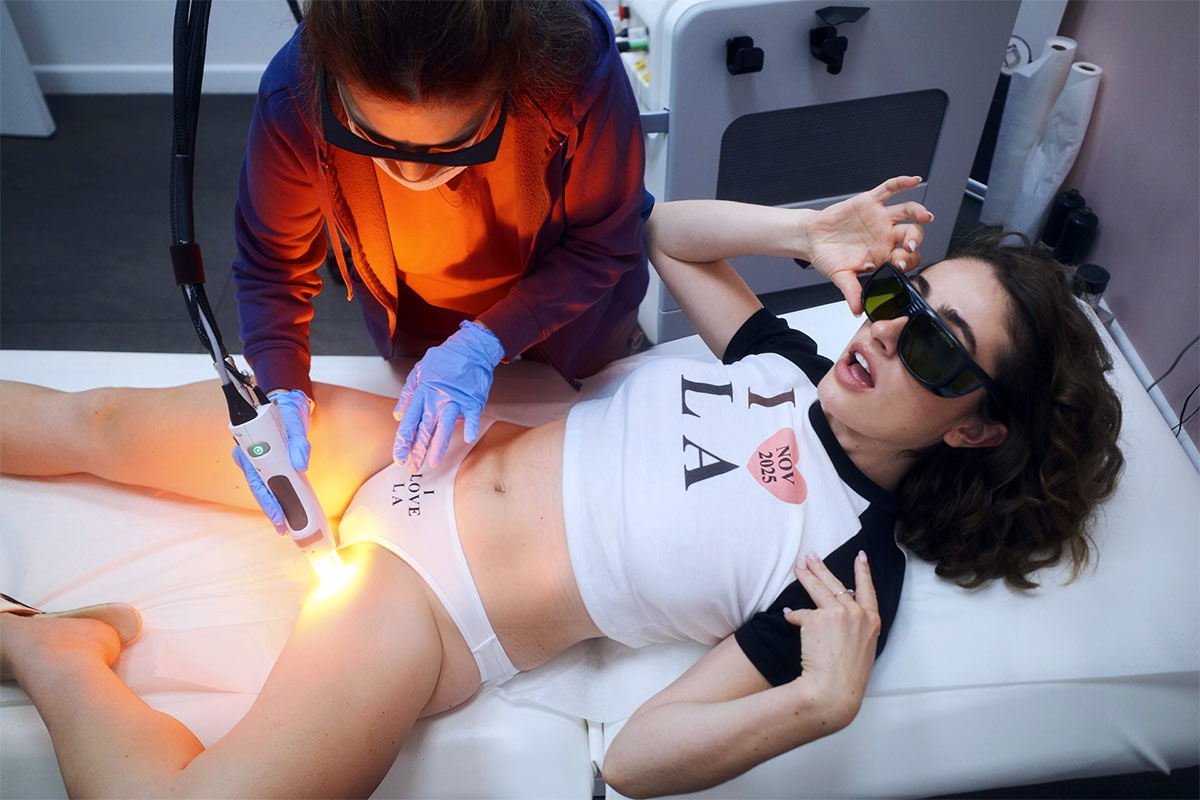
In an apparent bid to be relatable, the latest HBO series, “I Love LA,” is anything but. There’s no doubt that, as an actress, Rachel Sennott is engaging, possessing a torrential-style charisma that barrels through any scene she’s in. It makes sense to build a series around her brand of energy, finding a balance between specific Gen Z humor, sex comedy, and observational looks at the messes we often find ourselves in during the tumultuous periods of our twenties. That said, it needed a different writer or creator, because while Sennott is engaging as a performer, her writing is a less appealing form of chaos.
Read More: Fall 2025 TV Preview: 45 Series To Watch
It doesn’t help that “I Love LA,” in all of its competing forms, has been done before and better. From this year’s underrated “Adults,” to whiffs of “The Other Two,” the best-friend shenanigans of “Broad City,” and, of course, “Girls,” the mid-2010s to now brand of comedy is loud and clear. Dry and scathing, populated by self-involved, self-sabotaging characters who, more often than not, get in their own way to happiness. All of which is anchored by a killer, perfectly curated soundtrack and just enough self-awareness to tamp down on any over-the-top verbal acid. But what the Sennott-led series lacks is hard-won self-awareness, accountability, and a diversity of personalities.
The series wastes little time in establishing our core group of friends. Sennott stars as Maia, a young woman seeking to advance in her career. Despite receiving only slight recognition from her boss (played by an excellent Leighton Meester), Maia embarks on a new career journey upon the arrival of her best friend, Tallulah (Odessa A’zion), an influencer recently embroiled in controversy. Maia, looking to help both of them, becomes Tallulah’s manager, launching them to greater success with greater heights to fall from.
Surrounding them are their friends, celebrity stylist Charlie (Jordan Firstman) and Alani (True Whitaker), the daughter of a famous filmmaker, happy to float around the city. Then there’s Dylan (Josh Hutcherson), Maia’s too-patient-to-be-true boyfriend, who nearly always puts up with her antics and nails the best-written scene of the entire first season. Over the course of the eight episodes, we watch as they all (to varying degrees of success) look to find themselves further and establish where they prioritize their time.
There are elements of the series that work. Because, as often as the characters make full-body, cringe-inducing decisions or antagonize the viewer with how irritating they are, the humor has enough mastery of classic sitcom rhythm to make the jokes land. And when the series does acknowledge just how self-involved and insufferable these characters are, the dialogue works to convey their vapidness. It also understands when and how to use a strong guest cast.
While the direction isn’t a highlight in the talk-heavy series, episodes directed by Lorene Scafaria (also a producer) stand out for their slick production, which effectively emphasizes the city lifestyle surrounding them. Sennott remains a mesmerizing screen presence, with A’zion also delivering a hypnotic turn. Firstman has some of the most interesting material to work with as his character undergoes a personal journey of love and regret. Still, the writing is too inconsistent for him to really bloom into anything more than snapshots of an interesting character.
Whitaker, meanwhile, gets so little to do that it begins to feel like her character was an afterthought. Of all the characters, though, it’s Hutcherson’s who is the most likable, happy to put career ambition on the back burner in favor of lazy days at home and the camaraderie and comfort of relationships. This is a polarizing belief among this friend group, who all admire and strive to burn out culture.
Despite this thread of intrigue, “I Love LA” will leave you cold (despite the sunny setting). There’s no doubt that the writer wants these characters to be distinctive and bursting with life. Everything from the costumes to the impulsivity of the character actions, to the, again, admittedly great needle jobs, there’s a sense of “cool” kid, IT girl energy to the series. However, none of it amounts to anything substantial.
It’s worth noting that comedies don’t have to be relatable. But there are indications “I Love LA” wants to be. Instead, the result is a shrill and frustrating loop of characters making mistakes and either being let off the hook or seemingly justified in their poor decisions. There’s a tonal dissonance: while the show seems comfortable showcasing the ways these characters stumble, there is no desire to see them grow from it.
The script, which effectively writes four characters with the same personality, doesn’t help. Dylan is the only one who truly stands out, with Alani being a close second. However, Maia, Charlie, and Tallulah are all copy-and-paste versions of one another, with minuscule differences. That lack of depth in character makes for a shallow series that can’t seem to find anything of note or interest to say. Even the city at the heart of the series is a mere afterthought. The mirrored personalities plague the series with an unmistakable meanness in the dialogue (there are many comments about weight, being skinny, and calorie intake) that is hardly palatable.
A lot of the great comedies are vaguely mean-spirited, and there’s no denying that, in some ways, “I Love LA” works – especially for specific Gen Z types. But it works as one-liners and clips. The story itself is lacking. Suffering from a sloppy, inconsistent script and some unlikable characters who are desperately tough to root for, the series has some winsome pieces that fail to come together for a cohesive, enjoyable picture. [C]
“I Love LA” premieres November 2 on HBO.

New England-based Tomatometer-approved film and television critic. Ally is a member of the Boston Society of Film Critics, the Boston Online Film Critics Association, and the Online Film Critics Society. Her writing has also appeared at RogerEbert.com and The Mary Sue.


