




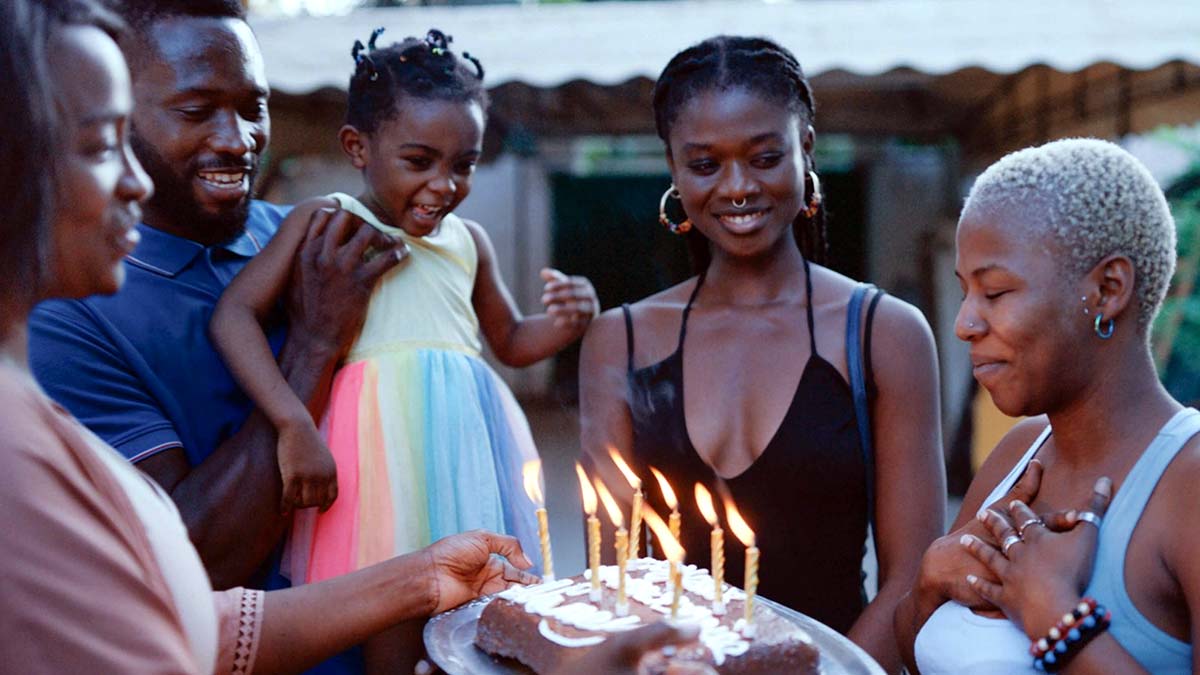
“Promised Sky” is a movie about, ostensibly, several different stories, ones that seemingly attempt to intermingle but, at the same time, seem unable to do so in any meaningful way. It’s a film that can’t seem to decide where to place the main focus, inadvertently burying any core messaging in the process; a case could be made that something is trying to be said, but those behind the scenes aren’t sure how to make this particular task happen. If all of this sounds frustratingly vague, believe me, so is the experience of taking in “Promised Sky.”
READ MORE: 53 Must-See Films To Watch Summer 2026
Set in Tunisia, the core plotline may very well feature Marie (Aissa Maiga), a local pastor/landlord, and her niece, Jolie (Kaetitia Ky), and Jolie’s friend Naney (Naney Debora), who live under her roof. These particular tenants of Marie follow decidedly different paths: Jolie’s a student pursuing engineering, while Naney seems content to engage in street-level hustles and petty acts of criminality. It’s said that Naney once lost a child, something which appears to play in the caring of Kenza (Estelle Kenza Dogbo), a young orphan we first meet as the two women are bathing her while the child regales both in the few details of her parents’ death she recalls (shipwreck, you see). Jolie’s mentions of her academic goals seem to meet with a semi-apathetic near-lack of response from whoever may be listening at that moment, while Naney’s actions, almost always with her friend Foued (Foued Zaazaa) acting as co-conspirator, equally act in stark contrast to Jolie. Nevertheless, clips of the women enjoying a night clubbing and playing soccer serve as reminders of their friendship, especially when the catcalls begin. As Jolie remarks about her dress and the two find themselves unable to hail a taxi, the discrimination and prejudice in this part of the world begin to make themselves abundantly known.
Spoken in French, in addition to Arabic, it’s as easy as it is aggravating attempting to extract the narrative left turns present throughout, somehow echoing the three different paths of our three leads, while simultaneously struggling to expound upon such topical issues as immigration, what with the script’s frequent mentions of residency paperwork. The setting itself even dances between playing a role and fading into the background, awash in a documentary-esque feel that could serve to fool the viewer as the film begins. The dialogue, meanwhile, consistently fails to flow with any semblance of natural speech, though undoubtedly meant to come across as such, best witnessed in a scene in which Naney speaks via FaceTime with her daughter. Separated by distance as the mother tries to deliver parental advice, with the conversation reaching its peak as the child sighs when Naney discusses traveling to see her, this is the type of news that’s been delivered before, and even with screenwriting shortcomings again present in this moment, the pain on Naney’s face helps to buoy a scene that could have also come up short.
Ultimately, such moments, alongside a lighthearted scene in which Naney and Foued enjoy a minute or two on a rented electric scooter, are at best few and far between, and the cinéma vérité atmosphere drowns their presumably intended purpose in a sea of unmixable ingredients. With her second feature, director Erige Sehiri likely has plenty she wishes to convey. In living up to the title, the only thing promised is a question of what exactly that is. [C]

Brian Farvour is a film/television critic and entertainment journalist whose work has also appeared on Fandomwire. He previously co-hosted The Playlist Podcast.

