
 3. “Escape from the Planet of the Apes” (Don Taylor, 1971)
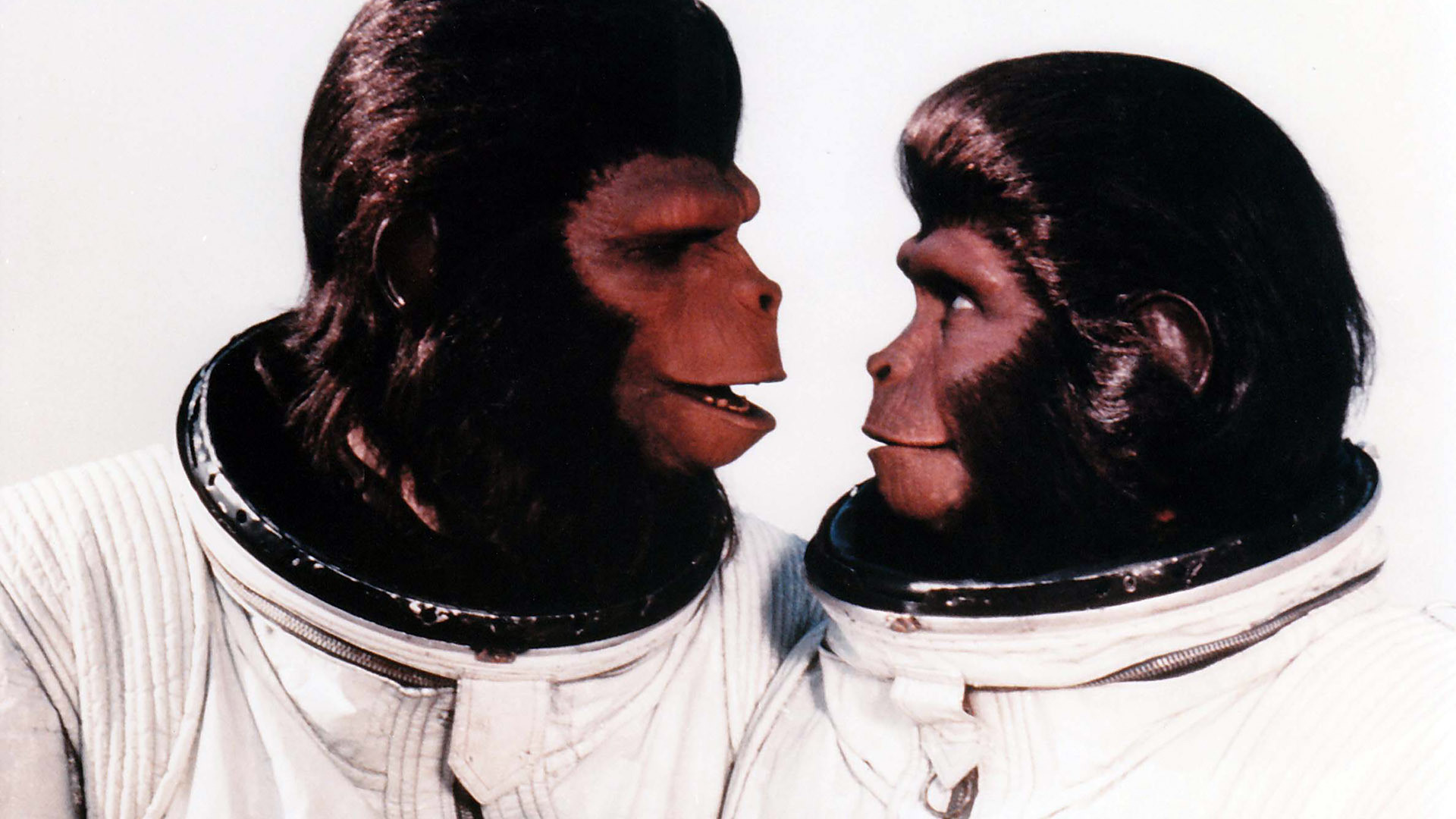
Fox wanted another sequel, and that’s what they got, with this inventive, wholly underrated time travel romp. Before the bomb went off at the end of “Beneath the Planet of the Apes,” it seems that a trio of chimpanzee scientists – Cornelius (Roddy McDowall, back thank god), Zira (Kim Hunter) and Dr. Milo (Sal Mineo) jumped in Taylor’s derelict spacecraft and traveled through the same wormhole that brought him to the planet of the apes, only this time they were the ones landing on a human-filled earth circa 1971. It’s an ingenious set-up that works well, complete with a dynamite pre-opening credits sequence where the spacecraft returns to earth, greeted by adoring members of the military who assume it’s Taylor and his crew (or, we suppose, that wet blanket Brent) but instead are greeted by a trio of human-sized chimpanzees—the sequence sets the tone for the movie, with its mix of fish-out-of-water commentary and uneasy tension. The first half is the lighter half, with talking apes Zira and Cornelius being given human clothes and treated like celebrities (“The biggest story since the moon landing” is one reporter’s grave opinion). This section of the movie is fun and funny (we love it when, while making an introduction to a tribunal, a priest gets worked up over the fact that Zira and Cornelius are married) but leads to a darker, more morally complicated second half, when Zira announces that she is pregnant and the government, aware that the visitors have come from an ape-dominated future-world, do all they can to terminate the pregnancy. The real star of “Escape from the Planet of the Apes” isn’t the ape make-up, which, with so few ape characters, returns to the sophisticated glory days of the original, but McDowall, who is able to show surprising range as Cornelius, first displaying his fine comedic chops (when the same tribunal asks Cornelius if he can also speak, he says, “Only when she lets me”) and his penchant for drama, especially towards the tragedy-streaked conclusion. Feminism briefly becomes one of the series’ political concerns, as Zira speaks in front of a women’s group and the notion of terminating the pregnancy coming across as a thinly veiled look at women’s reproductive rights in the early ’70s. And while the movie’s ending is just as grim as the previous two, there are, at least, glimmers of hope, with Zira and Cornelius’ baby taken in by a kindly circus owner played, with typical gusto, by Ricardo Montalban (“Yes, yes, a thousand times yes!”) A special shout out also should be reserved for Jerry Goldsmith‘s groovy score, which nearly eclipses the groundbreaking work he did on the original film (he wisely sat out the sequel). “Escape from Planet of the Apes” is, in fact, a superior film in many ways to the first, but is lacking that film’s freshness and originality. Still: an undeniable high watermark for the franchise.
 2. “Planet of the Apes” (Franklin J. Schaffner, 1968)
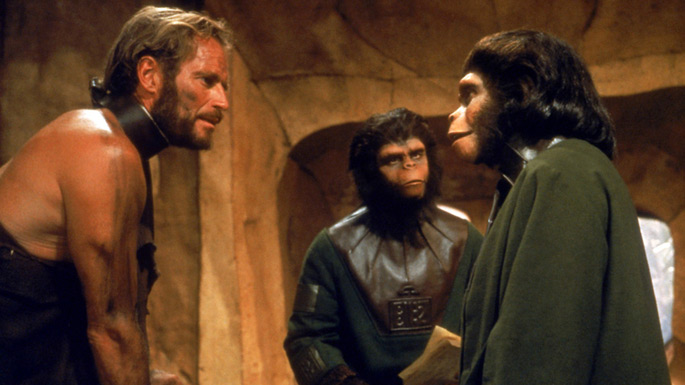
In the beginning, there was only, simply, “Planet of the Apes.” The passion project of publicist-turned-producer Arthur P. Jacobs, it was based, somewhat loosely on a 1963 French science fiction novel by “Bridge Over the River Kwai” author Pierre Boulle (who privately thought the novel was one of his lesser works and unworthy for a screen adaptation). In the film, a quartet of astronauts (including a woman, who goes uncredited of course) slips through a wormhole in space and winds up on a savage planet. At first things seem okay, with primitive humans belonging, seemingly, to an simple agrarian society but then, following a famous chase sequence through a cornfield, the true rulers of the planet are revealed: a race of highly intelligent apes. The astronauts are separated, leaving only Taylor (Charlton Heston) to fend for himself on this strange and merciless planet, until reaching the final, shocking conclusion as to what this planet is (a twist ending every bit worthy of original screenwriter Rod Serling, who after several drafts was replaced and almost all of his work jettisoned). The original “Planet of the Apes” was unlike anything that had come before it—bleak, apocalyptic, but also playful and strange and scary (like when Taylor comes across the remains of one of his fallen astronaut chums or it’s revealed that one of them has been lobotomized). The political subtext that would become straight-up text in the later installments is also present, although slightly toned down and stuffed into the background and Franklin J. Schaffner, whose next film would be “Patton” and would go on to direct “Papillon” and “The Boys from Brazil” helms with sure-footed fluidity. And while the apes got the notice as being a technological breakthrough, with John Chambers‘ make-up effects winning him an honorary Academy Award the following year, really everything about the film felt odd and groundbreaking (like Jerry Goldsmith‘s eerie score and Leon Shamroy‘s sun-drenched photography), and as impressive as the effects were, it was the performers themselves, especially Roddy McDowall as Cornelius, Kim Hunter as Zira, and Maurice Evans as Dr. Zaius, that made them so iconic and beloved. A brilliant synthesis of story, theme, performance and innovation, it’s no wonder the original “Planet of the Apes” spawned the pop culture phenomenon we know today.
1. “Dawn of the Planet of the Apes” (Matt Reeves, 2014)
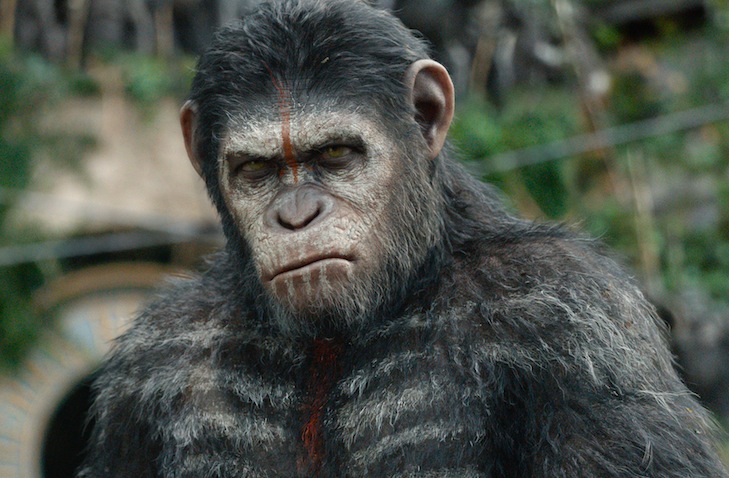
Maybe the biggest surprise of “Rise of the Planet of the Apes,” a movie that played like a seemingly never-ending series of surprises, was the emotional connection formed between the audience and Caesar. So it’s not much of a surprise that almost all of the sequel, directed by “Let Me In” and “Cloverfield” filmmaker Matt Reeves, would hone in on that connection, resulting in easily the most emotionally complex (and, at times, scariest) entry in the entire franchise. Set ten years after the events of “Rise of the Planet of the Apes,” after the world has been ravaged by the killer virus seen in the first film (the outbreak dramatized in a beautiful, nearly wordless prologue), this film is set largely in the burgeoning ape community that has cropped up in the overgrown forests now surrounding San Francisco. Caesar is leading peaceably, sometimes using tenets from earlier movies (“Ape shall not kill ape” is one of the elements appropriated from “Beneath the Planet of the Apes“), a harmonious ecosystem that is dangerously threatened when human survivors from San Francisco (led by Jason Clarke) encroach onto the apes’ land while looking for a new source of power. Tensions gradually mount until an all-out war begins between ape and human. Reeves establishes a deliberate mood and pace early on, with the first 20 minutes or so spent in the apes’ camp, watching them use sign language and go on hunts (everything is mossy and earthy). With the introduction of the human element, Reeves pumps up the tension (this is easily the scariest apes film since the 1968 original) and maintains an almost unbearable level of suspense, right up until the credits roll. But it’s the film’s emotionality that makes it so special. Andy Serkis’ performance is even better and more nuanced than it was in “Rise of the Planet of the Apes,” and the sequences he shares with his wife Cornelia (Judy Greer) and Clarke, are hugely powerful. While the human drama is somewhat throwaway and there has yet to be a strong female character introduced on the level of Zira, it’s hard not to be dazzled by “Dawn of the Planet of the Apes”—everything from its jaw-dropping 3D photography to Michael Giacchino‘s delicate (and at times, muscular) score, to Gary Oldman‘s more nuanced human villain. This represents the peak of the series, not because of its cleverness or political allusions or technological innovations, but because of the size of its heart. It’s positively planetary.
There is also more tangential “Planet of the Apes”-related content that is interesting, if not essential. There was the 1974 “Planet of the Apes” television series that ran on CBS for a whopping 14 episodes in the fall and winter of 1974. The decision to do the series on CBS was due, in part, to the tremendous ratings that the first three movies racked up when CBS aired them as movies-of-the-week. Taking its cue from “The Fugitive,” the series featured a pair of goofy astronauts (played by Ron Harper and James Naughton), who crash land on the titular planet and then go on the run from the oppressive ape forces that rule. So, yes, they would basically get caught and escape every week. The series is slightly interesting for yet again featuring Roddy McDowall, this time playing a young ape named Galen (who, of course, tries to keep the humans out of trouble) and for the fact that “Twilight Zone” mastermind Rod Serling, who had a hand in the original film’s screenplay, wrote scripts for the first two episodes (these were never filmed). In 1980, the series would live on, sort of, as five made-for-television movies. A year after the live action series aired, an animated series also ran, for 13 episodes, as part of NBC‘s Saturday morning line-up. Entitled “Return to the Planet of the Apes,” the series was cheaply animated but is, as yet, the only representation of the more advanced ape civilization as depicted in author Pierre Boulle‘s original novel. More essential than either series is “Behind the Planet of the Apes,” a 1998 made-for-TV documentary by Kevin Burns and David Comtois that was hosted by McDowall and delves into the entire franchise, including the somewhat problematic sequels and the ahead-of-its-time merchandizing blitz that accompanied the series. There are lots of juicy behind-the-scenes details crammed into the documentary, although just as many went unexplored, leaving us with a slight pang of longing for a follow-up chronicle. But that’s a characteristic of almost the entire “Planet of the Apes” franchise: always leaving you wanting more.
Let us know your feelings about the franchise and our rankings, (are we “hail Caesar” or “damn dirty apes”?) in the comments below. — Drew Taylor, Jessica Kiang