




The 98th Academy Awards had more to talk about than just who won. Conan O’Brien kept the show light on its feet, “Sinners” supplied the telecast’s biggest jolt of energy, and Paul Thomas Anderson finally got the full Oscar-night breakthrough that had eluded him for years with “One Battle After Another.” Add in the Academy’s long-overdue new Casting category, a few awkward detours, and one especially glaring no-show, and this was the kind of ceremony that gave a Best/Worst column plenty to work with.
So that’s really the story here: the highs that gave the night its shape, the stumbles that slowed it down, and the smaller snubs and surprises that still managed to stand out once the envelopes were opened. From Conan’s opening sprint and “I Lied to You” blowing the roof off the room to reunion bits that dragged and a few races that said something more complicated about where the Academy still is, the 2026 Oscars weren’t chaotic—but they were lively enough to be worth sorting through.
READ MORE: ‘One Battle After Another’ Wins Best Picture & Six Oscars Overall
Best: Aunt Conan Being Chased by the Kids From “Weapons”
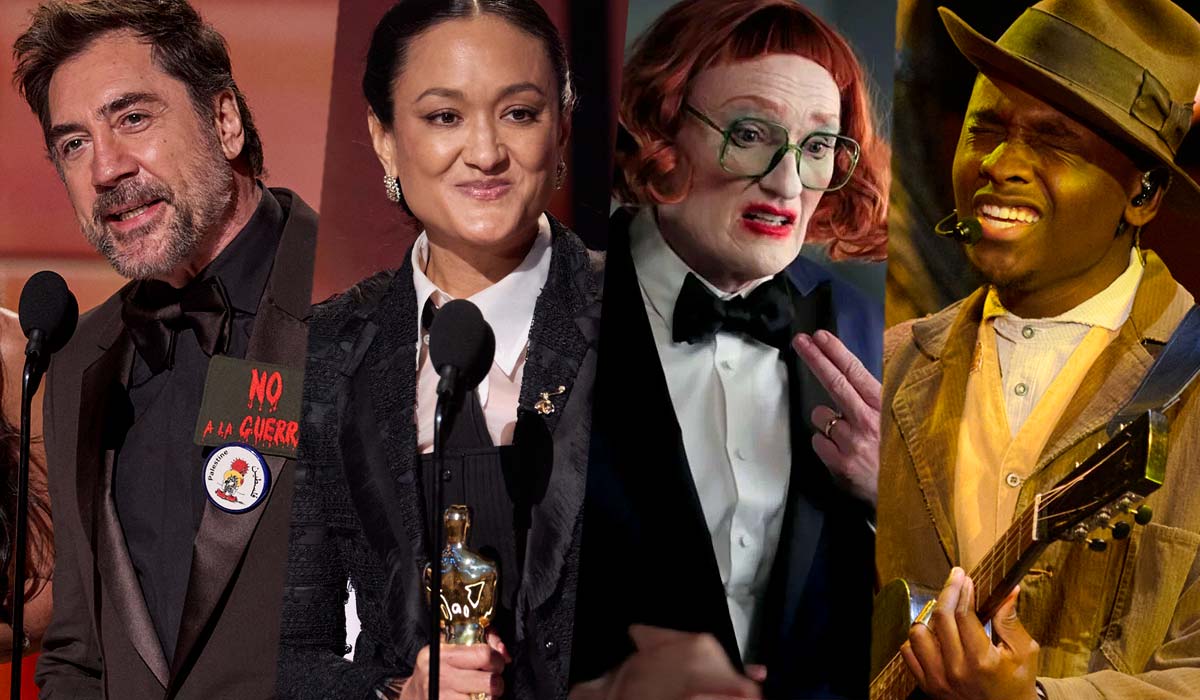
Kicking off the show with the kind of old-school movie-hopping opener the Oscars used to know how to do, Conan appeared as Amy Madigan’s Aunt Gladys from “Weapons,” got chased through a string of nominated worlds, and sprinted into the Dolby ready to work. It was silly, fast, and just self-aware enough without feeling desperate. More importantly, it reminded you that a host still matters. Conan doesn’t just keep the thing moving—he gives it shape. After years of telecasts that felt either overproduced or half-awake, he again looked like the obvious choice to keep doing this as long as he wants.
Best: “I Lied to You” Rocks the Oscar Stage
The night’s best performance didn’t feel like an awards-show interruption. It felt like the ceremony briefly giving itself over to another movie’s gravity. Ryan Coogler’s “Sinners” came roaring into the room with Miles Caton, Raphael Saadiq, Brittany Howard, Buddy Guy, Shaboozey, and Misty Copeland helping turn “I Lied to You” into the kind of full-bodied Oscar moment the show rarely pulls off anymore. Instead of flattening the film into a tidy musical excerpt, the performance rebuilt some of its haunted, ecstatic force.
Best: Casting’s Moment in the Sun
After years of industry lobbying and common-sense arguments, the Oscars finally recognized casting as what it has always been: authorship. Cassandra Kulukundis became the first winner of the new Casting Oscar for “One Battle After Another,” and it was hard to imagine a stronger inaugural choice. The ensemble is deep, slippery, funny, dangerous, and populated with exactly the right faces at exactly the right pressure points. Good casting can make a movie feel inevitable. Great casting makes it feel alive. This win understood the difference.
Best: An In Memoriam Fitting for the Legends We Lost
For once, the In Memoriam didn’t feel rushed past like an obligation. The producers gave it room to breathe, and the result was one of the telecast’s most moving stretches. Billy Crystal opened with a tribute to Rob Reiner, Rachel McAdams paid homage to Diane Keaton in a typically moving speech, and others, and Barbra Streisand closed with Robert Redford and a brief rendition of “The Way We Were.” Elegant, mournful, and unusually patient, it felt like the show understood that remembrance didn’t need to be squeezed into a montage and a swell of strings.
Best: Paul Thomas Anderson Finally Wins an Oscar
After years of watching him pile up nominations without ever quite getting over the line, Anderson didn’t just win his first Oscar—he owned the night. “One Battle After Another” won Best Picture, Best Director, Best Adapted Screenplay, Best Film Editing, Best Supporting Actor, and Casting, turning the ceremony into something bigger than a career-correction narrative. It wasn’t the Academy tossing a belated flower at one of its modern masters. It was the Academy going all in.
Worst: The Spiraling Season for Timothée Chalamet, Losing Best Actor
For long stretches of the season, Timothée Chalamet looked like the guy to beat. By Oscar night, though, the air had changed. “Marty Supreme” went home empty-handed, Conan kept circling back to the backlash around Chalamet’s comments on ballet and opera, and the race that once looked like his ended with Michael B. Jordan taking Best Actor for “Sinners.” Whether or not you think the backlash actually cost Chalamet the Oscar, the bigger point is simpler: by the end of the season, his campaign no longer felt like the story the Academy wanted to ratify.
Worst: Sean Penn Winning His Third Oscar, Not Showing Up
By the end of the season, Sean Penn had clearly become the category’s late-breaking choice, winning BAFTA and the Actor award before taking Supporting Actor for “One Battle After Another.” He skipped those ceremonies, too, and then skipped the Oscars, leaving Kieran Culkin to collect the award and crack, “Sean Penn couldn’t be here this evening—or didn’t want to.” The joke landed because the absence was the story. Penn winning his third acting Oscar should have been one of the night’s biggest moments. Instead, it became a hole in the room.
Best: “Sinners” Has a Strong, Historic Night as the Runner-Up
If “One Battle After Another” won the top prize, “Sinners” was the movie that gave the night its pulse and still walked away with a huge haul. Warner Bros.’ vampire-blues fever dream won Best Actor for Jordan, Best Original Screenplay for Coogler, Best Cinematography for Autumn Durald Arkapaw, and Best Original Score for Ludwig Göransson. Four Oscars is nothing to shrug off, and Arkapaw’s win made history as the first woman to win the category. It was the runner-up on paper, but it often felt like the telecast’s beating heart.
Best: Adding Clips Back to the Acting Categories
One of the smartest course corrections of the night was also one of the simplest: the show finally trusted the power of the performances again. Bringing clips back into the acting races gave the categories some texture and reminded the audience what the work actually was, not just who had the best campaign narrative. It’s such a basic fix that it almost feels ridiculous to praise it, but after a few years of the telecast acting allergic to the obvious, it deserved the applause.
Worst: ABC/Disney’s Lame Attempt At Corporate Synergy
The night’s most shameless bit of corporate synergy was also one of its limpest. The Chris Evans/Robert Downey Jr. “Avengers” reunion already felt less like inspired presenter chemistry than pre-sold franchise maintenance, with “Avengers: Doomsday” looming later this year. Then came the Pedro Pascal/Grogu detour, which might have been mildly cute on its own but turned groanworthy the second it was followed by a plug for “The Mandalorian & Grogu.” At that point, the joke stopped being a joke and started feeling like brand extension with applause breaks.
Worst: Fumbled Film Reunions During the Oscar Categories
The Oscars can never quite resist stuffing the broadcast with reunion bits, and this year was no different. The “Bridesmaids” reunion had charm, and the “Moulin Rouge!” reunion with Nicole Kidman and Ewan McGregor had enough nostalgia to get the room humming. Still, both also felt like classic telecast clutter—pleasant detours that arrived right when the show should have been tightening its grip. Reunions are fun until they start pulling focus from the actual races. This year, a few of them did.
Best: Adrien Brody Finds Self-Awareness
Adrien Brody, of all people, showed a little welcome self-awareness. Presenting Best Actor, he got in on the joke by nodding to last year’s overexposed Oscar baggage instead of pretending it never happened, a smart move given how much his 2025 win for “The Brutalist” became synonymous with excess. Brody’s acceptance speech last year ran 5 minutes and 40 seconds, setting the record for the longest in Oscars history—and seemingly even angering his director Brady Corbet in the process— so the self-own landed because it finally showed he understood what everyone else had already clocked.
Best: Political Speeches That Gave the Night Some Weight
For a telecast that never tipped fully into sermonizing, the political speeches that did break through actually carried some force. Javier Bardem set the tone before presenting Best International Feature with a blunt call of “No to war and free Palestine,” Paul Thomas Anderson used his first Oscar speech to frame “One Battle After Another” as something written for his children in a moment when the world felt dark, “Mr. Nobody Against Putin” turned its Best Documentary Feature win into a rebuke of silence and complicity, and Joachim Trier accepted Best International Feature for “Sentimental Value” by invoking James Baldwin and extending that responsibility to children in Palestine, Ukraine, and Sudan. None of it felt canned, and none of it felt like empty applause-bait either. For one of the few times all night, the Oscars let politics sound less like performance and more like moral clarity.
Snubs & Surprises
There really weren’t that many. The season had mostly narrowed into something pretty legible by the time the envelopes opened. But a few outcomes—and one familiar pattern—still stood out.
Snub: Non-White Actresses Walk Away Empty-Handed Again
The Academy has changed in visible ways since #OscarsSoWhite, but the actress races still know how to tell an old story. There were no non-white nominees in Best Actress, and the only actresses of color nominated across the two actress categories were Wunmi Mosaku for “Sinners” and Teyana Taylor for “One Battle After Another.” Both lost. That doesn’t erase broader progress, but it does leave the same dispiriting image onstage yet again: when it comes to rewarding women of color in these races, the Academy still has a habit of stopping short.
Surprise: Autumn Durald Arkapaw Wins Best Cinematography and Makes History
This one was a real jolt—in the best way. Michael Bauman’s work on “One Battle After Another” had plenty of precursor strength, and “Train Dreams” was widely admired for its classical beauty. But Arkapaw won for “Sinners,” and the surprise came with real history attached. She became the first woman to win Best Cinematography, only the fourth woman ever nominated in the category, and the first Black person to win it. That’s not just a nice Oscar-night storyline. That’s a door finally getting kicked open.
Surprise: It’s a Tie for Best Live Action Short
For the first time since 2013, and only the seventh time in Oscar history, the Academy produced a genuine oddball live-TV moment with a tie in Best Live Action Short. “The Singers” and “Two People Exchanging Saliva” shared the prize, making them the first same-category co-winners since “Zero Dark Thirty” and “Skyfall” tied in Sound Editing at the 85th Academy Awards. The Oscars don’t do weird very often anymore. This was weird in exactly the right way.

Ryan McQuade is a film-obsessed writer in San Antonio, Texas. Raised on musicals, westerns, and James Bond, his taste in cinema is extremely versatile. He’s extremely fond of independent releases and director’s passion projects. When he’s not watching movies, he’s rooting on all his favorite sports teams, including his beloved Texas Longhorns.