


 Anyone familiar with Emir Kusturica‘s 1995 film “Underground” has had a taste of the signature Balkan brass music unique to Serbia, a wild, lively, and heart-pumping blend of trumpets, drums and other brass instruments that gives the film its distinctive tone and cultural stamp. “Brasslands,” a documentary directed by the 10-person Meerkat Media Collective, sets out to explore this type of music at the largest trumpet festival in the world, in the tiny village of Guča, Serbia. The people of Serbia are passionate about their music, something that sets them apart as a culture and serves as a point of desperately needed national pride in the wake of the war with Bosnia and subsequent NATO bombings in the 1990s. So while “Brasslands” captures this special music and its spirit, it also captures what this music means to Serbians and how they see themselves in the world. And more than that, the film shows us how this music can draw in and hook anyone, Serbs and non-Serbs alike, united in the lightning fast rhythms and infectious celebratory spirit.
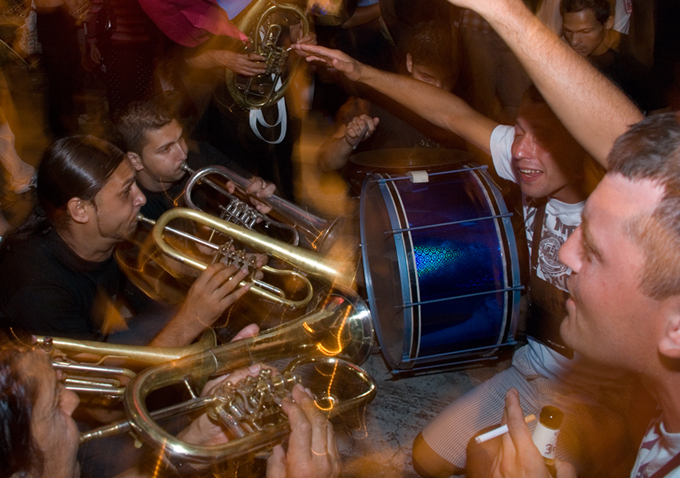
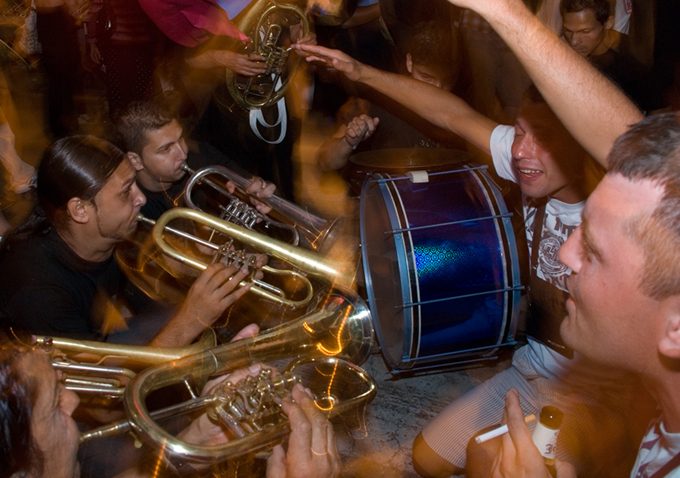
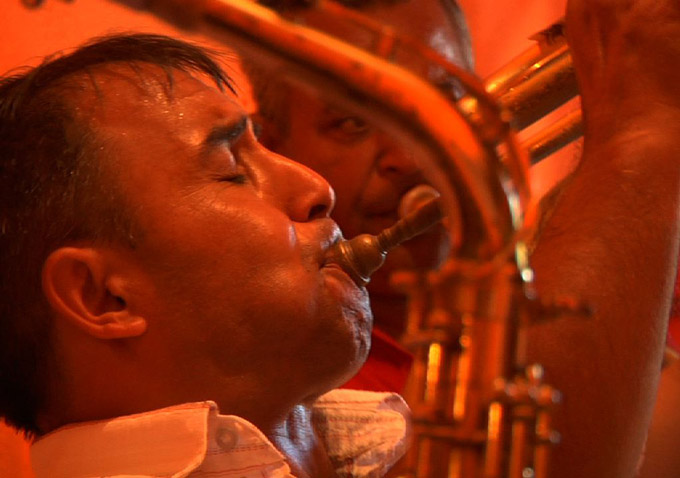 But that’s not what the members of Zlatne Uste are trying to do, as they’re just happy to be there and to participate, having played the festival for the first time in 1987. Their desire and need to play this music seems to exist on a cellular, spiritual level; they are taken with the addictive, adrenaline rush of a rhythm and sound. They’re chasing the high that can only come from this music, which is much more than just the music, it’s an experience. The bands tend to play in and around groups of people, often in the middle of a circle of dancers, or while smoking cigs with a groom-to-be, or next to a dead sheep for a housewarming party. It’s as much about the music as it is about the dancing, the unity, the bills stuck in the hats and on the heads of sweaty trumpeters.
 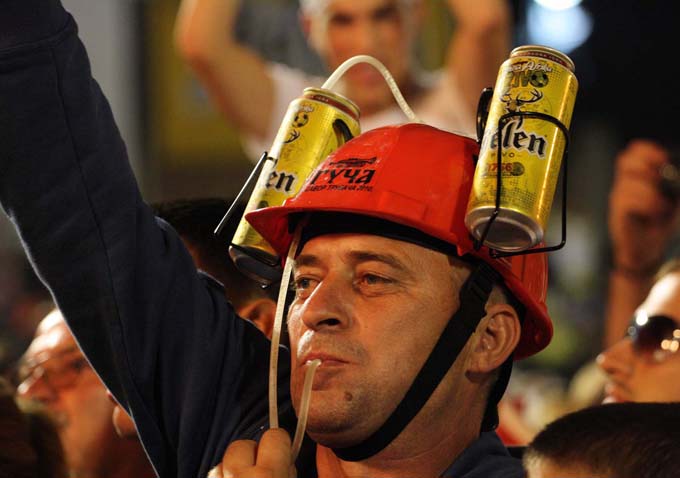 As the film builds to the crescendo of the ultimate trumpeting competition, we can see just how the filmmaking collective does its best work. With cameras backstage, front and center, in the audience, and on all of our major players and the rowdy crowd itself, they capture moments from the concert from so many viewpoints that brings a real live feeling and temporal vitality to the proceedings, capturing all of the emotions of the major players participating. That could not be accomplished without so many filmmakers, and the multitude of viewpoints helps the storytelling and objectivity in the documentary. As every band has 10 members who each play their parts, so too does the Meerkat Media Collective. The film also doesn’t shy away from dealing with the more unsavory political issues that continue to leave their mark on Serbia, and the Serbs in the film are preoccupied with their image to the West— approaching the members of Zlatne Uste and bringing it up, and wanting so desperately to be known for something as joyful and jubilant as their music. It is the most important thing to them, part of their everyday lives and something beautiful that they can be proud of.
 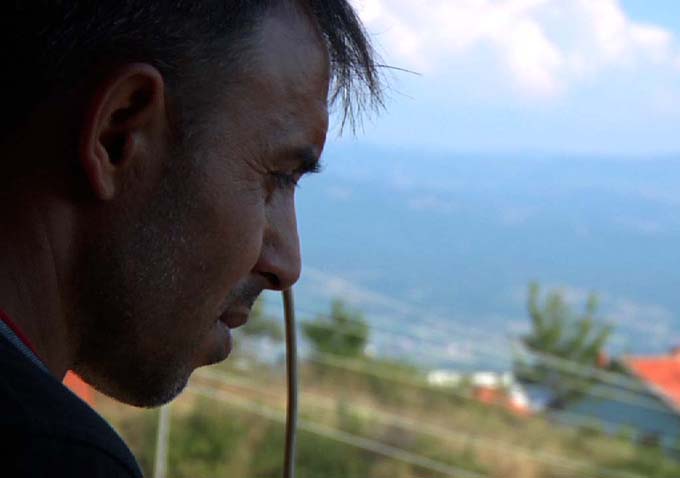 The only downside of “Brasslands” is that, for a film about music, one wishes there were only more of it. Only a few full songs are featured, and while we are plunged into the masses of music and booze and dancing and singing, as an audience member, you wish you could be more swept away as the people onscreen are, taken over by the music and the energy. The film is a bit preoccupied with the contest itself, the buildup bringing down the pace a bit, only to end in an anti-climatic fashion. Which serves to illustrate that it’s not about the competition, it’s about the music and the experience… and it needed a bit more of that. While the film is a lovely documentation of this event, and the various people who love and perform this music, one wishes that the film could really give that truly visceral experience, which just may not be possible on a screen.