


![Kane Parsons On ‘The Backrooms,’ Liminal Horror, & Turning An Internet Phenomenon Into An A24 Film [Interview]](https://cdn.theplaylist.net/wp-content/uploads/2026/05/28120335/Kane-Parsons-On-%E2%80%98The-Backrooms-Liminal-Horror-Turning-An-Internet-Phenomenon-Into-An-A24-Film-Interview.jpg "Kane Parsons On ‘The Backrooms,’ Liminal Horror, & Turning An Internet Phenomenon Into An A24 Film [Interview]")
At just 20 years old, Kane Parsons has already gone from anonymous internet horror experimenter to the youngest filmmaker ever to direct a feature for A24. What began as a series of eerie, lo-fi “Backrooms” videos uploaded online when Parsons was still a teenager has evolved into one of the most anticipated horror projects in recent memory—a surreal, psychologically disorienting feature adaptation starring Chiwetel Ejiofor.
The original “Backrooms” shorts became a viral sensation by tapping into something deeply uncanny: the terror of liminal spaces—those eerily empty hallways, fluorescent-lit office corridors, abandoned hotels, and in-between environments that feel disconnected from reality. Parsons’ work didn’t just popularize the aesthetic for a new generation online; it helped codify an entire branch of internet horror.
During a recent post-screening Q&A discussion, Parsons and Ejiofor spoke about adapting the mythology into a feature film, the psychological mechanics behind memory and space in the story, and why the emotional core mattered more than “lore bloat.” Parsons also reflected on his influences—from the “Portal” games to Sam Esmail’s “Mr. Robot”—and explained why he draws more inspiration from lived experience than from other films.
Read the full conversation below.
You first encountered “The Backrooms” when you were pretty young. How old were you when this all started?
Kane Parsons: Yeah. I first encountered it when I was 13 because it was 2019, and then I first started the series when I was 16. It’s been a good little span of time.
READ MORE: ‘Obsession,’ ‘Backrooms,’ And The Viral Horror Boom Of Our Current Moment
That’s almost half your life, percentage-wise, that you’ve been thinking about this. When you started expanding the concept—through video effects, Blender, and all the experimentation that helped advance this kind of online horror—what was the biggest thing you had to learn?
Parsons: I think probably the most significant growing pain with any of these internet-born independent IP projects—or at least for me—was finding the right ratio of bringing what people are familiar with, the elements that people already know, and the elements that are working functionally.
Because I’m doing this series online, and I’ve had it in my brain for a while, I’m very used to it. So the idea of doing an adaptation requires a certain level of stepping back and going back to basics, so to speak, for a newer audience coming in.
Some projects have trouble with lore bloat, or whatever you want to call it, where, in trying to adapt something that has a lot of rich online history and a long legacy of traction, it tries to cram too much in. So I think it was just making sure that we were focusing on the most fundamental elements. Not simple, exactly, but there was something simple about the original post, and people responded to something simple in the original short film as well. So I think the goal was to pull that through in a more complex way.
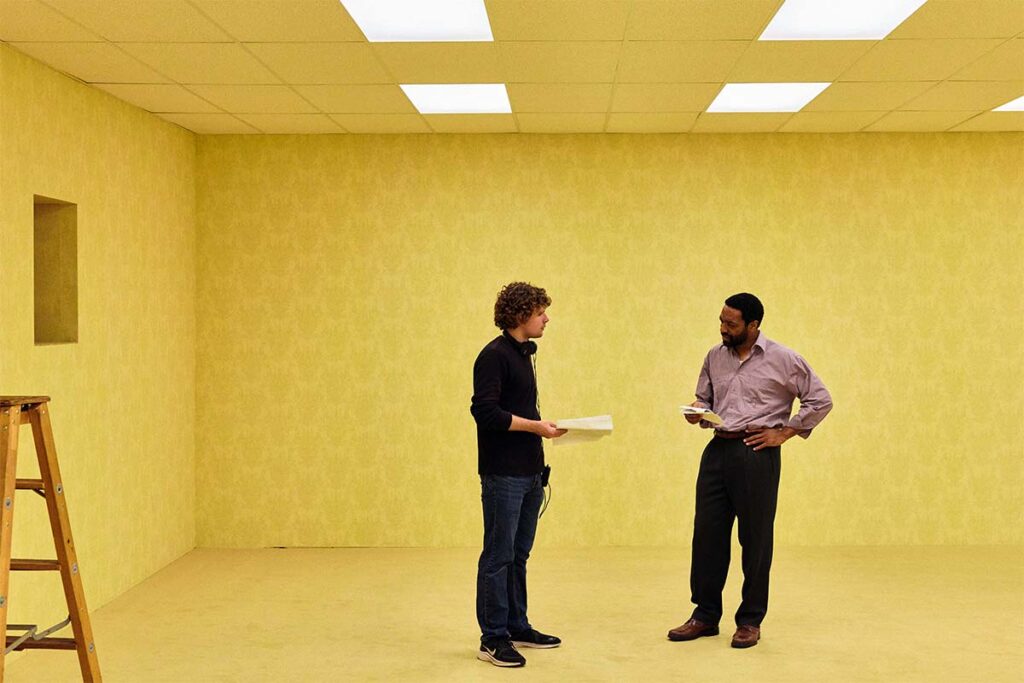
The film is so focused on liminal spaces—places between worlds, spaces that are spaces but also somehow not spaces. What was the first time you heard the term “liminal space” or “liminal horror,” and what do you think makes people so attracted to that idea?
Parsons: I don’t recall the exact first time. It would have probably been either late 2019 or sometime in 2020. In my memory—and this may not be perfect—it was “The Backrooms.” I was introduced to “The Backrooms” as a meme that would float around starting in 2019, and then it ushered in, or at least opened the door to, this whole image subgenre that is being called liminal spaces.
I don’t know if people could actually tell you what united each of these images in that sort of semantic category, but I would say the common trait that I personally identified with was a feeling of looking back at early years in your life, where you’ll have memories that are not quite contextually linked to the parts of your life that you can identify.
Maybe it’s little flashes of a location. You don’t know when it happened or where it happened. Just little traces of things from throughout your life that will sometimes pop in your brain, either in dreams or when you wake up, and you have a flash of a memory for a moment, and then it leaves.
A lot of these photos felt like that. They made me feel a little seen in a way. These little textural elements in life were finally given the spotlight, despite how mundane they are. So that’s kind of what my initial connection with it was.
Chiwetel, what was it about this script or the character of Clark that made you want to be part of the film, especially knowing Kane was a first-time feature filmmaker and so young?
Chiwetel Ejiofor: There were a lot of things. I didn’t have any information about “The Backrooms.” I didn’t know about “The Backrooms” initially, and I had some knowledge of liminal spaces, but only a little bit. I was sent everything as a complete package.
So I spent this weekend, I think, before I’d read the script, just online watching one of the videos. And I think, like everybody else, I ended up just falling down this bizarre rabbit hole and feeling completely lost, but also feeling that something was being scratched, like an itch I didn’t even fully know that I had about this idea.
At the time, I was also told, “You should know that the director is 19.” And I obviously thought about myself when I was 19 and thought, “How is this going to work? What would it have been like if it were me at 19 trying to direct this movie?”
After reading the script, I was excited about it. Obviously, I was excited about what Kane had created and “The Backrooms” series. I thought it was incredible. There were specific things that I was completely taken with. Then we had a Zoom conversation, and I realized very quickly that Kane isn’t your common-or-garden 19- or 20-year-old. It was almost literally the last time that I thought about him as a young director.
I love working with first-time directors. I love working with new directors and new voices. It’s completely the lifeblood of what we’re doing and what we’re trying to accomplish here. But this is a singular vision, and this depth of understanding of this world is what you always want from a filmmaker—to have a filmmaker who really understands the world that they’re trying to talk about.
For Kane to be such a seminal part of the creation of this iteration of “The Backrooms,” of this space, was remarkable for all of us, not just the cast, but everybody on the production. It was a process of picking his brain and really understanding what was underneath it.
Then there were things that I loved about Clark. I think that as a character, interacting with somebody at a certain point in their life, maybe with a lot of regrets, where you don’t necessarily trust the cycles that you’re in, or the memories that you have, or the person you’ve become—interacting with this space and “The Backrooms,” and the psychological parallels and complexity of that, I thought was incredibly well drawn.
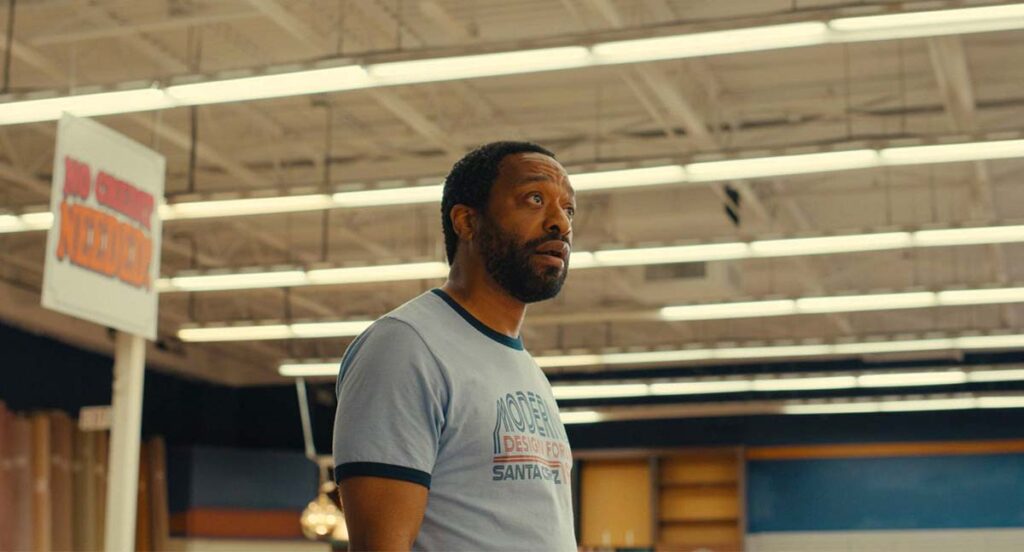
There are several readings you could have of this film. You could talk about affect theory, the abject, the real, and the imaginary. But what’s special is that it never feels like a dreadful intellectual exercise in a classroom. It’s engaging and emotionally affecting. How did you incorporate those psychological elements through the camera, the score, or other parts of the filmmaking process?
Parsons: So much of it comes together in a few different threads moving in parallel. With the camera work and the soundscape—particularly the soundscape—we’re constantly trying not to repeat ourselves melodically in the film. Obviously, we have a lot of common auditory factors that carry us throughout, like diegetic sounds.
But fundamentally, it’s all the stuff you just said about where Clark is at in life and where Mary is at in life. I think I come into “The Backrooms” as a concept first, honestly, and I build a lot of these psychological elements as different alignment points people could have with this central mechanic.
When I look at the psychology of the film and how “The Backrooms” works, it is very much parallel to the physical mechanics of human memory—how and why memory evolved as a trait, and how it fits into and drives everything in our emotional lives. Everything. The way that we contextually link the pieces of our lives to create a portrait.
As a species, our goal was not to evolve to perceive life and reality as it is perfectly. We evolved into a niche, and we see a sliver of what we need to be productive and produce more humans. That’s life, which is a very simple way to say it. But I think it’s about getting at the feeling that there is something hiding within that, or something we’re clearly not seeing. Not to say it’s driving us in a more sinister fashion. I like to be forgiving with these broader tendencies that people have. But I feel as though “The Backrooms” and the people entering it are very much part of being driven by this same unseen mechanical system.
You start to feel that more and more, and you get a glimpse of it near the end of the film. But obviously, no one comes out of the woodwork and gives you a perfect, clear answer to what the truth is. It’s about how we allow ourselves to feel attached to the machine, if that makes any sense. I literally just got here from London. I may be completely insane right now.
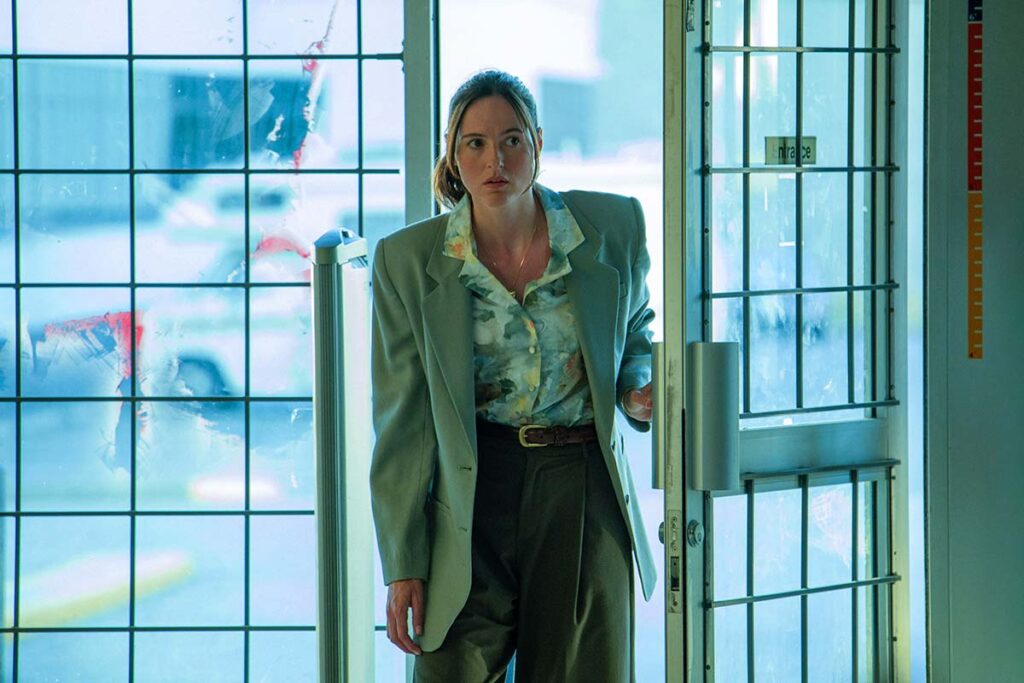
There is a real humanity to it, even though it’s conceptual and abstract. Clark and Mary are people with memories and experiences they’re trying to understand, and by reliving or re-encountering them, they continue creating new memories that splinter off from those. Chiwetel, have you ever seen characters like this?
Ejiofor: Never. There are so many things that I think are incredibly rich about it, but it completely surprised me. It completely floored me, the complexity of how these spaces interact with these characters, and how open that is, and how rich that interpretation is.
It seemed like so many things, which to me is cinema. It doesn’t necessarily need to be articulated in a way. You just feel it. When I was reading the script and watching the film, I could see and know how Clark interacts with this space and why—how they see each other, how I can see him, and how he sees it.
It seems really clear to me. To actually give it a neat explanation, I don’t think that’s necessary.
Kane, you’re part of this new class of young filmmakers who grew up online, or at least grew up in a different context than many of your predecessors. Were there other filmmakers or films that inspired you while you were making this?
Parsons: I pick up a million different things from a million different places as far as conscious influences go. I’m a little scattered on that front. I honestly need more time to come up with a great list, like a roadmap of how specific things influenced it.
Mentally, I can say the “Portal” games were probably a big influence on this film because I was obsessed with those growing up. Sam Esmail’s work on “Mr. Robot” has definitely influenced how I like to capture spaces in reality and the people within them. “One Hour Photo” was a pretty big tonal reference, I’d say. It’s generally one of my favorite films of all time.
There we go. There are three. More than any of that, though, I do feel—because I’ve had to think about this quite a bit—that so many of my influences are kind of abstract. They’re more fundamentally tied to nonfiction experiences and personal relationships I have with real people in life. It’s hard to cite some of them because they’re real people, and it’s sensitive.
I’m very keen on trying to look at film as an organic structure that I’m purely trying to pull from nonfiction reality as much as I can. Obviously, I’m using so many subconsciously learned tropes and tricks to make sense of it and package it. Still, I consciously try to be more interested in drawing from the source of life rather than taking inspiration from already filtered artistic interpretations of life, if that makes sense.
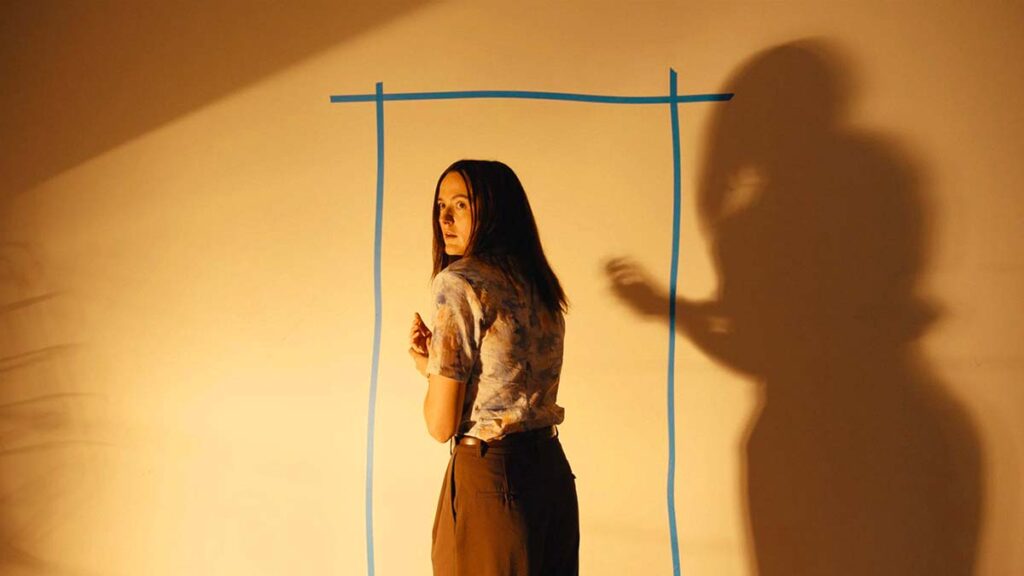
For both of you: do you have a favorite liminal space you’ve experienced in real life? Or a favorite Backrooms space that was created among the 30,000 square feet of production space you worked with?
Parsons: Of all the iconic ones, I have technically been to the hotel inside London Heathrow Airport. I don’t know if people know what I’m talking about, but there’s a pretty famous image that I’ve just incidentally happened to stay at before, which was quite neat.
That’s the best one. I mean, I try to look for interesting spaces everywhere. I feel like every building is alive in a way, and I like paying attention to neglected areas. So they’re everywhere.
Ejiofor: When I saw the series, I didn’t realize that this was the first time, when we were shooting, that it was a physical space. I thought for sure somewhere in the series there had been a physical space at some point, and it wasn’t all just creative.
So I was pretty amazed to be in that space. Everybody was kind of buzzing when we were meant to be there in that base space. Having a large, tactile workspace was fantastic.
Being able to get lost and go a little mad in the space is so helpful. I would be trying to find catering or whatever, and go out the wrong door and end up inside the studio, then have to run back. Just having that kind of energy there was great for me, in terms of understanding what a liminal space over time might do.
“Backrooms” opens in theaters this Friday, May 29.


