


Hollywood is already living with a low-grade fever: consolidation jitters, layoffs as routine weather, and a creeping suspicion that “efficiency” is just the corporate euphemism for fewer humans. So when Disney decides to strap itself to the rocket of generative AI—while simultaneously lighting another AI company up over alleged infringement—it lands like a thunderclap in a town that doesn’t need more reasons to tense up.
Today, Disney announced a three-year agreement with OpenAI, making the studio the first major content licensing partner for the company’s short-form video generator, “Sora,” including a $1 billion equity investment. The pact is sweeping in both symbolism and scale: more than 200 characters across Disney brands (including Disney, Marvel, Pixar, and Star Wars) are being licensed, allowing fans to generate and share prompt-based videos. A curated selection of those fan-made shorts will also be made available to stream on Disney+. What could possibly go wrong?
READ MORE: 15 Pressing Questions For A Netflix Warner Bros. Merger
This is the part Disney wants to frame as “responsible innovation,” the kind of controlled experiment that keeps the brand intact and the lawyers happy. The companies say the deal does not include talent likenesses or voices, and Disney is touting guardrails meant to prevent characters from being depicted in inappropriate situations. Disney also becomes a major OpenAI customer, using its APIs to build products and experiences (including those for Disney+) and deploying ChatGPT across internal employee workflows.
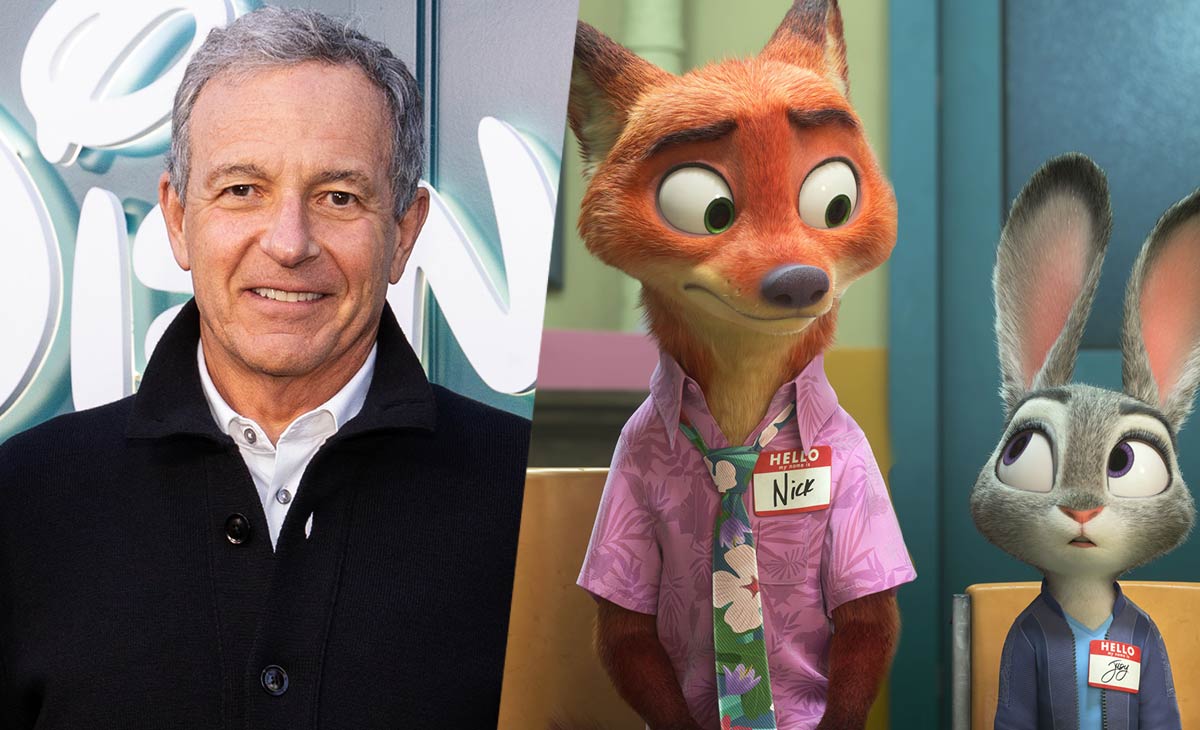
In a statement that reads like it was crafted to be read aloud in a room full of nervous creatives, Disney CEO Bob Iger emphasized the moral posture Disney wants to be associated with this pact. “Through this collaboration with OpenAI, we will thoughtfully and responsibly extend the reach of our storytelling through generative AI, while respecting and protecting creators and their works,” Iger said. If that’s the thesis, statement, in plain English, it’s: Disney is saying AI is fine—so long as it’s licensed, fenced in, and monetized in a way that keeps the corporation in the driver’s seat.
And that’s where the whiplash hits.
Because at the same time Disney rolled out the red carpet for OpenAI, it also escalated a fight with Google, issuing a cease-and-desist letter demanding the company stop using Disney content without permission to feed and train its AI systems—including Google’s Veo video generator and Imagen and Nano Banana image generators, according to the AP News’ reporting and its review of the letter. The studio accused Google of “infringing Disney’s copyrights on a massive scale,” and the letter doesn’t just argue harm in the abstract—it claims Disney has raised these concerns for months and hasn’t seen meaningful mitigation.
So yes, the optics are brutal: one hand signing a billion-dollar pact with an AI company, the other hand trying to stop another AI company from doing AI things with Disney IP. But it’s not random hypocrisy so much as the purest expression of the new Hollywood logic: permissioned AI is “innovation”; unpermissioned AI is theft. The difference isn’t morality—it’s licensing, leverage, and who’s getting paid.
The larger, more unsettling takeaway is that Disney isn’t merely experimenting with generative video; it’s buying a piece of the machine. Reuters notes Disney also receives warrants to purchase additional OpenAI equity. That’s not just a partnership. It’s a hedge, a moat, and potentially a blueprint for how every major studio tries to survive the next wave: invest in the platform, license the vault, and turn the chaos of user-generated “AI slop” into something packaged, curated, and brand-safe.
Of course, the human cost is the question hanging over everything—especially in an industry where workers have already watched “disruption” become a euphemism for displacement. Talent groups and agencies have warned about the risks of generative tools to creative labor, and Reuters points out that the backlash calculus is real, even if the momentum is harder to slow. Disney can promise responsibility, and OpenAI can promise safeguards, but the anxiety Hollywood feels isn’t theoretical. It’s personal. It’s payroll. It’s the creeping fear that the next “new tool” arrives with a quiet instruction manual that reads: do more with less, and smile while you do it.
And now Disney has effectively informed the market what the next phase will look like. Not “AI is coming.” Not “AI might change everything.” So is it hypocrisy? In plain English, human sense—sure. In the corporate sense, it’s the same logic that governs everything from streaming windows to franchise spinoffs: if you can’t stop the tide, build a dam you own and charge admission.

Born in Chile, raised in Canada, now living in Brooklyn, NY, Rodrigo Perez is the founder and editor-in-chief of The Playlist, which he launched in 2007. He has worked in entertainment journalism since 2000, including at MTV, and has written for SPIN, IndieWire, Pitchfork, Complex, Magnet, MuchMusic, and various music, film, and entertainment publications over the past two decades.
- Rodrigo Perez
- Rodrigo Perez
- Rodrigo Perez
- Rodrigo Perez
- Rodrigo Perez
- Rodrigo Perez
- Rodrigo Perez
- Rodrigo Perez
- Rodrigo Perez
- Rodrigo Perez
- Rodrigo Perez

