


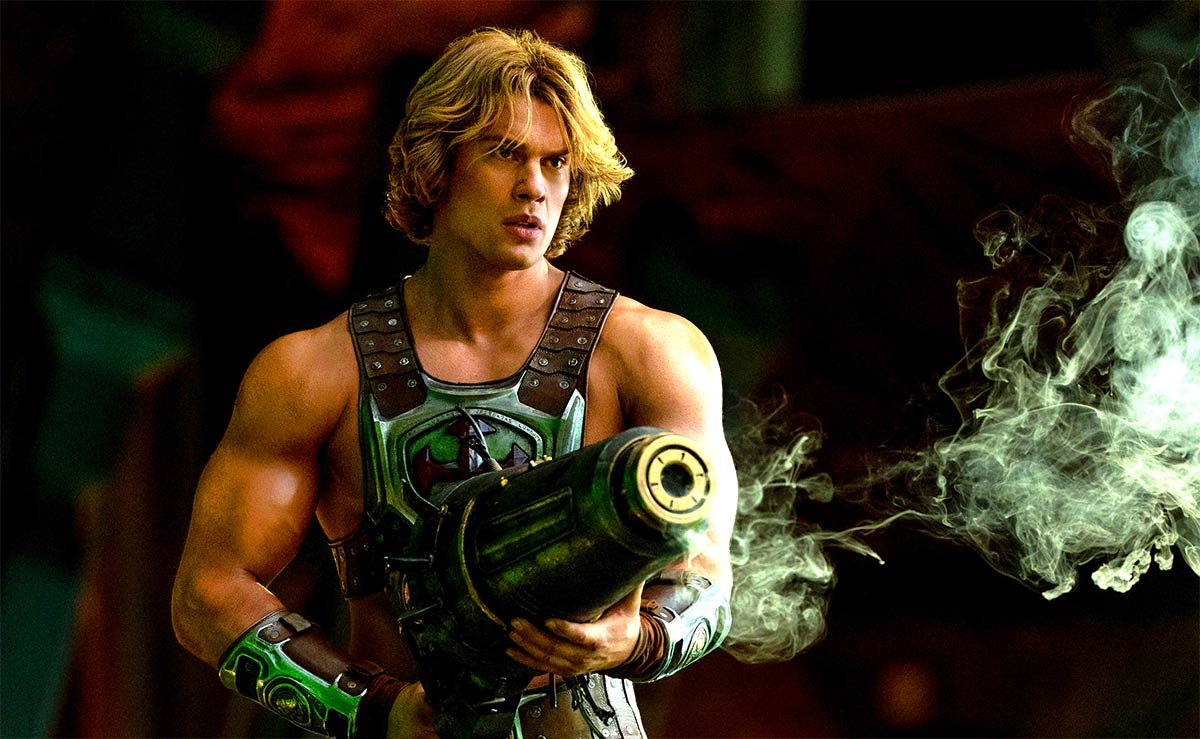
If “Barbie” gave Mattel a new sense of confidence about turning old, crusty toy boxes into theatrical IP, “Masters of the Universe” feels like one win corroded into unearned ego. This toy relic property turned into a film feels like the clumsier next phase of that experiment: corporate audacity mistaking self-awareness for a point of view. Travis Knight’s live-action He-Man movie is acutely aware that its source material is ridiculous. It has the muscles, the glowing sword, the cosmic mythology, the fantasy names, and the straight-faced insistence that a blond beefcake with godlike abs can become the most powerful man in the universe. The problem is that the movie never decides whether it wants to laugh at that premise or believe in it. The truth is, it desperately wants both, and that clash is super sweaty.
READ MORE: 53 Must-See Films To Watch Summer 2026
That tension can be productive. “Thor: Ragnarok” turned fantasy lore, god-power spectacle, and sci-fi nonsense into an amusing twist on a self-serious franchise, while “Dungeons & Dragons: Honor Among Thieves” wrapped charm, irreverence, and moxie around deeply nerdy material without sneering at it. “Flash Gordon” is probably the purer reference point—the same galactic goofiness, the same primary-colored fantasy camp, the same understanding that gaudy nonsense can become its own pleasure if everyone commits. “Masters of the Universe” wants cues from all of them, but it is too clunky and tonally scrambled to land in the same zone. It wants to wink at the audience and then ask them to be moved. It wants He-Man to be a joke and a hero, an action figure and a wounded prince, a nostalgia object and a sincere savior. It keeps reaching for both registers, and the strain is obvious.
The setup is already a heap of contrivance, conveyed in a “let’s quickly gloss over how goofy this is” voiceover. A young prince, Adam, separated from Eternia by the evil forces of Skeletor, winds up stranded on Earth for 15 years after losing the Sword of Power. When the blade resurfaces, Skeletor’s goons are suddenly alerted, and Adam is pulled back toward a destiny he has spent most of his life pining for, turning half-remembered lore into an outsider obsession that only makes him look stranger to everyone around him. There is an obvious prodigal-son-returning shape here, but the film’s idea of that return is to reveal the long-lost heir as an inept milksop who has to prove he is worthy of the legend everyone keeps insisting is profound. In execution, the disappearance, rediscovery, and villainous re-entry feel like screenwriting duct tape slapped over a world the movie assumes will explain itself.
The Earthly material has flickers of a sharper, stranger comedy buried inside it. The film briefly gestures toward satire of modern sensitivity culture through a Human Resources subplot where Adam works, complete with conflict-resolution language, workplace feeling management, and the strange spectacle of Eternian fantasy colliding with contemporary corporate manners. There is a funnier, leaner, more ruthless 85-minute version of this movie somewhere in that idea: He-Man as a walking muscle god trapped in a culture of pink shirts, compliance language, and mandatory emotional fluency. But “Masters of the Universe” keeps backing away from the joke, flirting with that thread, then pivoting back into heavy clichés about failure, courage, standing tall, never staying down, and becoming the man you were meant to be.
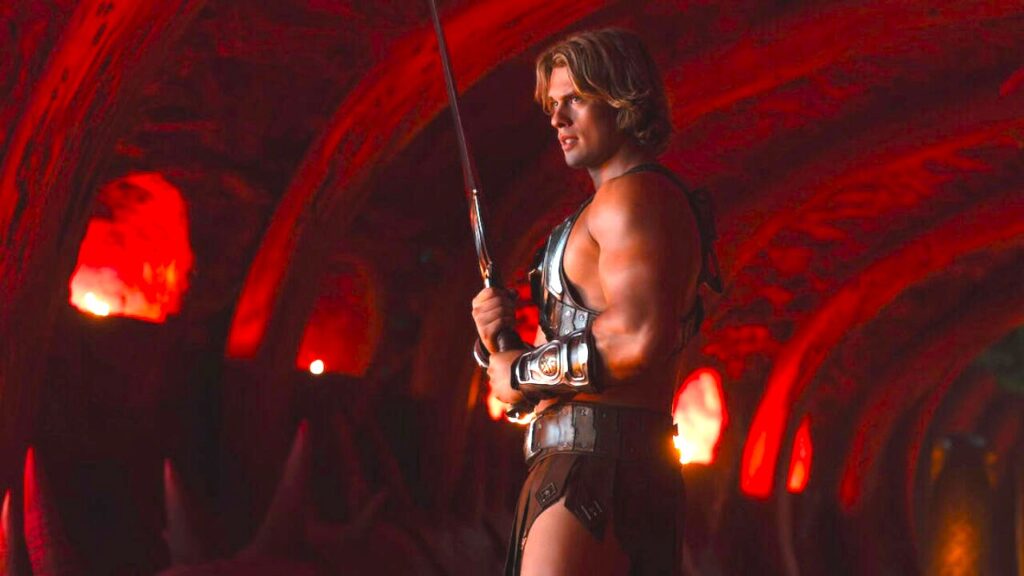
At nearly two-and-a-half hours, that indecision becomes punishing. The movie is too padded to work as a lark and too flimsy to survive as grand heroic spectacle. The pacing would be easier to forgive if the film had a sharper comic rhythm or a sturdier emotional spine, but Knight keeps shifting between smirk and swoon without either mode taking hold. The jokes are rarely pointed enough to puncture the material, and the solemn stuff is too hokey to give all the sword-and-sorcery pageantry much weight.
The nostalgia plays are worse. When Adam finally screams, “By the power of Grayskull, I have the power!!” the film all but stops cold, waiting for applause for the bare minimum: reciting a line from a children’s cartoon that, nostalgia aside, was never exactly profound scripture. The old He-Man canon is preposterous, which is not fatal in itself, but “Masters of the Universe” wants devotion and adoration simply for checking off its dumbest tropes. The nods to the toys, the cartoons, and the 1980s live-action film are staged with the smugness of a movie treating basic recognition as emotional payoff. The callbacks do not deepen the world or sharpen the joke; they just sit there, cloying and obvious, as if familiarity alone were enough.
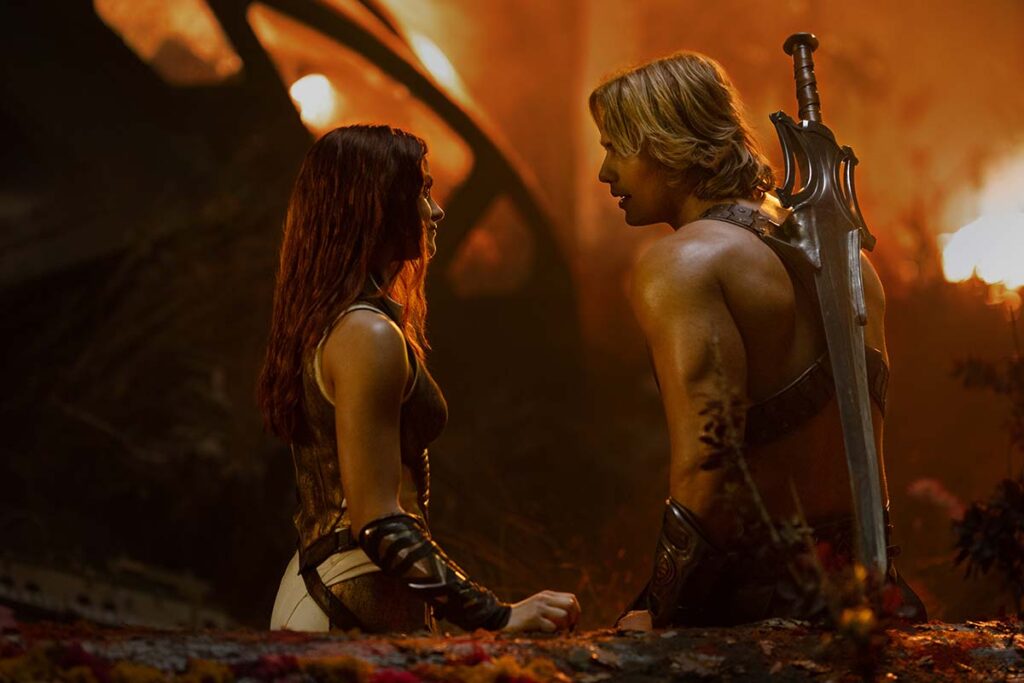
The movie’s hedging curdles into disdain. It is too aware of He-Man’s built-in camp value to commit fully to square-jawed fantasy, but too hungry for franchise grandeur to give itself over to the joke. So it keeps covering its bases. A goofy line gets underlined, a ceremonial beat gets inflated, a familiar reference gets treated like a sacrament, and the movie moves on as though it has satisfied every possible audience. The children get the action figure, the adults recognize the wink, the fans understand the reference, and the studio receives its brand extension. But the film never develops the confidence to be one coherent thing.
The cast does what it can. Nicholas Galitzine has the impossible task of playing Adam/He-Man as a dumb, naïve, fish-out-of-water Earthling, a cosmic himbo, an inept prodigal son, and an earnest chosen one, and the movie rarely gives him a stable enough tone to make any of those sides stick. Camila Mendes gets folded into the same overlit machinery, asked to ground a world that keeps undercutting its own stakes. Idris Elba and Alison Brie seem to be collecting professional-grade franchise paychecks, but the film never convinces you that anyone onscreen is especially invested in the material beyond its utility as an ongoing revenue stream.
The exception is Jared Leto, who is genuinely amusing as Skeletor. It might as well have been a voice role, and who knows if he was ever even on set. Maybe that is why it works: Leto leans into the theatrical villainy without pretending there is some grand emotional secret underneath the skull face. Skeletor is ludicrous, and Leto plays him with relish, giving the movie rare moments of clarity. Whenever he disappears, the film drifts back into its mush of ironic detachment and straining earnestness.
The clash never resolves because “Masters of the Universe” wants the power of sincerity and the shield of irony. It wants to be moved by He-Man’s destiny while protecting itself from the embarrassment of believing in He-Man. It knows the old material is plastic and outlandish, but it also wants to mine it for wounded nobility, heroic growth, and franchise-scale importance. And it repeats this cycle ad nauseam.
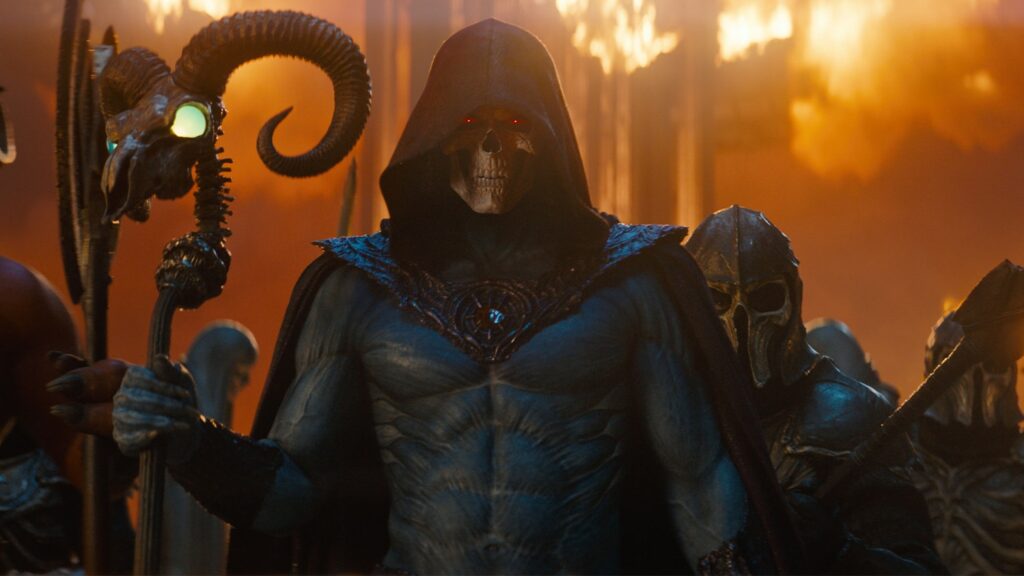
There are stray laughs, a few humorously inane flourishes, and Leto briefly gives the film a ludicrous spark it needs. But the overall experience is loud, ungainly, and exhausting, a franchise launch that cannot decide whether He-Man is a punchline, a god, or a brand-management challenge. “Masters of the Universe” asks the audience to care about its hero’s destiny while constantly reminding them how ridiculous the whole enterprise is. By the end, the power is there in theory, but conviction never dares to show its face. [D+]

Born in Chile, raised in Canada, now living in Brooklyn, NY, Rodrigo Perez is the founder and editor-in-chief of The Playlist, which he launched in 2007. He has worked in entertainment journalism since 2000, including at MTV, and has written for SPIN, IndieWire, Pitchfork, Complex, Magnet, MuchMusic, and various music, film, and entertainment publications over the past two decades.

