


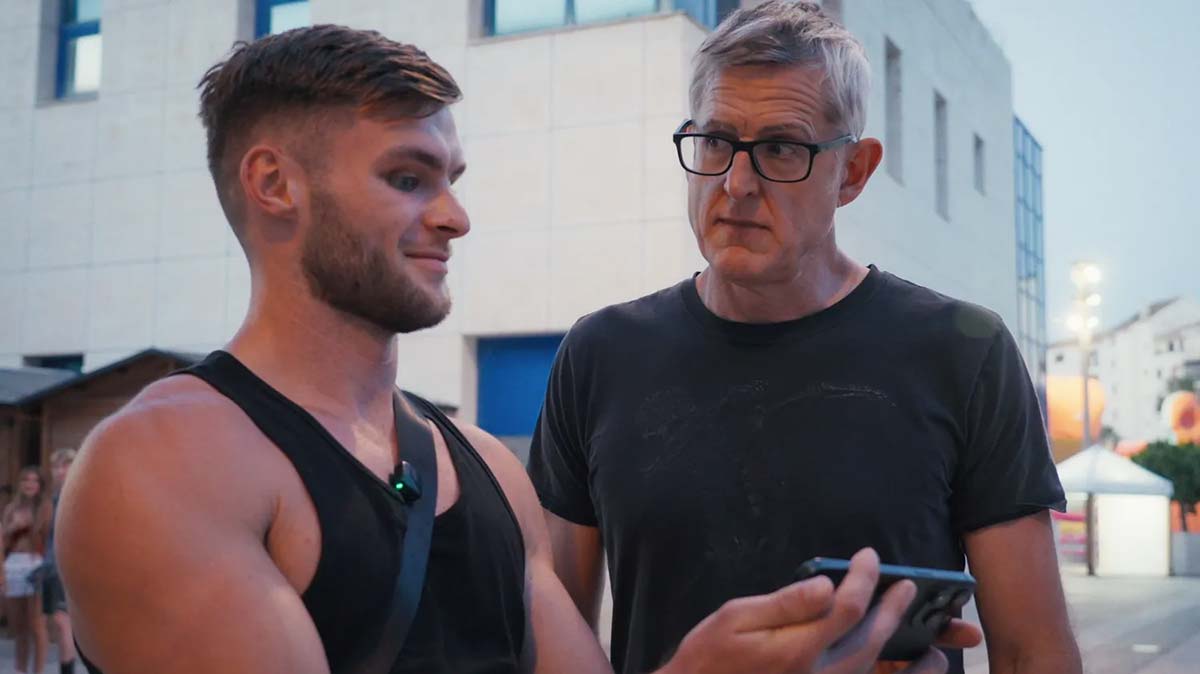
There is nothing especially complicated or mysterious about the men featured in Netflix’s “Inside The Manosphere,” and that obviousness is part of what makes the Louis Theroux-presented documentary so bleak. For anyone who has spent time online around the world, the film may not feel especially revelatory. The misogyny, the racism, the homophobia, the resentment politics, the theatrical swagger—none of it is new. But for viewers less familiar with the ecosystem, the documentary works as a clear and unsettling overview of how this culture operates online. And if the film has a real throughline, it is not just that these men are toxic, though, yes, they are. It is that they are opportunists. Not simply ideologues, but grifters posing as salesmen, feeding off male loneliness and bitterness.
READ MORE: 13 March Films To Watch: ‘Project Hail Mary,’ ‘Peaky Blinders,’ ‘Hoppers’ &’ The Bride!’
Directed by Adrian Choa (“Jamali Maddix: Follow the Leader”), but presented by Theroux—a journalist, BBC host, documentarian, and inquisitive podcaster—its main subjects, Harrison Sullivan, aka HSTikkyTokky, Ed Matthews, Nicolas Kenn De Balinthazy, better known as Sneako, Myron Gaines, and Justin Waller, differ in style, polish, and persona, but they all arrive at the same core point. They are less distinct thinkers than variations on the same online salesman: red-pilled influencers, incel-adjacent opportunists, and resentment merchants who have learned how to convert male panic into algorithmic and financial reach. That is what makes them so insidious in a low-trust, misinformation-soaked culture still recovering from the disruptions of the last decade. They thrive among the vulnerable, the susceptible, and the answer-hungry—men looking for certainty in a world that feels unstable, only to find performers eager to profit from their confusion.
The ugliness is obvious. So is the business model beneath it. What ties these figures together is not only the venom of what they say, but the way they turn it into cash. They rage-bait for attention because attention becomes conversion-rate income. Clicks become subscriptions, memberships, products, courses, access, and status. The contempt is real, but it is also profitable. Beneath all the talk of masculine truth, discipline, rebellion, and self-mastery is a familiar influencer logic: find a vulnerable audience, flatter its fears, feed its resentment, and turn that emotional vulnerability into revenue.
What they are really selling is illusion—the illusion of wealth, control, certainty, masculinity itself. They present themselves as men who have figured out life, cracked the code to success, beaten the culture, mastered women, and reclaimed some lost masculine truth. But so much of that image feels inflated and compensatory. The wealth is branding, the confidence a performative mask, and the authority obviously self-appointed. They have to look bigger, richer, tougher, and more in command than they really are, because the fantasy is the product.
And there is a ready-made audience for that fantasy: men who are lonely, angry, insecure, romantically frustrated, socially stunted, or otherwise unmoored by what Esther Perel calls the metacrisis—the existential doomscroll world we currently live in and all its various challenges. The film sits right beside the so-called male loneliness epidemic, though in many cases it also points to how much of that loneliness has curdled into self-inflicted suffering. A certain kind of man seems unable or unwilling to form meaningful relationships while still feeling entitled to intimacy, admiration, sex, success, and authority. Those men are perfect marks for this world. The red-pilled, the incels, the aggrieved. The men looking for a shortcut, an operating system guru, a reason their lives feel smaller than they imagined.
That sense of entitlement is the key. These men are not simply mourning a life they hoped to have. They are raging at a world that no longer hands them what they feel should naturally be theirs: power, status, wealth, women, control. The manosphere flatters that wound. It tells them their disappointments are not failures, but theft. Equality becomes oppression and emasculation. Accountability becomes persecution. Social change becomes proof that men like them have been cheated. The seduction begins there. Before the rage gets fully weaponized, the wounded ego gets flattered. You are not lacking, the pitch says—you have been wronged (gee, where have you heard that one before?)
That is also why so much of the toxic masculinity on display feels, in its own way, darkly comic. It is so exaggerated, so overplayed, so desperate to project hardness and dominance that it winds up exposing the weakness underneath it. These men sell alpha fantasies because they are terrified of what sits beneath their tight-fitting costumes.
The documentary also quietly works as a portrait of a broader backlash culture that has been building for years. The manosphere did not begin with #MeToo or Donald Trump, but both helped supercharge the emotional conditions in which it thrives. Trump-era resentment politics normalized backlash and gave male anger a larger political language. And #MeToo, along with wider conversations about sexism, accountability, and privilege, rattled men who had gone generations without being meaningfully challenged. For some, that produced self-reflection. For others, it produced panic, bitterness, and reaction. Men who were unused to consequences suddenly found themselves being scrutinized, told no, or asked to confront behavior and assumptions that older systems had long protected. The manosphere became one place where that backlash could be organized, affirmed, and sold back as identity.
It all runs on Ponzi-scheme logic and cheat-code culture—a system that recycles insecurity as aspiration and never delivers the life it promises. A toxic life coach, if you will. What gets sold, over and over, is the fantasy that manhood itself can be hacked through the right subscription, routine, guide, or worldview.
One criticism of “Inside The Manosphere” is that Theroux does not push back hard enough, a fair criticism. Not especially prosecutorial, the film does not always press these men at the point of maximum contradiction. A viewer looking for a more confrontational dismantling may come away wanting sharper edges. But there is still value in the method. Theroux gives these men room, and what they reveal in that space is often damning enough. They expose their vanity, cruelty, insecurity, and opportunism with minimal help. He does not need to force every conclusion when his subjects keep volunteering it.
So while the documentary may not offer a startling new thesis, it still lands in its own subdued way. What lingers is not simply the ugliness of the rhetoric, but the banality of the scam. These are not master thinkers. They are not dark philosophers. They are grifters who understand the market. They know how to capitalize on loneliness, how to brand resentment, how to flatter entitlement into loyalty, and how to turn male anxiety and alarm into profit.
That is the real horror of the film. The manosphere is not just a subculture of sexist men ranting into microphones. It is a predatory economy built on emotionally susceptible men being sold fantasies they will never actually receive. The men at the top get richer. The followers get angrier, lonelier, and more invested in the lie. Theroux may not always drive the knife in, but he does not have to. His subjects expose the hollow enterprise every time they open their mouths.

Rodrigo Perez is the founder and editor-in-chief of The Playlist, which he launched in 2007. He has worked in entertainment journalism since 2000, including at MTV, and has written for SPIN, IndieWire, Pitchfork, Complex, Magnet, and various music, film, and entertainment publications over the past two decades.

