




![‘Paper Tiger’ Review: Adam Driver, Miles Teller & Scarlett Johansson Anchor James Gray’s Searing New York Crime Drama [Cannes]](https://cdn.theplaylist.net/wp-content/uploads/2026/05/16191813/Cannes-Competition-Paper-Tiger.jpg "‘Paper Tiger’ Review: Adam Driver, Miles Teller & Scarlett Johansson Anchor James Gray’s Searing New York Crime Drama [Cannes]")
Filmmaker James Gray has never met a story about the fallacy of the American Dream he didn’t want to pick apart: the national promise we’re taught to chase while money, power, and inherited advantage largely determine who gets to outrun consequence. Fortunately, Gray can return to the same obsessions without simply repeating himself. His humanity, feel for slow-building sorrow, and ear for complicated domestic dynamics ensure that each story feels specific. “Paper Tiger,” his latest feature, is a James Gray movie through and through, bruised and deeply felt.
READ MORE: The 27 Most Anticipated Films From The 2026 Cannes Film Festival
Gray went all the way to the outer rim of space in “Ad Astra” only to find himself once again consumed by fathers and sons, then returned to Queens with “Armageddon Time” to examine privilege, class, and memory. “Paper Tiger” is an even deeper homecoming, bringing him back to crime in 1980s New York, brotherhood under pressure, and the ways love can become tangled up with self-preservation. The picture recalls “The Yards” and “We Own the Night,” though its register is quieter, more intimate, and more interior.
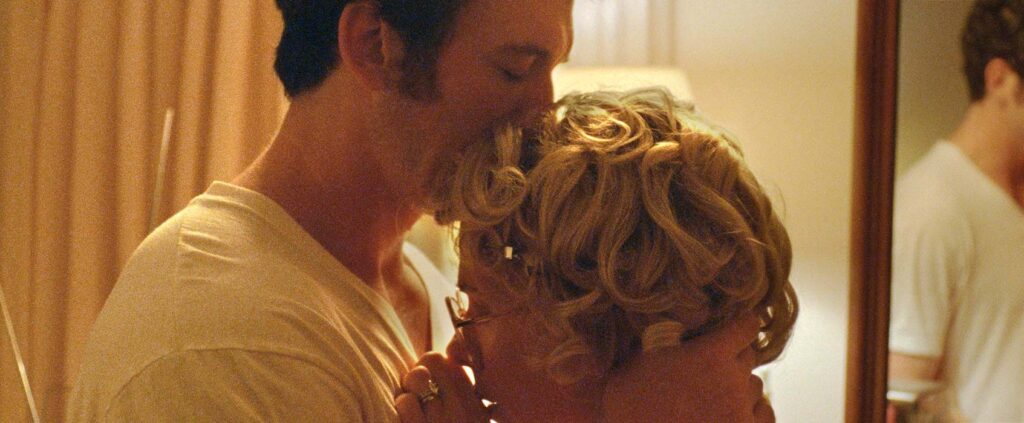
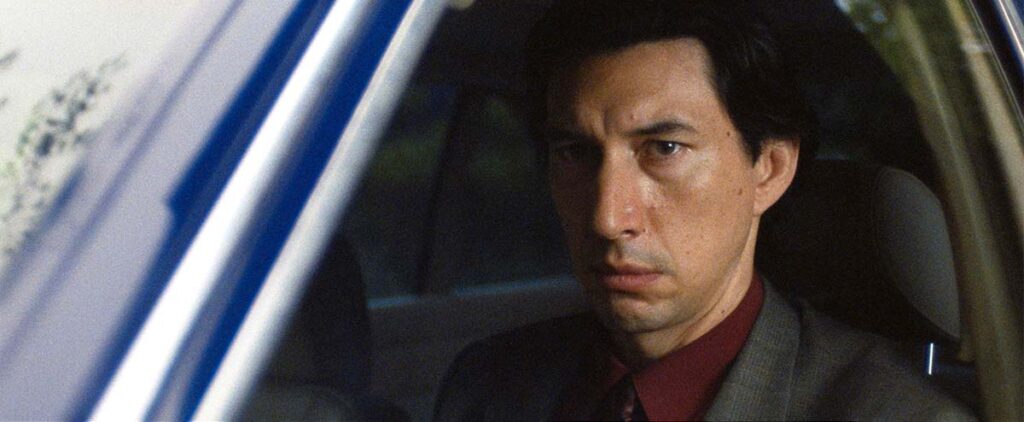
The story centers on Irwin Pearl, played by Miles Teller, a loving father trying to provide, and his brother Gary Pearl, played by Adam Driver, a former cop whose confidence in his ability to manage risk brings paranoid Russian gangsters to the family’s doorstep. Irwin is decent, tender, and a little naive, a man whose faith in upward mobility is rooted less in greed than in the need to offer his wife and children something better. Gary, by contrast, is slicker, cooler, and more opaque, the kind of guy who thinks proximity to power can substitute for control.
Driver is excellent as Gary, making him the film’s most ambiguous figure without turning him into a conventional villain. He means well, at first, and seems to believe he can outthink the men he has chosen. But Gray has always been drawn to men who mistake self-command for clarity, and Driver gives that contradiction a charged, unnerving edge. His Gary keeps a controlled, almost casual surface, yet anxiety flickers beneath it. It is a tremendous performance of tremors: the calm customer whose confidence begins to register as a defense mechanism because the alternative is too frightening to admit. He is proud, scared, calculating, loving, foolish, and in over his head at once.
Teller, meanwhile, gives Irwin a lovely sense of warmth and tenderness, making the Pearl home feel genuinely lived in rather than arranged as a dramatic target. His wife, Hester Pearl, played by Scarlett Johansson, is equally grounded, and Johansson is very good here, bringing alertness, affection, and a lived-in New York Jewish cadence to a woman trying to hold everything together before she fully understands how much peril has already entered their lives. The accent is there, but not as a prop, folding into Hester’s humor, practical intelligence, and wary awareness. Irwin and Hester’s children, played by Gavin Goudey and Roman Engel, are innocents placed in harm’s way as dread tightens around the Pearls.
Gray’s intimacy in these domestic scenes gives the movie its deepest ache. The affection in the household is understated, as usual, but unmistakable: the small rhythms of parenting, the tenderness between Irwin and Hester, the casual warmth of a place built out of care rather than money, and the sense that Irwin’s dream of providing for them is not some empty capitalist reflex, but a human expression of love, pride, and fear. Gray doesn’t sentimentalize that life, but he gives it enough texture that when violence starts pressing against the edges of the house, the suspense cuts far deeper than genre mechanics. The threat is not just bodily harm; it is the possibility that this modest, loving, hard-won world could be shattered by one man’s desperate belief that he can outmaneuver forces he never truly understands.
![‘Paper Tiger’ Review: Adam Driver, Miles Teller & Scarlett Johansson Anchor James Gray’s Searing New York Crime Drama [Cannes]](https://cdn.theplaylist.net/wp-content/uploads/2026/05/16191815/Scarlett-Johannson-Paper-Tiger-James-Gray-1024x607.jpg)
“Paper Tiger” may look like Gray working through his greatest hits, fusing “We Own the Night” family/crime dynamics with the delicate emotional frequency of “Armageddon Time.” But Gray has never been driven by novelty for its own sake. His best work gathers force through small disappointments, compromises, private resentments, and the moments when people realize they have already crossed lines they cannot uncross.
That patience does mean “Paper Tiger” moves at Gray’s preferred simmer. This is not a propulsive gangster thriller, and anyone looking for pure genre velocity may find its restraint challenging. But the movie’s power lies in the way it lets unease seep into domestic spaces. Gray builds tension through worry, through signposts pointing toward catastrophe long before the characters are ready to read them. Disaster rarely announces itself all at once here. It accumulates in glances, withheld confessions, and the slightly too-long pause before an answer. Because the household has been drawn with such care, the encroaching menace cuts deeper; what is at risk is not just survival, but the quiet love that gives the movie its trembling heart.
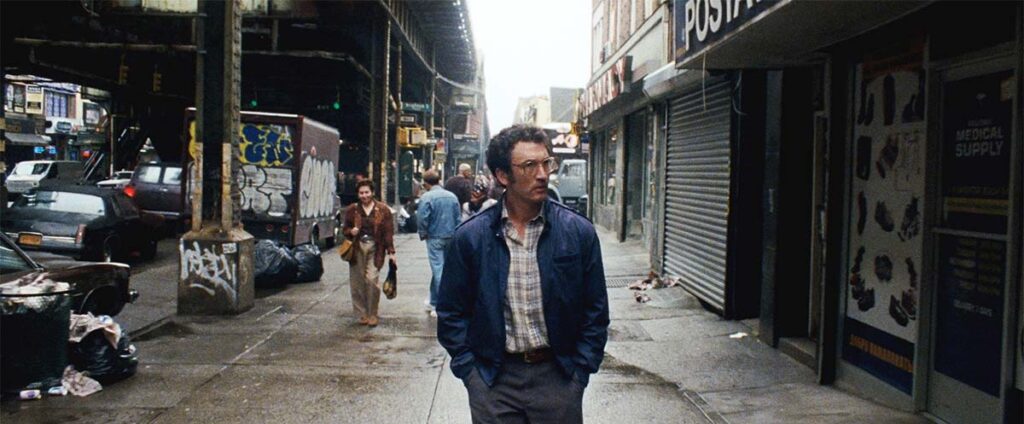
Just as crucial is the return of cinematographer Joaquín Baca-Asay, working again with Gray after more than a decade away from the fold. His images are prince-of-darkness gorgeous: textured, shadowy, and emotionally resonant without tipping into showiness. Rooms seem to hold old grief. Streets carry the residue of choices made too late or too quickly. The visuals have a tactile, lived-in quality that suits Gray’s gift for pressure, regret, and buried emotion, making the movie feel like a cousin to “We Own the Night,” not a retread, but another nocturnal study of loyalty.
Christopher Spelman once again provides the music, and the score is fittingly melancholic and softly mournful, underscoring the story’s ache without overdetermining it. Gray’s work often feels like an elegy for people already haunted by the versions of themselves they failed to become, and Spelman’s music gives “Paper Tiger” a somber current that never overwhelms the performances. The craft is controlled throughout, but never cold; Gray’s command is formal, yet the picture remains deeply attuned to the damage gathering beneath each choice.
The American Dream, in Gray’s cinema, is not simply unreachable; the chase itself exposes the lie. In “Paper Tiger,” the promise of reinvention becomes inseparable from corruption, compromise, and the fantasy that one can climb without pulling someone else into the fall. Irwin wants to provide. Gary wants to prove he can handle forces he barely understands. Hester wants to protect the family before it becomes impossible to pretend the danger is still outside. Gray lets those desires overlap until ambition, love, and betrayal become part of the same gathering storm.
What keeps his work from turning punitive or schematic is his emotional intelligence, his tremulous empathy, and the sympathy he evokes for characters who are often the architects of their own collapse. Gary may bring danger to the Pearl family’s doorstep, but Gray never treats him as a cautionary device. Irwin may be naive, but his dream of providing for his children is rooted in tenderness. Hester may sense the walls closing in before anyone fully says it aloud, but she is not merely there to suffer the consequences of men’s mistakes. “Paper Tiger” may be built from recognizable Gray pieces, but he keeps finding new variations inside the same mournful blues. The result is familiar in outline, but authentic, poignant, and quietly devastating. [A]