


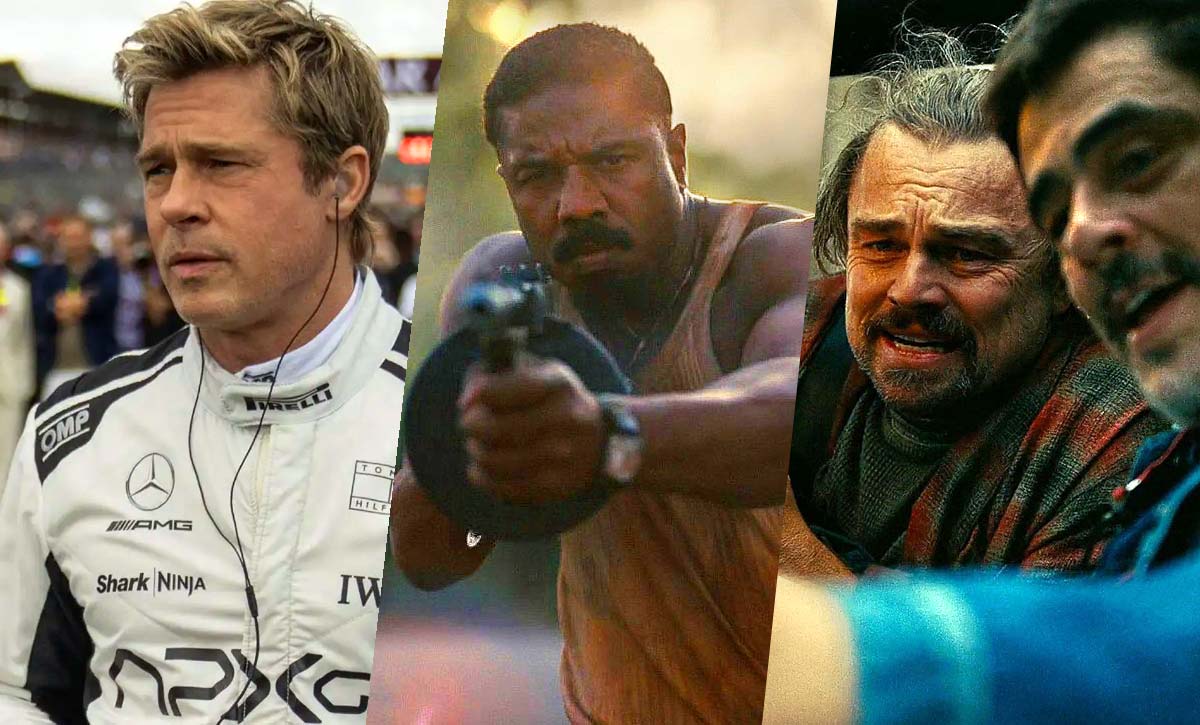
Oscar nomination mornings usually turn into a referendum on “the year in movies.” This time, though, the headline was also a rare industry stat stunner: Warner Bros. made Oscar history by landing three Best Picture nominations in the same year, off three completely different lanes of filmmaking; the first time that feat had been accomplished since 1975.
Those three films spanned a remarkably wide range of sensibilities. Paul Thomas Anderson’s restless, big-swing provocation “One Battle After Another” sat on one end of the spectrum, Ryan Coogler’s genre-jukebox Southern nightmare “Sinners” on another, and the high-octane, premium-screen spectacle “F1” on the third. And while “F1” was an Apple Original Films title on the ownership side, it still counted as a Warner Bros. distribution play—exactly the kind of distinction the industry used when it tallied “who had what” on nomination morning.
The raw numbers made the flex louder. “Sinners” set a new record with 16 nominations, “One Battle After Another” followed with 13, and “F1” clocked in with four—Best Picture, plus Best Sound, Best Film Editing, and Best Visual Effects—for a combined total of 33 nominations across the trio. The last distributor to pull off a three-title Best Picture morning was Paramount, which did it with “Chinatown,” “The Conversation,” and “The Godfather Part II,” with the latter ultimately winning Best Picture.
The internal politics implied by Warner’s morning were hard to miss. The three-nom haul played like a major validation for Michael DeLuca and Pam Abdy, the studio chiefs who had been the subject of “hot seat/potentially losing their jobs” chatter earlier in the year. Whatever that noise had been—inside the building or the industry echo chamber that fed off every quarterly headline—nomination morning delivered the most straightforward rebuttal possible: the slate didn’t just survive the season, it defined it, built on filmmaker-forward bets instead of defensive, risk-flattened decision-making.
It also reshaped the optics around the larger corporate environment. Even in a company where David Zaslav’s cost-cutting reputation often framed the conversation, this outcome strengthened the argument that the studio’s leadership still backed taste-driven choices that landed with voters—and that a slow-build strategy still paid off in the loudest way possible once nominations were on the board.
Finally, the scoreboard came with an investor-facing narrative attached. Warner Bros. and its would-be partner Netflix combined for 50% of the Best Picture choices, while Warner led the Critics’ Choice Awards with 36 nominations—precisely the kind of awards-season dominance a would-be parent company could point to as proof of viability and savvy, not just scale. If Netflix’s acquisition ever closes, the pitch won’t only be a library and a pipeline flex; it would be awards credibility with a legacy distributor stamp attached, packaged as an instant victory lap.

Rodrigo Perez is the founder and editor-in-chief of The Playlist, which he launched in 2007. He has worked in entertainment journalism since 2000, including at MTV, and has written for SPIN, IndieWire, Pitchfork, Complex, Magnet, and various music, film, and entertainment publications over the past two decades.
- Rodrigo Perez
- Rodrigo Perez
- Rodrigo Perez
- Rodrigo Perez
- Rodrigo Perez
- Rodrigo Perez
- Rodrigo Perez
- Rodrigo Perez
- Rodrigo Perez
- Rodrigo Perez

