


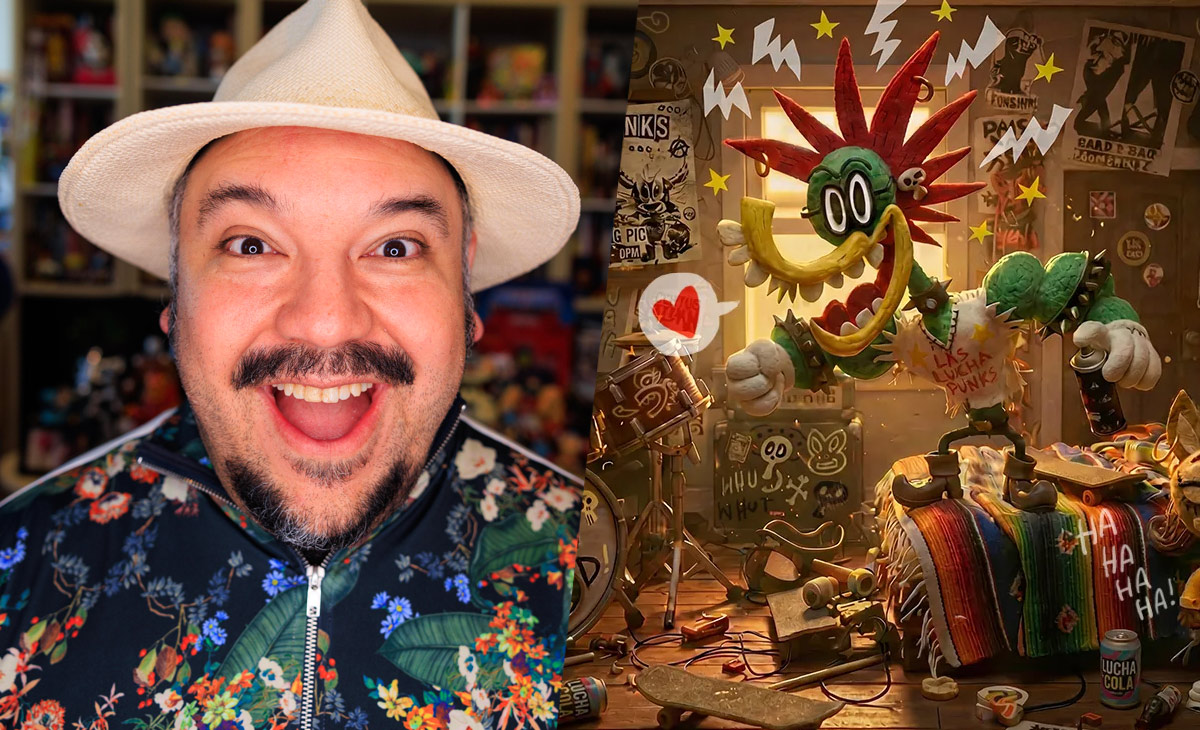
Does online bullying work? And regardless, this story certainly moved fast. Less than 48 hours after Amazon, MGM Studios, and AWS unveiled their GenAI Creators’ Fund and announced “Punky Duck” as one of its flagship projects, creator Jorge R. Gutierrez appears to have backed away from the initiative following a fierce backlash from fans, artists, and animation professionals.
The controversy erupted this week when Amazon revealed three animated projects created through its AI-powered Project Nara platform, including Gutierrez’s “Punky Duck.” The filmmaker—best known for “The Book of Life” and “Maya and the Three”—immediately became the focus of criticism for his previous outspoken advocacy for artists and creative labor.
In response to the backlash, Gutierrez initially defended his participation “as a big experiment for me, and I will be as cautious as possible with AI. Artists driving tech, and not the other way around, is my goal,” he said in a statement, emphasizing that artists, not technology, should remain in control.
But the reaction only intensified online. The criticism spread rapidly across social media, with many fans accusing the filmmaker of contradicting his earlier positions on AI and artistic ownership. At the same time, Gutierrez took a “thanks for your thoughts, but I’m going to try this out anyhow” approach in tweets that have since been deleted.
Then, earlier today, Gutierrez abruptly changed course. In a lengthy statement posted to social media, the filmmaker apologized to fans, artists, and colleagues, saying he had underestimated both the technology and the concerns surrounding it.
“I have decided to drop out of the AI program at Amazon,” he wrote. “I will not be making a ‘Punky Duck’ series. Actions speak louder than words.”
It was a sharp reversal from his initial defense, and Gutierrez framed the decision as a response to what he had heard from artists and fans over the previous day.
“My intent was to showcase artists, both new and seasoned, both inside and outside the studios, driving this new tech,” he continued. “My sincerest apology to those I upset. I promise to do better moving forward. Thank you for your patience with me. I will try harder.”
Before announcing his exit, Gutierrez had already signaled that the backlash was landing. “Learning a lot from many of you. Thank you. Lots of information that I’m digesting wholeheartedly,” he wrote. “I am absolutely understand the concern of using AI to assist an animation pipeline. For all those showing me grace, I really appreciate it. I have a lot to think about.”
That thinking did not take long. Within hours, one of the highest-profile names attached to Amazon’s AI animation push was gone, turning what was meant to be a splashy rollout into an immediate public-relations headache.
For Amazon, the larger AI program appears to be moving forward. But the Gutierrez episode is a blunt reminder of how toxic generative AI remains in animation circles, where artists are already dealing with layoffs, shrinking opportunities, and fears that studios will use the technology to cut labor out of the process. Whatever Amazon hoped “Punky Duck” would signal, its first major message was a backlash so strong that its creator walked away.
I have decided to drop out of the AI program at Amazon. I will not be making a Punky Duck series. Actions speak louder than words.
— Jorge R. Gutierrez (@mexopolis) May 29, 2026
My intent was to showcase artists, both new and seasoned, both inside and outside the studios, driving this new tech.
My sincerest apology to… https://t.co/GJQZMkfZwd
Learning a lot from many of you. Thank you. Lots of information that I'm digesting wholeheartedly. I am absolutely understanding the concern of using AI to assist an animation pipeline. For all those showing me grace, I really appreciate it. I have a lot to think about.
— Jorge R. Gutierrez (@mexopolis) May 29, 2026

Born in Chile, raised in Canada, now living in Brooklyn, NY, Rodrigo Perez is the founder and editor-in-chief of The Playlist, which he launched in 2007. He has worked in entertainment journalism since 2000, including at MTV, and has written for SPIN, IndieWire, Pitchfork, Complex, Magnet, MuchMusic, and various music, film, and entertainment publications over the past two decades.
- Rodrigo Perez
- Rodrigo Perez
- Rodrigo Perez
- Rodrigo Perez
- Rodrigo Perez
- Rodrigo Perez
- Rodrigo Perez
- Rodrigo Perez
- Rodrigo Perez
- Rodrigo Perez
- Rodrigo Perez

