



If the Academy normally, instinctively treats horror like a noisy tenant—welcome to show up, not welcome to move in—the 98th Oscars nominations just made that old posture look threadbare. Director Ryan Coogler’s “Sinners” didn’t simply “get in.” It led the entire field with a record 16 nominations, a number so loud it forces the conversation out of the usual carve-outs and into the center of the ceremony itself.
The reality is horror occasionally breaks through every few years—“Black Swan,” “Get Out,” and “The Substance” in recent years—but this is the first time something this aggressively genre-first has bulldozed its way in: a blood-slick, grit-caked, horny-as-hell, blaxploitation-flavored vampire movie getting embraced in the loudest, least-deniable way possible.
For years, the conventional wisdom has been that horror—like comedy, genre movies, and superhero cape sh*t—has been treated like it belongs in a separate neighborhood, politely acknowledged from a distance but rarely welcomed through the pearly gates of “serious” Oscar recognition, a club seemingly reserved for respectable awards-bait dramas and hagiographic prestige films. And sure, the Academy has always had its excuses: horror is “too commercial,” “too pulpy,” “too genre,” as if genre is a stain you’re supposed to scrub off before you can be invited into the grown-ups’ room.
But “Sinners” didn’t show up looking for permission. It showed up and owned nominations morning—Best Picture contender, above-the-line muscle, and a haul that didn’t read like a polite, compartmentalized tip of the cap. It read like the Academy opening the door and letting the thing in.
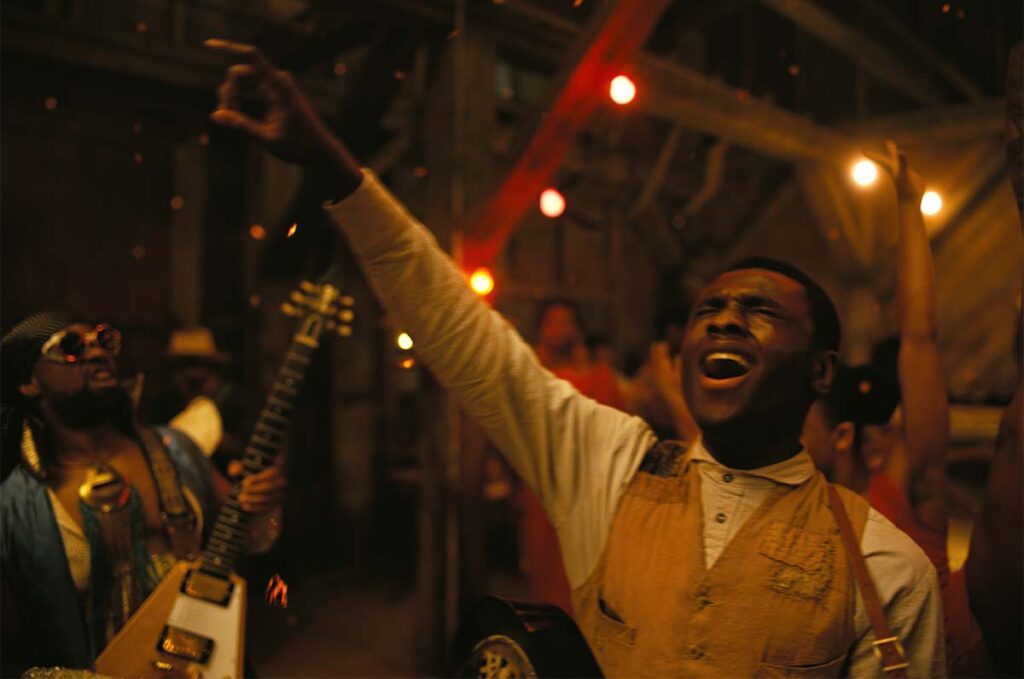
For the uninitiated—if that’s still humanly possible by now— Coogler’s film is set in 1930s Mississippi and centers on twin brothers (both played by Michael B. Jordan) who try to build a juke joint as a refuge for blues and community, only for the night to curdle into a violent gangsters-versus-vampires showdown that’s explicitly tied to the era’s segregation and racial terror. And the movie doesn’t play coy about what it is; it turns that blues-soaked dream into something predatory and punishing, unmistakably genre even as it’s doing something larger underneath (read our review).
And the thing is: this didn’t come out of nowhere. The Academy had flirted with horror for decades, usually in two ways—either the “respectable” horror-adjacent prestige lane, or individual-craft/acting recognition that treated the genre’s surface as something to be forgiven.
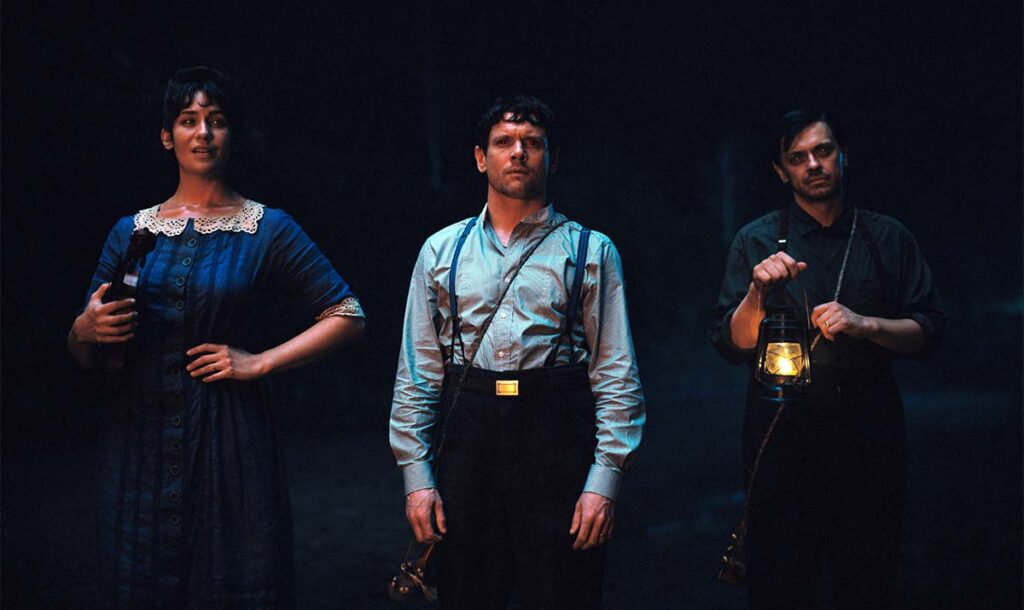
Horror has broken down the door before, but never at this scale. You can draw a pretty straight line of major Best Picture-era breakthroughs: “The Exorcist” shows up as a full-scale phenomenon at the 46th Academy Awards; “Jaws” turns a blockbuster into a Best Picture nominee at the 48th; “The Silence of the Lambs,” arguably more thriller, doesn’t just get nominated, it sweeps the top prizes at the 64th; “The Sixth Sense” becomes a mainstream ghost story voters treat like a serious drama at the 72nd.
Even when horror isn’t granted the big invitation, the acting branch has occasionally had to vote for the undeniable. “Psycho” lands Janet Leigh in Supporting Actress at the 33rd Academy Awards. Ruth Gordon wins Supporting Actress for “Rosemary’s Baby” at the 41st. “Carrie” earns acting nominations for Sissy Spacek and Piper Laurie at the 49th. And Kathy Bates winning Best Actress for “Misery” at the 63rd remains one of the cleanest examples of the Academy recognizing a straight-up genre performance without demanding the film put on a tie first.
Our modern era has just given the Academy a new comfort language for the same old impulse: reward horror when it arrives pre-translated into “prestige.” “Black Swan” channels psychological torment through formal rigor, so it slides into the Best Picture category. “Get Out” lands as a cultural lightning rod with a razor-sharp thesis, so it becomes a Best Picture nominee and a screenplay winner. And “The Substance” is body horror with auteur muscle and acting chops, so it lands in Best Picture, Directing, and Best Actress.

Now, horrologists might insist “Sinners” isn’t “pure” horror, depending on how aggressively they police the borders. Fine. Call it horror or don’t—the film still moves with its fangs out: violent, sensual, ugly in the ways it needs to be, and confident enough to let the grotesque sit right next to the tender without apologizing for either.
But if you’re looking for a clean emancipation narrative—horror is finally free, the gates are open forever—Hollywood has never moved that neatly. The Academy can crown “Sinners” the most-nominated film, and it can still walk away with very little. The curse of the “most noms” flex has backfired lately: look at Martin Scorsese’s “Killers of the Flower Moon,” the most-nominated film of 2022 that left the ceremony empty-handed—an unmistakable “we respect you” note, not necessarily a “we adore you” bouquet.
Maybe the healthiest way to read this moment isn’t as horror finally being “accepted,” but as the Oscars admitting—out loud, with numbers—that it needs the genre’s electrical current to stay culturally plugged in. And if that’s true, the real provocation of this nominations morning isn’t that horror finally got a seat at the table; it’s that a film this committed to being itself didn’t have to sand down its rough edges to be taken seriously. Sixteen nominations doesn’t read like a craft pat on the head. It reads like the Academy conceding that a horror-forward genre movie can be one of the year’s defining achievements—without translation, without apology, and without pretending it’s something safer than what it is.


