


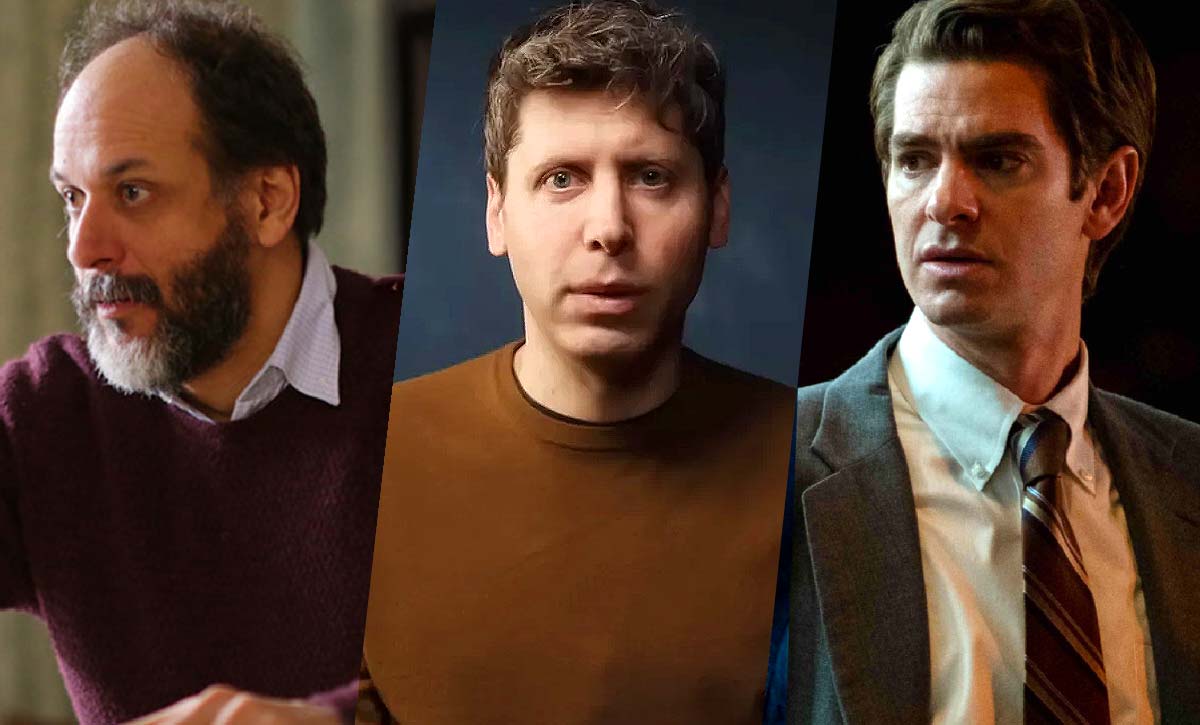
The story behind Luca Guadagnino’s “Artificial” is starting to sound nearly as loaded as the film’s subject. After Amazon MGM Studios abruptly parted ways with the nearly completed OpenAI drama, Neon picked up worldwide distribution rights to the movie earlier this week. But a new report suggests Amazon’s exit may have been driven by more than just the company’s very obvious business ties to OpenAI and Sam Altman.
According to Vulture, “Artificial” had gone through a difficult production at Amazon before the studio decided to sell it off. The film reportedly went over budget, required extensive reshoots, and shifted “markedly darker” than Simon Rich’s original script and Guadagnino’s initial pitch, per Puck. One source with knowledge of the production told Vulture there were “all sorts of disasters.” )
That’s the studio-side version, at least, and it is worth treating with a little caution. A report like this can also serve a purpose when a studio is trying to justify unloading a high-profile filmmaker’s movie late in the process. Whether that is happening here is impossible to know, but Vulture’s account certainly gives Amazon MGM a more production-focused rationale for dropping the film, rather than letting the entire story revolve around corporate anxiety, OpenAI, and Jeff Bezos’ proximity to Altman.
“Artificial” stars Andrew Garfield as Altman and chronicles the dramatic days around the OpenAI CEO’s brief firing and reinstatement in 2023. The cast also includes Yura Borisov as OpenAI co-founder Ilya Sutskever, Ike Barinholtz as Elon Musk, Monica Barbaro, Mark Rylance, Jason Schwartzman, Zosia Mamet, Cooper Hoffman, Cooper Koch, Chris O’Dowd, and Billie Lourd.
The bigger intrigue is why Amazon MGM let the film go in the first place. The studio had been developing “Artificial” as a prestige play, with David Heyman producing and Guadagnino coming off his Amazon collaborations “Challengers” and “After the Hunt.” Vulture reports that Amazon green-lit the film at a reported $50 million net, even though Guadagnino was known in town for running over budget and over schedule.
Then came the uncomfortable corporate overlap. Amazon dropped “Artificial” after its parent company entered a major strategic partnership with OpenAI, including a reported $50 billion investment deal earlier this year. That timing led to immediate speculation that Amazon no longer wanted to release a film that could be read as an unflattering portrait of Altman, who had become a much more important business partner to the company.
Vulture’s report also notes that the movie had already been test-screened, was in the final stages of post-production, and had been expected to premiere at SXSW before Amazon decided to shop it around. CAA reportedly handled the auction, with A24, Netflix, Focus Features, Mubi, and Warner Bros.’ specialty label Clockwork among the companies that showed interest before Neon landed it.
Some buyers apparently questioned the film’s commercial prospects, too. Vulture cites one executive who said the film felt more like a streaming title than a theatrical play, while another person who saw it described it as a pointed Altman takedown, but also praised the film’s performances and Silicon Valley satire. In other words, the picture emerging is not simply “Amazon got scared,” but “Amazon may have gotten scared about a movie it also had production and marketability concerns about.”
Still, the optics are hard to ignore. Amazon MGM could have buried “Artificial” entirely, but instead sold it to Neon, which now gets to position the film as the one Amazon chose not to release. That alone may become part of the movie’s eventual marketing, especially if the film does turn out to be a sharp, unflattering portrait of Silicon Valley power and the increasingly porous wall between Hollywood, tech, and money.
No release date has been announced yet for “Artificial,” but Neon could realistically have it ready for the Guadagnino-friendly Venice Film Festival, capitalize on all the press around Amazon MGM’s exit, and turn the film into a fall awards-season player. If that happens, it would be a major embarrassment for Amazon MGM, which already looks like it may have been more worried about protecting its OpenAI relationship than releasing a potentially provocative movie.

Rodrigo Perez is the founder and editor-in-chief of The Playlist, which he launched in 2008. He has worked in entertainment journalism since 2000, including at MTV, and has written for SPIN, IndieWire, Pitchfork, Complex, Magnet, and various music, film, and entertainment publications over the past two decades.
- Rodrigo Perez
- Rodrigo Perez
- Rodrigo Perez
- Rodrigo Perez
- Rodrigo Perez
- Rodrigo Perez
- Rodrigo Perez
- Rodrigo Perez
- Rodrigo Perez
- Rodrigo Perez

